Blog Archives
Pressure-Reduced Outlets

Kyle and His Pal Jake: What a Duo These Two Make! follows a young boy into adulthood as he rediscovers the joy of ventriloquism and uses it to reach his students. What was the inspiration for the setup of your story?
This story is semi-autobiographical. When I was ten, I received a ventriloquist puppet that looked like Paul Winchell’s dummy, Jerry Mahoney (which I still have to this day). It came with an LP record that taught me ventriloquism. And, yes, I put on shows for my friends in my garage with a stage my Papa had made for me.
As an elementary school teacher, I would have the kids make their own puppets based on characters in the stories we had been reading. Then, in groups, they presented the stories to the class. I also taught them ventriloquism.
Kyle’s embarrassment in middle school feels very relatable. Was it important to show how quickly children can hide something they love when they feel judged?
Oh, yes. Young people don’t like to be ridiculed and judged for having unique hobbies or interests. As a teacher, we celebrated our varying interests in my classroom.
What role do you think creativity plays in helping children feel emotionally safe?
It is my belief that creative activities provide relaxed, pressure-reduced outlets where children can process and express their feelings.
If a child reading the book sees something of themselves in Kyle, what do you hope they feel by the last page?
It’s okay to have interests and talents that differ from others, whether it is academically or intellectually, athletically, or theatrically.
Author Links: GoodReads | Facebook | Instagram | Amazon
Now a third-grade teacher, Kyle is always looking for ways to reach his students, especially Wendy, a shy, silent girl. An answer arrives in a package from his mom. In it are items from his youth, his baseball glove, his favorite chapter books, a model airplane, and Jake.
As he removes Jake from the box, Kyle comes up with a plan on how he can use Jake in his classroom and help Wendy come out of her shell.
The Lonely Loon


The Lonely Loon follows a blue-eyed young loon in Maine who gets separated from his family, asks for help, and is rejected by other loons because he looks different. With kindness from a wise heron and courage of his own, he finds his way through fear, a storm, and a painful choice: whether to help the very loons who hurt him. In the end, he returns home steadier in himself, carrying the lesson that belonging doesn’t require sameness.
The writing is tender and direct, in the best picture-book way. The rhymes have a comforting bedtime rhythm, but the story doesn’t shy away from the sting of exclusion. As a parent, I appreciated that the message isn’t just “be nice.” It goes deeper than that. It shows how fear can make others unkind, and how a child can still choose compassion without pretending the hurt didn’t matter.
The artwork has a handmade softness that really suits the story. The art feels misty, quiet, and a little melancholy, especially in the lonely river scenes and storm pages. I liked that the blue-eyed loon is visually different but not exaggerated. He’s still simply a loon, which makes the book’s central idea land gently. The author’s note added real emotional weight for me, too. Knowing the story was inspired by Henry and by the ache of seeing a child misunderstood made the whole book feel more personal and grounded.
I thought The Lonely Loon is a sincere and compassionate picture book with a clear heart and a quietly moving sense of purpose. It’s especially good for young children who are beginning to notice differences, for families talking about inclusion, disability, empathy, or bullying, and for kids who need reassurance that being different doesn’t make them less worthy of love. Its loveliest gift is its reminder that kindness can be brave, and that a child’s truest self is something worth protecting.
Pages: 36 | ASIN : B0GVLVPHD2

Bridging the Gap

In Youth Truth, you reflect on the students you encountered as a school resource officer, the crises they faced, and the adults who reached out to them. Why was this an important book for you to write?
This book was never just a book for me—it was a responsibility.
As a School Resource Officer, I saw kids carrying far more than they should have to—those slipping through the cracks, those acting out because they didn’t have the words, and those who looked fine but were struggling in silence.
What stayed with me is this: it’s rarely the big interventions that change a life—it’s one adult, one moment, one question asked the right way.
But I also saw good parents, teachers, and mentors who cared deeply and still didn’t feel equipped to reach these kids. Conversations were being missed—not from a lack of care, but a lack of confidence and tools.
That’s why I wrote Youth Truth: Engaging in Conversations That Can Change Lives.
I wanted to bridge that gap—turn real, front-line experiences into something practical people can actually use when it matters most.
Because I’ve lived this truth: connection heals what correction can’t.
And too many moments are being missed—sometimes with consequences we can’t take back. This book is about helping more adults show up in those moments, because one brave, genuine conversation doesn’t just change a moment—it can change, or even save, a life.
Stories like Jon’s imagined meal or Jane’s struggle with addiction are deeply affecting. How did you choose which stories to tell?
Those stories stayed with me long after the moment passed—that was my first filter.
I chose stories that represented patterns I saw over and over again: youth feeling unseen, unheard, or carrying pain they didn’t know how to express. I also chose ones that reflected different kinds of struggle, so more readers could see a piece of someone they love—or themselves—in those pages.
And I was intentional about this: every story had to serve a purpose. Not just to move people emotionally, but to help them understand what’s really going on beneath the surface and how they can show up differently.
Because these aren’t just stories—they’re windows into moments where the right response could change everything.
Did you ever feel tension between letting stories speak for themselves and explaining their lessons?
Absolutely—there was a real tension there.
The stories are powerful on their own, and I never wanted to over-explain or take away from their truth. But I also knew that if I left them without guidance, some of the most important lessons could be missed—especially for adults who are already unsure how to navigate these moments.
So I was intentional about both: letting the stories be felt, and then giving just enough insight and practical takeaways to help readers actually use what they just experienced.
Because for me, this book wasn’t just about telling stories—it was about making sure those stories lead to action, better conversations, and real connection when it matters most.
What did you most want readers to understand about youth in crisis?
More than anything, I wanted readers to understand that youth in crisis aren’t trying to be difficult—they’re trying to be understood.
What looks like anger, withdrawal, or defiance is often pain, fear, or confusion they don’t have the words for yet. And too often, we respond to the behavior instead of the need underneath it.
If adults can pause, get curious, and lead with connection instead of correction, everything shifts.
Because at the core of it, most youth in crisis aren’t pushing people away—they’re quietly asking, “Will someone see me, hear me, and stay?”
Author Links: Facebook | Website
This gripping book delves into the raw, unfiltered world of today’s youth. Their lives are way more complex than most realize. It is a compelling and poignant exploration of the challenges faced by young souls, bringing to light the often overlooked and misunderstood battles they fight.
In Youth Truth, discover the essential guide to navigating the tough conversations that matter most to today’s youth. This compelling narrative empowers parents, educators, and mentors to approach sensitive topics with empathy and understanding, creating safe spaces where young voices feel valued and heard. From the haunting realities of suicide and bullying to the silent battles of eating disorders, this book unveils the raw struggles faced by a generation yearning for connection.
Written by a retired law enforcement officer and School Resource Officer, Youth Truth is more than just a collection of stories; it is a clarion call for compassionate dialogue. Learn the right questions to ask and how to engage meaningfully with the youth in your life. By fostering open conversations, you can profoundly impact their lives, helping them navigate their challenges with resilience and strength. Join the movement to bring understanding and compassion to the forefront of youth engagement.
Nurse Dorothea® Presents Bullying and How to Create a Culture to Prevent It

Bullying and How to Create a Culture to Prevent It, by Michael Dow, feels less like a conventional storybook than a guided classroom session turned into a book. Nurse Dorothea leads an after-school mental health club and walks a group of children through what bullying is, the forms it can take, and the damage it can do, from insults and exclusion to cyberbullying, humiliation, extortion, and workplace cruelty. Along the way, different kids speak up with examples from school, work, and daily life, and the book keeps returning to the same core conviction: bullying shrinks a person’s sense of self, but communities can answer it with courage, candor, and mutual protection.
The book doesn’t treat bullying as a minor social hiccup or a rite of passage. It treats it as something corrosive, something that stains a whole environment. I found that persuasive, especially in the moments where the children’s comments give the lesson a human pulse, like Frida describing insults as social pollution, or Azamat recalling the humiliation of being shamed by a teacher in front of classmates. Those moments give the book a bruised, lived-in feeling. Even when the language is direct and didactic, there’s an unmistakable sincerity underneath it, a real desire to protect children and to name harms that adults often dismiss too quickly.
The writing is earnest and clear, and it often speaks in declarations, so it can feel more instructional. This isn’t a book driven by plot so much as by accumulation. Example after example, consequence after consequence. Yet I didn’t mind that because the ideas are unusually expansive for a children’s book. It isn’t content to say bullying hurts feelings. It follows the damage outward into anxiety, isolation, sleep problems, burnout, lower performance, family strain, even housing instability, and fear of deportation. That reach gives the book a grave, almost civic imagination. It wants children to understand not only that bullying is cruel, but that it distorts whole cultures if nobody interrupts it. I respected that ambition because the book is trying to build conscience, not just deliver a tidy lesson.
This book is blunt, compassionate, and deeply invested in the idea that young readers can handle serious conversations about power, shame, and self-worth. I would absolutely recommend it for classrooms, counselors, parents, and older children who are ready to talk openly about bullying in a structured, reflective way. It’s a children’s book for readers who need language for what they’ve lived through, and for communities trying to become braver on purpose.
Pages: 123
Youth Truth: Engaging In Conversations That Can Change Lives


Youth Truth is a compassionate and story-driven work of nonfiction in which author Carlamay Sheremata, drawing on her years as a school resource officer, reflects on the lives of young people standing at the edge of crisis and the adults who either reach them or fail to. The book moves through a series of case-based chapters on suicide, addiction, sexual coercion, identity, abuse, eating disorders, self-harm, and bullying, always circling back to one central claim: a life can change when a young person feels truly heard.
What stayed with me most was the book’s insistence that intervention rarely begins with brilliance. More often, it begins with a question, a hunch, a small act of care, like noticing a boy’s hollow face and handing him a cafeteria card, or recognizing that a teen who has nowhere left to go still knows which office feels safe enough to enter.
I enjoyed the book’s emotional candor. Sheremata doesn’t write from a great height, and that matters. She writes close to the ground, inside school hallways, cramped kitchens, ambulances, offices with doors half shut, the ordinary places where unbearable things are quietly carried. Jon’s imagined waffle breakfast, so painfully vivid because he’s starving, is the kind of detail that lands with a thud. So is Jane clutching the last cigarette before returning to rehab, or Cameron, tangled in gang expectations, coming alive at the possibility of working with food. These moments give the book its pulse. I felt, again and again, that Sheremata understands something essential about young people in distress: they are often dismissed as dramatic when they are being most truthful. The book is strongest when it trusts those intimate particulars and lets them do their work.
The book’s deepest strength is its moral clarity. Sheremata is not coy about what she believes. She believes adults should show up, listen better, speak more honestly, and stop mistaking control for care. I respected that conviction. At the same time, I did fee that the writing can be a bit repetitive, and the reflective passages sometimes spell out lessons that the stories have already made beautifully obvious. But even there, I understood the impulse. This is not a detached literary exercise. It’s a book written by someone who has seen too much suffering to hide behind polish. The prose is straightforward, yet it carries real feeling, and the ideas feel urgent because they’ve been earned in lived encounters.
Youth Truth is moving, sincere, and unsettling in the best way, because it asks whether the young people around us are less unreachable than we claim and more neglected than we admit. I finished it thinking not only about the youth in these pages, but about the adults around them, and how often salvation arrives in the form of patient attention. I’d recommend this book especially to parents, teachers, counselors, coaches, and anyone who works closely with adolescents, though I think it could also reach careful teen readers who want to feel less alone. It’s heartfelt, useful, and humane, and that combination makes this book highly recommended.
Pages: 121 | ASIN : B0DJ7M94GW
The Metamorphosis of Marna Love

Tom McEachin’s The Metamorphosis of Marna Love follows a sixteen-year-old Iowa girl whose strange dreams, appetite for existential literature, and growing suspicion that her mother has hidden something immense from her begin to braid together into a deeper reckoning. What starts as a sharp, observant coming-of-age story about jobs, boys, school, friendship, a bowling alley that feels like sensory warfare, gradually opens into a mystery about memory, violence, and the buried aftermath of a supermarket shooting from Marna’s childhood. The novel’s real engine is not plot alone but Marna’s inward change: she moves from skittish curiosity to moral urgency, and then toward a harder, more adult kind of self-knowledge.
I liked how intimately the book inhabits adolescent consciousness without making Marna flimsy or precious. She’s funny, exasperating, bright, vain in small human ways, and often startlingly earnest. Her running arguments with Kafka and her teacher, her awkward experiments with dating, her loyalty to Kate, and her instinctive but imperfect love for her mother all make her feel lived-in rather than designed. I especially liked the way McEachin lets her mind dart: one moment literary, the next petty, the next wounded, the next brave. That movement gives the novel a supple realism. I also found the mother-daughter relationship unusually affecting. Barbara is not merely withholding information for plot purposes; she is a woman who has survived something and then tried, perhaps clumsily but lovingly, to make a habitable life after it. Their conversations have a bruised tenderness that resonated with me.
What surprised me was the book’s moral texture. A lesser novel might have turned the mystery at its center into a clean revelation, but this one keeps asking messier questions: what memory owes truth, what gratitude owes reality, whether one act of courage can coexist with a damaged life, and how a young person learns to judge others without becoming glib. I liked that the novel grows more serious without becoming pompous. I do feel that some passages could have been trimmed, and now and then the dialogue explains a touch too much, but the book’s emotional candor more than compensates. By the final pages, I felt the story had earned its tenderness. It doesn’t confuse transformation with polish; Marna’s metamorphosis is awkward, costly, and incomplete, which is exactly why it feels true.
I would recommend this novel to readers of young adult literary fiction, coming-of-age fiction, psychological fiction, family drama, and mystery-inflected contemporary novels, especially anyone who likes books where interior life matters as much as events. It should resonate with readers who enjoy the introspective intelligence of John Green, though this novel is earthier and more quietly feral in its emotional weather. I read The Metamorphosis of Marna Love as a novel about how identity is not discovered in one flash but assembled, painfully and beautifully, from memory, language, and the courage to look straight at what hurt you. This is a coming-of-age novel that understands growing up is less a bloom than a reckoning.
Pages: 252 | ASIN : B0GKCJDYGD
Understanding Grief and Giving Hope

Ghost Brother follows two brothers in the aftermath of a car crash that kills one and leaves the other to pick up the pieces of his life. What is it that draws you to write Young Adult fiction?
I love the YA genre. As a former high school English teacher and the mother of four sons, I have noticed that this age group doesn’t receive the same attention as young children. Reading is essential for all ages, but keeping readers interested and engaged during their teens is critical. I feel that more emphasis and attention need to be placed on junior high and high school students regarding their literary options. There needs to be encouragement from all of us for them to read books of their choice, where they can see themselves in the stories and read for enjoyment.
How were you able to capture the thoughts and feelings of Carlos, the twin who watches his brother move on without him?
When I lost my sister, it was so hard for me to understand and deal with the fact that she was gone. I would talk to my mom about messages I felt were from her. My mom was also feeling the same way. What I realized was that there were so many coincidences that made it clear that her spirit was still with us. I would talk to my mom about the story I had started working on about siblings. I found myself wanting more information and reading anything I could about losing someone. It brought me comfort. When my mom suddenly passed away, I felt I had to publish my book so that it would help others understand their grief of losing a loved one and give them hope that there is more beyond this life.
Can fans look forward to more books from you soon? What are you currently working on?
Reading and writing are my passions. I have many stories waiting to be shared with readers. I’m currently working on a manuscript that focuses on Selena, the girl that Cris falls in love with, in Ghost Brother. She is a strong, intelligent, and interesting female character. I wanted her to have a more active role, but didn’t want to take away from the brothers. I intend to tell her story from her perspective. She is gifted and can see and hear things others can’t. She was able to communicate with Carlos, the dead brother. Selena was misunderstood because she could do things others did not understand. She is now the main character in my new manuscript. I hope to complete her story later this year and will then start submitting in the hopes of getting it published
Author Links: GoodReads | X | Facebook | Webite
Ghost Brother
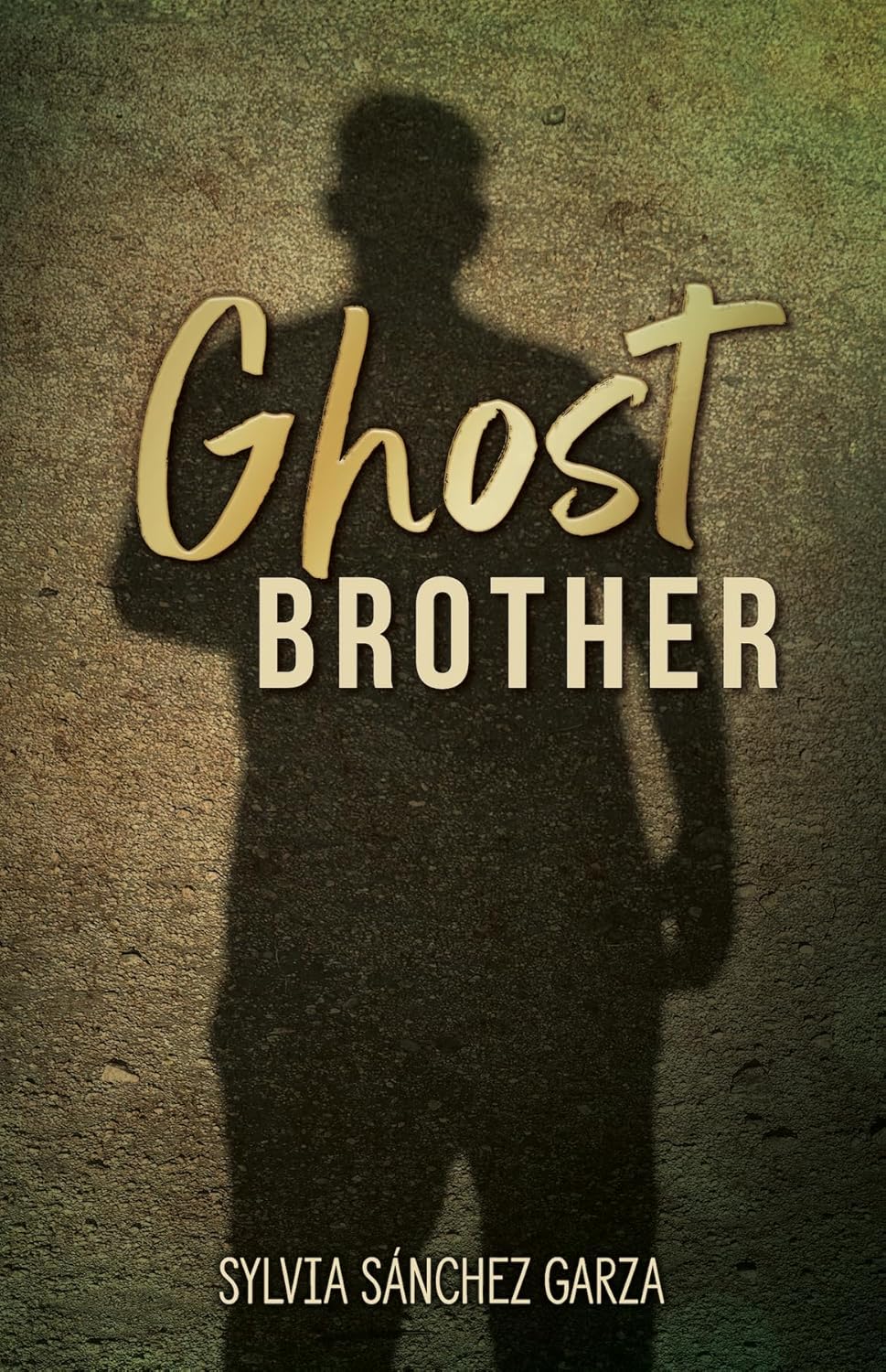
Ghost Brother is a young adult novel that opens with twin brothers, Cris and Carlos, heading to a school dance in South Texas, only for a violent storm, a pair of bullies, and a disastrous crash to shatter their lives. Carlos dies instantly. Cris survives. What follows is a story told in both of their voices, one alive and drowning in guilt, the other watching as a ghost who can see everything but cannot be heard. The book blends grief, memory, and mystery as the brothers struggle, separately and together, to face what happened and what it means for their family.
Reading it felt like sitting with someone who is trying to talk through the hardest moment of their life, stopping and starting, sometimes whispering, sometimes spilling over. The writing is simple and direct, which fits the teen voices. I liked that the author didn’t rush past the emotional fog after the accident. Cris moves through the world as though he’s wrapped in wet cotton, and Carlos drifts with this strange mix of clarity and longing. Their alternating chapters make the tragedy feel bigger and messier because you’re seeing it from both sides of the veil. Some scenes hit with sharp force, like the mother collapsing when she hears the news or Carlos watching her cry and being unable to touch her. Others move slowly, the way real grief does, circling the same memories again and again.
I was also drawn to the author’s choices around culture and community. The book is rooted in Mexican American traditions, beliefs, and rhythms that shape how the characters mourn and how they make sense of death. There’s a spiritual layer here that never feels like decoration. Carlos isn’t just a ghost for plot convenience. His presence echoes the stories their grandmother told, the prayers their mother whispers, the sense that the dead stay close. The supernatural moments glide in quietly, almost like a breeze shifting the curtains. At other times, they feel heavier, especially when Carlos tries to warn his family that the sheriff may twist the truth about the accident. The blend of realism and the supernatural makes the book feel like a hybrid of contemporary fiction and ghost story, but always grounded in teen experience.
By the end, I felt like I’d spent time with a family trying to hold itself together. The story doesn’t pretend grief is tidy or that answers neatly appear. It sits in the uncertainty, in the fear that justice may not come easily, and in the hope that love still stretches across impossible distances. If you like young adult fiction that honestly explores loss and adds cultural depth and a touch of the supernatural, this book is for you. It’s especially suited for readers who appreciate emotional stories that explore family bonds, healing, and the invisible threads that connect us even after death.
Pages: 182 | ASIN : B0CZPLPB7P


