Blog Archives
The MACH-10 PM: AI-Powered Product Management at Hypersonic Speed


The MACH-10 PM lays out a clear promise. Product managers can use AI to move at “hypersonic speed” without losing judgment or empathy. The book walks through the whole product life cycle, from discovery and roadmapping to launches, growth, and leadership. Each chapter mixes stories from Qualcomm and GoPro with simple models, tool suggestions, and concrete prompts that show how to pull AI into real work rather than treat it like a toy. The main idea is simple. You stop trying to outwork the chaos and instead use AI to gain leverage, clarity, and what Riggs calls “speed with soul.”
The tone of the book is punchy and direct, almost like a seasoned PM talking across a whiteboard after a long sprint. Sentences stay short, the examples feel real, and the metaphors around “MACH-10” and “radar” stick in my head. I liked the way each chapter closes with questions and small exercises, because that nudged me to picture my own workflow instead of just skimming along. The visuals and little tables, like the “AI-powered discovery loop” and the roadmap comparisons, break up the text and make the main arguments easy to recall later.
I found a lot to like. I really appreciated the focus on AI as a multiplier, not a replacement. The sections on discovery, feedback synthesis, and roadmap scenarios felt grounded and very practical. The prompt examples are useful, and the insistence on pairing AI with ethics and judgment kept the whole thing from sliding into tool worship. I also liked the recurring message that PMs should measure themselves by impact, not output, and that the real job is to orchestrate people and systems, not just ship tickets.
I would recommend The MACH-10 PM to working product managers who already know the basics and want a push to rethink how they use AI day to day. I think it will be especially useful for people in mid-level roles who feel stuck in meetings and backlogs and want language and tools to reclaim time for strategy. Leaders of product teams could also use it as a shared playbook for running experiments and setting expectations around AI use. If you want a sharp, fast, and pretty human guide on how to work with AI without losing your soul, this book fits that slot nicely.
Pages: 270 | ASIN : B0FSP1Z1C4

The Power of Digital Identity: Winning Customer Trust and Transforming Experience
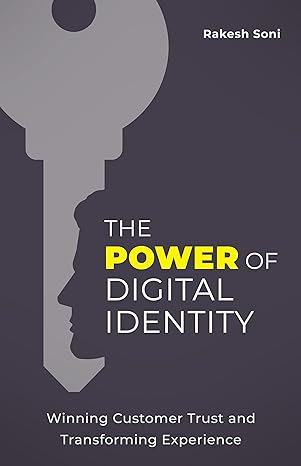

The Power of Digital Identity explores the critical role of digital identity in shaping modern customer experiences, securing personal data, and meeting evolving global privacy regulations. Rakesh Soni, drawing from his experience building CIAM (Customer Identity and Access Management) systems, makes a case for how digital identity is no longer optional, it’s essential. The book starts with the evolution of identity, from tribal names to biometric authentication, and moves into the mechanics of CIAM, contrasting it with traditional IAM (Identity and Access Management). Soni explains how CIAM can unify customer experiences, reduce fraud, streamline compliance, and increase business revenue by building trust. He closes by outlining strategies to design and implement a CIAM system, with an eye on future trends in privacy, personalization, and digital innovation.
I found the book to be clear and convincing. Soni has a knack for making technical concepts feel personal and relevant. His examples, like the frustration of forgetting a password or the clunky experience of interacting with siloed systems, feel familiar. He doesn’t get bogged down in code or vendor specifics; instead, he speaks plainly and focuses on the “why” behind digital identity. I especially appreciated the chapter on consumer behavior. The way he ties trust to revenue, and privacy to user experience, made it click for me in a way other tech books rarely do. There’s a genuine sense of urgency in his writing, but it never feels preachy or abstract.
The book sometimes reiterates points. Some of the trends, like the rise of mobile-first experiences or the impact of regulations like GDPR, are well-known to anyone in tech or marketing. There are references to Fortune 5000 companies using CIAM, but I found myself wishing for a few more real-world success stories.
I’d recommend this book to product managers, tech leaders, and marketers who want to understand how digital identity ties into the bigger picture of customer experience. It’s a strong read for anyone trying to build trust with users online, or who is tired of trying to wrangle legacy systems and clunky login flows. It’s not overly technical, but it’s practical and well-grounded.
Pages: 223 | ASIN : B0FBQ7FT53
STRATEGIES FOR HIGHER THINKING: Optimizing Our Lives by Embracing AI
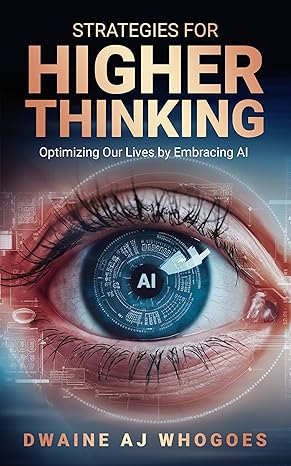
The topic of artificial intelligence (AI) is undeniably divisive, with some opposing it due to ethical concerns and its potential to displace jobs, while others champion its ability to significantly enhance our lives. In Strategies for Higher Thinking, Dwaine AJ Whogoes presents his thoughtful perspective on AI, exploring its profound impact on our daily lives. His approach to the subject is both enlightening and accessible, carefully avoiding any condescension toward those with differing views. Instead, Whogoes aims to educate a broad audience about a technology that is clearly here to stay.
The book begins by highlighting how deeply embedded AI is in our everyday activities, from using smart devices to browsing online, effectively setting the stage for a more in-depth exploration of AI’s revolutionary impact across various sectors. Whogoes offers fascinating insights into the practical applications of AI, particularly in everyday devices like smartphones. He explains how AI enhances functionalities such as facial recognition, predictive text, camera features, and app personalization. Additionally, the author delves into AI’s transformative role in smart homes, healthcare, and social media, emphasizing its potential to improve efficiency, security, and personalization in our daily lives.
Whogoes’ enthusiasm for the subject is infectious, keeping readers engaged throughout the book. His authority and passion for AI are evident as he demonstrates its potential to solve complex problems and significantly improve our lives. His primary goal is to make AI accessible and understandable to everyone, regardless of their background. The book successfully demystifies AI through practical examples, ethical discussions, and interactive activities, making even the most complex concepts comprehensible and engaging. For those who may have previously avoided discussing AI due to a lack of understanding, this book provides a solid foundation for forming informed opinions and choosing a stance on the subject. Whogoes’ writing is inclusive, targeting a diverse audience that includes teachers, entrepreneurs, technologists, and job seekers. He adheres to the basics and facts about AI, with each chapter building on the last to ensure a comprehensive understanding of AI’s capabilities and its future role. While one might expect the book to lean heavily toward advocacy, Whogoes remains neutral and focused on informing rather than persuading, allowing readers to draw their own conclusions.
Strategies for Higher Thinking is a highly informative read that breaks down what can often be perceived as a complex subject into simple, digestible parts that anyone can understand, even those unfamiliar with AI. This book is a valuable addition to the growing body of literature on how technology can drive positive change and inspire innovative thinking. Given the increasing integration of AI into everyday life, Whogoes’ work is a timely resource that challenges readers to rethink their positions or, at the very least, support their arguments with well-reasoned facts.
Pages: 175 | ASIN : B0D92S11XC


