Blog Archives
The Way I Saw Myself And The World
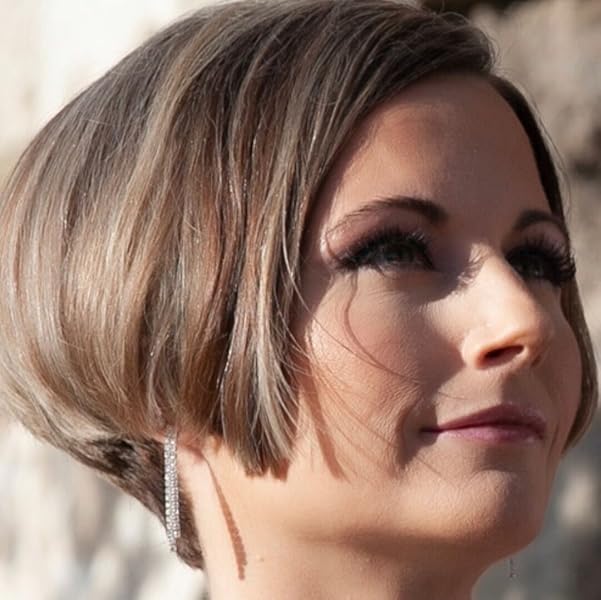
Unbroken: Life Outside the Lines is your memoir, about surviving a childhood shaped by violence, poverty, mental illness, and constant upheaval, and how you continue to work each day to live and love despite it. What was the inspiration for the setup of your story?
I wanted the setup to feel like inviting the reader to sit beside me at the kitchen table while I finally say the things I was never allowed to say out loud.
The inspiration really came from two places: my younger self and my present-day self. As a child, I lived inside the chaos—violence, poverty, mental illness, constant moving—and I didn’t have language for any of it. As an adult, I finally do. The setup of the story grew out of my desire to honor that little girl’s confusion and fear, while also letting the woman I am now gently guide the reader through it. I didn’t want the book to be just a list of painful events; I wanted it to show how those early rooms, those sounds, those secrets shaped the way I saw myself and the world.
I also structured the opening around a simple but honest truth: the past doesn’t stay in the past. I wanted readers to meet me not only as a child in survival mode but as a grown woman still learning how to live and love with everything I’ve carried. So the setup moves between then and now—between the immediacy of what happened and the quiet work of healing that continues. My hope was that, from the very beginning, readers could feel both the weight of what I survived and the possibility that a different life is still being built, day by day.
I appreciated the candid nature with which you told your story. What was the hardest thing for you to write about?
There were three kinds of pages that nearly broke me:
- Writing about the people I loved who also hurt me.
Putting certain family members on the page was excruciating. I grew up in an environment where we didn’t “tell family business,” and breaking that unspoken rule felt like a betrayal, even as an adult. I had to constantly walk the line between telling the truth and not turning anyone into a monster. Most of the harm in my story came from people who were wounded themselves, and holding both of those realities at once—“this hurt me deeply” and “you were not only your worst moments”—was incredibly hard. - Admitting the ways the trauma shaped my own behavior.
It was one thing to write about what was done to me; it was another to be honest about how I carried those wounds forward. The moments where I shut down, pushed people away, ignored red flags, or repeated unhealthy patterns in my own relationships were very painful to face. Those chapters forced me to look at myself with the same unflinching honesty I used on my past, and that was humbling and raw. - Going back into the child-mind.
Some scenes required me to re-inhabit my childhood body—the sounds, the smells, the confusion, the terror. I didn’t write them as an observer; I wrote them as if I were back there. After those writing sessions, I was often wrung out. I’d have to walk, cry, or sit in silence before I could rejoin “normal life.” It took a lot of emotional and physical grounding to go back, and then come back.
In a way, the hardest thing to write about was not one single event, but the ongoing impact—the way those early experiences still echo in my marriage, my parenting, my self-talk. Putting that on the page meant admitting that healing isn’t a neat before-and-after story. It’s daily work. Letting readers see that unfinished, imperfect process was terrifying… and also, I hope, the most honest gift I could offer.
How did you balance the need to be honest and authentic with the need to protect your privacy and that of others in your memoir?
I thought about this constantly while writing. For me, “tell the truth” and “do no unnecessary harm” had to sit side by side.
A few things guided me:
- I kept the focus on my experience, not other people’s secrets.
I tried to stay in the lane of what I saw, what I felt, what I carried, rather than exposing every detail of someone else’s life. If a piece of information belonged more to another person than to me, I either left it out, softened it, or hinted at it without giving identifying specifics. - I changed or obscured details where it didn’t weaken the truth.
Names, locations, certain timelines, and identifying characteristics were altered to protect privacy. The emotional truth and the impact stayed the same, but the “tracing paper” over the real people got thicker. If a reader can feel what happened without being able to easily recognize who it happened with, that’s a good balance for me. - I gave myself permission to have boundaries.
There are things that happened that are not in this book. Not because I’m hiding, but because some stories are still tender, or they belong to a future version of me who’s more ready—or they simply don’t need to be on public display to validate my pain. I reminded myself often: You owe the reader honesty. You do not owe the reader your entire self. - I wrote the raw version first, then edited with care.
In early drafts, I didn’t censor myself. I needed to know the real story on the page. Later, I went back and asked:- “Is this necessary for the reader to understand my journey?”
- “Does this cross a line into someone else’s private life?”
- “Am I telling this from a place of healing, or from a fresh wound?”
If something felt like a wound still bleeding, I either reframed it or removed it.
- I tried not to punish or vindicate anyone on the page.
Even when I wrote about harm, my goal wasn’t to get even. It was to bear witness. That helped me keep the tone grounded in my humanity and theirs, instead of in revenge. I can say, “This hurt me deeply,” without turning the book into a public trial.
In the end, the balance looked like this: the reader gets the truth of my interior world—the confusion, the terror, the resilience, the ongoing healing—but not a roadmap to track down every person who ever hurt me. The story is mine. The people inside it are real, but they are not mine to expose.
How has writing your memoir impacted or changed your life?
Writing Unbroken: Life Outside the Lines has changed me in ways I felt in my body first—before I could even explain them.
A few of the biggest shifts:
1. I stopped arguing with my own story.
For a long time, I minimized what I went through:
“It wasn’t that bad.”
“Other people had it worse.”
Writing the memoir forced me to sit with the facts. Seeing them on the page—clear, ordered, undeniable—made it much harder to gaslight myself. I don’t have to keep re-litigating whether it “counts” as trauma. It happened. It shaped me. That simple acceptance has been huge.
2. It changed how I talk to myself.
When I wrote scenes from my childhood, I had to look at that little girl closely—how hard she tried, how alone she felt, how much she carried. It softened something in me.
Now, when I’m harsh with myself, I picture her. It’s harder to call myself “too sensitive” or “weak” when I’ve just spent months honoring her survival on the page. Writing the book made self-compassion less like a buzzword and more like a daily practice.
3. It rearranged my relationships.
Telling the truth has a way of shaking the tree.
- Some relationships have gotten closer. People in my life understand me better now. They see why I react the way I do, why certain things are hard for me, why I need boundaries. There’s more context and, sometimes, more grace.
- Other relationships have become more distant or more defined. Putting things on paper meant I had to stop protecting certain illusions. That’s painful, but it’s also cleaner. I’m not working as hard to pretend.
Overall, it gave me permission to let my inner reality and my outer life match more closely.
4. It turned my pain into something useful.
Before the book, a lot of my story felt like random debris—memories hitting me out of nowhere. Writing gave it shape. Now, when I talk to someone who’s navigating their own trauma, I’m not just speaking from the middle of the fog. I’ve walked through it intentionally, sentence by sentence.
It’s changed how I show up:
- I’m more open about my history without feeling like I’m oversharing.
- I feel less ashamed and more… equipped—like, “Yes, this happened, and here’s one way I’ve learned to live with it.”
There’s a strange relief in knowing the worst things you survived can now sit in a book and maybe help someone else feel less alone.
5. It taught me the power of boundaries and pacing.
Writing this memoir forced me to learn:
- when to stop for the day,
- when to ground myself,
- when to say, “I can’t talk about that right now.”
Those skills didn’t stay on the page. They bled into my daily life. I’m more aware of my limits, more protective of my energy, and more willing to say no—even to “good” things—if my nervous system is tapped out.
6. It gave me a different kind of courage.
Surviving my childhood was one kind of courage.
Choosing to lay it out for others to read is another.
Now, other risks feel a little less terrifying:
- Sharing my work.
- Speaking honestly in conversations.
- Naming what I need in relationships.
- Letting myself be seen as I actually am, not as the “together” version I used to present.
Once you’ve told the hardest truths in print, small everyday truths get easier to say out loud.
In short: writing Unbroken didn’t “fix” my life. I still have triggers, hard days, old patterns that flare up. But it reorganized my inner world. It gave me language, loosened shame’s grip, clarified my relationships, and reminded me that my story is not just what happened to me—it’s also what I choose to make of it now.
Author Links: Instagram | Facebook | Website
As her mother’s delusions intensify, Adriene and her younger brother are swept into a cycle of instability: temporary relatives’ homes, decrepit apartments, shelters, and the bureaucratic indifference of Child Protective Services. Her life becomes a study in adaptation. Teachers, social workers, and therapists appear as both saviors and spectators, their well-meaning interventions undercut by a system that cannot see the full truth.
Amid this chaos, Adriene discovers a sanctuary in learning. Books become her escape and her mirror, a means of constructing identity from fragments. Her intelligence and resilience earn her entry into gifted programs and, later, a transformative scholarship through the Duke University Talent Identification Program’s ADVANCE Camp – a rare space of belonging and recognition. Yet even moments of promise are shadowed by trauma’s lingering grasp; her mind remains both brilliant and haunted.
Foster care, meant to save her, instead subjects Adriene to new forms of cruelty. The “Bitch from Hell,” her abusive foster mother, wields authority with sadism cloaked in righteousness. Still, Adriene’s intellect and adaptability allow her to navigate this world – and, in small acts of defiance, reclaim pieces of her agency.
College becomes both a milestone and a reckoning. Having survived the unimaginable, Adriene graduates with honors in International Business, only to find herself unprepared for the invisible toll of trauma in adulthood. Depression, self-sabotage, and a string of hollow relationships bring her to the brink of despair once more. The memoir crescendos with a raw confrontation of suicidality – and the awakening that follows.
In one of the book’s most powerful sections, Adriene revisits her own CPS case files, psychiatric evaluations, and therapy notes. Reading herself through the cold lens of institutional language, she confronts the staggering disconnect between documented “stability” and lived abuse. This duality – the official record versus the inner truth – forms the heart of Unbroken. The narrative closes with a reclamation: survival not as triumph over pain, but as the deliberate act of continuing to live and love despite it.
Unbroken: Life Outside the Lines
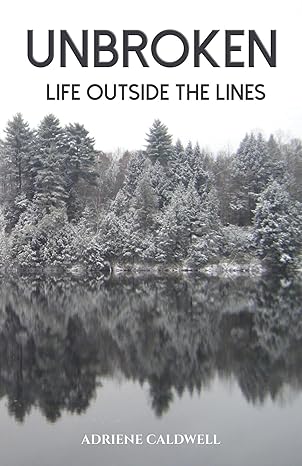

Unbroken: Life Outside the Lines tells the story of a childhood shaped by violence, poverty, mental illness, and constant upheaval. The author shares scenes that feel almost too real to read, moments where survival hangs by a thread, and small flashes of love keep her moving. The book follows her from her earliest memories with a schizophrenic and abusive mother, through years of instability, family trauma, homelessness, and danger. It is a memoir that traces pain in sharp detail but also draws a clear line toward resilience and the stubborn spark of hope that refuses to go out.
I felt pulled into the author’s voice in a way that left me raw. Her writing hits hard because she does not hide. She tells everything straight, letting each moment speak for itself. The simplicity of the language works in her favor. It keeps the story grounded. It also makes some scenes feel heavier because the words do not soften them. I kept thinking about how young she was during the worst moments and how she managed to hold on to any sense of self. The honesty in her storytelling is powerful.
I also found myself drawn to the way she describes small joys. A homemade sour treat from her grandmother. A moment of kindness from an aunt. A flash of sunlight during a hopeless day. These little details gave me something to cling to as a reader. They also gave the memoir a sense of rhythm. I appreciated how the author allowed those memories to stand beside the darkness without trying to smooth them together. Life often feels jagged that way. The book captures that unevenness with real heart. I found myself caring deeply about her younger self and feeling frustrated at how many systems failed her at every turn.
The story is heavy, no doubt about it. Still, the author’s insistence on survival leaves a clear message. Pain shapes us, but it does not have to end us. I would recommend this book to readers who appreciate personal stories told without filters, to those who work with vulnerable communities, and to anyone who wants to understand trauma from the inside out.
Pages: 221 | ASIN : B0FHY52WZ2




 LITERARY TITAN