Blog Archives
Sages of the Motherland: The Great African Philosophers
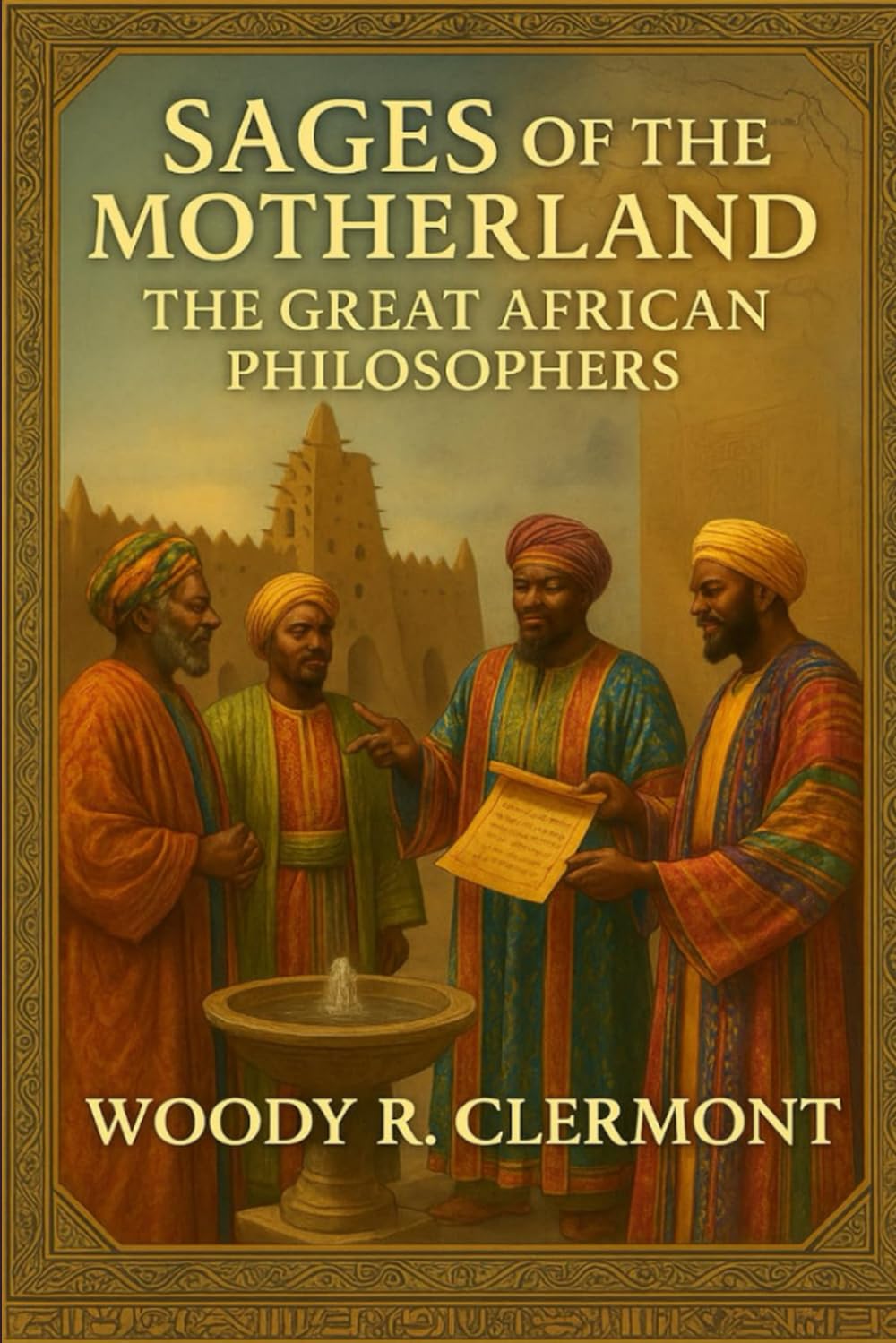

Reading Sages of the Motherland felt like walking through a living museum of African thought. Woody Clermont takes readers on a sweeping tour from Ahmed Baba’s defense of African dignity in Timbuktu to Achille Mbembe’s probing of postcolonial power. Each chapter gives a clear and respectful portrait of philosophers who shaped Africa’s intellectual legacy, people like Zera Yacob, Kwame Nkrumah, Cheikh Anta Diop, and Kwasi Wiredu. The structure is clean and rhythmic, almost like a guidebook, but it never loses sight of the human stories behind the ideas. What struck me most was how the book connects spiritual, political, and philosophical threads across centuries, making it easy to see African philosophy as a continuous, evolving tradition rather than isolated fragments.
As I read, I found myself pulled between admiration and introspection. The writing is straightforward but deeply informed, and there’s a quiet passion running through every page. Clermont doesn’t just list facts, he listens to the voices of these thinkers and lets their ideas breathe. I felt especially moved by how he handles figures like Zera Yacob and Walda Heywat, whose rationalism feels timeless, and Okot p’Bitek, whose poetic rebellion against colonial thought feels urgent even now. The prose is patient and deliberate, though at times a little dense when tracing historical connections. Still, the sincerity and clarity kept me turning pages. It’s rare to read a scholarly book that feels this personal and respectful.
I didn’t expect to feel this emotionally involved in a philosophy text. There’s something powerful in seeing Africa’s wisdom traditions presented without apology or defensiveness. The way Clermont ties the ancient Kushite sense of justice to modern debates about humanism hit me hard. His tone is calm, but his purpose burns bright: to restore balance to how we think about global philosophy. The ideas challenged me to slow down, to think about what counts as “philosophy” and who gets to decide.
Sages of the Motherland is more than a history, it’s an act of restoration. I’d recommend it to anyone who wants to see philosophy as a global conversation, not a European invention. It’s perfect for readers curious about African thought, decolonization, or simply how ideas travel across time and space.
Pages: 141 | ASIN : B0FS1WRKXY

The Golden Mansaic Age: The Legendary Malian Empire

Woody R. Clermont’s The Golden Mansaic Age tells the sweeping story of Mali’s rise from a patchwork of small kingdoms to a vast empire that commanded the world’s attention through trade, faith, and intellect. The book opens with the quiet strength of Naré Maghann Konaté, passes through the legendary journey of Sundiata Keita, the Lion King of Mali, and culminates in the golden reign of Mansa Musa, whose pilgrimage to Mecca shook the medieval world. Clermont doesn’t just trace kings and battles; he gives life to the land itself, the Sahel’s dry winds, the Niger’s silver bend, the hum of markets, and the griots’ songs that carried memory across generations. It’s both a historical chronicle and a deeply personal exploration of heritage, born from the author’s discovery of Malian roots in his own DNA.
I found Clermont’s writing vivid and heartfelt. He writes history like a storyteller sitting by a fire, his tone warm and patient. The details of Mali’s geography and trade, salt, gold, the lifeblood of empires, feel tactile, almost cinematic. Sometimes the descriptions linger too long, but that lingering adds to the sense of awe. The way he frames Sundiata’s journey from frailty to kingship hit me hardest. There’s something powerful about watching a child mocked for weakness grow into the man who unites nations. Clermont’s reverence for Mali’s intellectual legacy, especially Timbuktu’s libraries, made me pause more than once. He captures the quiet grandeur of a civilization often reduced to footnotes. Reading it, I felt the weight of history and also the sorrow of how much the world forgot.
Emotionally, this book moved me. Clermont’s mix of fact and faith feels intimate, almost confessional. His admiration for Mansa Musa is clear, but he also warns against seeing gold as the only measure of greatness. I liked that balance. His tone is proud yet thoughtful, his sentences simple but rhythmic. You can sense the author’s own rediscovery of self through the story of Mali. At times I caught myself smiling, other times I felt a pang of grief for what was lost when empires fade and stories fracture. It’s the kind of book that makes you want to look at a map, trace the old trade routes, and imagine the caravans shimmering under the desert sun.
I’d recommend The Golden Mansaic Age to anyone who loves history that feels alive, especially readers drawn to Africa’s forgotten empires or to stories that connect ancestry with identity. It’s not a dry academic study. It’s a heartfelt retelling, full of rhythm and respect. If you like books that teach you something while also stirring something inside you, this one will do that. It’s for those who want to remember that the world’s golden ages were not all born in Europe, and that sometimes the brightest light comes from the heart of the desert.
Pages: 225 | ASIN : B0FSXFPYT9

The Black Wall Streets of America: Towards a Black Stock Exchange

This book takes the reader on a journey through the history of thriving Black business districts across the United States, from the Greenwood District in Tulsa to Sweet Auburn in Atlanta and Bronzeville in Chicago. Author Woody Clermont recounts their origins, their rise, and the deliberate forces that brought them down, whether through racial violence, redlining, or highway construction. Beyond its historical context, the book pivots toward the future. It lays out a detailed framework for rebuilding economic power, including the call for a Black stock exchange, the use of AI for empowerment, and policies to ensure wealth creation that can last. It is both a historical record and a forward-looking manual, blending storytelling with strategy.
I found myself deeply moved while reading. The writing has a clear rhythm, direct and unpretentious, almost like a conversation with someone who refuses to give up hope. The stories of Tulsa, Rosewood, Overtown, and Hayti broke my heart. These communities built so much from so little, only to see it wiped away. I could feel the injustice in my chest, but I also felt admiration for the resilience. Clermont’s framing of each city through metrics like business density, land ownership, and cultural vitality made the past feel real and measurable. It wasn’t just nostalgia; it was proof that prosperity was built, and proof that it can be built again.
The vision of a Black stock exchange is bold and inspiring. I caught myself wondering how much of this could really be implemented, given the political and financial climate of today. Still, the conviction in Clermont’s words carried me through those doubts. The chapters on AI as a leveling tool stood out. They challenged me to stop seeing technology as something distant or threatening, and to instead think of it as a weapon for independence. That shift in tone, from history to possibility, was what kept me turning the pages with real excitement.
I would recommend this book to anyone who cares about history, justice, and the power of ownership. It’s not just for economists or scholars. It’s for community leaders, young entrepreneurs, and even everyday readers who want to understand the depth of what was lost and the potential for what could be regained. If you’ve ever wondered how to make lasting change, this book offers both the reasons and the roadmap.
Pages: 204 | ASIN : B0FPB4HKHR
Indigenous Resilience

From Taino Suns to Phoenix Flames: A Story of Haiti narrates the expansive history of Haiti, beginning with its Indigenous roots, through its revolutionary victories, and into its contemporary challenges, showcasing the resilient spirit of the Taíno people of the Caribbean. Why was this an important book for you to write?
Haiti’s story is often reduced to struggle or crisis in the public imagination, but that does a disservice to its depth. For me, this book was about restoring balance — showing Haiti’s roots in Indigenous resilience, its revolutionary brilliance, and its ongoing fight for dignity. I wanted people to truly see the amazing story that Haiti is, and has always been. The historic achievements are often overlooked.
Haiti is a country rich in history, traditions, and its own unique identity, which it has fought to bring back to the modern world. What were some ideas that were important for you to share in this book?
I wanted to highlight three things: first, that Haiti has always been a place of innovation — political, cultural, and spiritual. Second, that its revolution wasn’t only about freedom from slavery, but about redefining what freedom means for the world. And third, that Haitian culture, from its music and art to its rituals and storytelling, continues to be a source of strength and creativity. Haiti has never been passive; it has always been shaping its destiny.
What is one thing that you hope readers take away from From Taino Suns to Phoenix Flames: A Story of Haiti?
That Haiti is not only a story of survival but of leadership. The Haitian Revolution redefined human rights and liberty in a way that still resonates today. I hope readers leave with a sense of respect for Haiti’s place in world history — and with the awareness that its challenges today must be understood against that backdrop of extraordinary resilience.
What is the next book that you are writing, and when will that be published?
My next project is The Golden Mansaic Age: The Legendary Malian Empire. It’s a sweeping look at Mansa Musa, Sundiata, Timbuktu, and the rise and legacy of Mali. I’m aiming for publication within the next year. Like From Taino Suns to Phoenix Flames, it’s part of a larger effort to spotlight histories too often pushed to the margins, but which deserve the center stage.
Author Links: GoodReads | Amazon
Taíno Suns to Phoenix Flames traces the history, culture, and enduring spirit of the indigenous Taíno people of the Caribbean and the birth of a nation compared once to the fictional Wakanda. This is Black nationalism and autonomy at its finest. Weaving together Taíno history, Haitian indigenous heritage, and personal journeys of cultural rediscovery, this book explores how a people once thought lost have reclaimed their identity, traditions, and pride in the modern world.
Inside, you’ll discover:
The history of the Taíno people before and after European contact.
Caribbean indigenous culture — from language to spirituality.
Stories of indigenous resilience and revival across Haiti, Latin America, and the Caribbean.
The impact of colonization on Caribbean heritage and identity.
How the Taíno legacy inspires cultural pride and modern indigenous movements.
Rich with history, storytelling, and cultural insight, Taíno Suns to Phoenix Flames is both a historical journey and a call to remember, reclaim, and rise.
From Taíno Suns to Phoenix Flames: A Story of Haiti is a sweeping and powerful chronicle of Haiti’s soul-stirring journey—from its Indigenous Taíno origins to its revolutionary blaze of independence, through the shadows of exploitation, and toward the radiant hope of rebirth. Author Woody R. Clermont masterfully blends history, culture, revolt, and vision in this richly illustrated, deeply researched, and passionately written tribute to the Haitian spirit.
This book traces the sacred threads that run through Haiti’s past: the wisdom of the Taíno people, the courage of enslaved Africans who defied colonial empires, and the brilliance of revolutionaries who dared to birth the first Black republic. It confronts the devastations of foreign interventions, economic sabotage, and interference with unflinching clarity, while also lifting up the resilience, artistry, and ingenuity that define the Haitian people.
But From Taíno Suns to Phoenix Flames is more than a recounting—it is a resurrection. Clermont envisions a Haitian renaissance where the nation rises like the mythical phoenix from the ashes of betrayal and despair. Through economic reform, education, diaspora engagement, agriculture, innovation, and spiritual renewal, he lays out a roadmap for turning Haiti into the “Caribbean Wall Street”—a vibrant hub of commerce, culture, and sovereign strength.
A rallying cry and a visionary blueprint, this book calls Haitians and the world to witness a nation not broken but becoming. It is a story of fire, but also of flight—soaring toward destiny with faith, memory, and the unyielding light of the Haitian sun.
From Taino Suns to Phoenix Flames: A Story of Haiti

The book tells the sweeping story of Haiti from its Indigenous roots to its revolutionary triumphs and modern struggles. Clermont begins with the Taíno people, their cosmology, agriculture, and spiritual life, then moves into the violence of colonization, the contradictions of Enlightenment ideals, and the brutal realities of slavery. From there, he charts the rise of figures like Toussaint Louverture, Dessalines, and Sanité Bélair, weaving in battles like Vertières where Haiti shattered French imperial dreams. Later chapters explore U.S. interference, the persistence of Vodou, and the promise of Haiti’s future. It’s not just a history, though, it’s a vision for rebirth, framed by the phoenix metaphor of destruction and renewal.
Clermont doesn’t write like a detached historian; he writes like someone deeply tied to the soil and spirit of Haiti. In the first chapter, when he describes the Taíno as “one of the most organized and spiritually rich Indigenous cultures in the Caribbean” and details their cassava-centered agriculture and sacred ceremonies. I felt pulled into a world that history books usually skim over. It made me slow down and imagine life before conquest, and it set the emotional tone for the devastation that followed. The writing has a rhythm to it, almost like spoken word, that makes the past feel alive.
At times, though, the style feels heavy-handed. In The Butchers chapter, the descriptions of Columbus’s cruelty, like mutilations and dog hunts, are brutal and vivid. I appreciated the unflinching honesty, but the intensity made it hard to read in long stretches. That said, I think that was Clermont’s point: he wants readers to sit with the horror, not brush past it. His refusal to soften the edges gave the later stories of resistance, like Boukman’s Bois Caïman ceremony or Capois-La-Mort’s charge at Vertières, an even sharper impact. The contrast between oppression and defiance came through strongly.
What I liked most was the forward-looking vision in the final chapters. When Clermont compares Haiti’s potential to countries like Singapore and Rwanda, he takes a risky leap, but it’s also inspiring. He sketches ideas like diaspora investment, cultural exports, and digital startups with a mix of practicality and hope. The “Phoenix Rising” section especially stood out. It felt like a manifesto, not just a history. I could sense his belief that Haiti’s story isn’t finished, and that belief rubbed off on me. I don’t know if every blueprint he offers is realistic, but the spirit behind them is contagious.
I came away both educated and moved. This book isn’t just for history buffs; it’s for anyone who wants to understand Haiti beyond clichés of poverty and disaster. It’s for readers who like stories of resilience, who don’t mind raw truths, and who can appreciate a mix of scholarship and passion. Personally, I found it powerful and memorable. It made me rethink what I thought I knew, and it left me hopeful for what Haiti might still become.
Pages: 236 | ASIN : B0FP9N1MZM


