Blog Archives
The C.L.A.R.I.F.Y. System: A Mindset Framework for Healing the Workplace & Elevating Productivity


The C.L.A.R.I.F.Y. System is a workplace mindset book that tries to turn inner steadiness into outer effectiveness. Shae Pratcher structures it around seven linked practices, from Clarity and Listen through Adjust, Reset, Integrity, Focus, and Yield, and threads those ideas through an ongoing workplace narrative involving Jordan and Alex, two figures navigating lateness, strained check-ins, missed deadlines, brittle trust, scattered priorities, and finally the release of old habits and needless process. What I found most central is the book’s insistence that productivity usually breaks down before the spreadsheet ever shows it, in the small psychic moments where urgency outruns thought, fear distorts listening, or teams keep carrying procedures that no longer deserve the weight placed on them.
The book is not cynical about work, which is rarer than it should be, but it isn’t naively cheerful either. Pratcher keeps returning to the idea that a bad moment doesn’t have to become a bad day, and that struck me as both simple and honestly earned. I liked the recurring “Mindset Moments” for that reason. They give the book a human pulse. The sections on Reset and Integrity landed especially well for me. The image of Alex realizing that the words were technically right but the impact still felt diminishing is a sharp, recognizable truth about modern workplace speech, where people can hide behind intent and call it leadership. And the focus chapter, with Jordan feeling busy but not effective, names a particular kind of contemporary exhaustion with painful accuracy. I didn’t feel preached at there. I felt seen.
The book is earnest, polished, and structured well. Pratcher has a gift for compression. Lines like the notion that reaction feels efficient while reset is effective, or that focus removes waste rather than work, have the clean snap of phrases shaped to be remembered. The aviation frame and the lesson architecture give the book momentum, and the repeated Jordan and Alex scenario helps keep the ideas from floating off into abstraction. I admired the clarity of thought. The book doesn’t merely say “be better at work.” It argues, with consistency, that culture is built through ordinary responses, that boundaries are part of care rather than a retreat from it, and that yielding outdated beliefs or inherited processes may be the most mature move a team can make.
I found The C.L.A.R.I.F.Y. System thoughtful, sincere, and more grounded than a lot of workplace literature that talks endlessly about performance while barely acknowledging the emotional weather people are working inside. What it offers is a calm, usable vocabulary for people who are tired of chaos masquerading as professionalism. I’d recommend it most to managers, HR leaders, team leads, and individual contributors who are capable and conscientious but feel worn down by reactive cultures, fuzzy expectations, or the low-grade fatigue of carrying too much for too long. In the end, I came away feeling that the book’s greatest strength is its steady belief that clearer thinking can make work not just more productive, but more humane.
Pages: 120 | ASIN : B0GKT88P7R

Build From Your Past

Pioneers reveals eight timeless principles behind immigrant-built businesses that endure—showing how resilience, community, and purpose create lasting success beyond profit. What sparked the idea for writing Pioneers?
I originally set out to write about business resilience, which then evolved into resilience at work. However, after nearly two years of rejections and multiple iterations of the business-resilience idea, I came across a striking statistic: immigrants make up roughly 14–15 percent of the U.S. population, yet immigrants and their children founded about 46 percent of Fortune 500 companies. These companies generated $8.6 trillion in revenueand employmore than 15 million people worldwide. Immigrant-founded businesses also tend to have greater longevity and economic impactthan their counterparts. Then there is innovation: immigrants have founded more than half of U.S. billion-dollar startups, account for a disproportionate share of U.S. patents, and have received around 40 percent of U.S. Nobel Prizes in the sciencessince 2000.
I realized that in the academic literature, while many scholars talk about and research why immigrants are more likely to become entrepreneurs (this is where necessity entrepreneurship comes in), no one had made the connection or asked the deeper question: why are immigrants more likely to create businesses that last?
One could say that the book was always in me, because I am an immigrant entrepreneur myself. We have a leather products business that is now in its 26th year, and when I went on to do my PhD, one of my research topics was ethnic entrepreneurship. In that sense, the book was two decades in the making. And yet, when I finally sat down to write it, I completed it in just six months. It was one of the best times of my life, because I felt honoured and deeply grateful to finally get it all on paper.
How did your own journey from Bulgaria to the U.S. shape the lens of this book?
It is the reason why the book exists. I was born in Bulgaria to a Turkish ethnic minority family, and in 1989, we became refugees, with only two suitcases to our names. It was at that very moment, when we crossed the border—with my father screaming like a wounded animal, and fear etched across my mother’s face—that I made a decision: I need to get a good education.
Looking around me, it did not seem that this would be possible. We started life in a refugee tent, and I quickly learned that our Turkish language did not sound at all like the Turkish spoken in Turkey.
Courage is making a decision. I had made a decision to get a good education, and I held onto it as my North Star. That decision led me to graduate as a valedictorian and to receive financial aid to study business at the University of Miami. You can only imagine how unsettling this was for me as an 18-year-old who packed yet another suitcase and suddenly found herself on the palm-tree-lined streets of Miami, on a college campus filled with students who drove slick cars, seemed at ease in their surroundings, and spoke to professors with a confidence that felt entirely foreign to me.
The place where my anxiety was most acute, however, was the computer lab. It was the first time I had ever seen a computer, and now I was expected to work on one—and even receive a grade at the end of the course. It was in that same computer lab that I made a startling discovery. I learned that the chip inside those computers had been developed by Andrew Grove, whose work at Intel made the personal computing revolution possible.
And he, too, was an immigrant—just like me.
How can companies build genuine communities, not just networks?
I draw a distinction between social capital and community because companies often conflate the two. Social capital is about connections — networks, introductions, homophilic ties. Those matter, and immigrant entrepreneurs are often very good at building and maintaining them. Community is different. A genuine community is built on mutual responsibility, not just shared interest. It exists when people feel that risk, success, and failure are collectively borne, rather than pushed downward or outward.
What I found in my research is that immigrant entrepreneurs tend to take community seriously because many come from contexts where it was a necessity rather than a choice. When you’ve experienced displacement or instability, you invest in trust and reciprocity for the long term, not just for advantage.
For companies, this means shifting the question from “How do we connect people?” to “What obligations do we have to one another?” That shows up in how decisions are made, how transparently trade-offs are handled, and whether people feel protected when things go wrong. Networks help organisations grow. Communities are what allow them to last.
What advice would you give immigrant founders just starting out?
I would tell immigrant founders to start with the problem, not the business. Focus on creating real value for others. If you do that well, profitability usually follows. Too many people feel pressure to prove themselves quickly, especially immigrants, but the businesses that last are rarely built that way.
To solve a meaningful problem, I think it’s important to look inward. Your lived experience is not something to hide or smooth over. It’s often the source of your strongest insight. Immigrants are naturally positioned between worlds – different cultures, countries, systems, and languages – and that perspective allows you to see things others miss. Many opportunities sit exactly in those gaps.
Finally, I would encourage founders not to erase their past in order to fit in. The people I’ve studied who build the most resilient businesses are those who integrate their experiences into what they’re building. They don’t see their past as something to overcome, but as something to build from. That tends to create companies with more trust, more purpose, and ultimately more staying power.
Author Links: GoodReads | Website Author | Website Book | LinkedIn
In Pioneers: 8 Principles of Business Longevity From Immigrant Entrepreneurs, academic, entrepreneur, and consultant, Neri Karra Sillaman, delivers a one-of-a-kind exploration of the remarkable success of immigrant entrepreneurs. The author writes about how immigrants, often starting with limited capital and connections, have built iconic and enduring businesses. Sillaman combines rigorous academic research with compelling case studies and personal experience and narrative to uncover the principles that drive these stunning achievements.
Pioneers offers a blueprint for business leaders seeking longevity, profitability, and sustainability in the contemporary marketplace. You’ll find:
Strategies for building resilient businesses that embrace diversity and inclusion
Explanations of the power of community and how you can leverage it for business growth
Stories of the importance of creating a legacy that goes beyond mere profit
Techniques and actionable advice to turn past failures into future success
Exploring the dramatic immigrant success stories powering such well-known brands as Chobani, WhatsApp, and BioNTech, this book is a must-read for entrepreneurs, business leaders, and anyone else interested in the dynamics of immigrant entrepreneurship. Pioneers is a transformative and inspiring business guide that will help you build a company that stands the test of time.
Pioneers: 8 Principles of Business Longevity from Immigrant Entrepreneurs
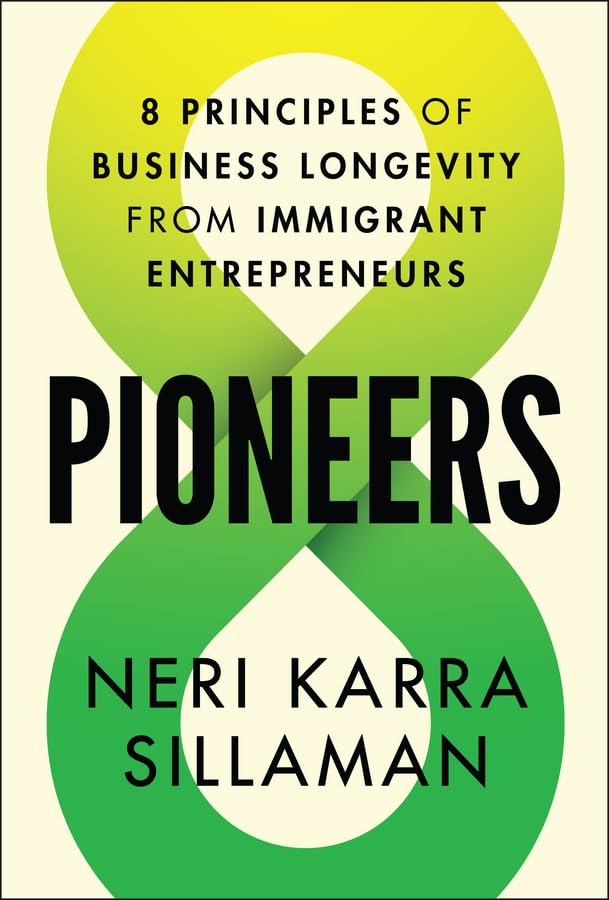
Pioneers traces the journeys of immigrant entrepreneurs and distills from their experiences eight principles for building businesses that last. It mixes memoir, research, and storytelling to show how people who cross borders develop resilience, creativity, and a sense of purpose that shape the companies they build. The book moves from myth-busting to vivid historical accounts, such as Andrew Grove’s escape from Hungary and rise at Intel, and blends these with the author’s own story of leaving communist Bulgaria, arriving in the United States, and discovering how immigrant ingenuity fuels sustainable business success. At its core, the book argues that true longevity comes less from chasing profit and more from creating legacy, community, and meaning.
This is a very stirring and thought-provoking read for me as an immigrant. I kept catching myself nodding along because the writing has this straightforward honesty that sneaks up on you. The author offers big ideas, yet she never hides behind jargon. Instead, she speaks from lived experience and lets the stories do the heavy lifting. I felt pulled in by the mix of hardship, chance, grit, and hope. The scenes of her early years in Miami hit especially hard as she describes feeling lost in a computer lab while also discovering that the device baffling her had been shaped by an immigrant like herself. That moment alone carried so much emotion that I had to pause for breath. The writing lands because it feels authentic. It is part history lesson, part personal confession, and part rallying cry.
What also stayed with me was the way the book reframes business. Instead of the usual talk about scaling fast or beating competitors, the author insists that legacy matters more. That idea caught me off guard, and honestly, it warmed me. The stories show people building with care, whether they are taking tiny steps in cramped workshops or making life-altering decisions at national borders. I loved how she exposes the myths we cling to about entrepreneurship and gently replaces them with something truer. At times, the stories stirred sadness, especially those describing refugees fleeing violence, yet they quickly turned into something brighter. That emotional swing gave the book a rhythm that felt relatable and alive.
By the end, I felt energized. The book would be wonderful for people who enjoy real stories about how success is built from the inside out. Entrepreneurs starting from limited resources will find comfort here, and leaders who want to build mission-driven companies will get a push to rethink what longevity means. Honestly, anyone who wants to remember that business is made by people, not numbers, will find value in these pages.
Pages: 231 | ASIN : B0F723TMDZ

The Gardener: A Lesson for Leaders

The Gardener follows PJ, a thoughtful and hard-working executive who suddenly finds herself facing two life-changing opportunities: inheriting her grandfather’s farm and being offered the role of CEO at her company. What starts as a simple visit with her grandfather turns into a five-week leadership apprenticeship in the garden. Each Monday lesson uses farming as a metaphor for vision, culture, timing, teamwork, and resilience. The book ends with a clever reveal. Her grandfather is not only a farmer but also the company’s board chairman. The lessons were his way of preparing her for the weight of leadership. It is a clean, warm story that frames leadership principles through family ties and simple moments in nature.
The writing is plain and smooth, which made it easy to sink into the rhythm of each Monday morning. I liked how author James McCarroll kept the tone gentle. The lessons were clear without being preachy. At times, I found myself smiling at G Pa’s calm wisdom. At other times, I felt a tug in my chest when he talked about storms or when he paused to remember his late wife. Those small human touches brought the teaching to life. I did wish PJ pushed back a little more in certain moments. She accepted a lot very quickly. Still, the simplicity of the writing worked. It felt like sitting on a porch and listening to someone who has lived enough life to stop showing off.
What surprised me most was how much the ideas stuck with me after I closed the book. The garden metaphors are not new, but the way they were tied to PJ’s personal doubts made them feel fresh. I found myself thinking about seasons, soil, bugs, and rain in totally different ways. Some lines were especially emotional, especially the parts about rebuilding after storms and choosing people with the right mix of grit and joy. The story kept pulling me along because it stayed grounded in experience instead of theory. I could feel PJ’s nerves and her relief as each lesson clicked. I could feel that mix of fear and anticipation right before the final meeting. The book made leadership feel less like a cold skill set and more like a fully lived thing shaped by patience and resilience.
I would recommend The Gardener to readers who enjoy personal growth wrapped inside a light narrative. It is a great fit for new leaders and for anyone stepping into a role that feels bigger than they expected. It is also a warm read for people who appreciate family-centered stories that offer gentle guidance. If you want a book that teaches without lecturing and comforts while it challenges and leaves you feeling steadier about the storms that come, you’ll enjoy this book.
Pages: 61 | ASIN : B0CTKL1T2Q
Kissed the Girls

Anthony Silman’s Kissed the Girls dives deep into the sleek, poisonous world of power, privilege, and corruption. The novel weaves several storylines together, a pair of ruthless lawyers, a naïve designer lured into a predator’s den, a celebrity couple undone by scandal, and a grifter who thrives in the cracks of bureaucracy. The book opens with a cry of outrage from the press against a man “beyond the law,” setting the tone for what follows: a series of interconnected tales where greed, lust, and moral rot fester beneath elegant façades. It’s satire, thriller, and social commentary rolled into one.
Reading it, I found myself both fascinated and uneasy. Silman’s writing is crisp and confident, filled with sharp dialogue that makes his characters sound alive, even when you wish they weren’t. Inigo and Archie, the slick lawyers who bend law and ethics like soft metal, are drawn with wit and venom. Suzanne Pickwick’s story hit harder for me. Her innocence, her polite compliance, the quiet horror of what she endures, it all builds slowly until you’re holding your breath. I could almost feel the weight of the room she’s in, the polished menace of the people around her. There’s anger beneath the words too, a fury aimed at the smug invulnerability of men like Omar, and it bleeds through in the best way.
At times, the story feels like a moral fable hiding behind a crime drama. Silman’s world is full of people who think they can buy decency, and for a while, they almost do. But there’s a pulse of resistance running through the book. Suzanne’s defiance, the small flickers of conscience from unexpected places, they make the darkness sharper. The style isn’t smooth or sterile. It stings, it laughs at itself, it jumps from the wickedly funny to the deeply grim. That volatility made me enjoy it more. I felt irritated, amused, disgusted, and even oddly hopeful, often within a few pages.
In the end, Kissed the Girls left me rattled but satisfied. It’s not a pretty story, and it doesn’t try to be. It’s clever and brutal, and it doesn’t let you stand comfortably on the sidelines. I’d recommend it to readers who like their fiction bold, cynical, and grounded in the uncomfortable truths of modern power. If you enjoy stories that peel back the glossy surface of success to show the greed and cruelty underneath, this one’s for you.
Pages: 408 | ASIN : B0FHQFRBGN
The Unexpected CEO: My Journey from Gas Station Cashier to Billion-Dollar CEO
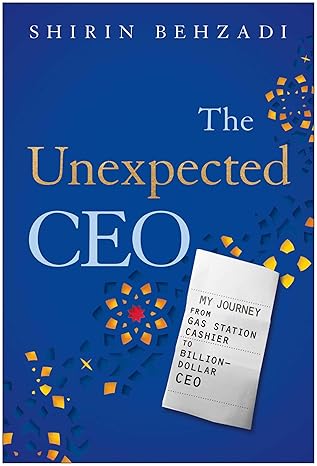

When I first opened The Unexpected CEO, I thought I’d be reading another standard success story, but it turned out to be much more. Shirin Behzadi takes us from her childhood in Iran, through the revolution, exile, and survival in a new country, all the way to her rise as the CEO of a billion-dollar company. It is part memoir, part leadership guide, and part testament to resilience. The book moves from deeply personal family stories to the cold realities of business, weaving them together in a way that shows how character and conviction are built over a lifetime of trials.
The writing surprised me. It isn’t polished in the glossy, distant way you sometimes see in business memoirs. It feels raw, often intimate, as if she is telling you the story over a late-night coffee after years of holding it in. Some chapters hit hard, especially when she recounts her experiences during the revolution and the losses that came with it. Others feel like a quiet conversation about values, leadership, and how to carry empathy into places where profit usually reigns supreme. I found myself moved, sometimes even shaken, by how open she was about trauma and recovery. The sections on illness and learning to walk again made me pause, close the book, and just sit with my own thoughts.
Some sections gon on longer than I expected, while others fly past events that I wanted more detail on. Life is messy, and she doesn’t try to iron out the wrinkles for the sake of a neat story. Her ideas about leadership resonated strongly with me. She refuses the cutthroat style so often celebrated in business, insisting instead that culture, trust, and compassion drive success. I believed her because she lived it, not because she wrapped it in fancy management speak. It’s rare to read a business book that makes you tear up, and yet this one managed that more than once.
I walked away feeling inspired. This is not a fairy tale of overnight success. It is a story of grit, survival, and the slow shaping of a person who carried her scars into the boardroom and refused to let them harden her heart. I would recommend The Unexpected CEO to anyone who has faced adversity, to entrepreneurs who think they have to choose between kindness and profit, and to readers who want to be reminded that success is possible without losing your humanity.
Pages: 320 | ASIN : B0DVD24YV7
The Black Wall Streets of America: Towards a Black Stock Exchange

This book takes the reader on a journey through the history of thriving Black business districts across the United States, from the Greenwood District in Tulsa to Sweet Auburn in Atlanta and Bronzeville in Chicago. Author Woody Clermont recounts their origins, their rise, and the deliberate forces that brought them down, whether through racial violence, redlining, or highway construction. Beyond its historical context, the book pivots toward the future. It lays out a detailed framework for rebuilding economic power, including the call for a Black stock exchange, the use of AI for empowerment, and policies to ensure wealth creation that can last. It is both a historical record and a forward-looking manual, blending storytelling with strategy.
I found myself deeply moved while reading. The writing has a clear rhythm, direct and unpretentious, almost like a conversation with someone who refuses to give up hope. The stories of Tulsa, Rosewood, Overtown, and Hayti broke my heart. These communities built so much from so little, only to see it wiped away. I could feel the injustice in my chest, but I also felt admiration for the resilience. Clermont’s framing of each city through metrics like business density, land ownership, and cultural vitality made the past feel real and measurable. It wasn’t just nostalgia; it was proof that prosperity was built, and proof that it can be built again.
The vision of a Black stock exchange is bold and inspiring. I caught myself wondering how much of this could really be implemented, given the political and financial climate of today. Still, the conviction in Clermont’s words carried me through those doubts. The chapters on AI as a leveling tool stood out. They challenged me to stop seeing technology as something distant or threatening, and to instead think of it as a weapon for independence. That shift in tone, from history to possibility, was what kept me turning the pages with real excitement.
I would recommend this book to anyone who cares about history, justice, and the power of ownership. It’s not just for economists or scholars. It’s for community leaders, young entrepreneurs, and even everyday readers who want to understand the depth of what was lost and the potential for what could be regained. If you’ve ever wondered how to make lasting change, this book offers both the reasons and the roadmap.
Pages: 204 | ASIN : B0FPB4HKHR
Understanding Economics

Why You Should Give a Damn About Economics a passionate and plainspoken call to action aimed squarely at the average American voter to help them understand how government spending and economic principles shape their daily lives. Why was this an important book for you to write?
Most citizens have not had basic economics, and it is important for them to understand that in order to understand the economic policies we are following and the dangers we face. So, part II delved into the key issues and severe problems that most people do not think about. We must get there attention and hope they will recognize the serious nature of our economic problems, AND let their elected representatives know they want it fixed.
What were some ideas that were important for you to share in this book?
Basic economics first, both micro and macro in an easy-to-understand condensed version but covering all the major topics. Then introduce the problems in a way that they can relate to and understand. I try to get across how serious the problems are and what we can do about them.
What is one thing about economics in politics and its impact on the average American that you think is misrepresented in the media?
The bias is widespread, and it leans left in almost all cases. I want them to understand good economic policies beget good results, and our out-of-control spending to buy votes, is killing this country. Limited Government + fiscal restraint + reasonable regulations will get us back to growth and prosperity, as we used to have it.
What is one thing that you hope readers take away from Why You Should Give a Damn About Economics?
Our spending is out of control and the deficits will eventually destroy this country for our kids and grandkids. Our debts today are around $37 trillion and moving in 10 years to nearly $70 trillion if we stay on our current course. That will destroy us. But the politicians are focused on the next election, not the next generation, so they do anything to get elected, and if we are uninformed about the consequences, we will keep supporting them as they buy our votes with endless give-a-ways.
America is facing a fiscal crisis. The accumulating national debt now reaches into the tens of trillions—and shows no end in sight. Meanwhile, our leaders in Washington have done little to mitigate this threat. In Why You Should Give a Damn About Economics, business executive and former CPA Leslie A. Rubin explains why this pressing issue matters to every American.
In simple, straightforward language, Rubin explains how national economics affects our daily lives. He aptly outlines the basics of US economic policy, the crisis we face today—and both the pitfalls and benefits of proposed solutions. A concise but comprehensive handbook, Why You Should Give a Damn About Economics provides the tools we need to disarm the debt bomb before it’s too late.


