Blog Archives
Healing the Wounds

Uncovering Amy shares your experiences of being diagnosed with Dissociative Identity Disorder and working with Bryan Redfield using the brain training method to integrate your inner Parent, Adult, and Child into a single unified self. What were some ideas that were important for you to share in this book?
It was incredibly important to me that I get across the frame of mind I was in when the whole situation began: Searching for answers outside of myself in every way I had available to me because I had no conception that there could be more going on INSIDE my own mind. I also wanted to be sure to give the reader hope: whether they suffered from a similar experience or not, there is a solution to bringing all parts of your mind together as one.
What was the most challenging part of writing your memoir, and what was the most rewarding?
The most challenging part of this was explaining the process I went through, because I feel that the only way someone can truly understand it is to go through it. This concept is not just about affirmations or subliminals or NLP; this is recognizing the multiple parts of your own personality and healing the wounds they’ve carried for your entire life so you can be reborn as the person you were always meant to be. It’s not a process everyone can handle.
What do you hope is one thing readers take away from your story?
I hope my book makes its way into the hands of those who need it most: the person who is afraid to be themselves, afraid of what society might do to them, and doesn’t know how to protect themselves from the abusers in the world. I want you to know: there is hope.
Author Links: GoodReads | Facebook | Website | Amazon
Uncovering Amy is Amelia South’s raw, unfiltered memoir of living with dissociative identity disorder (formerly known as multiple personality disorder) — and the radical, self-directed process she used to retrain her brain and reclaim internal control.
This is not a story of gentle healing. It is a firsthand account of internal wars, competing identities, and the desperate, sometimes dangerous attempts to make the chaos stop. Alcohol. Exorcisms. Extreme self-experimentation. Moments of terror. Moments of breakthrough. And the slow, deliberate work of learning how to lead a fractured inner world.
With a chapter by Bryan Redfield, her guide through the process, Uncovering Amy explores a structured framework for internal leadership — not surface-level coping, not spiritual bypassing, but the gritty, methodical reorganization of the mind from the inside out.
This book does not claim to be the only answer. It is one person’s documented path from psychological fragmentation to internal coordination. Along the way, it raises a provocative question: if a divided mind can learn to work together, what might that mean for the internal conflicts we all carry?
If you’re looking for comforting platitudes, this isn’t it.
If you’re ready for honesty, courage, and a story that challenges what you think is possible for the human mind — keep reading.
Uncovering Amy
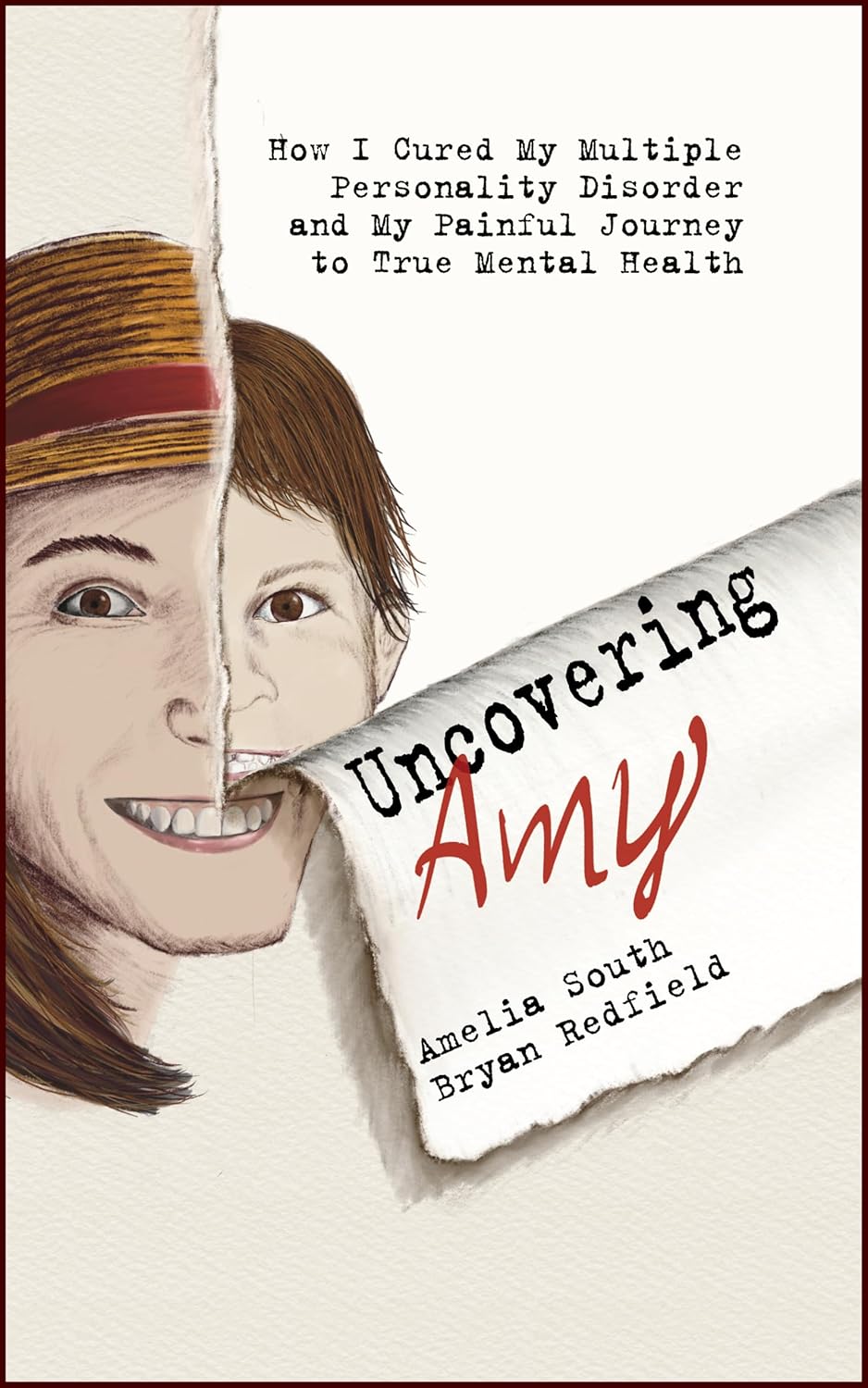

Uncovering Amy follows herbalist and coach Amelia South as she tells the story of how she went from a chaotic, abusive childhood to a full-blown mental and spiritual crisis, then to what she calls “true mental health.” The book traces her early trauma, her toxic relationships, her heavy drinking, and her obsessive search for meaning in pagan and Indigenous spiritual traditions. From there she describes hearing an internal voice she names “Robert,” going through exorcisms, wrestling with the idea of schizophrenia or Dissociative Identity Disorder, and finally working with Bryan Redfield’s “Super Team” brain training method to integrate her inner Parent, Adult, and Child into a single unified self. The result is a hybrid of memoir, spiritual testimony, and lay self-help that argues DID is misunderstood and that her method can “cure” it.
The book feels raw and very direct. I felt like I was sitting across from someone who decided to tell me everything, swear words and all. The early chapters about her family, her stepfather’s cruelty, and her string of relationships have a blunt, almost confessional rhythm. Sometimes that worked really well for me. Her anger, shame, and loneliness come through in plain, sharp lines, and I could feel the teenage girl who learned her worth was tied to her body and her usefulness to men. At other points, the storytelling meanders. Scenes with drum circles, graveyard visits, and spiritual chats sometimes pile up.
I admire the courage it takes to frame your own mind as “broken,” lay out the ugliest moments, then insist that healing is possible and that you are living proof. Her focus on self-responsibility, on ending generational harm, and on giving tenderness to the scared inner child felt powerful. The way she gradually recognizes “Robert” as Amy, her young self, and then starts to love that part instead of fighting it, hit me in the gut in a good way. She is confident that the Super Team method works every time, and very sure that DID can be resolved if you do the work she describes. There is also a mix of spiritual explanations, dowsing rods, ancestors, demons, and telepathy.
I believe that Amelia is telling the truth as she understands it, and I respect the sheer effort it took for her to claw her way out of despair and claim a life that feels stable and whole. I also think this book works best as a personal testimony. I would recommend Uncovering Amy to readers who like spiritual memoirs, people interested in alternative or experiential approaches to healing, and survivors who may feel less alone seeing their own confusion and rage mirrored on the page. For me, it is a raw, messy, and relatable story that can spark reflection and hope.
Pages: 220 | ASIN : B0GKJLXPFC

Value in the Wisdom

Within Think Like an Herbalist, readers find practical advice for a more grounded way of living, including remedies, prevention, and the steps to more responsible living. Why was this an important book for you to write?
I know I put this on the back cover, but it’s the honest truth- this is all the stuff I wish I had known about my own health and what to expect with my body when I was 20 years old. If I had been better prepared for the possibilities of various health problems and been more aware of how to PREVENT these things from happening, I feel like I would have been able to avoid many of the health problems I experienced over a 15-year period in my life. My hope is that this book will fall into the hands of other 20-somethings who will appreciate and find value in the wisdom I shared.
How long did it take to research and put this book together?
It took about two months for me to write it and another 4 months of editing, proofreading, and citing my research.
What is one misconception you believe many people have regarding healthy living?
So many people think that they just need a magic herb to solve their problems! I hate to break it to you, but that simply doesn’t exist. What you put into your body day after day (food, supplements, etc.) matters more than just about anything else. Herbs are fantastic and very helpful, but they’re not the only answer. It took ME several years to learn and accept that, so I hope you can learn from my own mistakes.
What do you hope readers take away from Think Like an Herbalist?
I hope they have an a-ha moment about their own bodies. Even people who have studied herbalism and nutrition have read my book and said “Huh, I never thought of that!” at some part of my book. The more I can open someone’s eyes to new possibilities, the more I feel like I’ve succeeded.
Author Links: GoodReads | Facebook | Website | Amazon
Think Like an Herbalist is not a typical herbalism book. Instead of memorizing plant lists or following rigid protocols, this book teaches you how to understand your body in plain language—so you can finally make sense of symptoms, cravings, digestion issues, hormone shifts, and energy crashes.
Written by practicing herbalist and foraging instructor Amelia South, this book draws on years of hands-on experience with herbal medicine, gut health, whole foods, and wild plants. Complex topics like digestion, inflammation, detoxification, and hormonal balance are broken down into concepts that everyday people can actually understand and apply.
Readers consistently say this is the book where things finally “click.” Instead of guessing what supplement to take next, you’ll learn how to read your body’s signals and respond with food, herbs, and simple lifestyle shifts that support real healing. This empowering approach helps you move away from symptom-chasing and toward long-term wellness.
Inside, you’ll discover:
How to understand digestion, gut health, and inflammation without medical jargon
Why many modern diets and health trends leave people feeling worse
How herbal medicine works with the body rather than against it
The role of whole foods, traditional nourishment, and wild plants in healing
How to build confidence in your own intuition and body awareness
This book is ideal for beginners to herbalism, women navigating hormone changes, and anyone seeking a more natural, sustainable approach to health. Whether you’re dealing with gut issues, fatigue, skin problems, or simply want to feel at home in your body again, Think Like an Herbalist offers clarity, encouragement, and a grounded path forward.
Read less
Think Like an Herbalist


Think Like an Herbalist is part handbook, part pep talk, and part field guide to a more grounded way of living. The author walks through the basics of bodily systems, gut health, diet choices, vitamins, lifestyle, foraging, herbal remedies, and mindset. She mixes practical steps with personal stories and folds them into a larger message about taking responsibility for your health. The book is split into prevention and remedies, and she uses the house metaphor again and again. Build the foundation first. Add the herbal siding later. It all feels direct, simple, and very relatable.
As I read, I found myself pulled in by her voice. It’s blunt. It’s funny. It’s very real. She shifts from nutrition advice to honest stories about HPV scares, gut issues, farm work, and motherhood, and she does it without softening anything. That raw tone hit me. When she talks about people wanting an herb to fix a deep problem, I caught myself nodding hard. I have been that person. I liked how she refused the easy path. Her focus on mindset surprised me most of all. She treats it like the missing puzzle piece, and I felt that in my chest while reading.
I also loved the practical sections. The lists of wild plants made me want to walk outside and start spotting things in the grass. The food explanations are plain and simple. No fancy science words. Just straight talk about fiber and color and what actually helps a body feel alive. She writes with strong opinions about diet, wheat, dairy, and medical culture, and sometimes I wanted more nuance. Still, her confidence brings a spark to the pages. The passion behind her advice is obvious. She really cares about people learning how to help themselves, and that energy carries the book.
I walked away feeling hopeful. I would recommend this book to people who want to take their health into their own hands and don’t mind a straight-shooting guide who tells stories along with solutions. It’s great for beginners, for curious foragers, for folks tired of feeling stuck, and for anyone who wants a warm shove toward better habits. It’s not a medical text. It’s a conversation, and a pretty lively one at that.
Pages: 302 | ASIN : B0FMYXKRSN



