Blog Archives
Beyond the Sky: A Mountain Woman’s Journey to Personal Freedom


Beyond the Sky follows Tillie Carpenter, a character introduced earlier in Ann Heap’s Hidden Valley series. The book is split into two parts. The first part traces Tillie’s journey from her teen years through college, weaving her passion for science and her involvement in the civil rights movement into a vivid coming-of-age narrative. The second part shifts back in time, presenting the journals of her foremothers, the mountain women of Hidden Valley, stretching from Irish immigrant ancestors in the 1840s to Tillie herself. The book is about heritage, resilience, and the blend of old wisdom with modern science.
I found myself swept up in the writing. The style is warm, almost conversational, yet it carries weight when the story demands it. The descriptions of family bonds, quiet mountain life, and the turmoil of the civil rights era felt raw and real. There were moments when the writing tugged me straight into Tillie’s skin, especially during her conflicts with her stepmother and her longing to merge Granny’s folk remedies with modern research. There were times the pace slowed, especially in some of the journal sections, but just as quickly, Heap would pull me back with a sharp emotional moment.
I admired how Heap connected the private, everyday struggles of women across generations with broader historical movements. It gave the sense that change doesn’t just happen in marches or headlines, but also in kitchens, gardens, and the quiet choices families make. I loved that balance.
Beyond the Sky is a heartfelt novel that I would recommend to readers who enjoy historical fiction rooted in family and community, and to those who like stories that braid social justice into personal lives. It would especially resonate with readers who appreciate strong, complex female characters and the blending of old traditions with modern challenges. It’s not a quick or light read, but if you’re willing to let the story take its time, it’s rewarding.
Pages: 352 | ASIN : B0F4RRHPQ4

The Fourth Industrial Revolution

The AI Revolution Will Not Be Televised follows a self-taught financial educator from Harlem, who uses his platform, ThePriceBandit.com, to teach women, especially Black women, how to navigate the stock market and build wealth through AI-driven investments. What were some ideas that were important for you to share in this book?
I want to encourage women, particularly Black women, to invest in AI stocks through do-it-yourself online stock trading as we navigate the fourth industrial revolution. This is a unique opportunity for marginalized groups to capitalize on the significant economic gains expected over the next decade during the AI revolution.
What is one thing that you hope readers take away from The AI Revolution Will Not Be Televised?
I encourage everyone reading this book to start online stock trading as soon as possible. This is a unique opportunity to grow your wealth during a time when the stock market is poised to deliver significant returns. This situation is reminiscent of the wealth generated when Apple went public at $22.00 per share in 1980 and when Google went public at $85.00 in 2004. Those investors who recognized this transformative shift in how individuals interact with technology became very wealthy.
What is the next book that you are working on, and when will it be available?
I am currently working on a book about infidelity, specifically focusing on men who cheat on their wives. Throughout my life, I have observed how this topic can turn casual conversations among family and friends into heated arguments and debates. When I told my older sister that I was writing a book on cheating, she exclaimed, “True ‘dat,” which was her blunt way of saying, “Yes, baby brother, write what you know.”
Infidelity is also a prevalent theme in many previously published books and movies available on streaming services. As authors, we are artists first, but we also need to consider the business side of things and pay attention to the bottom line. I anticipate that this book will be published on Juneteenth 2026.
Author Links: GoodReads | X (Twitter) | Facebook | Website | Amazon
David’s relationship with Onyx, a professional Black woman seeking comfort in an older partner, adds depth to his journey. As his influence grows, he launches an online trading platform, transforming lives nationwide for women facing financial struggles.
While Wall Street resists change, love and tragedy shape the conclusion of this fictional tale inspired by real events. David’s followers carry his legacy forward, advocating financial independence as a universal right and striving for global economic equality.
Heather’s Journey: Historical Romance of 1930
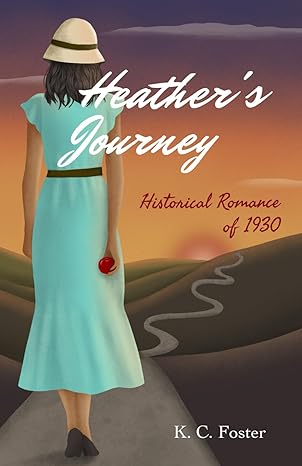
Heather’s Journey by K.C. Foster is an emotional, immersive novel that pulls the reader into a deeply atmospheric world of family struggles, love, loss, and the quest for identity. Set in the 1930s, the book follows Heather as she navigates a life tangled with mystery, survival, and self-discovery. From the first few pages, we are drawn into Heather’s tense reality, witnessing a secretive late-night burial in Chapter 1 that sets the tone for the book’s brooding undercurrents. As the story unfolds, we meet a complex cast of characters, each carrying their own burdens, yet all woven into Heather’s path toward understanding herself and the world around her.
Foster’s writing is rich and evocative, making every setting feel alive, from the small town of Sterling, Illinois, to the shadowed corners of Dodge Grocers. There’s a poetic rhythm to the prose, particularly in descriptions of the world Heather inhabits, whether it’s the wind whispering secrets across the fields or the hushed tension in a dimly lit kitchen. One of the book’s strongest points is its ability to create mood. In the opening scene, Heather is watching shadows move in the night while whispers of danger hang in the air, which immediately sets up an eerie intrigue. The dialogue, too, is crisp and filled with subtext, particularly in interactions between Heather and the enigmatic Renato, whose presence in her life is as steady as it is uncertain.
The heart of the book, though, is in its characters. Heather’s father, Hugh, is a quietly dignified figure, a man of resilience, whose fate is one of the novel’s most devastating blows. When tragedy strikes, Foster doesn’t hold back in letting us feel the rawness of Heather’s grief. The way she stumbles through her pain, desperately seeking solace in routine, in small moments, in the presence of Renato, it’s heartbreakingly real. And then there’s Sylvia, Heather’s absent mother, whose arrival is both anticipated and dreaded. When she finally steps onto the page, she’s not the warm, comforting figure Heather might have hoped for. Instead, she’s a force of vanity and detachment, more concerned with reclaiming control over the family store than reconnecting with her daughters. Foster masterfully builds Sylvia as a character we want to understand, yet can’t fully trust.
There are moments in this book that feel so intimate, they almost hurt to read. One of the most striking is when Heather, caught between grief and longing, kisses an unconscious Renato, a moment filled with quiet yearning, desperation, and a kind of naive hope. It’s these personal, human moments that make Heather’s Journey so compelling. The novel isn’t just about external struggles, it’s about the battles within, about the weight of choices, and about how even love can be tangled in regret and hesitation.
By the time I reached the final chapters, I was left with an ache in my chest. Heather’s Journey is not just a coming-of-age story; it’s a reckoning with past and present, with what we want and what we are forced to accept. It’s a book for those who love deeply drawn characters, slow-burning tension, and writing that lingers long after the last page is turned. If you enjoy historical fiction with a raw emotional core, this book is absolutely worth the journey.
Pages: 207 | ASIN : B0CWB5QRNX
The AI Revolution Will Not Be Televised

David Lewis Wadley’s The AI Revolution Will Not Be Televised is more than just a book about artificial intelligence, it’s a deeply personal and socially conscious exploration of financial justice, technology, and economic empowerment. At its core, it follows the journey of David, a self-taught financial educator from Harlem, who uses his platform, ThePriceBandit.com, to teach women, especially Black women, how to navigate the stock market and build wealth through AI-driven investments. The book blends history, music, and finance with a narrative that is both engaging and eye-opening, warning of the perils of unchecked corporate power while offering a blueprint for individual financial empowerment.
Wadley’s writing has a rhythm of its own, much like the classic R&B tracks he references throughout the book. His storytelling is rich with culture and nostalgia, weaving in everything from Duke Ellington’s jazz to the financial struggles of single mothers. One of the most striking aspects of the book is its dedication to Black women and their economic struggles. Wadley makes it clear that his mission is to arm marginalized communities with the financial tools to fight back against systemic inequality. His protagonist, David, grows from a child witnessing his mother’s financial hardships to a man determined to educate and uplift others. The emotional weight of these moments makes the book feel raw and authentic.
The AI Revolution Will Not Be Televised is not just about heart, it’s also about strategy. Wadley delivers sharp critiques of Wall Street’s exploitative practices while laying out a clear, practical roadmap for financial independence. The chapters on AI-driven trading and market psychology are among the most compelling, offering insight into how technology is reshaping finance. Wadley doesn’t blindly praise AI, he warns of its dangers, especially when controlled by the wealthy elite. His approach is both empowering and cautionary, encouraging readers to seize AI’s potential before corporations monopolize its benefits.
The book’s greatest strength is also its most challenging aspect: its fusion of genres. It’s part memoir, part financial guide, part cultural commentary. This makes for a unique, engaging read, but at times, the shifts between personal anecdotes, financial advice, and historical reflections can feel abrupt. Readers expecting a straightforward finance book might find themselves caught off guard by the deep dives into music history and Harlem culture. But for those willing to embrace the blend, Wadley offers an experience unlike any other, a book that teaches while it inspires.
I’d recommend The AI Revolution Will Not Be Televised to anyone interested in financial literacy, particularly women looking to break into investing. It’s also a must-read for those curious about the intersection of AI, finance, and social justice. Wadley’s passion is contagious, his advice is actionable, and his storytelling makes complex topics feel accessible. Whether you’re a seasoned investor or just starting, this book challenges you to think differently about money, power, and the future of wealth in the digital age.
Pages: 220 | ASIN : B0DYL71RY5



 LITERARY TITAN