Blog Archives
Passion’s Duty


Lizzie Jenks’s Passion’s Duty is a lively historical romance set in New York’s Mohawk Valley as the French and Indian War begins to gather force in 1755. James Carroll, an ambitious Irish immigrant working for William Johnson, hopes military service will earn him the status and security he’s never had. Faith Richmond arrives with her irresponsible officer father, expecting to manage his affairs and accept a practical marriage arranged around land, debt, and family obligation. When she’s injured and placed in James’s care, their attraction develops alongside escalating danger from French scouts, disputed territory, and an approaching military campaign.
The romance works because James and Faith admire each other’s abilities before either one fully understands their feelings. James is a skilled woodsman and natural leader, but he carries deep insecurity about his poverty, limited education, and Irish identity. Faith is intelligent, commercially minded, stubborn, and accustomed to doing work that the men around her barely notice. Their relationship gains momentum through action. He learns that she can think under pressure, gather intelligence, tend wounds, and keep moving through fear. She sees the loyalty and tenderness beneath his rough humor and ambition. Their conversations are often funny, and the supporting cast gives the story the comfortable energy of a close, argumentative family.
Jenks also gives the historical setting real weight. The wilderness is beautiful, inconvenient, and dangerous, while the political situation is complicated by competing British, French, colonial, and Indigenous interests. Mohawk characters such as David and Okwaho have their own knowledge, loyalties, and opinions, and they regularly challenge the assumptions of the British characters. The story moves between domestic concerns and military peril with surprising ease. Faith can be discussing mills and land use in one chapter, then escaping captivity or treating a gunshot wound in another. Some scenes linger on practical details, but those details create a convincing sense of how people traveled, communicated, fought, and survived.
Readers who enjoy Diana Gabaldon’s Outlander may recognize a similar blend of romance, danger, cultural conflict, and carefully researched eighteenth-century life. Jenks’s approach feels more compact and direct, with a stronger focus on frontier military networks and a hero whose central struggle is his hunger for belonging. Passion’s Duty is ultimately a warm, adventurous love story about two capable people realizing that duty doesn’t have to mean surrendering their own futures. James and Faith’s marriage feels earned because it grows from shared danger, mutual respect, and the discovery that each offers the other something deeper than protection or social advantage: a genuine home.
Pages: 289 | ASIN : B0F3W51LPM

Lifelines

Loving Josephine follows a young woman whose life begins in the shadow of a brothel, finds mercy from a stranger, and learns to face the man whose cruelty shaped her fear. What was the inspiration for the setup of your story?
Loving Josephine grew out of my fascination with the quiet resilience of women who survive circumstances they never chose. I wanted to explore what happens to a young woman whose life begins in a place meant to break her—and what mercy looks like when it arrives in the form of an unexpected stranger. The setup came from my desire to show that even in the harshest beginnings, a single act of compassion can redirect an entire life. Josephine’s world is rough, but her spirit is tender, and I wanted readers to feel both truths from the very first pages.
How did you balance Jo’s vulnerability with her strength?
Balancing Jo’s vulnerability with her strength meant honoring the truth of what she’s lived through. Losing her mother so young left her without the one person who might have protected her, and that loss shaped both her fear and her longing. She’s been shaped by fear, but she hasn’t lost her capacity for hope or connection. I wrote her with the understanding that courage doesn’t always look loud or defiant—sometimes it’s the quiet decision to keep going, to trust again, to face the person who once held power over you. For me, Jo’s vulnerability isn’t a weakness; it’s the very place her strength grows from.
Why do you think female friendships and mentorships are such powerful storytelling elements?
Women often become each other’s lifelines. In stories—and in real life—female friendships and mentorships create spaces where women can be seen, believed, and strengthened. These relationships offer a kind of emotional refuge that allows characters to grow in ways they couldn’t on their own. In Loving Josephine, the women who cross Jo’s path help her reclaim pieces of herself she thought were lost. Their presence reminds her she’s not alone, and that kind of support can change the trajectory of a life.
What do you hope female readers see in Jo’s journey?
I hope women see that healing isn’t linear and that their worth isn’t defined by where they started. Jo’s journey is about reclaiming her voice, her safety, and her sense of self—slowly, imperfectly, and bravely. If readers walk away feeling even a small spark of recognition, that they, too, can rise from the shadows of their past and step into something gentler and truer—then Jo’s story has done what I hoped it would.
Author Links: GoodReads | X (Twitter) | Facebook | Website | Amazon
One journey.
One life hanging in the balance.
Chicago, 1879. Fourteen‑year‑old Josephine is expelled from boarding school and sent back to the St. Louis brothel where she was raised. There she finds her mother gravely ill and held under the control of a ruthless strongarm. Stranded in a world she barely understands, Josephine steels herself as danger closes in and faith becomes her only refuge.
Hundreds of miles away in Rosewood, West Virginia, newlywed Beth Wallace receives a bewildering letter meant for a man long gone. Its message unlocks long‑buried secrets Beth never imagined, awakening a conviction she cannot ignore. Trusting God’s prompting, Beth leaves her new family and sets her face westward, determined to answer a call she never expected.
As Josephine fights to survive and Beth races toward Missouri, their lives converge in a journey marked by peril, providence, and the quiet courage of women who refuse to surrender.
Loving Josephine is a Christian historical romance woven with suspense, redemption, and grace. Set in the post‑Reconstruction South, it continues the saga begun in Loving Beth, bringing to light the hidden past that will change both their lives forever.
This is Book Two in the Daughters of Appalachia series and continues the story of Beth and Jacob from Loving Beth. Readers will enjoy this book best after reading Book One.
Loving Josephine

Loving Josephine, by Bonnie Rose Ward, follows Josephine “Jo” Hollis, a sharp, wounded young woman whose life begins in the shadow of a St. Louis brothel and her mother Katherine’s illness, then opens into the difficult mercy of a stranger when Beth Wallace brings her to Rosewood, West Virginia. What begins as a rescue story becomes something quieter and richer: Jo learning how to belong, how to teach, how to sing again, and how to face the man whose cruelty shaped so much of her fear.
As someone who loves women’s fiction and romance novels, I was most moved by the way this book treats love as more than courtship. Yes, there are tender domestic threads, marriages, births, and the warmth of a growing household, but the central love story is Jo’s reclamation of herself. Ward gives us the kind of heroine I want to follow: bruised but not brittle, proud but not hard, capable of both terror and tenderness. Jo’s arc from shame to rootedness feels earned, and the Appalachian setting gives the novel a hearth-lit intimacy without making hardship ornamental.
The book’s faith element is pronounced, but at its best, it’s not merely decorative; it’s braided into the characters’ daily acts of care. I especially admired the scenes of community, the schoolhouse, the church, the meals, and the small gifts that become sacraments of belonging. The emotional climax involving Cap is thorny and surprisingly moving because forgiveness is not treated as amnesia. It’s costly, imperfect, and deeply personal. I wanted a little more romantic tension in the traditional sense, but the novel compensates with a generous, capacious vision of love: sisterly, maternal, neighborly, divine.
I think Loving Josephine is best read after Loving Beth, as it continues an already exceptional storyline. Loving Josephine is for readers of historical fiction, Christian romance, Appalachian fiction, family sagas, and frontier fiction, especially those who like wounded heroines, found family, moral repair, and domestic tenderness with a steel spine. Fans of Janette Oke’s homestead warmth or Francine Rivers’ redemptive emotional sweep will recognize the book’s deep interest in grace, endurance, and women remaking their lives after ruin.
Pages: 306 | ISBN : 978-0999698761
Tinker
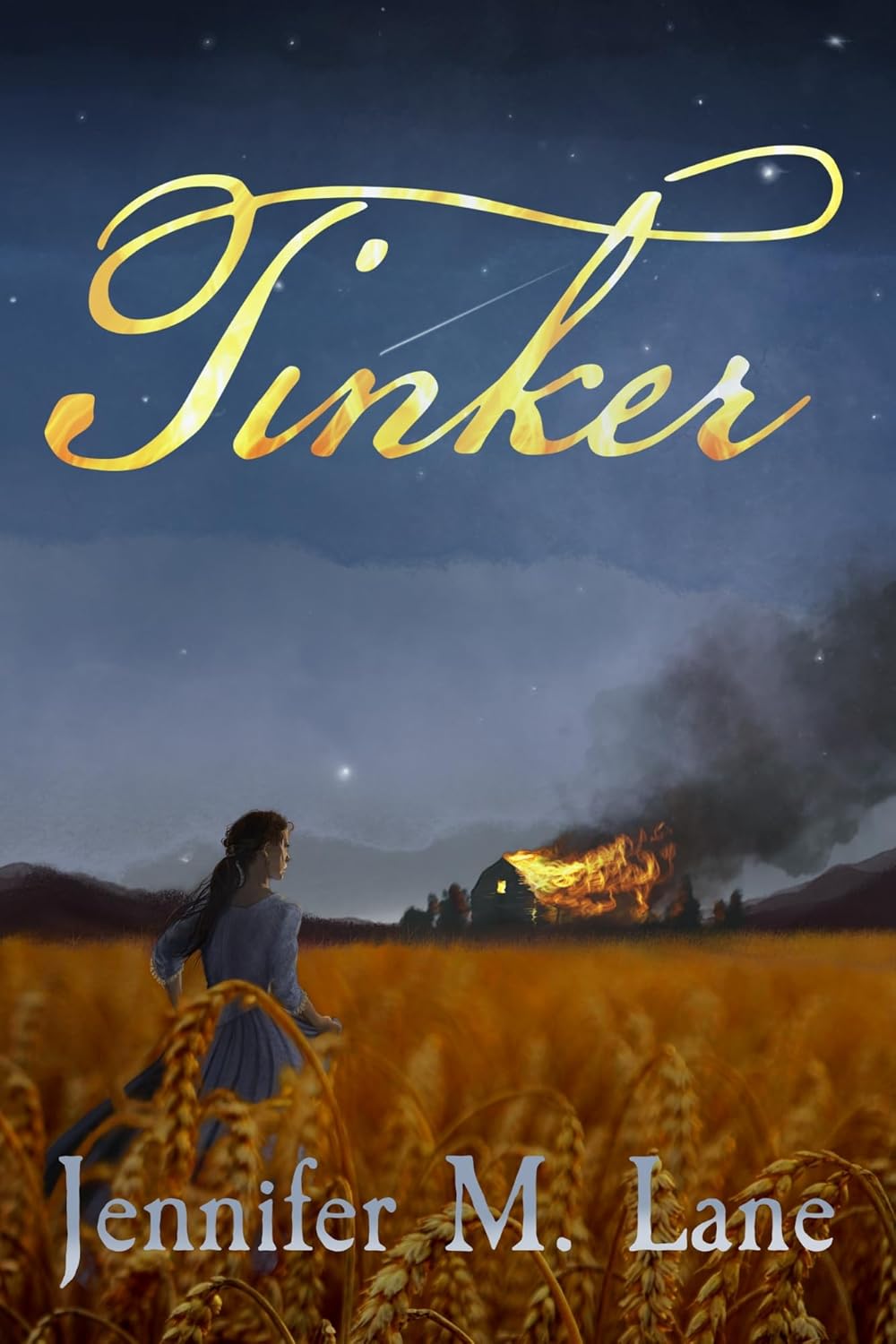
Jennifer M. Lane’s Tinker is a sharp and intimate historical novel set during the Whiskey Rebellion, told through Caroline Neville’s eyes, a woman caught between family loyalty, political unrest, and her own hunger to be heard. Caroline is the daughter of John Neville, whose role in collecting the whiskey tax has made the family name dangerous in western Pennsylvania. From the opening image of her father burned in effigy beneath a “Liberty and No Excise” ribbon, the book makes it clear that Caroline’s world is already on fire, even before she starts writing under the name Tom the Tinker.
What makes the novel work so well is Caroline’s voice. She’s funny, stubborn, observant, and often painfully aware of the ways men underestimate her. Her first battle over a bottle of ink with Tench Coyle is playful, but it also sets up the larger conflict of the book: ink matters because words matter. When Tench later says, “The written word stands as nothing more than a testament to its creation,” it feels like the book is telling us what it’s about.
The romance between Caroline and Tench gives the story warmth without pulling it away from the political stakes. Their connection grows through books, banter, shared ideals, and secrets that can’t stay hidden forever. Tench isn’t just a love interest, and Caroline isn’t simply choosing between love and family. She’s trying to decide what kind of person she’ll be when every side claims righteousness, and when silence might be safer than honesty.
I appreciated the way Lane makes the Whiskey Rebellion feel personal rather than like a history lesson. The tax, the writs, the smashed stills, the burned homes, and the fear spreading through the countryside all come through in lived-in details. Caroline’s position is especially compelling because she sees the farmers’ suffering, but she also understands the people within the Neville household. Her line, “I just wanted people to have some hope and stop feeling powerless,” captures the heart of her choices.
Tinker is a thoughtful and lively novel about voice, consequence, and the messy places where private lives meet public history. It has the sweep of historical fiction, but its best moments are often small ones: a horse betraying Caroline by liking Tench, Nonnie’s blunt wisdom, a family argument that finally cracks something open. The result is a historical fiction novel that feels grounded, romantic, tense, and deeply interested in how ordinary people try to do the right thing when the whole world around them is choosing sides.
Pages: 290 | ASIN : B0GP8XQ481
Patriot of the Lowcountry: Eliza Wilkinson and the Fall of Charleston

Patriot of the Lowcountry by Tracy Lawson is a historical fiction novel set during the American Revolution, centered on Eliza Wilkinson, a young widow in the South Carolina Lowcountry whose private fight for independence becomes tangled with war, occupation, family loyalty, grief, and slavery. The story follows Eliza as British forces and Loyalist raiders threaten her home, her community, and the fragile sense of freedom she has built for herself, while Lawson grounds the novel in Eliza’s real letters and the civilian experience of Charleston’s fall.
I loved how immediate the book feels. Lawson doesn’t put history in a glass case. She puts us in the rooms, on the roads, near the marshes, and inside the fear of not knowing who is coming next. I liked that Eliza isn’t written as a perfect heroine. She’s proud, stubborn, brave, sometimes naïve, and often learning in real time. That made her easier to trust. The first-person voice gives the novel a close, confiding quality, almost like Eliza is sitting across from me, trying to make sense of what happened while still refusing to soften her own edges.
I also appreciated the author’s choice to make liberty more complicated than a slogan. The book is clearly a Revolutionary War story, but it keeps asking who gets to claim freedom and who is still denied it. Eliza’s thoughts about women’s independence and slavery give the novel its sharper bite. The dialogue leans a little polished for moments of crisis, and some themes are stated more directly than I usually prefer. Still, I didn’t mind much, because the emotional core holds. The book wants readers to see women not as background figures in history, but as witnesses, thinkers, risk-takers, and moral actors.
I would recommend Patriot of the Lowcountry to readers who enjoy historical fiction with a strong female narrator, especially those interested in the American Revolution beyond the battlefield. It’ll appeal most to people who like character-driven stories, well-researched settings, and books that mix personal survival with larger questions about justice and freedom. It’s reflective, tense, and quietly forceful. A good fit for readers who want their historical fiction novels to feel authentic.
Pages: 303 | ASIN : B0GRQBHT8Q
Time to Tell Her Story

Beyond the Sky, written in two parts, follows a young woman through her college years and her involvement in the civil rights, and traces her ancestry from immigration from Ireland to the mountains of Hidden Valley. What was the inspiration for the setup of your story?
When Tillie first showed up in Hidden Valley in my debut novel, New Tomorrows, I knew she would be the one whose mysterious background would take her away from the valley to be involved in the activism of the Civil Rights Movement of the 1960s. My intent as a writer is to create engaging stories that readers can not only enjoy but also be drawn in to explore real, contemporary issues with characters they can relate to. I identified the racial tension our country has faced and dealt with, in one form or another, throughout our history, as one of several important issues I wanted to help my readers explore. I myself enjoy stories that have a touch of romance, but not in the traditional way romance is presented in many books in that genre. I see romance as just one aspect of human connections, and I wanted my stories to be about connections, especially in families and communities.
When I first imagined Tillie, we were witnessing legislative and societal changes influenced by my generation begin to erode or disappear. As a writer, I feel a responsibility to speak about the past to shine light on the present. It was time to tell her story.
I was deeply involved in the Civil Rights Movement myself in the 1960s. I decided to bring Tillie to the same University I attended, letting her arrive as a freshman the year I was a senior. Her story is not at all biographical, but I was able to write about a time period and events that I personally experienced. While the events are real, both those that are part of our well-known (and some not so well-known) history or the local events in Pittsburg, the characters all spring from my imagination.
What is it that interests you most about historical fiction?
Let me first share my perspective on fiction vs. non-fiction. I like to define fiction as learning through imagination, whereas non-fiction is learning through facts. Reading fiction gives us an opportunity to spend time in a life quite different from our own. I believe folks can often learn more history through fact driven, engaging fiction than they might from a history book. When that happens to us, we often come away with a new understanding or a wider perspective of what life is like living in another person’s skin, both figuratively and realistically. My hope with all my books is that readers might gain increased awareness, understanding, and empathy for the marginalized in our society who struggle daily for justice, inclusion, and dignity.
I have always been a bit of a history buff; my college degree is in Creative Writing, but my minor was history. If I am going to write about human connections, part of who we are is defined by where we can from – the ancestors of yesterday who built the foundation for who we are today. That was especially true for Tillie. Her story was not complete without the stories of the strong woman who came before her and the choices they made, along with the men who loved them.
How did you go about finding your characters’ voices while planning your writing?
First, let me say a word about my writing process. Some folks divide writers into two groups – the plotters, or the seat-of-the-pants writers. I’m a combination of both, but my plotting is very sketchy with only major plot turns in my mind. It’s no more a brief list, rather than a plot outline. My writing is very character driven and sometimes even those major plot turns change as I become more immersed in the life of a character. As I wrote and got to know my characters on a deep personal level, they often sent me off on an unexpected side trip. One such side trip was quite literal when Percy told me to take him back to Quebec because he had to talk to his grandmother and get the pearl ring she had promised him. I didn’t even realize the ring had a pearl instead of a diamond until Percy first heard Taynay’s song about the moon.
One of the greatest joys of writing Tillie’s story was getting to know the six generations of mountain women who came before her. I imagined these women, along with their families, making choices that were often difficult. Choices that went beyond the traditional thinking of their time period. Each one was different, so they spoke and acted in their own unique way.
My original intent was to reference their journals with quotes as Tillie was reading and learning more about her generations of grandmothers. As their situations and choices came to light, and as their words began to paint a picture of the challenges of her time period, I realized I could not merely include snippets of their lives. These women deserved to have their whole stories told, thus I created the entire second half of the book to include their entire first-person narratives.
Where will the next book in the Hidden Valley series take readers? When will it be available?
The next book is already in progress, but I have as usual, been doing a bit of research into its topic and only have a few opening chapters written. The title is One More New Chance: A Vet Tech Romantic Suspense. The male protagonist is Brink, but I won’t reveal the name of the female protagonist because it would be a spoiler. I will drop a brief hint that she is a character readers have met in a prior book, however briefly. Brink is struggling with two issues – his dedication to tracking down the criminal rings that are staging the dog fights in various remote hollers in the valley and his own personal identity conflict due to bullying he has experienced as a result of his bi-racial background. It will be out in 2026, but I do not have a firm date right now. In truth, it has briefly been placed on the back burner while I’ve been doing some minor revisions and reformatting of my first book in the series, New Tomorrows. That slightly revised book will be live soon, to coordinate with October being National Domestic Violence Awareness Month.
Author Links: GoodReads | Facebook | Website | Amazon
The passion of activism flourished on college campuses in the tumultuous sixties, and Tillie embraced it as a freshman at the University of Pittsburgh. Descended from Irish immigrants known in their Appalachian community as Granny Women – the healers – her compassionate nature drew her into the Civil Rights Movement. She could never have predicted how dramatically her life would change. When family journals reveal shocking news about her history and lineage, she’s forced to re-define her path to the future.
Which road will she choose?
After navigating new horizons, she may have to look for answers that lie Beyond the Sky.
Join readers on a thought-provoking journey through the divisions of the Civil War into the ardor of an era when our country’s youth led the way to a better national consciousness.
Beyond the Sky: A Mountain Woman’s Journey to Personal Freedom

Beyond the Sky follows Tillie Carpenter, a character introduced earlier in Ann Heap’s Hidden Valley series. The book is split into two parts. The first part traces Tillie’s journey from her teen years through college, weaving her passion for science and her involvement in the civil rights movement into a vivid coming-of-age narrative. The second part shifts back in time, presenting the journals of her foremothers, the mountain women of Hidden Valley, stretching from Irish immigrant ancestors in the 1840s to Tillie herself. The book is about heritage, resilience, and the blend of old wisdom with modern science.
I found myself swept up in the writing. The style is warm, almost conversational, yet it carries weight when the story demands it. The descriptions of family bonds, quiet mountain life, and the turmoil of the civil rights era felt raw and real. There were moments when the writing tugged me straight into Tillie’s skin, especially during her conflicts with her stepmother and her longing to merge Granny’s folk remedies with modern research. There were times the pace slowed, especially in some of the journal sections, but just as quickly, Heap would pull me back with a sharp emotional moment.
I admired how Heap connected the private, everyday struggles of women across generations with broader historical movements. It gave the sense that change doesn’t just happen in marches or headlines, but also in kitchens, gardens, and the quiet choices families make. I loved that balance.
Beyond the Sky is a heartfelt novel that I would recommend to readers who enjoy historical fiction rooted in family and community, and to those who like stories that braid social justice into personal lives. It would especially resonate with readers who appreciate strong, complex female characters and the blending of old traditions with modern challenges. It’s not a quick or light read, but if you’re willing to let the story take its time, it’s rewarding.
Pages: 352 | ASIN : B0F4RRHPQ4
Ripple Effect

Heather’s Journey follows a 19-year-old girl living in a small town in Illinois during the 1930s who dreams of leaving, but tragedy strikes, changing everything about the course of her life. What was the inspiration for the setup of your story?
The year 1930 amazes me. For most of the year, everyone thought the stock market crash would breeze over and they could keep dancing like they did in the Roaring Twenties. They were so vulnerable, and our early Americans have grabbed my heart. Along with this, there was Prohibition, and racism that was considered normal. They were still recovering from World War I and the Titanic sinking. (Similarly, we’re still recovering from 9/11, which was over 20 years ago. Healing takes time.) Heather was a mirror of her father’s dreams in his younger days. He moved north; she wants to go south where the dreams started, but racism, like I said, was normal. I pondered on how unfair that had to have been for a young woman with enough issues to deal with. Racism had such a ripple effect on Heather’s entire life. It really umbrellaed her whole “journey.”
Were you able to achieve everything you wanted with the characters in the novel?
I took 18 months to write the novel. I fell in love with all my characters. I even have some compassion for Sylvia. It took time to develop her character. I withheld good qualities from her. I also discovered a struggle in creating Mae — a comical character who isn’t too annoying. Renato’s character was fun — I built him from younger photos of Marc Anthony. I picture Heather to look like Dorothy Danridge in her younger years. Hugh is a soft version of Denzel Washington. 🙂 I have gazed over the marsh in Savannah and thought, this is what the end of a happy story looks like. And so, . . . So, yes, I achieved everything I wanted to.
What were some themes that were important for you to explore in this book?
One important theme is conflict with independence and family — when are we being selfish, and how much of ourselves should we feel guilty about if we don’t give away? Sylvia suffered this conflict. So did Heather and Mae. Renato keeps the reader in conflict with this. He held back going to his family who could keep him safe to take care of Heather and Mae.
Chasing a dream that seems impossible is another theme. Must we have the skills and resources to walk towards where we want to be in life? Renato had a rough past, but he dreamed of respect.
The power of the ripple effect of racism is embedded before page 1.
What is the next book that you are working on and when can your fans expect it to be out?
I am working on another book set in 1930. The setting is a Chicago hotel. Once again, the protagonist is an unadmirable character in the American eye — an Irishman named Percival Dooley. I am hoping to be done with the story by the end of June of this year.
Author Links: GoodReads | X (Twitter) | Website | Amazon
Nineteen-year-old Heather Randolph longs to escape her small-town life in Sterling, Illinois, and uncover her family’s roots in Savannah, Georgia. But when tragedy strikes, she’s thrust into a world of danger, deception, and forbidden romance.
Caught between a charming Puerto Rican bootlegger, her sharp-tongued 12-year-old sister, and a mother whose cruelty knows no bounds, Heather must navigate the turbulent era of Prohibition, the shadows of World War I, and the harsh realities of racism and lawlessness. With the law closing in and her dreams slipping away, will she find the freedom she craves—or be trapped by the past she’s desperate to escape?
A gripping historical fiction novel set in 1930s America, perfect for fans of sweeping family sagas, unforgettable heroines, and forbidden love.


