Blog Archives
Seven Magic Bullets
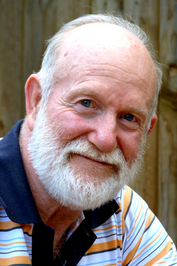
The Hole in Your Life is a compassionate and practical guide to navigating grief and bereavement, shared from a place of not just professional expertise, but lived personal experiences, making it relatable in a way other books are not. Why was this an important book for you to write?
I get a great deal of satisfaction, even joy, when I can relieve suffering. If you like, you can think of this as selfish: I’ve been cursed with way too much empathy, so, for example, the daily news is a horror show. I cannot avoid it because being informed is necessary for my job as a Professional Grandfather (striving for a tomorrow for today’s youngsters, and a tomorrow worth living in), so if I don’t take precautions, I shed sympathetic tears of blood in response to war, environmental disasters, inhumane treatment of people and the like.
This book sets out how I deal with deep distress of any kind including this second-hand grief, but also the death of my daughter, and what I have taught to lovely people during decades of my counseling psychology practice. And the good thing is that these tools are all science-validated.
All sentient beings are apprentice Buddhas, apprentice Jesuses. So, when I remember (but never when I don’t), I act as if I were already enlightened. The Dalai Lama has said, “My religion is kindness,” and “The aim of enlightenment is to be of service,” so this book is an important step on my chosen journey.
What were some ideas that were important for you to share in this book?
First, life is too short for the seriousness it deserves. There is no point in being gloomy when writing about sad topics. In fact, fun is one of the “seven magic bullets” that shoot down monsters like depression, chronic anxiety, irrational anger. When you put a good dose of the seven magic bullets into your life, you are a pogo stick: the harder life bounces on you, the higher you rise. You’ll find them described at http://bobswriting.com/psych/firstaid.html
Second, whatever is, is. Acceptance, what in Buddhism is called equanimity, is the most powerful way to deal with any problem. This doesn’t mean condoning evil, but is part of being an effective change agent.
Third, forgiveness (including self-forgiveness), gratitude, and generosity are the most important tools of positive psychology, which is the scientific basis of my work.
Oh… about generosity. I have a long-standing policy: anyone sending me proof of purchase of one of my books, and anyone subscribing to my blog, Bobbing Around, has earned a free (electronic) book.
What was the most challenging part of writing your book, and what was the most rewarding?
I love all my children. That includes the real physical two-legged beings who call me Dad, and also the children of my imagination. On three occasions, these two groups have overlapped, giving me the opportunity to give double love.
My fictionalized autobiography, Ascending Spiral, has my children in it with their genuine personalities, and the events in their lives, but fictionalized names. (How surprising is that?)
Anikó: The stranger who loved me is my biography of a remarkable woman who achieved the impossible and survived the unsurvivable more than once. She is my mother. I visited her in Hungary during her dying days and returned with a huge amount of material. I couldn’t even look at it for two years, then wrote the book, which has won four awards.
The third book is of course The Hole in Your Life: Grief and Bereavement. It uses the story of how I dealt with the death of my daughter, Natalie, so there she is, loved twice over. Is that challenging enough?
And this is also the most rewarding part. Unlike my mother’s biography, this book was almost completed weeks after Natalie’s death, thanks to all I have learned in the past twenty-four years.
What do you hope is one thing readers take away from The Hole in Your Life?
Your wonderful reviewer has pinpointed it. The best way to deal with suffering is through it rather than avoidance. This gives us the opportunity for growing from the experience. Hmm… I should be about 50 ft tall by now. Hold it, that’s not the kind of growth I mean.
Thanks to the handicap of a scientific training, I don’t believe anything but go with the evidence. So far, I’ve spent a brief 82.75 years collecting that evidence, so I won’t list it all here. There is a part-completed draft of a book hiding in my computer about that. But the conclusion is that the purpose of life is spiritual growth. There is no point in change when everything is perfect. Suffering is the spur to growth. It doesn’t feel nice—but ask a teenager about growing pains.
A major loss is awful, but it is also the opportunity for a new start.
Author Links: GoodReads | X | Bluesky | Facebook | Website
The Hole in Your Life: Grief and Bereavement


Dr. Bob Rich’s The Hole in Your Life is part memoir, part guidebook, and part quiet act of grace. It opens with a deeply personal account of his daughter Natalie’s final months, setting a tone that is both tender and raw. From there, Rich blends professional insight with lived experience, walking readers through grief’s unpredictable terrain. He writes about denial and despair, hope and healing, blending practical techniques, like scheduling grief time and mindfulness, with heartfelt stories from his counseling practice. The book never lectures. It feels like a hand on your shoulder, reminding you that pain is part of being alive, and healing, though never complete, is possible.
I found myself deeply moved by the book’s honesty. Rich doesn’t sugarcoat anything. He talks about loss as something brutal and transforming, a force that tears through you but can, somehow, make you more whole. His writing is simple and kind, with a quiet humor that lightens the heaviness. I liked how he tells real stories, of clients, friends, even himself, without turning them into neat lessons. It’s messy and human. Some parts made me tear up, others made me smile. There’s warmth in his words that feels genuine, like you’re listening to someone who’s been through hell and came back wiser, not just older.
Some sections sometimes read like therapy notes, but then I’d hit a line or story that stopped me cold and made me think about my own losses. Rich’s balance between intellect and compassion is rare. He talks about pain as a teacher, about finding meaning even when nothing makes sense. I felt comforted, not because the book promised easy answers, but because it didn’t try to.
The Hole in Your Life isn’t just for people drowning in grief. It’s for anyone who’s loved deeply and lost something they can’t get back. It’s for the quiet moments when you want to believe life can still hold beauty. I’d recommend it to therapists, caregivers, and anyone sitting in the dark looking for a light that doesn’t blind you with false hope, but steadies you with truth.
Pages: 109 | ASIN : B0FFZVVK6X

Walking Wounded

From Depression to Contentment: A Self-Therapy Guide is a book that provides help for readers who are experiencing depression and desire an alternative to outside therapy. It presents well-researched techniques and methods that are straightforward to implement. Why was this an important book for you to write?
Actually, the book title addresses depression because my publisher is very firm: each book should seem to limit itself to one problem. However, psychotherapy doesn’t actually work like that. With suitable modification, essentially the same tools will provide a path out of chronic anxiety, addictions, anger… basically, human suffering. This is because, as I say in the book, classifications like in the Diagnostic and Statistical Manual are basically science fiction.
Second, the therapy bit is only halfway, from ongoing agony to “normal,” which is the walking wounded. Then the tools of positive psychology and Buddhist psychology allow you to rise WAY above that.
This book is the distillation of decades of my personal experience, study, and therapeutic practice. I wrote it to be of service to as many people as possible, then a few more.
How much research did you undertake for this book and how much time did it take to put it all together?
In a way, no research at all — specifically for this book. When I started university, I decided not to go into Medicine because it was a 6-year course, then at least 4 more years of training. Then, overall I spent 14-and-a-half years as a student. And in my profession, you don’t ever stop learning. A condition of being registered is continuous study. And even though I retired in 2013, I have kept up with new research, just from interest.
So, while this research and study were not for the book, all that information and knowledge is in there. Well, it is, up to the publication date. It’s annoying, but when I sent my time machine in for service, they returned it to an alternative universe. What’s happened since is only marginal, but it doesn’t matter all that much, because therapy, including self-therapy, will work if three conditions are present, as Carl Rogers has described. These are empathy, love of the kind Buddha, Jesus and many other sages have told us to give to everyone, and genuineness. That last one is that it has to be honest.
What were some ideas that were important for you to share in this book?
• Chronic emotional suffering beyond what the situation warrants is always due to the interaction of
several factors. One of them is childhood trauma, as seen through the child’s eyes.
• Depression, chronic anxiety and the like are not due to faulty brain chemistry.
• Using the tools I teach in the last part of the book, you can live a contented life in any situation.
What is one thing that you hope readers take away from From Depression to Contentment?
The more you give, the more you get, and also the more you grow.
Author Links: GoodReads | Twitter | Facebook | Linkedin | Mastodon | Website
Every tool in this book is based on research, but presented in an easy to understand, easy to apply manner.
With homework assignments, you will find your inner strengths, uncover the true source of happiness and develop great resilience.
Learn how to put the philosophies of all great religions to practical use, even if you are an atheist.
This program can help you start a new life – one of meaning, positivity and purpose.
Unlike instructional books, this book is not only useful but also enjoyable.
From Depression to Contentment: A self-therapy guide
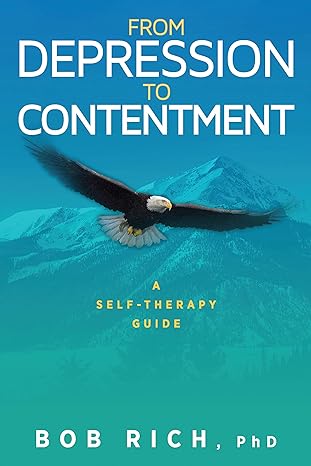
From Depression to Contentment: A Self-Therapy Guide, by Bob Rich, is an enlightening and approachable book that tackles the complex topic of depression. Rich’s book is not just a clinical discourse but a practical guide filled with empathy that draws from the author’s own experiences and psychological expertise.
Rich’s writing style is both engaging and easy to understand, a breath of fresh air in the often technical world of psychological self-help books. His personal anecdotes add a level of authenticity that’s both relatable and inspiring. The book’s approach of viewing depression not just as a medical issue but as a perspective on life is a refreshing angle. It challenges readers to rethink their own views on depression, making it an engaging read for anyone interested in mental health.
The book is skillfully structured, guiding the reader through various strategies, from basic self-care to deep psychological work. Particularly impressive is the chapter on “Controlling Depression,” where Rich introduces practical methods to reframe negative thoughts, encouraging a proactive stance in dealing with depressive thoughts. It is worth noting that some readers may find the chapter on spirituality less applicable, depending on their personal beliefs.
The conclusion of the book underscores a crucial message – the importance of actively applying these strategies in one’s life. This is where Rich’s guide distinguishes itself; it’s not just informative but also motivational.
From Depression to Contentment is a highly recommended read for anyone who is struggling with depression or has an interest in mental health. It’s particularly suited for readers seeking a blend of professional insight and practical, easy-to-implement strategies.
Pages: 157 | ASIN : B07PGQMP4Q



 LITERARY TITAN