Blog Archives
Welcome to the World’s Worst Club: A Raw, Unfiltered, Surprisingly Funny Companion Through Grief


Michele Greene’s Welcome to the World’s Worst Club is a brief and illustrated collection of personal stories about grief, family, and the unpredictable ways people respond to loss. Its organizing image is a club whose membership arrives without anyone’s consent, a premise Greene develops with dry humor and emotional candor. Drawing on her experiences as a daughter, mother, granddaughter, and friend, she examines how bereavement enters ordinary life and changes familiar relationships. Her observation that “Grief is one of the most human experiences we have, and somehow we are terrible at talking about it” establishes the book’s central concern. She gives that difficulty a recognizable voice, attentive to the awkward conversations, practical distractions, and conflicting feelings that accompany mourning.
Short sentences, generous spacing, and frequent direct addresses create the rhythm of someone telling a story across a kitchen table. She has an ear for the absurdity of social expectations, especially the pressure to remain composed while managing the logistics and interactions surrounding a death. Her humor often grows from the distance between what she intends to do and what she actually does. She’s willing to examine her own impatience, need for control, and questionable decisions, which gives the narration much of its credibility. The language is earthy and sometimes profane, and the comedy can be pointed. Through it, Greene conveys how laughter and sorrow can occupy the same moment, each expressing something the other can’t quite hold.
Greene remembers people through their habits, private jokes, forceful personalities, and everyday gestures of affection. These details give her recollections texture and preserve the individuality of the people she loves. She also considers the strain grief places on families, the assumptions parents make about their children’s feelings, and the care involved in supporting a grieving friend. Her inclusion of beloved animals extends that attention to losses whose significance others may overlook. One of her clearest statements, “Sometimes love is knowing when to be quiet,” captures the value she places on patient companionship. The quieter passages are especially effective because they let an action, an object, or a remembered exchange carry the feeling.
The compact chapters make Welcome to the World’s Worst Club accessible for readers whose concentration or emotional energy may be limited. Its illustrations and recurring club imagery reinforce the sense of an intimate, deliberately informal book. Greene’s repeated sentence patterns and closing reflections occasionally make the storytelling feel predictable, though they also establish a consistent speaking voice. The writing is most persuasive when its specific observations supply their own meaning, and there are enough of those moments to give the collection lasting substance. Readers who appreciate candid memoir and irreverent humor will find a thoughtful account of grief’s uneven course. Greene offers company through her willingness to remember honestly, acknowledge her own mistakes, and make room for feelings that can be difficult to express. The result is a personal and compassionate book whose warmth rests on the particularity of the lives and relationships it describes.
Pages: 135 | ASIN : B0HGC386BF

Shattered but Unbreakable

Nadine Walker’s Shattered but Unbreakable: How Love and Faith Survived is a Christian grief memoir about a mother learning to live with losses that arrive twenty years apart. In 2003, a car strikes her family’s van while it’s stopped beside a Pennsylvania highway, killing her husband, Paul, and seven-year-old daughter, Cassie. In 2023, her daughter Aria dies by suicide after years of struggling with mental illness and addiction. Walker tells both stories from close range: the hospital rooms, the calls she wishes had gone differently, the funerals, and the ordinary mornings that follow. Her experience as a nurse sharpens her account of medical care, while her voice stays firmly that of a wife and mother.
The people Walker remembers come through in small, lively details. Paul shows love by feeding whoever enters his kitchen; after his death, Walker tries to recreate the sauce he never wrote down. Cassie sings at a school breakfast in camouflage and heart-shaped sunglasses. Aria masters the butterfly stroke, bakes cinnamon rolls before sunrise, and leaves notes that reveal how closely she noticed the people around her. These scenes give the memoir its warmth and make room for each person’s full life. They also give Walker’s grief a physical texture. A cut-up yellow dress, a dog searching the couch where Aria slept, and brownies kept in a freezer hold memories that a broad statement about loss couldn’t carry as vividly.
Faith is the book’s continuing conversation. Walker reads her experience alongside Hannah, Naomi, and Job, and she describes God’s presence in prayer, worship, and friends who arrive with clothes, meals, or the patience to sit quietly. Her account of Aria is especially tender because it holds love, conflict, exhaustion, and regret together. Walker recalls the effort of helping a daughter through repeated crises and the painful clarity of a final text exchange. As Christian inspirational nonfiction, the book speaks directly to readers who draw on Scripture while grieving. Its reflections often return to the same conviction: Walker feels held by God even when she has no answer for what happened.
In its final chapters, this faith-based memoir turns outward to the people who want to help. Walker explains why a grieving person may withdraw after appearing composed all day, and why support matters years after a funeral. Her suggestions are practical: bring food without creating another task, remember anniversaries, and say the person’s name. She gives particular attention to suicide loss, asking readers to remember a whole life while treating survivors with care. Those pages grow naturally from the friends who stayed beside her through both tragedies. Shattered but Unbreakable offers readers an intimate family story and a clear invitation to keep showing up for someone whose grief continues long after the first wave of sympathy has passed.
Pages: 248 | ISBN : 1637659245
Seven Magic Bullets

The Hole in Your Life is a compassionate and practical guide to navigating grief and bereavement, shared from a place of not just professional expertise, but lived personal experiences, making it relatable in a way other books are not. Why was this an important book for you to write?
I get a great deal of satisfaction, even joy, when I can relieve suffering. If you like, you can think of this as selfish: I’ve been cursed with way too much empathy, so, for example, the daily news is a horror show. I cannot avoid it because being informed is necessary for my job as a Professional Grandfather (striving for a tomorrow for today’s youngsters, and a tomorrow worth living in), so if I don’t take precautions, I shed sympathetic tears of blood in response to war, environmental disasters, inhumane treatment of people and the like.
This book sets out how I deal with deep distress of any kind including this second-hand grief, but also the death of my daughter, and what I have taught to lovely people during decades of my counseling psychology practice. And the good thing is that these tools are all science-validated.
All sentient beings are apprentice Buddhas, apprentice Jesuses. So, when I remember (but never when I don’t), I act as if I were already enlightened. The Dalai Lama has said, “My religion is kindness,” and “The aim of enlightenment is to be of service,” so this book is an important step on my chosen journey.
What were some ideas that were important for you to share in this book?
First, life is too short for the seriousness it deserves. There is no point in being gloomy when writing about sad topics. In fact, fun is one of the “seven magic bullets” that shoot down monsters like depression, chronic anxiety, irrational anger. When you put a good dose of the seven magic bullets into your life, you are a pogo stick: the harder life bounces on you, the higher you rise. You’ll find them described at http://bobswriting.com/psych/firstaid.html
Second, whatever is, is. Acceptance, what in Buddhism is called equanimity, is the most powerful way to deal with any problem. This doesn’t mean condoning evil, but is part of being an effective change agent.
Third, forgiveness (including self-forgiveness), gratitude, and generosity are the most important tools of positive psychology, which is the scientific basis of my work.
Oh… about generosity. I have a long-standing policy: anyone sending me proof of purchase of one of my books, and anyone subscribing to my blog, Bobbing Around, has earned a free (electronic) book.
What was the most challenging part of writing your book, and what was the most rewarding?
I love all my children. That includes the real physical two-legged beings who call me Dad, and also the children of my imagination. On three occasions, these two groups have overlapped, giving me the opportunity to give double love.
My fictionalized autobiography, Ascending Spiral, has my children in it with their genuine personalities, and the events in their lives, but fictionalized names. (How surprising is that?)
Anikó: The stranger who loved me is my biography of a remarkable woman who achieved the impossible and survived the unsurvivable more than once. She is my mother. I visited her in Hungary during her dying days and returned with a huge amount of material. I couldn’t even look at it for two years, then wrote the book, which has won four awards.
The third book is of course The Hole in Your Life: Grief and Bereavement. It uses the story of how I dealt with the death of my daughter, Natalie, so there she is, loved twice over. Is that challenging enough?
And this is also the most rewarding part. Unlike my mother’s biography, this book was almost completed weeks after Natalie’s death, thanks to all I have learned in the past twenty-four years.
What do you hope is one thing readers take away from The Hole in Your Life?
Your wonderful reviewer has pinpointed it. The best way to deal with suffering is through it rather than avoidance. This gives us the opportunity for growing from the experience. Hmm… I should be about 50 ft tall by now. Hold it, that’s not the kind of growth I mean.
Thanks to the handicap of a scientific training, I don’t believe anything but go with the evidence. So far, I’ve spent a brief 82.75 years collecting that evidence, so I won’t list it all here. There is a part-completed draft of a book hiding in my computer about that. But the conclusion is that the purpose of life is spiritual growth. There is no point in change when everything is perfect. Suffering is the spur to growth. It doesn’t feel nice—but ask a teenager about growing pains.
A major loss is awful, but it is also the opportunity for a new start.
Author Links: GoodReads | X | Bluesky | Facebook | Website
Reach Out with Acts of Kindness: A Guide to Helping Others in Crisis


Letitia E. Hart’s Reach Out with Acts of Kindness is a heartfelt and practical guide born from personal loss and the deep desire to help others in pain. The book begins with Hart’s devastating story of her husband John’s brain cancer diagnosis and the emotional, physical, and spiritual toll that followed. From there, she expands outward, offering compassionate and straightforward advice on how to support people facing illness, grief, or crisis. Divided into clear, accessible sections, the book mixes personal storytelling with tangible suggestions, from cooking a meal and writing cards to simply showing up when someone is hurting. It reads like a friend pulling up a chair to tell you what to do when you don’t know how to help.
Reading this book felt like sitting across from someone who has lived through the storm and wants to help you keep your footing when it’s your turn. Hart’s writing isn’t fancy or polished for effect, but that’s what makes it so honest and moving. She doesn’t hide behind flowery words or abstract theories. She writes straight from the gut, with empathy, humor, and a kind of raw clarity that only comes from living through the unimaginable. I found myself touched by her humility and her insistence that kindness doesn’t need to be grand. She shows how simple gestures like a note, a meal, or a quiet presence can hold people together when everything else is falling apart. Some sections broke my heart, others made me pause and think about how often I’ve stayed silent out of fear of saying the wrong thing.
What stood out most was the emotional honesty. Hart admits when she struggled, when she was angry, when she didn’t know what to do. She gives readers permission to be human while encouraging them to act anyway. The advice is practical without ever feeling clinical. The way she weaves her story into the guidance makes it feel real and attainable. You can sense her grief, but also her purpose. The tone stays steady and compassionate, not preachy or sentimental. There’s an undercurrent of resilience that made me feel both sad and hopeful. I could feel her love for John in every line, and that love radiates outward, asking readers to keep it going through their own acts of kindness.
I’d recommend Reach Out with Acts of Kindness to anyone who’s ever felt helpless watching someone they care about suffer. It’s also for those learning to rebuild after loss. This isn’t just a book about grief, it’s about community, empathy, and what it means to be there for one another. It’s comforting without sugarcoating reality. For me, it was a reminder that kindness doesn’t always need words, only intention and heart.
Pages: 239 | ASIN : B0CZWGJLHR

The Hole in Your Life: Grief and Bereavement

Dr. Bob Rich’s The Hole in Your Life is part memoir, part guidebook, and part quiet act of grace. It opens with a deeply personal account of his daughter Natalie’s final months, setting a tone that is both tender and raw. From there, Rich blends professional insight with lived experience, walking readers through grief’s unpredictable terrain. He writes about denial and despair, hope and healing, blending practical techniques, like scheduling grief time and mindfulness, with heartfelt stories from his counseling practice. The book never lectures. It feels like a hand on your shoulder, reminding you that pain is part of being alive, and healing, though never complete, is possible.
I found myself deeply moved by the book’s honesty. Rich doesn’t sugarcoat anything. He talks about loss as something brutal and transforming, a force that tears through you but can, somehow, make you more whole. His writing is simple and kind, with a quiet humor that lightens the heaviness. I liked how he tells real stories, of clients, friends, even himself, without turning them into neat lessons. It’s messy and human. Some parts made me tear up, others made me smile. There’s warmth in his words that feels genuine, like you’re listening to someone who’s been through hell and came back wiser, not just older.
Some sections sometimes read like therapy notes, but then I’d hit a line or story that stopped me cold and made me think about my own losses. Rich’s balance between intellect and compassion is rare. He talks about pain as a teacher, about finding meaning even when nothing makes sense. I felt comforted, not because the book promised easy answers, but because it didn’t try to.
The Hole in Your Life isn’t just for people drowning in grief. It’s for anyone who’s loved deeply and lost something they can’t get back. It’s for the quiet moments when you want to believe life can still hold beauty. I’d recommend it to therapists, caregivers, and anyone sitting in the dark looking for a light that doesn’t blind you with false hope, but steadies you with truth.
Pages: 109 | ASIN : B0FFZVVK6X
Resiliency and Strength

All She Knew follows a twelve-year-old girl who loses her mother suddenly, leaving her with chaos, confusion, and grief as she tries to navigate a new world in a new place she has no connection to. What was the inspiration for the setup of your story?
The inspiration for the story is my own. I lost my mother at a young age, and All She Knew is loosely based on my story. I didn’t have the opportunity to connect with other kids who had experienced a loss at that time. I wanted to provide a story that other children and those young at heart can relate to; to connect with the challenges the character goes through; to know they are not alone and can be ok through their journey.
What were some ideas that were important for you to personify in your characters?
I wanted to show the range of emotions Charity goes through and the different experiences she has. I wanted to show that it’s ok to laugh, cry, feel uncomfortable, angry and unsure as you go through grief. Grief isn’t linear, it has ups, downs, and sideways turns. I wanted to normalize this for children experiencing loss and different ways of navigating through it.
What were some themes that were important for you to explore in this book?
It was important for me to highlight the loneliness, sadness and confusion Charity goes through. When anyone loses a loved one, they can feel isolated and alone. For a child, those feelings are more confusing, hard to understand and work through. I wanted to connect and explore the different dynamics and struggles Charity goes through. The various ranges of her grief journey and trying to understand her new reality, who she is and will need to become after her loss. It was important for me to show all the different angles to her. I wanted the reader to connect with the character; to see themselves in what Charity is experiencing.
What is one thing that you hope readers take away from All She Knew?
I hope readers take away that they aren’t alone in their grief and they can get through it. I want readers to know, as is written in the synopsis of the book, “while tragedy can feel like a pit of turbulent emotions, resiliency and strength are always within us.”
Author Links: GoodReads
Charity’s life becomes a roller coaster. She’s lonely. She has to go through a grieving process she doesn’t understand. And in all of this she has to leave her home and move to a place she doesn’t feel connected to. It’s overwhelming. How is a young girl supposed to get through this?
In this powerful story, All She Knew looks at the human spirit to remind us of this important truth; while tragedy can feel like a pit of turbulent emotions, resiliency and strength are always within us.
A Finalist in American Book Fest 2025 American Fiction Awards which honors literary excellence.
The Hope of Heaven

Singing Through Fire shares with readers how your life took an unexpected turn when you developed a chronic illness, leading you to cross paths with a youth pastor facing terminal cancer, and falling in love even though you knew your time together was limited. Why was this an important book for you to write?
Singing Through Fire was important for me to write because I knew God was calling me to share my story to encourage other sufferers. Walking through illness and loss was never the path I would have chosen, but it became a place where God’s presence and grace shone most clearly. Writing the book was an act of obedience, a way to testify to His goodness even in seasons of deep suffering. My hope was simply to be faithful with the story He entrusted me with.
What is one piece of advice someone gave you that changed your perspective on God and faith?
One of the most life-changing truths someone shared with me was that our present suffering, as heavy as it feels, is not the end of the story. Scripture reminds us that the eternal glory awaiting us far outweighs the pain we endure now. That perspective shifted my focus from asking “why me?” to lifting my eyes toward the hope of Heaven. It doesn’t erase the grief, but it gives it meaning and frames it in light of eternity.
What was the most challenging part of writing your memoir, and what was the most rewarding?
The hardest part was returning to memories that were still raw with grief and pain. Writing about them meant reliving them, and at times I wondered if my heart could handle it. But the most rewarding part was seeing how God had been present through it all, and how He wove beauty and love even into suffering. Putting it on paper gave me perspective, gratitude, and a way to honor the people and moments that shaped my story.
What do you hope is one thing readers take away from your story?
I hope readers come away with the assurance that even in the darkest seasons, God has not abandoned them. Life may not unfold as we expect, and suffering may come in ways that feel unbearable, but God is still faithful. If my story encourages someone to hold on to hope and to trust His heart, even when His plan feels hidden, then the book will have done its work.
Author Links: GoodReads | X (Twitter) | Facebook | Website | YouTube | Instagram | Amazon
Enter Matthew Silverman: a witty, wise, and impossibly joyful youth pastor and professor facing terminal cancer. What begins with a few random encounters soon ignites an extraordinary, God-written love story that neither of them saw coming.
As their unlikely romance unfolds between medical crises, late-night laughter, and unexpected musical performances, Matthew’s unshakable faith challenges everything Lara thinks she knows about God’s goodness—and what it means to walk with Christlike faith, resilience, and joy in the face of overwhelming grief and suffering.
But with time against them, one question looms louder than the rest: What if this gift is only for a moment?
Surprisingly funny and spiritually rich, Singing Through Fire is a modern-day “Job meets Lucille Ball.” It explores what it means to suffer, love, and even laugh and make music while your life is burning down around you. It eloquently gives voice to the aching questions many sufferers quietly carry—then takes readers inside the breathtaking story of two people who found miraculous love and defiant joy amid heartbreaking loss.
It reveals how God can use even our deepest pain to write the most beautiful love stories—even on the cusp of eternity.
All She Knew
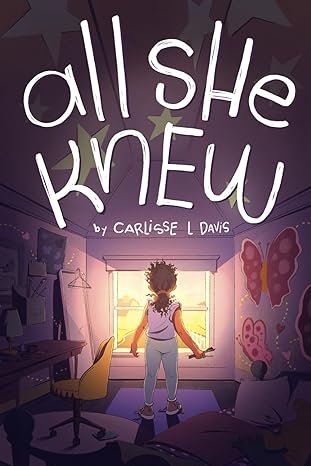
All She Knew tells the story of Charity, a twelve-year-old girl whose world turns upside down after the sudden death of her mother. In a voice that feels both tender and raw, the book walks us through her grief, the disorienting changes of moving in with relatives, and the awkward navigation of friendships and school life in the shadow of loss. The narrative is intimate, almost like leafing through Charity’s private diary, showing her memories of her mother, her inner thoughts, and her small moments of joy and sadness as she tries to make sense of a life she didn’t choose.
The writing is simple but honest, which makes the emotional weight even heavier. There’s no filter on Charity’s feelings, her anger, her loneliness, her confusion, and it hit me how rarely we allow young people that kind of space in real life. I found myself protective of her, frustrated with the adults who clearly cared but sometimes didn’t know how to show it, and touched by the fleeting, sweet moments that gave her hope. The book doesn’t rush her healing, and I liked that. Grief is messy, and the author lets it stay messy.
Some scenes linger in places that are uncomfortable, but those moments are often the most truthful. I appreciated how the book showed the push and pull between wanting to hold on to the past and needing to step into something new. It’s not a dramatic, twist-heavy story. It’s a quiet one, built on small shifts in emotion, and that’s where its strength lies.
All She Knew is for anyone who has had to start over after losing someone they love, especially teens and young adults trying to figure out who they are without that person. It’s heartfelt, gentle, and painfully real. This isn’t a book you race through. It’s one you sit with, maybe with a box of tissues close by, and let it remind you that even when the shape of your life changes completely, the love you carry stays with you.
Pages: 157 | ASIN : B0CZJT6HDT


