Blog Archives
Penny Pangolin and the Missing Ant Cake
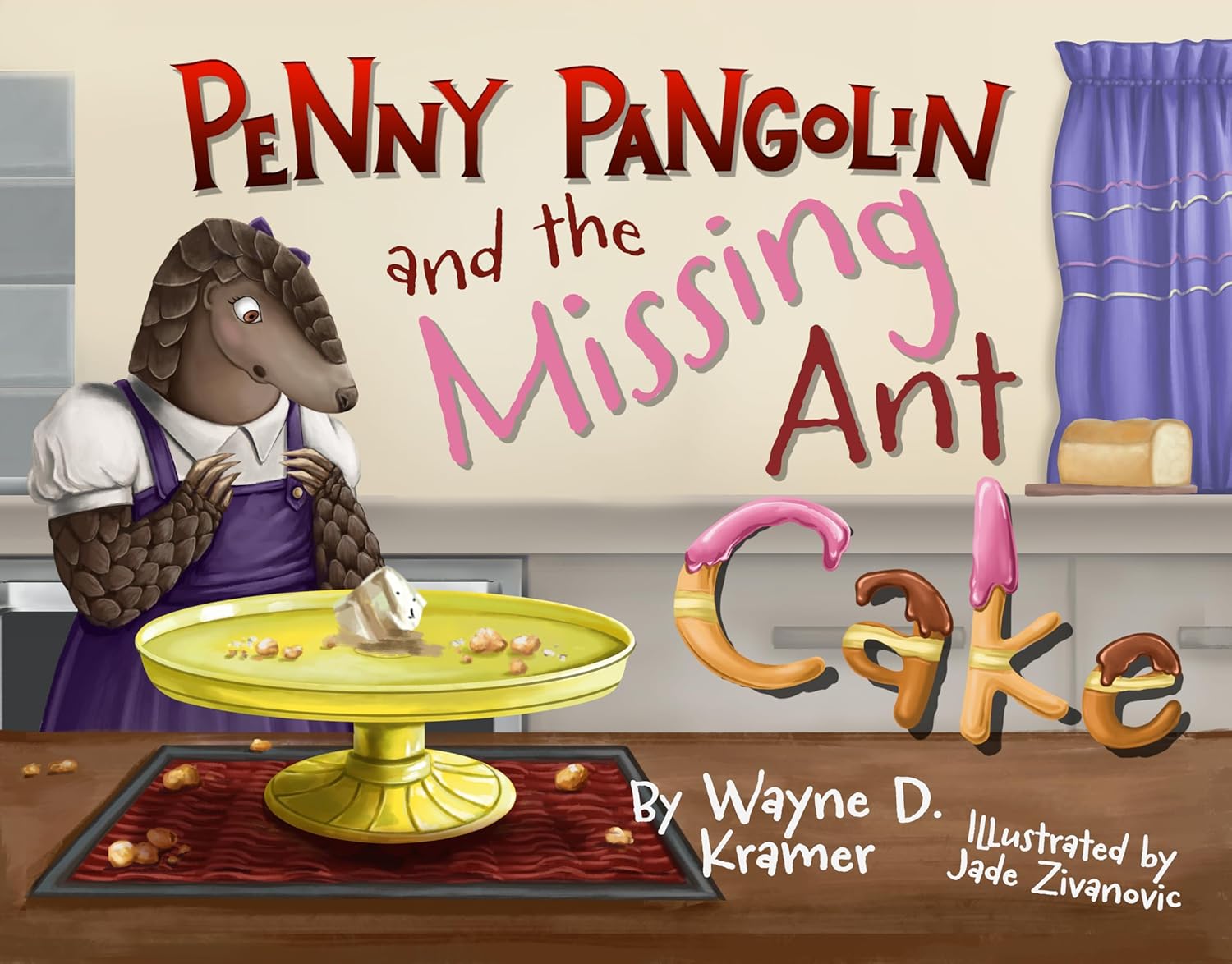

Penny Pangolin can hardly contain her excitement; her dear friend Vin is on his way for a visit. To mark the occasion, she decides nothing could be more fitting than serving one of her mother’s celebrated lemon-ant cakes. The plan seems perfect, until disaster strikes: just before Vin’s arrival, the cake mysteriously disappears. What follows is a lighthearted mystery as Penny and Vin embark on a search to uncover the culprit. Along the way, they encounter a colorful cast of suspects, each with a possible motive, all within the lush setting of the jungle. Beyond the playful suspense lies a gentle message about friendship and sharing that resonates with young readers.
Kramer’s tale feels both familiar and fresh. There are echoes of Kipling’s Jungle Book in the wild setting, yet the warmth and moral clarity recall the charm of the Berenstain Bears. Penny herself is a delightful protagonist, brave, kind, and endlessly curious, while Vin serves as an ideal companion for her adventure. The story avoids real peril, making it best suited to children at the younger end of the spectrum. For ages 3–8, however, it offers exactly the right balance of fun, imagination, and heart.
The illustrations elevate the book even further. Several stand out, particularly those depicting Penny engaged in traditional pangolin activities, which both entertain and educate. An additional section at the end, highlighting the endangered status of pangolins, underscores Kramer’s dual commitment to storytelling and conservation.
Penny Pangolin and the Missing Ant Cake is more than a whimsical jungle caper. It is a cheerful blend of art and narrative that introduces children to an extraordinary animal, all while reinforcing timeless lessons about generosity and friendship. Light, lively, and instructive, it has all the makings of a story that young readers will want to revisit again and again.
Pages: 34 | ASIN : B0BYQPM686

The Unearthing
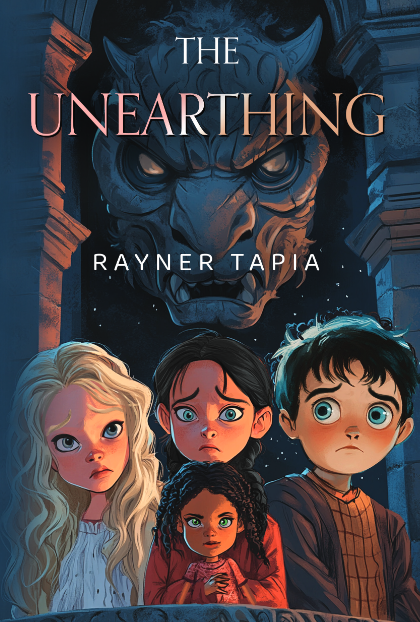
The Unearthing follows the Krigga family as they leave their suburban life behind for an old Georgian house in the countryside. The story is told mostly through the eyes of Anna, the middle child, who resents the move and resists every change. Her brother Rupert and sister Clara add their own voices to the chaos of sibling rivalry, while their parents try to hold the family together. Soon, the house itself begins to reveal secrets. Hidden staircases, strange rooms, eerie discoveries, and a foreboding tower nearby push the children into a world of mystery and unease. What begins as a family drama slowly shifts into something more shadowed, blending everyday struggles with a creeping sense of the supernatural.
The writing swings from tender to dramatic, sometimes even over the top, but that’s part of its charm. I could feel Anna’s anger like a living thing, the way she stomped and sulked and held on to her grievances. At times, I wanted to shake her. At other times, I wanted to comfort her. Tapia captures that messy middle-child energy perfectly, and while it could be grating, it also felt real. The imagery is thick and vivid, and I loved how it painted the old house as if it were alive, breathing with history and menace.
There were moments when I laughed at the squabbles between the siblings, then felt uneasy when the story leaned into shadows and whispers. The pacing could be uneven, lingering on moods a bit too long before getting to the action. Yet, when the eerie attic scenes or the crumbling gargoyles came into play, I was hooked. The book feels like a blend of family diary and gothic adventure.
I’d recommend The Unearthing to readers who enjoy stories about families in transition, especially when everyday life collides with something darker. Young adult readers might see themselves in Anna’s moods, while older readers may smile knowingly at the chaos of siblings and the weight of growing up. If you like your mysteries tinged with domestic squabbles, eerie houses, and a touch of the uncanny, this children’s fiction novel will speak to you.
Pages: 399 | ASIN : B08NCB4XKX

Harry the Hedgehog and the Lost Eggs

Harry the Hedgehog wakes to an unexpected problem on Easter morning. The forest animals are buzzing with holiday excitement, yet a mystery casts a shadow over the celebration, all the decorated eggs have vanished. Determined not to let Easter be spoiled, Harry embarks on a search. Alongside his loyal companions, Russell the Rabbit, Clara the Chicken, and Milo the Teddy Bear Dog, he races against time to uncover the truth behind the missing eggs. Without them, Easter simply won’t feel the same.
Harry the Hedgehog and the Lost Eggs, written by Rayner Tapia, is designed for children ages 2–7. The book is brief, easy to follow, and filled with bright pastel illustrations that bring each page to life. The artwork does more than decorate; it carries the action, introducing young readers to Harry and his woodland friends in a way that feels both playful and vivid.
The narrative itself is intentionally simple, perfectly suited to its audience, though likely too light for older readers. Its charm lies in the whimsical images and the gentle personalities of the animal characters. Each creature is rendered with human-like traits, making them instantly relatable. When the culprit is revealed and the animals spring into action, Tapia underscores a familiar but valuable lesson: teamwork makes challenges easier to overcome than going it alone.
That message resonates clearly without ever feeling heavy-handed. The adventure concludes neatly, with no sense of peril to unsettle young listeners. The absence of villains or darker tension makes the story especially well-suited for children just beginning to explore stories on their own. With its gentle pace and cheerful resolution, this tale has all the makings of a bedtime favorite, one likely to be requested night after night by eager little readers.
Pages: 35 | ASIN : B0FMYB1KH6
The Stomp-Clomp-Clump Monster Above the Bed
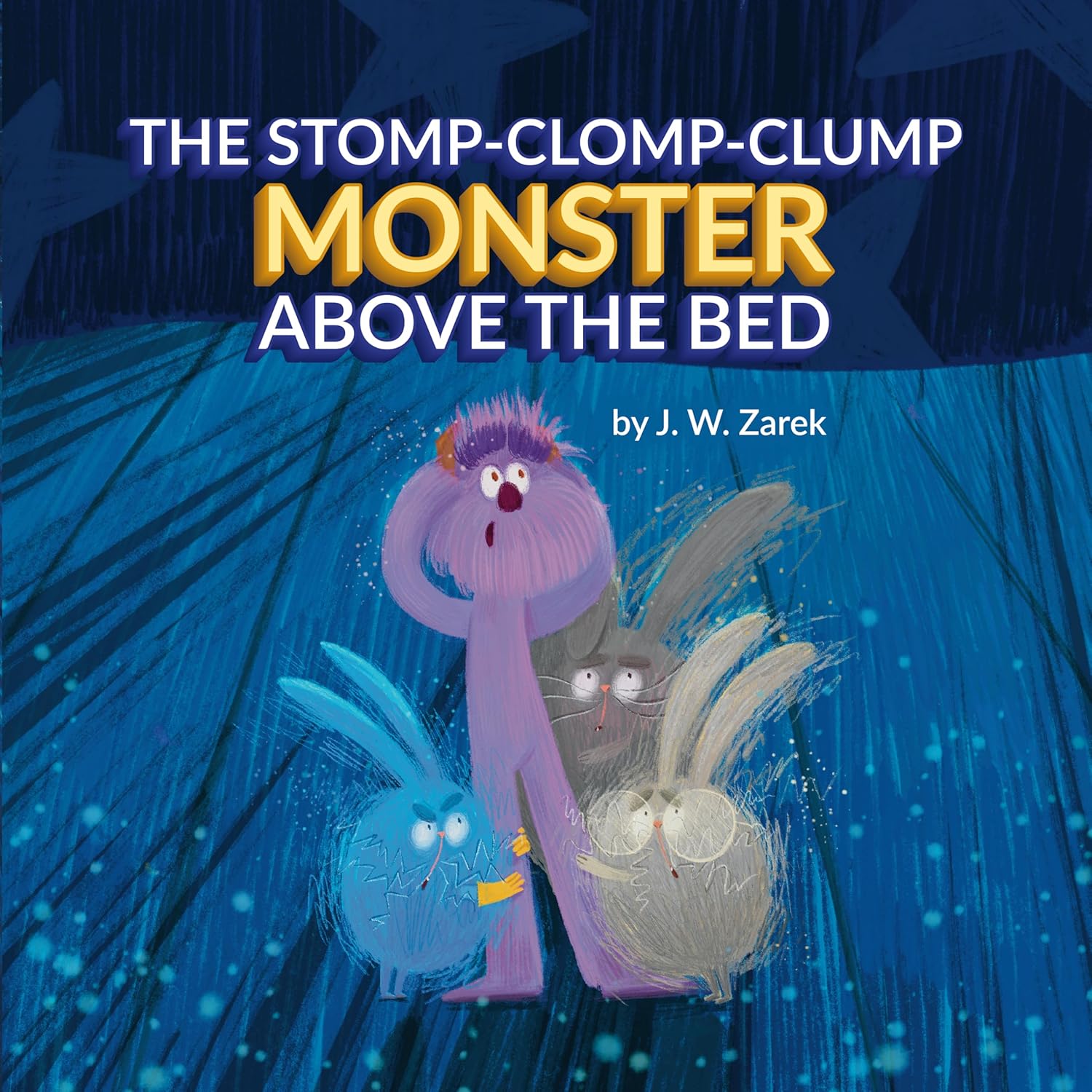
From the very first page, this imaginative story turns a classic childhood fear upside down. Instead of focusing on the terrified child who believes in monsters lurking beneath the bed, the book gives a voice to those very creatures. Fred and his trio of dust bunny companions, Brutus Bunfluff, Gunnar Puffbutz, and Dust Puff Ted, make for a quirky, lovable ensemble that children and adults alike will instantly warm to.
The brilliance of this tale lies in its inversion of perspective. Monsters are usually the source of nighttime dread, but here they are the ones unsettled by the “noisy human” above them. Billy, the new boy in the bedroom, becomes the unintentional menace with his stomping feet, bouncing mattress, and messy playtime chaos. This role reversal not only delivers humor but also provides an accessible way for children to confront their own fears. What if the things that scare us are just as frightened of us?
Each dust bunny has a distinct personality that adds charm and comic relief: Brutus, the brave leader; Gunnar, the jittery bundle of nerves; and Ted, the compulsive cleaner. Their antics make the narrative lighthearted and fun, while the underlying theme of learning to understand “the other” lends depth. One scene in particular that made me laugh was when Brutus says there are “booby traps everywhere” because he keeps tripping on Billy’s toys under the bed. Another memorable moment is when the monsters panic, convinced they are under attack by Billy’s red crayon. The illustrations are well done and bring the characters to life with so much to look at, offering young readers a chance to discover new details on every page.
At its core, the story is about more than just monsters and messy bedrooms. It’s about bridging differences, finding common ground, and recognizing that sometimes our fears are misplaced. The resolution, where Fred and his friends must decide whether to make peace or go to “war,” beautifully reinforces the values of empathy, friendship, and compromise.
The Stomp-Clomp-Clump Monster Above the Bed is a delightful, twist-filled read that offers both entertainment and gentle life lessons. With its witty premise, laugh-out-loud moments, engaging illustrations, and warm message, it’s a perfect bedtime story for children who wrestle with their own nighttime fears. It reminds readers of all ages that sometimes, monsters aren’t monsters at all, they’re just friends waiting to be found.
Pages: 44 | ASIN : B0FQ7T1WHX
Shell School

Young Jake doesn’t care much for school. Why bother slogging through lessons when the beach promises freedom and fun? That’s exactly where he intends to go, until the unexpected happens. Suddenly, he is pulled into Shell School, a place unlike anything he’s ever known. Trapped inside a shell, Jake becomes the reluctant student of Mrs. Olly, a no-nonsense octopus who refuses to let him slack off. To escape, he must outwit sea creatures in a series of unusual competitions, each challenge bringing new hilarity beneath the waves.
Lisa Peardon’s Shell School is an illustrated children’s book brimming with playful energy. Its whimsical spirit recalls the clever absurdity of Shel Silverstein and the offbeat charm of Louis Sachar’s Sideways Stories from Wayside School. The narrative thrives on imagination rather than logic; Jake’s sudden entrapment in a shell is never explained, nor does it need to be. Children embrace the impossible with ease, and here, that leap into magical nonsense makes the story sparkle.
Jake himself is an engaging lead. Resourceful, likeable, and always one step from mischief, he anchors the tale while sparring against an assortment of quirky ocean classmates. The artwork is bright, uncomplicated, and expressive, and punctuates each encounter, adding humor without overshadowing the text. Importantly, the book never strays into menace; the tone remains buoyant, reassuring its young readers that Jake will triumph and return home.
Beneath the laughs lies a clear moral: skipping school carries consequences. Yet the message is never heavy-handed. Instead, it arrives wrapped in fun, leaving children entertained while quietly nudging them toward responsibility. Shell School feels destined to become a favorite for young readers who relish imagination-driven adventures. If your child loves playful storytelling with a dash of mischief, this book is one to place at the top of the reading list.
Pages: 64 | ISBN : 0648278115
I Bet I Can Make You Yawn

This cute children’s book is all about a playful challenge. The narrator talks directly to the reader, daring them not to yawn while they say the word over and over again, stretching arms and legs, and even bringing in a sleepy sloth at the end. The whole thing builds like a little game, with the text teasing and testing whether the reader can resist yawning until, of course, it’s almost impossible not to give in.
I had a lot of fun with this picture book. The writing feels light and cheeky, almost like a friend poking your side just to see if you’ll laugh. It’s repetitive in the best way, because that’s what makes the joke land. I caught myself smiling at how simple the trick was, yet it actually worked. The author clearly knew what she was doing by leaning into the contagious nature of yawns, and I think kids would get a kick out of feeling like they’re “losing” the game.
What I liked most was the pacing. Each page adds a little more, like stretching one arm, then both arms, then legs too, until finally you’re right there with the sloth, half-asleep yourself. It’s clever without being complicated. It just leaned into silliness, and that makes it work. The artwork is super sweet. The sloth shows up in different little poses, each one cuter than the last, and it adds a playful charm to every page. The colors are warm and inviting, making the whole book feel cozy. The illustrations are just as fun as the story.
I’d recommend this children’s book to parents looking for a funny bedtime read that actually helps settle kids down. It would also be fun for teachers who want a quick laugh with a group of kids. If you enjoy books that invite the reader to play along and don’t mind yawning a lot while reading, this one’s perfect.
Pages: 28 | ASIN : B0F1C7LZXJ
Building Healthy Connections

Coco Goes Skating follows a young girl who sees people in the park wearing shoes with wheels, and becomes curious and wants to try them for herself. What was the inspiration for your story?
My childhood memories of learning to skate about the age of seven, is the same sport I love today.
Are there any emotions or memories from your own life that you put into your story?
Yes, I had lots of fun roller skating as a child in tennis shoes roller skates, then as I got older roller blades, and winning a race as a young adult at a skating rink some years ago.
What were some educational aspects that were important for you to include in this children’s book?
Parental support helping them build healthy connections with their children through the sport of Roller skating and the journey, the process, and the fun kids can have learning to roller skate and ice skate.
What other adventures do you have planned for Coco in the future?
I am still in the formation stages of new books for her as she grows up and continues to explore new life adventures.
Author Links: GoodReads | Amazon
Coco because curious about the shoes
and wants a pair of her own.
Experienced Coco’s skating adventure
in 3D style.
as she rolls her way into lots of fun.
Have Fun With Your Fandom


How to Celebrate Your Fandom is an interactive guidebook structured around 52 activities designed to help fans of any age dive deeper into their chosen fandoms, showing readers that you are never too old to find your passion. What was the inspiration for the original and fascinating idea at the center of the book?
NICHOLAS SEIDLER: We had an experience at a convention, in which we went to a panel on fanzines, and the presenters at the front of the room were talking about how difficult it is to make one. I was honestly totally disappointed in the panel, because doing a fanzine is as simple as writing down your thoughts on a piece of paper, making copies of it, and sharing it with others who are interested in the same topic. The point of entry should be so simple and available to everyone, but the fanzine editor presenters — in an attempt to make themselves a bit self-important – were giving bad advice to the audience. It actually demotivated the new and younger fans in attendance. After that panel, we had a conversation about how we needed to give fans better advice and encourage anyone to be a part of whatever fandom they are interested in!
STEVEN WARREN HILL: Together, we all became friends through our shared interest in several fandoms. We sought to express our enthusiasm for promoting “best practices” among fans by fostering positivity, encouragement, representation, and camaraderie, while rejecting the negative aspects of certain portions of fandom.
LIBBY SHEA: When I was brought into the project, the original idea for the title was “How to Be a SuperFan.” To me, that felt like we were setting a “higher level” of fan, which could very easily be used to separate and discourage those that may already feel excluded. All I could think of is 8-year-old me being told “Oh, you aren’t a superfan because you haven’t done everything in the book” and that set a negative tone for something that we all wanted to be very positive. So, we transitioned away from putting a label on fans to focusing on how to be more involved in what you enjoy. All of us (the authors) have become friends by being in the same fandom and celebrating what made our friendship as strong as it is, is the core of what inspired this book.
ROBERT WARNOCK: We’ve seen too much negativity in fandom over the years. We wanted to write something that was inclusive and non-judgmental, especially if someone was just starting out in their fandom.
What were some ideas that were important for you and the other writers to share in this book, and how did you come up with the activities you suggest?
ROBERT WARNOCK: It was important to keep the activities at the beginning fairly simple, so we didn’t intimidate new fans. We started thinking of activities in a brainstorming session at a convention.
LIBBY SHEA: Because this is a book aimed primarily at kids, teenagers, and those just entering into the fandom space, we really wanted it to be a guide of how to be an overall positive influence in fandom. So often you hear of fans taking it too far and forgetting that everyone they interact with are still people. The activities are there to give you a starting place. We originally came up with over 100 ideas, but wanted to focus on 52, so that you could do one a week for a year and allow yourself to deep dive into your fandom. They are in order from easiest to (our perceived) most difficult to complete. When coming up with our final list of ideas, we tried to keep in mind what it would actually look like for a younger child to complete them. We kept the ideas generic enough so that if you had limited money or resources, you could still have fun and feel like you’re a part of something.
STEVEN WARREN HILL: Coming up with the ideas was a lot of fun. Some of the ideas stemmed from odd things we did ourselves when younger. Once we had a long list of ideas, we grouped them in several different ways (such as by difficulty, and how much we liked each one) and also eliminated the ones that were too similar to others. As Libby said, we decided the final list should number 52, so they could be weekly goals, adding another functional facet to the book.
NICHOLAS SEIDLER: We also realized that fandom was a very broad topic – and we wanted to give advice that applies to them all. Whether someone is a bibliophile, a sci-fi fan, interested in gaming, likes to cheer for a sports team, enjoys horseback riding, music, or whatever, the advice in the book applies to their interests. We chose to select activities that everyone can do, regardless of ability, and they become more complex further into the book, as a person’s fandom and experience grows.
What are some tips you have for older generations that are just now learning to embrace the world of fandom and feel behind the curve from the younger generations, or even like a fraud for not being involved sooner?
LIBBY SHEA: It’s okay that you found your fandom when you did. It’s not about younger or older, and it’s not about how long you’ve been in the fandom. Everyone walks different paths to get to where they are. What matters is how you show up to engage today. Feel safe and confident in the knowledge that you are a fan now and that’s all that matters.
STEVEN WARREN HILL: I used to bristle somewhat at younger people joining the same fandom that I’ve been in for decades, for the usual flawed reasons, until I realized that without young people joining my fandom, the fandom would just keep aging until it died. We need to remember, first and foremost, that if someone says they are a fan of something, then they ARE, even if they enjoy it in a different way. Conversely, for older people who have privately been fans of something and are only just stepping into fandom, my number one tip is to treat all your fellow fans as equals, regardless of anything, especially their age or the extent of their knowledge.
ROBERT WARNOCK: It’s never too late to get started. Your involvement can be as immersive as you want it to be. Be observant early on in your involvement to get a lay of the land, so to speak.
NICHOLAS SEIDLER: Be your authentic self. If you love something, own it – most people will love you for it. It’s our interests and fandoms that make us interesting.
What is one thing that you hope readers take away from How to Celebrate Your Fandom?
LIBBY SHEA: Everyone has to start somewhere. When you finally get to the point of feeling fully immersed in your fandom, embrace others who are just starting out, pass this along to them, and join in their journeys.
ROBERT WARNOCK: That anyone can be involved in whatever fandom they choose, at whatever level they choose.
STEVEN WARREN HILL: That it’s okay to focus on positivity! Not just the positivity of your specific interest, but positivity among your fellow fans and across other fandoms.
NICHOLAS SEIDLER: And have fun. We interviewed over 30 fans from ages 5 to 101 years old (their interviews appear in the book) and that was the advice they each shared with us — have fun! I think that’s what our book is all about.
Author Links: GoodReads | X | Facebook | Website
Fandoms build friendships and communities through many engaging activities. With the help of this book, you can learn new ways to enjoy being a fan. Inside are numerous pathways that one can connect with others with similar pursuits! Whether it is through starting a collection, dressing in cosplay, writing a blog, or attending a convention, each of these brings happiness to those who participate.
This book also contains interviews with fans of all ages (5 to 101), who tell their stories and share how they participate in their hobbies. Celebrate your fandom and the things that you enjoy the most! Fun Things to Do! New Things to Learn! Cool Things to Try!



 LITERARY TITAN