Blog Archives
Fun and Realistic Education
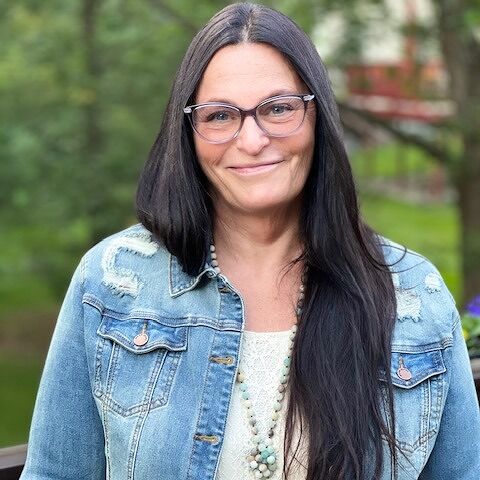
Dali & Banksy’s Brave Bite Adventure follows two young explorers on a cozy, confidence-boosting quest that turns tasting new foods into an upbeat, family-filled adventure. What was the inspiration for the setup of your story?
The Inspiration for the story was that I was teaching nutrition in the Flint Public Schools, and I was not happy with the book I had to read so I wanted one that was fun, realistic, and encouraged children to try new fruits and veggies.
Gram and Pepere add such comforting energy. Were they based on people from your own life?
Gram and Pepere are myself and my husband (Pepere is French Canadian). This is what Dali and Banksy call us.
The illustrations feel soft and welcoming. What guidance did you give the illustrator to achieve that mood?
The illustrations were perfect! Banksy knew who everyone was, and the illustrator was given pictures, and I just shared my vision for the book, most importantly, I wanted it to be kid-friendly and grab the attention of children and parents.
Do you imagine more Brave Bites Quests or other adventures for Dali and Banksy in future books?
Yes, the second book is currently in illustration, and it is about medically compromised children and helping them be brave.
Author Links: Facebook | Website
Dali and Banksy’s Brave Bite Adventure is a heartwarming, fun-filled story about two curious siblings who discover that trying something new isn’t so scary after all!
When Dali and Banksy are invited to try a new food, they aren’t too sure. What if it tastes weird? What if they don’t like it? With a little courage, a lot of imagination, and the support of each other, they take a brave bite, and learn that stepping outside your comfort zone can lead to tasty surprises and big life lessons.
Inspired by real-life siblings, this playful picture book encourages kids to be open-minded, adventurous, and kind. It’s perfect for children ages 3–8 and families who love stories about growing together, one small step (or bite!) at a time.
Great for: Picky eaters, new experiences, sibling bonding, courage-building, and shared family reading.
Tooth-builders Came to Life

Twinkling Wings and Toothy Things follows a tooth-builder from the Tooth Fairy Realm who, while on a mission, experiences some mishaps leading to a late-night adventure filled with valuable lessons. What was the inspiration for your story?
The inspiration was my daughter, Sadie. During family dinner, when my little girl got frustrated because she didn’t have teeth to chew, the idea of the tooth-builders came to life!
I found Nutter Nate to be an entertaining and likeable character. What was your inspiration for this character?
In real life, my brother and I own and operate a building company so naturally there would need to be a leader in the tooth building realm and I’m a little nutty, so Nutter Nate rhymed and it made goofy sense for the young audience to think that might be funny!
What were some educational aspects that were important for you to include in this children’s book?
Teamwork is definitely one of the main takeaways along with in life there will always be challenges to overcome whether it is on a job site or in an office building or at home.
What story are you currently in the middle of writing?
I left the ending open for more adventures for the characters. Maybe a book about lost teeth that are thrown in trash cans or swallowed (don’t want kids to be devastated thinking the tooth fairy won’t have their lost tooth). I’m always listening for book ideas that are not out there.
Author Links: Amazon | Facebook
Before a tooth fairy gets their wings, they work day and night as tooth-builders. Equipped with pearly paste, calcium soil, and bristly brushes, tooth-builders help build and install children’s shiny new adult teeth so that kids can smile with pride. Join Nutter Nate’s team of talented tooth-builders as they leave the Tooth Fairy Realm to install Sam and Sadie’s new teeth. But watch out for adults and animals—a pup’s bark could ruin Sam and Sadie’s bites!
Tiger and My Eye Patch


A young girl begins her summer burdened by an eyepatch meant to correct her lazy eye, and the weight of it grows heavier each time her classmates sneer. Branded “Pee Wee the Pirate,” she endures a name flung at her by children blind to the harm it causes. Relief arrives only when she escapes to Johnson City, where her grandparents wait with open arms, and with Tiger, their towering, gentle Great Dane. Tiger adores her. He offers no judgment, no mockery. Just warmth. Yet Tiger’s size and enthusiasm often land him in trouble, and before long, the girl’s courage and ingenuity are put to the test as she tries to save the companion who has quietly saved her.
Tiger and My Eye Patch, written by Colleen Lent, is a children’s story best suited for readers around ages 3 to 8. Its spirit echoes classic series like The Berenstain Bears, delivering an abundance of life lessons without losing its sense of play.
Lent draws from her own childhood, and that honesty radiates through the narrative. The sharper emotions, the confusion, and the vulnerability surface in the protagonist’s perspective and give the story a lived-in quality. Her world feels colored by past hurts, yet not dominated by them.
Joy still rises. It unfolds through tender moments with her grandparents and through the undeniable bond she forms with Tiger. The giant dog, good-natured yet misunderstood, mirrors her own struggle. His size invites assumptions, and he, too, carries the burden of being judged before being known. Their connection emerges naturally from shared experience, and it becomes the emotional heart of the tale.
Tiger and My Eye Patch maintains a light tone, but beneath it runs a clear thread of catharsis. Lent writes toward healing her own and that of any child who has ever been singled out for being different. The lesson she imparts, treat others with kindness, especially when they stand apart, is delivered with grace rather than force. Paired with lively, colorful illustrations, the story becomes both a comforting read and a meaningful one, offering young audiences a narrative they can enjoy again and again while absorbing its gentle wisdom.
Pages: 32 | ASIN : B0FV9W4242

Llife Can Surprise Us In Extraordinary Ways

The Friend from the Future: The Spark of Friendship follows a young girl stuck at home on a rainy day with homework who discovers a robot from the future has landed in her backyard. What was the inspiration for the setup of your story?
The story was inspired by something very simple and familiar — a rainy day that feels slow, quiet, and full of hidden possibilities. I’ve always loved the idea that magical things can appear when we least expect them. One afternoon, I watched my daughter staring out the window during a storm, and in that still moment I imagined a little glow landing in the backyard. That spark became Nova.
I wanted to show that even on the dullest days, life can surprise us in extraordinary ways. Sometimes magic arrives exactly when we feel bored, stuck, or overwhelmed.
What were some educational aspects that were important for you to include in this children’s book?
I focused primarily on emotional learning. Children often experience pressure, frustration, or confusion around schoolwork — just like Luna does. I wanted to show them, in a gentle and playful way, that curiosity, kindness, and creativity can turn stressful moments into exciting opportunities for growth and discovery.
I also sprinkled in playful futuristic elements like robots, glowing technology, and simple science concepts. Not in a heavy way — just enough to spark imagination and encourage kids to explore and see learning as an exciting adventure rather than something they “have to do.”
I found Luna and Nova’s characters to be dynamic and engaging. What was your process for writing the characters’ interactions to develop the bond between them?
I approached Luna and Nova’s friendship the way real friendships grow — with curiosity, honesty, and a bit of humor. Luna meets Nova with wonder, and Nova sees our world with fresh eyes. That contrast made their connection feel natural to write.
I let their conversations happen the way kids actually talk: sometimes excited, sometimes confused, sometimes deep without even trying. They learn from each other in small moments — a question, a laugh, a misunderstanding — and those moments slowly build trust. My goal was for readers to feel their bond forming page by page, just like a true friendship.
When will the next book in Luna and Nova Magical Journeys be available? Can you give us an idea of where that book will take readers?
The next book in Luna and Nova’s Magical Journeys series is already in progress, and I’m incredibly excited about it. It will be released soon — and this time, Luna and Nova step into a new kind of adventure that blends magic with a deeper emotional message.
Without giving too much away, the story will center around something very familiar to every child, something that seems small but affects the way they feel, think, and move through their day. Luna will face a challenge that requires her to look within, and Nova will guide her in a surprising way that brings mindfulness, growth, and a touch of enchantment.
Author Links: GoodReads | Facebook | Instagram | Website
One rainy day, Luna meets Nova, a robot from the future, who appeared in her backyard with a unique proposal. While he helps Luna with her daily tasks and challenges, she teaches him about friendship, empathy and emotions.
Can a curious girl and a high-tech robot prove that genuine friendship transcends time and space?
Why Families, Teachers, and Young Readers Love This Book:Engaging Rhyming Text:Makes reading aloud a joyful, memorable experience for the whole family.
Teaches Emotional Intelligence:Gently introduces themes like empathy, emotional expression, and compassion.
Sparks Curiosity and Imagination: It blends futuristic fun, whimsical moments with timeless lessons about confidence, growth, self-discovery, and embracing challenges.
Enjoyable for All Ages: Whether its storytime with little ones or independent reading, there’s something heartfelt and fun for everyone to enjoy.
Makes a Wonderful Gift: A thoughtful present for birthdays, holidays, or any occasion that calls for something special.
Give your child and your whole family a story that sparks connection and a friendship that travels beyond time and space!!!
A Way to Honor That Story

The Adventures of Belle Bear follows a cheerful polar bear cub living in the Arctic who has to move to a new home in a new country where everything is different, and she has to make new friends. What was the inspiration for your story?
When I was 9 years old, my family fled the Republic of Georgia after the collapse of the USSR. We were political refugees, ethnically Russian and Armenian in a newly nationalistic country, and had to start over in the U.S. with nothing but suitcases and survival skills. I didn’t speak English. I didn’t really fit in. I had to start over and make friends in a new place. There were no polar bears. And no one wore capes. I drew a lot of my strength and inspiration from my grandmother, my Baba. This book is a way to honor that story and my Baba’s memory.
What were some educational aspects that were important for you to include in this children’s book?
I leaned heavily into the social-emotional aspect of belonging in this book. While the story is about moving to a new place and starting a new school. I think it’s also for every kid who’s ever felt different or out of place. And for every adult who remembers what that felt like. For example, my 7yo daughter is the only left-handed student in her 1st grade class. She told me she felt a little like Belle Bear when she first realized it. But then she remembered that it was okay to be a little different. That it made her special.
What scene in the book did you have the most fun writing?
The most fun (and challenging!) scene in the book by far was the mirror-cape scene. I had the idea in my head for months, when Belle Bear internalized Baba Bear’s nightly affirmations, “I am kind, curious, and brave. I can do anything. I am a Belle Bear,” her new cape would somehow appear. But I wasn’t sure how it would work on the page. Originally, it was going to be a spin or a twirl. But the movement was hard to show in still illustrations. Nathalie, the illustrator, and I spent several weeks perfecting it after the rest of the book was done. It was the literally the last scene we finished. She really brought it to life with Belle Bear’s cape appearing in the mirror before she steps out on the next page wearing it. I couldn’t be happier with how it turned out!
Will this book be the start of a series, or are you working on a different story?
I have BIG plans for Belle Bear. Think of Belle Bear as The Berenstain Bears of this generation with a modern voice and an orange cape. Each book will explore a different challenge kids face today, from family transitions to standing up for themselves, and help them build confidence from the inside out. Belle Bear is just getting started!
Author Links: GoodReads | Instagram | LinkedIn | Website
Belle Bear is a spirited polar bear cub who lives in the arctic country of Mount Bearia with her beloved grandma, Baba Bear. Her days are filled with snowy games, cozy bear hugs, and magical moments—all while wearing an orange cape that makes her feel brave.
When Belle Bear and Baba Bear have to leave their home and move to a new country, Belle Bear’s world is turned upside down. There’s no snow, no other polar bears, and certainly no capes. At her new school, Belle Bear struggles to feel like she belongs, and she begins to doubt the very things that once made her feel special. But with a gentle nudge from Baba Bear and a heart full of courage, Belle Bear discovers her self-confidence and begins to make new friends who appreciate her for exactly who she is.
The Adventures of Belle Bear is a heartwarming story about moving to a new place, making new friends, and finding self-confidence in the process.
Belle Bear believes that every child should go to bed with a full belly and a bedtime story.
Through December 31, 2025, 100% of the proceeds from The Adventures of Belle Bear will be donated to Good Shepherd Food Bank, Maine’s largest hunger-relief organization.
Different Solutions

The Grubby Feather Gang follows a boy plagued by bullying and fear who finds himself part of a small circle of friends who together find adventure and hope in a village otherwise torn by war and chaos. What was the inspiration for the setup of your story?
I’m really not sure, to be honest. I am very interested in the experiences of those who lived through either or both of the world wars because both wars plunged otherwise peaceful, ordinary people into extraordinary and horrific situations. But I love the idea that different people can have different solutions to the same problems; most young men of fighting age during WW1 wanted – or felt the need – to go overseas and join the fighting whereas some, such as George’s father in the story, believed in a totally different, peaceful approach. The amount of courage needed for either approach must have been immense, and thankfully, most of us today can only imagine what it must have been like to face that dilemma. I’m fascinated by the fact that these experiences, that seem, to us today, to exist only in the realms of fiction, really happened to real people.
What do you find is the most challenging aspect of writing for middle-grade readers?
Other than the usual challenges of writing for any audience, I’m not sure I find anything especially challenging about writing for middle-grade readers. It can be a challenge when you’ve been hired by a publishing company – rather than writing just because you yourself have decided to do so – because if the project is for a young audience the publishers give you a tight word-count which creates restrictions and challenges, ones which, I have to say, I really enjoy working within. However, I wrote The Grubby Feather Gang off my own bat, so I didn’t have those restrictions, even though I did want to keep the book short. But middle-grade is a wonderful age range. I don’t hold back on the complexity of the language I use or the depth of the issues the story tackles. The only thing I do differently when writing for children as opposed to adults is to make the main characters children.
Is there anything from your own life included in the characters in The Grubby Feather Gang?
I’m happy to say that the experiences of the children in this story are very different from mine. I don’t think you have to have experienced something to write about it in a believable way though. I hope I’m right about that! But there often elements of the writer’s personality in the characters they create. George is prone to anger and sulking, and as a child, I was a little like that. (I’ve grown out of it now though!) I would add that I am always warmed by people – real or fictional – who turn out to be more impressive in some way than you originally realised, like Mr Haxby. And in a way, the same can be said of each of the three main characters.
What is the next book you are working on, and when will it be available?
I’m currently working on a novel for adults. Unlike most of what I’ve written before, this is a fantasy novel, with elements of horror. It features werewolves and witches. There is so much literature about such things, so the challenge is to present them in a new way, avoiding stereotypes and tropes, and I think I’ve achieved that…
Author Links: Facebook | Website
Worse still, the school bully hangs George upside-down from the hayloft, and the next day, George gets the cane! So, with a bit of help from Emma, a curious newcomer to the village, he decides to take daring and drastic revenge on both the bully and his teacher. But he could never have predicted what happens next…
The Grubby Feather Gang is the story of four friends helping each other cope with their parents’ problems.
The BigShorts books are short, stand-alone novels for strong Key Stage 2 readers. Each novel is around 100 pages long. The content is rich and detailed, tackling discussion-worthy themes. Being shorter than most novels, BigShorts books are a great length for teachers to read to their class, or for use as guided-reading texts.
Humor, Heart, and Absolute Chaos

Obesseus Feast of Legends follows a hungry hero who, in order to save his world from the war that his former best friend is starting he has to learn the mysterious art of Slam-Fu. What was the inspiration for the setup of your story?
The inspiration came from wanting to build a world where humor, heart, and absolute chaos could coexist. I grew up loving stories where ordinary things—like food—could become extraordinary. Snackland began as a simple joke, but the more I built it, the more it became a living universe with its own politics, rivalries, and deep history.
Obesseus represents unfiltered joy. He’s messy, impulsive, and determined to defend flavor itself. The setup came from imagining what happens when the world tries to regulate joy—and one hero refuses.
How did you come up with the idea for the antagonist in this story, and how did it change as you wrote?
There are many antagonists in the Slam-Fu series. Here are just a few examples.
Monica Mango
Originally, Obesseus’s best friend. Her fall from fun to fanaticism wasn’t planned; it naturally grew from her obsession with “reforming” Snackland. Instead of being evil, she becomes misguided to the point of danger.
Her “Juice Regime” came from exploring how righteousness can twist into extremism.
King Billy Blueberry
Billy rose from jealousy—he’s the ruler who believes Obesseus stole the spotlight that should have been his. As I wrote him, his character deepened into a symbol of insecurity, pride, and the fear of being forgotten. His conflict shows the darker side of leadership.
Espearagas, God of Vegetables
Espearagas was built as the ultimate escalation. He doesn’t want balance—he wants to wipe out flavor entirely. Writing him allowed me to explore how power can become detached from humanity (or food-manity). His declaration of war on flavor gave the series a mythic, epic direction.
Julian Jellybean
Julian is the trickster, the wildcard, the candy-coated menace who stirs chaos across all arcs. He wasn’t even planned originally—he forced his way into the story through sheer personality. Now he’s the thread that ties the conflicts together.
As the series grew, each villain evolved to represent a different kind of conflict—personal, political, emotional, or mythological.
Several more villains are coming, and the chaos will continue. My favorite villain is King Billy Blueberry. His character represents judging others, which is what many people do. Obesseus doesn’t care about being judged; he only cares about protecting what he loves. He loves snacks and Snackland. The Slam-Fu series is a fun way to remind people always to be themselves.
What were some themes that were important for you to explore in this book?
Three big themes anchor the series:
Identity vs. Expectation
Obesseus is unapologetically himself in a world constantly judging him. His journey reinforces that authenticity matters more than fitting in.
The Danger of Extremes
Every villain is extreme in a different direction—too strict, too jealous, too powerful, too chaotic. This allows kids to understand that balance is healthier than obsession.
Friendship Under Pressure
Monica’s transformation is emotional. Billy’s resentment is relatable. Julian’s chaos tests loyalties. Espearagas’s war forces everyone to choose sides.
These dynamics let younger readers grasp how friendships and alliances shift.
And of course, flavor vs. control is the heart of the comedy.
I hope the series continues in other books. If so, where will the story take readers?
There are going to be a lot more food wars. The next Obesseus book is going to be Operation Gravy Blockade. I plan to release that in 2026. What happens when Obesseus has to deal with the consequences of being Snackland’s symbol of rebellion? I plan to add a new faction to Snackland. Stay tuned for Operation Gravy Blockade.
Author Links: Goodreads | X | Website
Bursting with humor, heart, and deliciously absurd action, Obesseus: Feasts of Legends — The Slam-Fu Trilogy (Edition 1) collects three epic adventures from the Slam-Fu universe into one ultimate feast.
Wonderfully Mischievous

Bubble Gum Rocks follows three sisters spending a summer at their grandparents’ Kansas farm, who stumble into the long-forgotten magic of bubble gum rocks. What inspired the adventure the sisters go on?
The core inspiration for Bubble Gum Rocks is drawn directly from my own childhood, and it’s a very heartfelt, authentic memory for me. My grandparents own a farm that dates back to the 1800s, and for my sisters and me, that farm wasn’t just dirt and fields—it was a landscape of untapped magic.
The ‘bubble gum rocks’ themselves are very real. They are the rocks that look like chewed-up pieces of bubble gum that we would hunt for tirelessly. And when we found one, we would treat that rough diamond like it was pure gold. That simple act of discovery—the feeling of unearthing a secret treasure—became the foundation for the book’s central, forgotten magic.
But the adventure truly began with my uncle. My sisters and I were, let’s just say, wonderfully mischievous. We were constantly pushing the boundaries and getting into trouble. My uncle was the brilliant mind who channeled all that youthful energy. He would invent these elaborate, imaginative games to keep us entertained and, frankly, out of the way of farm work. It was his playful spirit and the inherent adventurous nature of exploring an ancient farm that inspired the sisters’ journey.
So, the book is really a love letter to that time: to the bond between sisters, to the creative genius of a loving adult, and to the idea that even the most ordinary-looking farm can hide the most extraordinary secrets if you just know where to dig.
What was your inspiration for the characters and their relationship?
My inspiration for the characters and their relationships is rooted in the most honest place possible: they are 100% real and based on my own family. While I’ve changed their names to ‘protect the innocent’—as the saying goes—their personalities, quirks, and the complex, wonderful dynamic between them are completely true to life.
For me, the personalities are the heart and soul of the book. I wouldn’t have had the amazing, adventure-filled childhood I did if it weren’t for the unique combination of my sisters, my uncle, my mom, dad, and my grandparents.
We’re a family that truly puts the ‘fun’ in ‘dysfunctional,’ and oh, what fun it is! You have:
- The older sister who tries to maintain order but is secretly the first one to break the rules.
- The middle sister, who is the creative, mischievous dreamer. (That’s often me!)
- The younger sister who looks up to the others but always surprises them with her free spirit and bravery.
It’s the way they tease each other, the way they fall back on each other when they’re in trouble, and the way they speak in their own little family code that brings the story to life. By basing the characters so closely on my family, I wasn’t just writing fiction; I was capturing the electricity of a real bond—a bond filled with deep love, playful rivalry, and shared mischief. That genuine relationship is what makes their on-page adventure feel so real and relatable.
What scene in the book did you have the most fun writing?
Without a doubt, the scene I had the most fun writing was the moment Avianna makes her wish, and the magic of the bubble gum rocks finally ignites.
It was a joy to write because it wasn’t just a turning point in the plot; it was the moment the book itself underwent a magical transformation. I envisioned the first part of the book in a kind of subdued, sepia-tone atmosphere—it represents the quiet, sometimes overlooked, reality of the farm and the mundane start to their summer.
Avianna makes that wish, and the long-forgotten magic truly awakens; the pages burst into beautiful, vibrant colors. Writing that shift felt like going from watching an old film clip to seeing the world in full HD.
It was the moment when the potential of the farm became reality. It’s where the secret Avianna was searching for finally manifests, and it felt incredibly rewarding to write. It’s where my real childhood memories of seeking treasure finally got to become a spectacular, larger-than-life fantasy on the page.
Will this book be the start of a series, or are you working on a different story?
I’m thrilled to confirm that Bubble Gum Rocks is the very first book in The Magical Farm Mysteries series!
When I finished writing the girls’ first adventure, I realized there was so much more untapped magic on that old Kansas farm that their story was far from over. The world felt too rich and the characters too real to leave behind after one summer.
I am already deep into planning and writing the next installment. Readers can certainly expect the three sisters to stumble into many other adventures with even more magic, unexpected twists, and fun new hidden secrets. It’s an ongoing journey, and I can’t wait for readers to follow the girls as they uncover the full scope of their family’s magical legacy.
Author Links: GoodReads | X | Facebook | AMB Kids Books
When three curious sisters – Avianna, Avery, and Ainsley – spend the summer at their Grandma and Grandpa’s farm, they stumble upon a magical and sparkly surprise, bubble gum rocks! What mysterious powers do these magical stones hold?
Join the sisters as they discover the wonders of the magical farm in their delightful first mystery of The Magical Farm Mysteries series!
Perfect for ages 6-10
Full of heart, humor and a touch of farmyard magic!



 LITERARY TITAN