Blog Archives
The Image Maker
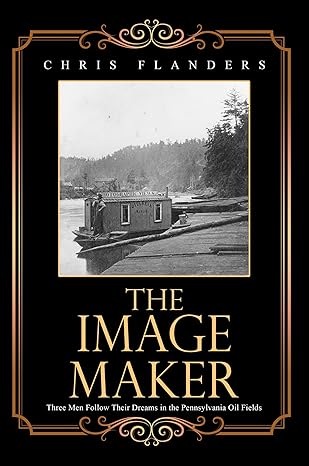

The book follows three men, John Mather, Charles Miller, and Patrick Boyle, whose lives intersect in the early days of the Pennsylvania oil boom. John is a restless photographer determined to capture the grit and grandeur of an industry in its infancy. Charles is a disciplined young soldier whose sense of duty shapes his choices in the Civil War era. Patrick is an impulsive dreamer from an Irish immigrant family, eager to escape the small-town life that feels too small for him. Their stories unfold against a vivid backdrop of muddy streets, booming derricks, political tension, and the ever-present lure of fortune. While grounded in historical fact, the novel moves with the ease of personal storytelling, never drowning in dry details.
I found the writing to be grounded and full of texture. Chris Flanders has a knack for painting a vivid picture without making it feel like a history lesson. The voices of the three men are distinct. John’s ambitious restlessness, Charles’s measured sense of order, and Patrick’s raw yearning. The pacing struck me as unhurried yet purposeful. Some passages lingered on small domestic or mechanical details, and instead of feeling tedious, they made the world feel lived-in. The narrative sometimes wandered, and I caught myself wanting certain plotlines to move faster. But when the moments landed, like a dramatic freshet scene or a tense exchange between characters, they landed hard.
The emotional heart of the book for me was less about oil or war and more about the push and pull between ambition and belonging. Each man is chasing something: security, glory, independence, but they’re also tethered to the people and places they can’t fully leave behind. I felt the quiet ache in John’s marriage, the wary pride Charles took in his promotion, and Patrick’s mix of fear and thrill as he signed enlistment papers. The dialogue read naturally, without feeling over-polished, and I appreciated that not every conflict had a neat resolution. Life in the 1860s oilfields was messy, and the book doesn’t shy away from that.
I’d recommend The Image Maker to readers who enjoy historical fiction that feels both relatable and vivid. If you like stories where real events breathe through the grit of everyday life, this will draw you in. History buffs will appreciate the accuracy, but even if you don’t usually reach for that genre, the characters are engaging enough to keep you turning pages.

Greed and Treachery
The Image Maker follows three men chasing opportunity, legacy, and identity in the Pennsylvania oil fields during the Civil War era, whose lives intersect during this pivotal time in history. What was the inspiration for the setup of your story?
The inspiration for the setup for the story told in The Image Maker was a conversation with a friend a couple of summers ago. Her family has a rich archive of information about their great-grandfather, who was an integral part of the processing of crude oil shortly after it was first pumped from the ground by Drake in 1859. Before this, oil was a commodity that the Indians used for salves, war paint, and to caulk their canoes. The early settlers found it a nuisance, contaminating their well water and always floating on the shallow oil creek waters.
I met, through the first family, another whose great-grandfather was a roustabout, doing all jobs required to get oil out of the ground. He became an oil scout, a spy for an oil company who hid behind bushes to find out whether the competitor’s well was a gusher or if it was a bust, often in peril of his life. He became the editor of the international oil newspaper, the Oil City Derrick, a resource for all oil people on current production, a breakdown of what was happening and where, and new tools invented on the spot to make oil production easier. Papers, photographs, and family tales from these two sources gave me the impetus to tell their stories. I added a photographer who became as famous, and Brady, who photographed the Civil War atrocities at about this same period. John Mather, glass negative by glass negative, taken in the fields, and often in danger from the gushing oil, documented the complete history of the infancy of the petroleum industry.
What intrigues you about this time period enough to write such an interesting and engaging period piece?
This time is within that of my grandparents and great grandparents, who were all alive when I was growing up, across the PA border from where this happened. Around 1880, oil was being found in the southern half of our county. So much of the background information needed to write about another period didn’t come from books or the internet, but from my 101-year-old father, a historian, who read the chapters, one by one, and helped my accuracy and added the smells and tastes of that time. His sharp mind and his love for history molded my writing career. My other books include the Book of Fretz, a 1750 historical novel on Kindle about one of my relatives coming at great risk to his life to America. I’ve also written a history book called The Bemus Point-Stow Ferry: A History about the early history of the Chautauqua Lake region. This Ferry started as a raft in 1811, crossing the narrows of the lake, and over the years became a barge carrying cars and people across the lake. It was fun showing how the whole history of our region was centered by this small ferry, now in her 114th year of continuous service. I gave the proceeds of the book to the Ferry to help with the maintenance of this aging piece of history.
What were some themes that were important for you to explore in this book?
The themes of this book included the prevailing greed and treachery of the early days of oil coming out of the ground in a very rural farming area, an area where the only export was wood from their hilly farms. The sudden wealth was mind-altering, making some folks very rich while others lost everything. The towns of only several hundred people were suddenly cities full of hotels, barrooms, brothels, and churches. Factories for processing the oil were along the shallow oil creek, while the barrels of oil, carried on barges, could only get to the deep flowing Allegany River by flooding the creek from the oil logging ponds along the way. Railroads were built, and when the independent drillers were at their best, along came Standard Oil and the underhanded buying up of all transportation, processing, and drilling businesses. You joined them, or you were doomed. The story is told from the three main characters and their families and friends. It gives the story an ability to relate to their feelings of hope, of despair, and of the importance of family. All three characters have flaws, but don’t we all?
What is the next book that you’re working on, and when can your fans expect it out?
I am currently writing a story, quite unlike The Image Maker. A friend read it and came to me saying her Great Grandmother was “something else, quite a character.” I was intrigued right away. She provided hours of family stories that I recorded, papers, short pieces written by Lila, and thousands of slides to plow through. Lila was born in 1906 in North Dakota. She got off the farm to live with her older sister in Chicago in 1930, working at Cook County Hospital in the typing pool. She was assistant to the CEO within 2 years. From there, after being jilted by her pilot boyfriend as WWII started, she joined the WACS. She went directly to Italy, where she was an administrative assistant to Patton as he took Italy and marched on to Germany. After the war, she took a job as an administrative assistant to the Army Corps of Engineers in Alaska, where she worked summers, spending her winters in San Diego. There she started going on trips, wherever the vessel went, on trawlers and freighter ships. She eventually circumnavigated the globe several times in her lifetime. She was never married but was seldom alone. What a setup! This should be out late 2027.
Author Links: GoodReads | Facebook | LinkedIn | Amazon
The Image Maker
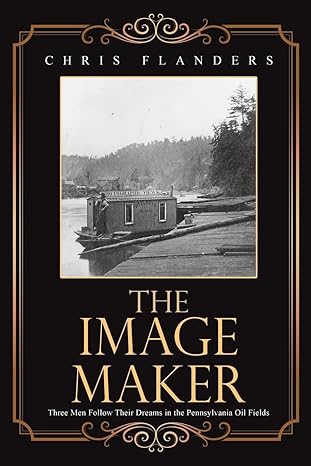

The Image Maker is a historical novel that follows the intertwining lives of three ambitious men, John Mather, Charles Miller, and Patrick Boyle, as they chase opportunity, legacy, and identity in the booming Pennsylvania oilfields during the Civil War era. Mather is a driven photographer obsessed with capturing the rise of the oil industry. Miller, a soldier turned industrialist, transforms hardship into wealth through sheer discipline. Boyle, full of restlessness and bravado, joins the Union army as a wide-eyed teen and matures through the brutality of war. Their separate but overlapping journeys unfold across muddy roads, oil-slicked rivers, and tense political moments, painting a vivid portrait of ambition, loss, and grit in 19th-century America.
What struck me most about this book was how real the characters felt. I found myself rooting for Mather even as he neglected his wife to chase photos of oil gushers. He was flawed but fascinating. His obsession with documenting progress, even if it meant losing himself, hit a nerve. The writing was clean, not flowery, which made the emotions hit harder. Flanders doesn’t drown you in exposition. Instead, she invites you into the sweat and smells and hunger of the time. It felt like watching history from behind the lens of someone who was living it, not reading it from a textbook. The story had a pulse, even in its quiet moments.
There were times, though, when some transitions were abrupt. At times, I would have enjoyed seeing the characters wrestle with the weight of what they were doing. Especially Boyle, his growth was interesting, but I wish we’d stayed longer in his head during those pivotal moments. Still, I was impressed by how well Flanders balanced historical detail with forward momentum. You don’t need to know a thing about oil or the Civil War to be pulled in. It’s the people who keep you turning the pages.
I’d recommend The Image Maker to readers who love character-driven historical fiction with a sense of place and a heartbeat. If you like stories about ambition, sacrifice, and chasing something bigger than yourself, even when it costs you, you’ll probably get something out of this. This book reminded me why I love historical fiction when it’s done well. It doesn’t just tell you what happened, it shows you what it felt like to live through it.
Pages: 272 | ASIN : B0F7M1FBSY




 LITERARY TITAN