Blog Archives
Commi Kitchen
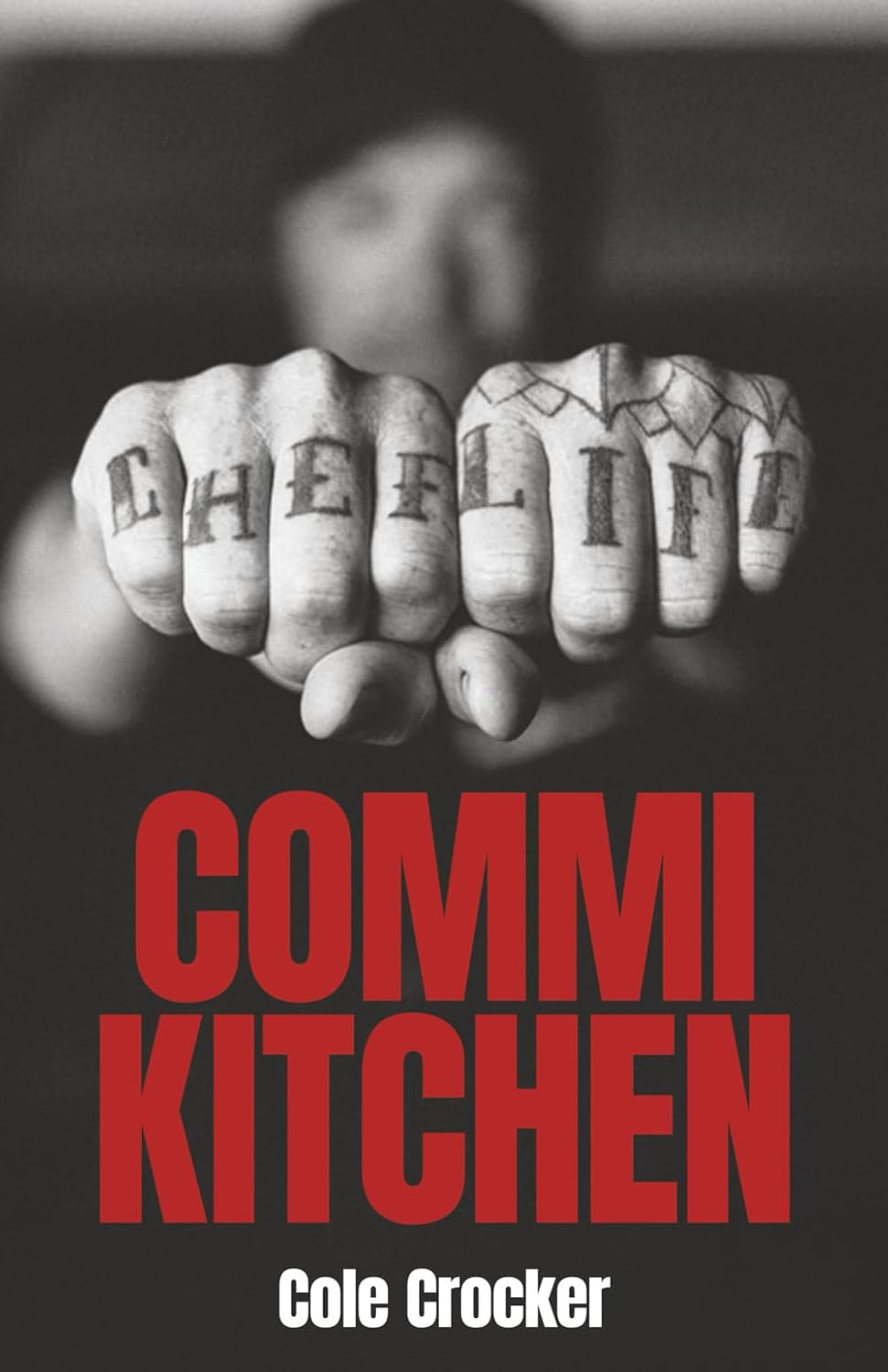

Commi Kitchen drops you into the chaotic, greasy, hilarious, and sometimes heartbreaking world of underground chefs hustling through shared commissary kitchens. The story follows Brand, a wide-eyed chef trying to get his catering business off the ground while working in a rundown kitchen filled with misfits, burnouts, and culinary dreamers. What starts as a slice-of-life about kitchen culture quickly turns into something deeper, a gritty, honest look at ambition, failure, and the strange family you find in unlikely places.
The opening chapter immediately drew me in, especially when Brand nervously declares, “My name is Brand, and I like to eat,” only to be roasted by high school kids. Ten pages later, he’s sweating in a chaotic commissary, dodging insults and grease splatter. Crocker’s writing feels raw and unfiltered, like the kitchen itself, grimy, hot, alive. The dialogue pops with realism; Abe, with his cigarette and cane, might be one of the most vividly drawn “managers” I’ve ever read. You can smell the burnt toast and old socks in every scene. The book has a way of making even the worst kitchen nightmare feel strangely poetic.
But what really got me was the way Crocker captures the rhythm of a cook’s life, the stress, the exhaustion, the twisted sense of pride. When Brand and his buddy Jim pull off their first catering event, it’s chaos and comedy rolled into one: sauce buckets spilling, a fuming bride, a furious wife, and then pure joy when the guests rave about the food. That moment when the salsa explodes across the floor had me laughing out loud and wincing at the same time. Crocker nails that emotional whiplash between triumph and disaster that anyone in the service industry knows too well. It’s not glamorous, but it’s real.
By the second half, the story shifts from kitchen antics to something darker and more introspective. Brand’s encounters with bizarre characters, like Oliver and Bob, the creepy old caterers who might be accidentally poisoning funeral guests, add this weird, almost dystopian layer to the story. The “Commi” itself starts to feel alive, like a haunted maze of ambition and decay. There’s this eerie moment when Brand finds Abe literally rehydrating a brick of weed over a stock pot, and I thought, “Okay, this kitchen’s officially gone to hell.” Yet even then, Brand keeps showing up, keeps cooking, keeps trying. It’s absurdly human.
What surprised me most was how emotional the book became without ever turning sentimental. Beneath all the grime and absurdity, there’s this quiet current of hope. Brand isn’t chasing fame, he’s chasing purpose. He wants to feed people, to prove that what he does matters, even when no one else seems to care. Crocker’s writing style mirrors that grind; it’s quick, punchy, and never overpolished. Sometimes the sentences hit like kitchen clangs; other times, they slow down just long enough for you to feel the heat, the loneliness, the small victories that make it all worth it.
Commi Kitchen is a love letter to the misfits who make magic in broken spaces, the cooks who burn themselves out chasing perfection on a dented prep table. I’d recommend it to anyone who’s ever worked in a kitchen, loved a dreamer, or just enjoys stories that don’t clean up the mess before serving it. This book isn’t fancy cuisine, it’s a wild, honest plate of real life, served hot and a little smoky around the edges. And I couldn’t get enough.
Pages: 445 | ASIN : B0FNQ6QT6P

From Foie Gras To Jello
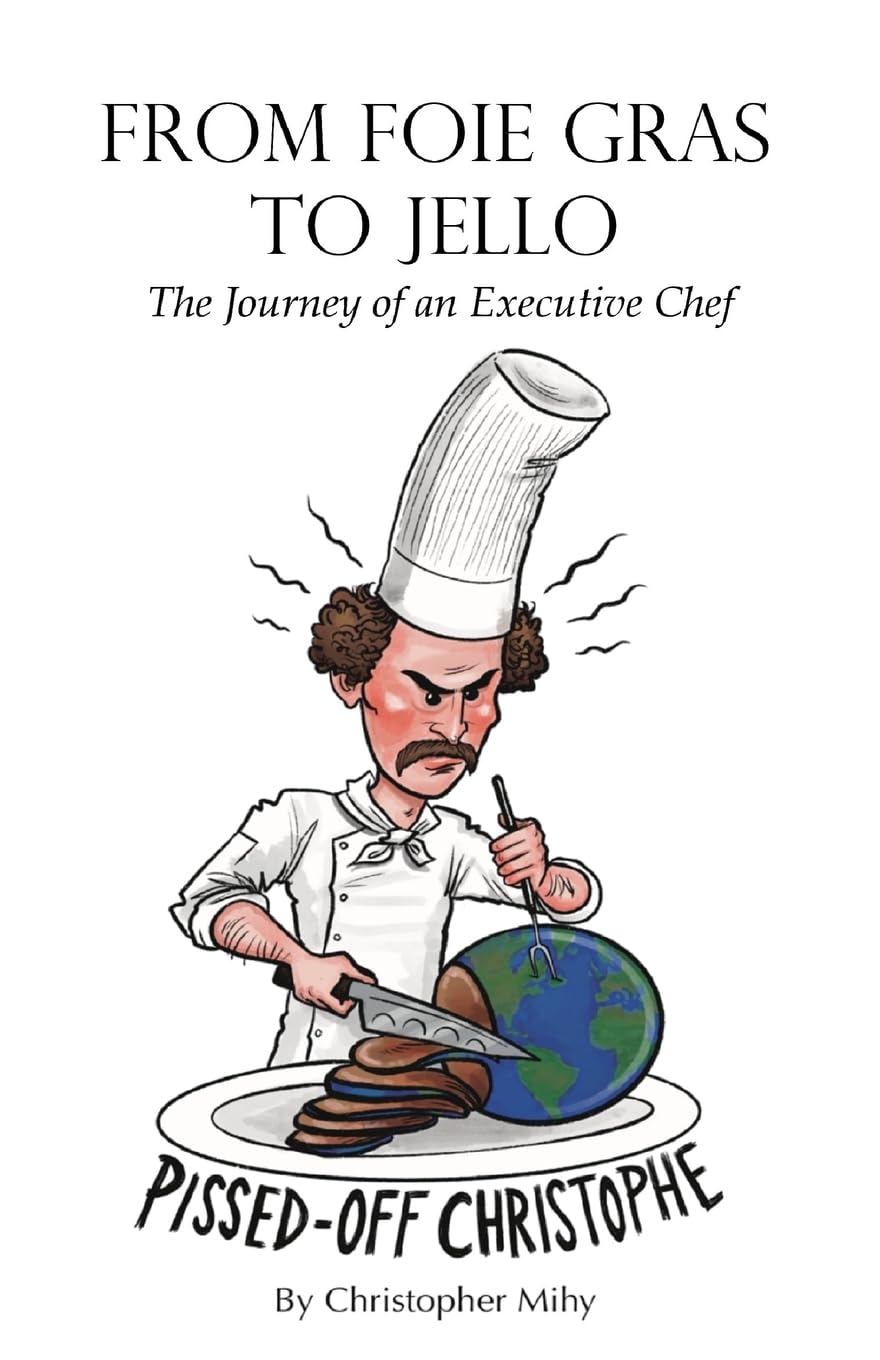
From Foie Gras to Jello is the raw, funny, and sometimes bruising life story of a chef who never stopped fighting his way forward. Christopher Mihy takes us from his childhood in the idyllic French town of Dieulefit to the blistering kitchens of Las Vegas. He recounts a life that swings between triumph and chaos, love and betrayal, hard-earned success and the relentless grind of the culinary world. The book reads like a casual conversation. It’s sharp and full of vivid moments that make you wince and laugh in the same breath. Mihy’s voice is direct, his humor dark, and his honesty disarming.
This book hit me harder than I expected. It isn’t polished like a typical celebrity memoir. It’s gritty, loud, and relatable. Mihy writes like a man who’s lived through a hundred lives and doesn’t care to sugarcoat a single one. His storytelling shines when he describes the kitchen, the smells, the noise, the violence of it all. You can feel the steam, the sweat, the bruised egos. And then there’s the vulnerability. He talks about heartbreak, humiliation, and redemption with a kind of humility that sneaks up on you. I found myself rooting for him, even when he was at his lowest, because he never stopped showing up. His pain feels real, his humor feels earned, and his victories, small or large, feel like yours too.
The pacing slows sometimes, but Mihy’s voice never loses its grip. It’s like hearing an old chef telling stories after a long service, when the knives are down and the whiskey’s out. There’s grit, but also grace in how he reflects on his mistakes. It reminded me that success in life isn’t about perfection. It’s about persistence, humility, and a bit of madness. His journey from “Foie Gras to Jello” isn’t just a metaphor for his career; it’s a statement on how far we fall and how hard we climb to get back up.
By the end, I felt both exhausted and inspired. Mihy’s story is not just for food lovers or hospitality folks. It’s for anyone who’s ever chased a dream and been knocked flat by it. If you’ve ever burned out, started over, or found yourself wondering why you keep fighting for something you love, this book will resonate with you.
Pages: 158 | ASIN : B0FQFJRVBX

Authenticity and Sacredness

Improvising in Italian is a heartfelt memoir that shares your journey of moving to Modena, fueled by a blend of optimism, romance, and idealism, and the personal unraveling that follows. Why was this an important book for you to write?
When we moved to a small town in northern Italy, we were surrounded by beautiful scenery, ate delicious food, and met wonderful new friends, all while dealing with the country’s notorious bureaucracy. The typical things you’d expect from Italy. But our experience living there ended up being a unique one. We found ourselves in crazy, once-in-a-lifetime situations like getting involved in trying to sell Stradivarius violins and a Raphael painting, and we met colorful people. Then, when COVID-19 hit, we were in strict lockdown, and this put a strain on our marriage. All this made me reflect on my childhood living in various countries around the world, my mother’s death, and raising my children.
What were some ideas that were important for you to share in this book?
Some of the themes in my book center around the idea of freedom, change, being categorized – the world broken down into clubs – and our search for the perfect meal, especially traditional dishes made with unprocessed ingredients, which represents authenticity and sacredness.
What was the most challenging part of writing your memoir, and what was the most rewarding?
The most challenging part of writing my memoir was exposing my vulnerabilities and ignoring the voice in my head that worried about what people were going to think of my story.
The most rewarding thing about writing this memoir was being able to look back on an interesting but difficult time and learn something from it.
What do you hope is one thing readers take away from your story?
That life is about change, and even though there are no guarantees that things will turn out as planned, we should be open to new possibilities.
Author Links: GoodReads | Website | Amazon
Improvising in Italian, narrated with candor and humor, is an honest appraisal of the romance and pitfalls of being a global nomad in a fast-changing world. It follows the couple as they survive missteps and setbacks-while struggling to maintain their love and friendship-improvising their way through it all.
Improvising in Italian

Improvising in Italian is a heartfelt memoir by Jennifer Artley that traces the winding path of a woman who moves to Italy in search of meaning, healing, and perhaps a sense of permanence. The story centers on her family’s relocation to Modena, fueled by a blend of optimism, romance, and idealism, and the personal unraveling that follows. At the core is the difficult departure of her teenage daughter, who chooses to return to the U.S., leaving Artley grappling with loss, identity, and questions about the life she has built. Through lyrical scenes and sharp reflections, Artley threads memories from her nomadic childhood with the chaos of present-day expatriate life. Food, family, and place become the fabric of the tale, stitched together with bittersweet honesty.
Reading this memoir felt like sitting across from a friend at a kitchen table, talking long into the night. Artley’s voice is vulnerable and unguarded. She tells it like it is. What struck me most was her ability to blend humor with heartbreak. One minute, I was laughing at her chaotic car rides through Italy, and the next, I was floored by the quiet grief of watching her daughter slip away. The writing flows easily, but it’s far from simple. She nails those small, aching truths of parenting, how love and guilt and hope get tangled up. I could feel how much she wanted this dream in Italy to work out, and I ached with her as that dream slowly fell apart.
What also stood out was her attention to detail, especially around food and culture. The way she described the tortellini in brodo or the smell of balsamico vinegar aging in attics. But more than just a tour of Italy’s cuisine, the book becomes a meditation on what it means to belong. Artley doesn’t hide her doubts or frustrations. Italy isn’t romanticized. It’s messy, inconvenient, beautiful, and frustrating all at once. That complexity made the memoir land in a very relatable way. Her decision to root herself, despite the chaos, is an act of quiet courage. And there’s a raw admiration in how she holds space for both her own heartbreak and her daughter’s independence.
This book will speak most to people who’ve taken big risks and had to live with the consequences—parents, expats, wanderers, or anyone trying to find home in a world that keeps shifting. It’s not a feel-good story in the conventional sense, but it is a deeply felt one. I’d recommend Improvising in Italian to readers who appreciate memoirs that pull back the curtain and show the vulnerable moments.
Pages: 204 | ASIN : B0DX3Q9NW1
A Chef on Ice

In A Chef on Ice, author Sebastien JM Kuhn invites readers to embark on a remarkable journey to the remote and enigmatic continent of Antarctica. Drawing from his unique experience as a chef in this icy realm, Kuhn narrates the challenges of enduring extreme weather conditions, long days, and nights while basking in the serene beauty of Antarctic nature, observing penguins and seals in their native habitats. His narrative extends beyond the Antarctic landscape, delving into his culinary ventures in Australia, discoveries about his family history in South Africa, and the challenges brought on by the COVID-19 pandemic.
This book is rich with captivating elements. Kuhn’s eloquent descriptions bring the Antarctic wilderness to life, complemented by photographs that illustrate the landscapes and moments he describes. The book skillfully intertwines themes of nature’s majesty with gastronomic delights. Kuhn’s vivid portrayal of battling the “intense coldness right inside my bones,” even with layers of clothing, highlights the book’s immersive nature. A key feature of A Chef on Ice is its culinary focus. Kuhn shares tantalizing food descriptions interspersed throughout the narrative, culminating in a collection of special recipes. These are sure to entice both culinary professionals and enthusiasts alike. The narrative is also a testament to Kuhn’s resilience and entrepreneurial spirit as he navigates the complexities of running a food business in various challenging environments. The book introduces readers to memorable people, such as Tina, whose warmth and friendliness shine through, and Sharon, known for her unflappable nature in stressful situations.
A Chef on Ice is more than just a travelogue or a culinary journal; it is an engaging compilation of exploration, cooking, culture, business acumen, and personal growth. This book promises to inspire readers with a taste for adventure and a love for the culinary arts. Sebastien JM Kuhn’s journey is not just a culinary exploration but an invitation to experience the convergence of diverse worlds through his eyes.
Pages: 273 | ASIN : B0CW1LNGQG


