Blog Archives
Immersion and Enthusiasm

Lucas Cabral and the Secret of the Amazon follows a group of guardians who must scramble to protect three newborn warriors while themselves being hunted by the Lord of Darkness. What was the inspiration for the setup of your story?
This story was born from a moment of inspiration during a trip, while listening to the song “I Save the World Today” by the Eurythmics. The narrative is structured into five fundamental parts and explores the eternal struggle between Good and Evil. It begins with an epic battle between a thousand Templar knights and a creature determined to destroy humanity. A surviving Master Templar prophesies the birth of three Warriors with special gifts who, together, will be the only hope for victory. For a millennium, while the Enemy’s servants have relentlessly searched for these children, a secret Brotherhood has been formed to protect them. Each Warrior of Light is assigned a Guardian who is prepared to give their life for them if necessary.
What is it that draws you to action and adventure tales?
I love writing stories filled with action, mystery, and adventure because I know how effectively they engage young readers – a mission I consider deeply important. When a theme is truly exciting, readers become so enthralled that they cannot put the book down, remaining captivated from the first to the very last page. Creating that sense of immersion and enthusiasm is exactly what draws me to this genre!
What were some themes that were important for you to explore in this book?
Beyond the classic battle between Good and Evil, I wanted to explore fundamental values such as solidarity, companionship, and loyalty. Environmentalism and ecology are also central themes; I wanted to raise awareness about the risks the Amazon rainforest faces due to unbridled ambition, greed, and the short-sightedness of those who put our entire planet in danger.
Can you give us a glimpse inside the next installment in this series? Where will it take readers?
The next book will be Fernão Dias and the Mystery of the Black Stones. It features the third Warrior of Light, born in Angola, who possesses very different gifts from those of Sofia Gama and Lucas Cabral. It is an incredibly emotional and thrilling book that continues this global mission to protect the Light.
Author Links: GoodReads | Amazon
Moral Danger

The Founding Scroll follows a ledger-trained merchant’s daughter who accidentally touches a run-shifting guild scroll labeled Vow of Accord / Twelfth Hand, leaving her Oathbound and forging the beginnings of the Vowforged. What was the inspiration for the setup of your story?
The inspiration came from a blend of gaming, anime, and real-life responsibility. I’ve spent years playing games like New World, World of Warcraft, and Elder Scrolls Online, and I’ve always loved how life-skills, crafting, and non-combat systems give players identity and purpose beyond fighting. Those systems feel lived-in, and they make the world believable. I wanted that same feeling in The Founding Scroll.
Anime such as Shield Hero also influenced the story, especially the idea of power that isn’t glamorous or chosen, but forced upon someone who never asked for it. Seren doesn’t begin as a warrior or a savior; she’s trained to track, record, and survive through systems. When she touches the scroll, the power she gains isn’t freedom; it’s obligation. That idea mirrors real life far more than traditional hero narratives.
Seren doesn’t just gain power; she gains public responsibility. How did you approach writing leadership as something morally dangerous as well as necessary?
Leadership in this story is shaped by my own experiences with responsibility, particularly decisions made through co-parenting, where the right choice isn’t always the one that benefits you personally. Sometimes leadership means choosing stability, protection, or fairness for others, even when the outcome costs you something. That tension is at the heart of Seren’s growth.
I wanted leadership to feel exposed and irreversible. Once Seren becomes visible, every decision she makes carries public consequences. There’s no version of leadership where she can please everyone or walk away unscathed. That moral danger, knowing that even the best choice will still hurt someone, is what makes leadership necessary, but never comfortable. Power in this world isn’t about dominance; it’s about carrying the weight of impact.
What role does the in-world codex play for you as a storyteller?
The codex is the structural backbone of the world. As a storyteller, it allows me to build a setting that feels governed rather than improvised. It defines how oaths function, how systems interact, and why consequences exist. Instead of magic being vague or reactive, it operates through rules that characters must learn, challenge, and sometimes exploit.
Beyond the page, the codex represents a larger creative vision. It’s designed to support expansion into multiple formats, whether that’s tabletop storytelling, interactive experiences, or visual adaptations, without losing internal consistency. I’ve always felt that many fantasy worlds are missing connective tissue between mechanics and meaning. The codex lets me fill those gaps, creating systems that feel discoverable, intentional, and alive.
Where does the story go in the next book, and where do you see it going in the future?
The first book is designed to complete a full rise-and-trial arc. Seren’s journey establishes her as a leader whose influence comes not from force, but from trust, trade, and the systems she helps shape. By the end of the story, she earns legitimacy, but that legitimacy comes with a visible cost. The world begins to recognize that her voice doesn’t just affect people; it affects how power itself moves.
The next book expands the scope of the story while deepening its relationships. As Seren’s influence grows, so does the complexity of leadership, particularly around partnership and responsibility. The world is structured so that growth feels earned, layered, and discoverable, where progress comes from systems, cooperation, and long-term choices rather than brute force. This is also where familiars take on a more prominent role. They aren’t pets or accessories; familiars aren’t pets in this world, they’re reflections of trust, role, and responsibility. They reinforce identity and function, shaping how individuals and groups operate together rather than acting as isolated sources of power.
Looking further ahead, the series explores legacy. It asks what happens when systems, oaths, institutions, and alliances become larger than the people who created them. As influence scales, those systems begin to strain, and Seren must confront whether they can evolve without losing the values they were built on. The familiars, like the people bound to them, become part of that question: what is chosen, what is inherited, and what endures.
Each book builds outward from personal survival, to shared leadership, to long-term consequence, while leaving room for future stories that explore different perspectives within the same world. At its core, the series isn’t just about gaining power, but about deciding what kind of world that power ultimately sustains.
Author Links: GoodReads | X (Twitter) | Facebook | Website | Amazon
Seren has spent her life balancing ledgers, not shaping history. But when she accidentally binds herself to an ancient guild oath—the Vow of Accord—her quiet world is pulled into a system far older and more dangerous than she imagined.
In a realm where contracts shape reality and trust is a form of power, Seren must navigate guild politics, rival merchants, and unseen forces that seek to control what she represents. Leadership is earned, not claimed. Every promise carries weight. And every decision leaves a mark.
The Founding Scroll is a system-driven fantasy about leadership, responsibility, and the cost of building something others depend on. Blending immersive worldbuilding with moral tension, it offers a fresh take on power—one forged through cooperation rather than conquest.
⭐ Perfect for readers who enjoy:
Guild-focused fantasy
Strategic worldbuilding
Moral leadership dilemmas
Progression with real consequences
Significant Purpose

The Legends of Astorynia: War of Wars Ending follows a young elf hunter who gets pulled out of his quiet life in Edengrove and dropped into the middle of a world-ending war. What was the inspiration for the setup of your story?
I actually began writing my book on a whim. What inspired me to write fantasy was everything fantasy, I guess (LOTR, Elder Scrolls, Dragonlance Chronicles, D&D, etc., etc.). I’m a huge, huge fan of the genre.
What made me want to write an actual full-length book would have to be The Hobbit by Tolkien. It was the first novel I had ever read from cover to cover, and I fell in love instantly. It wasn’t even so much the story itself, but how it was written, that I loved so much. I must have read it a dozen times by now. I sometimes still crack it open randomly and read passages or excerpts just to appreciate how well-crafted it truly is.
I started my story much like Tolkien started The Hobbit. I just wrote the first sentence off the top of my head without any plan or idea of what it would become, and then just rolled with it.
I began writing my book when I was 24, though I treated it more like a hobby than anything serious. I would write a paragraph or two here and there, sometimes several months apart. And on very rare occasions, an entire page! This went on for about 12 years, resulting in a mere 6 chapters.
A few years back, when I was between jobs, I decided to finally finish my book with the free time I had available. I would start at 6 am and grind away at the thing until midnight. I did this for 14 days straight. The result was a novel (War of Wars Ending) and 6 prequel novellas—approx. 140K words total (5 days on the novel and 9 on the prequels). I didn’t even mean to write any more than the main novel, but once I got started, I just couldn’t stop until the entire thing was out of my system.
It was a lot of fun to write!
Keagle begins as a quiet hunter and ends as a central figure in a world-altering conflict. What defines his growth?
Determination, courage, and persistence.
The story emphasizes loyalty across races and backgrounds. Why was chosen family such a central theme?
I just like the idea that no matter who you are, or where you’re from, there is a significant purpose for you somewhere in the world, even if you’re completely oblivious to it.
What lessons or values do you hope younger readers especially take away?
That anyone from anywhere can make a difference that truly matters. It’s not about where you’re from but how far you’re willing to go that defines you.
Author Links: GoodReads | X (Twitter) | Facebook | Website | Amazon
When a young Elf named Keagle meets a wise wandering wizard called Mannus, his small-time adventures become a grand one in this thrilling and epic action-adventure fantasy of one world uniting against an ancient evil.
In the world of Astorynia (Astor-eenie-uh) as war is ever wavering on the horizon, a group of companions, led by Mannus, travel the lands to bring together and unite the armies of Elves, Gnomes, Dwarves, Gruflyn, and Man against the ever-growing evil that is spreading. They strive to bring the People’s Army together one last time to put an end to this menace.
The vile creatures of the southernmost mountains of Shadowrock are led by a wicked sorceress known as Veldora. She leads this evil army of Vurkyn into battle against all the peoples of all the lands of Astorynia, to try and take the world for reasons all her own.
She must be stopped at all costs, and the company of companions are the ones to get the job done. With the help of a guardian dragon, they go to war to destroy this evil once and for all.
This is the story of the final war to end all war in the world of Astorynia.
The Clometheons


In The Clometheons, a science fiction novel with a strong spiritual and emotional core, we follow Jenelle, a solitary seamstress living in a remote valley whose life has been shaped by a past lightning strike that nearly burned her world down. When a storm rolls in with lightning that sometimes has no thunder, time that seems to freeze, and a comet-like streak of light that falls into the woods, her private battle with trauma suddenly collides with a much bigger one: an interdimensional conflict between TUPO and the Deugeotvites, watched over by mysterious beings and embodied in things like a glowing orb named Dot and a living doll called Stitch. As Jenelle, her sister Linda, her niece Melissa, and their friends get pulled into this strange war, the book shifts from small, weather-beaten cottage life to questions about peace, restoration, and what it actually means to trust.
The writing leans into vivid, sometimes almost playful description: thunder sounds like trucks in tunnels, storms feel like cauldrons whipped by a cranky wizard, and anxiety is this stomping thing in your gut that will not sit still. I enjoyed that a lot. It gave the science fiction a grounded, sensory feel, like the cosmic story had mud on its boots. I never doubted that the author cared about these characters. Jenelle’s fear of lightning, her stubborn attempts to pull up her big girl pants, and Linda’s protective streak all felt human and messy in a way that suited a character-driven sci-fi story more interested in hearts than hardware.
What surprised me most was how the book handles the big ideas under all the strange terms and factions. On the surface, you have TUPO, Deugeotvites, triglets, and travelers, but underneath that, I heard very familiar questions: What do you do with trauma that never really leaves? Is peace something you fight for or something you receive? How far do you go to keep others safe, even when you are terrified yourself? There is a clear spiritual layer here, not preachy, but present, especially in the way storms, second chances, and “miraculous” timing show up in Jenelle’s life. The science fiction framework lets the author talk about good and evil, loyalty, betrayal, and restoration in a way that feels like a parable in motion. I did feel the book’s length, and sometimes the pacing wandered when I wanted the main conflict to stay sharper.
I felt like I had spent time in a very particular corner of science fiction: one that cares as much about emotional scars as it does about cosmic battles. If you enjoy character-focused, spiritually flavored science fiction that mixes small-town living with interdimensional stakes, and you are okay with some extra flourishes in the prose along the way, The Clometheons will hit that sweet spot. Readers who like their genre stories thoughtful, hopeful, and a bit talky will get the most out of it, especially if they are willing to sit with storms, both in the sky and inside a person’s chest.
Pages: 658 | ASIN : B0FNYK44LJ

Lucas Cabral and the Secret of the Amazon: The Warriors of Light Series

Lucas Cabral and the Secret of the Amazon sweeps through prophecy, danger, and a race against time as ancient forces stir and evil claws its way toward freedom. The story moves from a cursed Templar temple to modern Brazil, where the birth of three extraordinary children sends shockwaves through the world. As Brotherhood guardians scramble to protect the newborn Warriors of Light, sinister servants of the Lord of Darkness hunt them across continents. The book blends myth, adventure, and heartfelt human moments in a tale about destiny, courage, and the fragile balance between good and evil.
This was an exciting story, and I felt the excitement right from the beginning. The writing has a bold, cinematic quality. At times, it feels intense, even breathless, because danger lurks behind so many corners. I loved how the book shifts between sweeping prophecy and very grounded moments, especially the scenes with Rafael navigating airports while holding onto fear and faith at the same time. The mix of mysticism and real-world tension pulled me along, and that slow but steady buildup was thrilling.
I also felt a warm connection to the characters. Rafael’s devotion struck me deeply. He’s not flashy or loud. He’s steady and scared and determined, which made him feel real to me. Tendy and Paulo brought softness and heart into the story, and the Amazon setting felt rich and alive. There were moments when I wished the pacing slowed down to give me more time with them, but even then, I admired how the author kept the story moving along. The ideas in the book made me think about legacy and responsibility and how ordinary people rise when the world seems to be falling apart.
By the time I reached the last pages, I felt both satisfied and curious about what comes next. I would recommend this book to readers who love fast-moving adventures, mythical prophecies, and stories where ordinary characters carry extraordinary burdens. It’s a great pick for anyone who enjoys young adult fantasy with a global scope and a good dose of heart.
Pages: 283 | ISBN : 978-1962185776
Stillness and Reflection

Shifting Sands follows the survivors of Sol Thalen in the aftermath of its fall as they try to rebuild their culture and society when everything has literally been destroyed. How did you approach writing about this destruction and your characters’ response to it?
For me, destruction is never just about the physical loss of a city—it’s about what happens to identity, purpose, and relationships in the aftermath. When Sol Thalen fell, it wasn’t just the loss of a home; it was the unraveling of legacy, belief, and the illusion of safety. I approached the writing with a deep sense of grief—both personal and communal. I asked myself, What do people hold onto when everything collapses? The characters’ responses came from that place of questioning. Just as some characters choose hope—clinging to survival and the chance to rebuild and dream of a future—others give up hope for themselves, often believing that their own death or disappearance might still serve a purpose. There’s this tragic tendency to justify surrender as a kind of sacrifice: If I fall, maybe someone else can rise. That contrast—between hoping for self and hoping for others—is the heart of the emotional conflict I wanted readers to feel. It’s rarely clean or heroic. It’s messy, human, and deeply personal. And it’s in those moments, I think, that the soul of a story reveals itself.
It seems you took your time in developing the characters and the story, creating a great emotional impact while the survivors process what is left of their world and civilization. How did you manage the pacing of the story while keeping readers engaged?
Thank you—that means a lot. Pacing is something I pay obsessive attention to. I wanted the emotional beats to land, but I also didn’t want the story to feel like it was dragging its feet. What I aimed for was a rhythm: moments of stillness and reflection followed by bursts of urgency. It’s like breathing. When the characters pause to mourn or reflect, the reader breathes with them. But when danger returns—and it always does—they’re pulled right back into the action. I layered multiple storylines so that even when one character is reeling, another might be scheming or moving forward. That way, readers never feel stuck. There’s always a heartbeat somewhere.
I also use an outline, and I’m meticulous about following it. That’s where I catch when there’s too much breathing space, when a chapter feels like it’s meandering, or when a sequence clearly needs to be tightened with rising tension or sharper stakes. The outline becomes a map of emotional flow and momentum, helping me keep that delicate balance. I layered multiple storylines so that even when one character is reeling, another might be scheming or moving forward. That way, readers never feel stuck. There’s always a heartbeat somewhere.
Are you a fan of the fantasy and adventure genres? What books do you think most influenced your work?
Absolutely, I’m a lifelong fan. Fantasy gave me the language to talk about things I didn’t always have words for—identity, grief, power, longing. I grew up reading Tolkien and C.S. Lewis like many others, but it was later on that I was deeply moved by authors like Brandon Sanderson, Cassandra Clare, J.K. Rowling, and Ursula K. Le Guin. Each of them, in their own way, showed me that fantasy could be epic and intimate. That worldbuilding could serve emotional truth. Their works taught me that it’s not just about dragons or swords or kingdoms—it’s about the people who bleed and hope in between. I try to carry that into every page I write.
I hope the series continues in other books. If so, where will the story take readers?
Thank you—and yes, it absolutely does continue. Shifting Sands is the fourth installment of a five-book saga, and the next book is the finale, where everything comes to a head. The choices made in Shifting Sands ripple outward, and readers will be taken to corners of the world that have only been hinted at until now. The political game gets even deadlier. Old wounds resurface. And the more fantastical elements take center stage in ways that force the characters to question not just their loyalties, but their very sense of identity.
If Shifting Sands was about surviving the collapse, Ancient Paths is about reckoning—learning who you really are when certain truths come to light, and deciding what kind of legacy you want to leave behind. Some legacies, after all, might be too broken to rebuild. And some people may discover they were never meant to serve themselves, but something far greater.
Readers have often told me they don’t know how the stakes could possibly get any higher—and to that, I say: I’m excited for them. Many have also noticed how I tend to plant seeds in earlier books that only bear fruit later on. Well, this fifth and final book is where all those seeds bloom. Every thread comes together. Every secret is revealed. This is the climax of everything.
Author Links: GoodReads | Facebook | Website | Amazon
THE DAWN OF A NEW ERA IS ALWAYS PAID IN GRAVES. And with the Sunken City subdued and Sol Thalen fallen, this truth has become undeniable. The Cycle of the Capitals has ended, leaving a world fractured by distance and silence. As Chris joins a people in exodus, he finds no victory left untainted—every gain paid for in blood, every cost sharpening like a blade. Joined by the new Chronicler, he journeys in a final attempt to save a scattered remnant from extinction—and soon realizes he must confront the creature within him… and accept that surviving the monsters around them may require becoming one himself.
Elline faces a different reckoning. With the Capitals isolated and every line of communication severed, mistrust coils behind every stone of Djarin Tor—ready to ignite a coup that would ensure their defeat in the widening war. To stop this collapse, she must embrace the birthright she has long avoided—even if it means defying the Magister. Meanwhile, Havet’s designs tighten with a precision that suggests his victory has already begun, and his cruelty shows no end. As an era dies in silence, the fate of the next will be written not by those who hope to endure it, but by those who dare to shape it from the ruins left behind.
A fast-growing favorite among epic-fantasy readers, this saga delivers cinematic battles, devastating stakes, and slow-burning bonds caught in the crossfire of a war that threatens to consume entire eras—set in a world where monsters rise and no victory comes without a price.
A Personal Challenge

The Manglers of Carraig centers around a boy fighting to protect his mother and sister and a jeweler known for her grim designs, both living in a world split by wealth and riddled with monsters. Where did the idea for this novel come from?
Believe it or not, the idea came from Brandon Sanderson’s writing course. I was in a bit of a literary slump, so I decided to check out the free creative writing course Brandon Sanderson posted on YouTube. In one of the classes, he asks students to come up with a setting or plot for a horror story. One of the students suggested “economic,” which stumped Sanderson. However, as an economics teacher, I took it as a personal challenge. Not long after, the idea hit me: what if a nation’s currency was not only a medium of exchange but also something people needed to keep the monsters away at night? I immediately took that concept and layered it over Hemingway’s To Have and Have Not—and voilà, my masterpiece was born.
What intrigues you most about the horror genre?
Definitely the characters. All genres need compelling characters, of course, but there is something about horror that requires very human and flawed people. I think this is why Stephen King is so successful. His plots are powerful, but it’s his characters that keep people invested for hundreds and hundreds of pages. To be honest, I would consider The Manglers of Carraig more dark fantasy than horror, but I knew I needed compelling characters if I was going to get readers invested in the setting.
What was your favorite scene in this story?
The scene with the Finger Baron. The chapters set in the Hen House, in general, are some of my best writing. I remember when I finished those chapters, I felt tremendous pride in how they turned out. Normally, I’m nervous after finishing a chapter because I worry the writing wasn’t as clear as it felt while it poured from my fingertips. But I had so much fun writing those chapters that they required almost no revisions in later drafts. The interaction with the Finger Baron was especially fun, and I actually laughed out loud at the madness I had created—or, more accurately, the madness the characters created for themselves, as sometimes happens when they take over the narrative. Hopefully, readers will find the same horror, humor, and suspense that I felt while writing the scene.
Can we look forward to more work from you soon? What are you currently working on?
I have quite a few books waiting to be discovered on Amazon, but for now, I’m working on a seafaring fantasy with pirate orcs and sea monsters. It’s in the early stages, but I’m happy with where it’s headed and hope to be finished by the end of 2026.
Author Links: GoodReads | Website | Amazon
Leave Them a Legacy
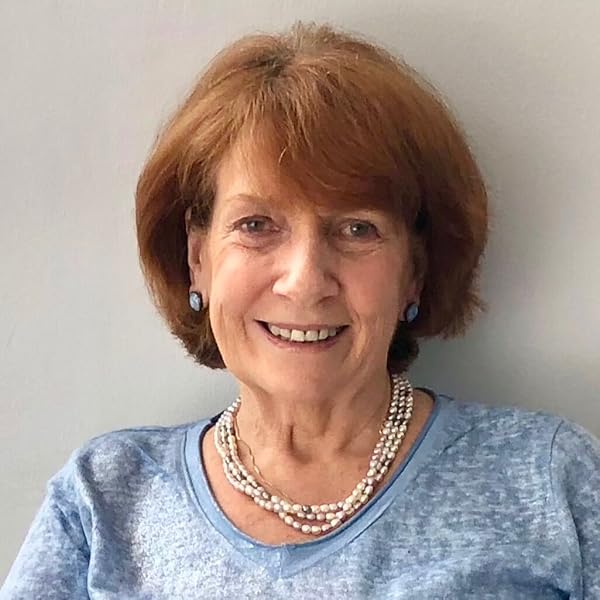
The Tralls of Nindarry follows two ordinary children who, while visiting their grandparents, discover a hidden realm of magical beings called the Tralls and wind up on an epic quest. What was the inspiration for the setup of your story?
Fantasy is a wonderful genre that exercises our brains and encourages us to think outside the box.
Young people today are often presented with a world facing shattering crises and heroes that save it by blowing up the invaders or performing dangerous and unbelievable stunts.
I wanted to introduce my readers to the beauty of nature and the dangers it faced. I also wanted them to realize they could be the heroes who save it for future generations to enjoy – not by engaging in incredible feats of daring or strength but by making small changes that could have a great impact.
I find the world you created in this novel brimming with possibilities. Where did the inspiration for the setting come from, and how did it change as you were writing?
The tralldoms were modelled on Badu Island, where we once lived and where we were very happy.
The setting of this story is my beloved Mt Ninderry. A beautiful mountain, shaped like a resting lion, and filled with an abundance of Australia’s amazing flora and fauna.
Of course, I needed to change some facets of the setting to accommodate the plot as it developed.
What is your background and experience in writing, and how did it help you write The Tralls of Nindarry?
I was a classroom teacher for many years, and I took classes as well in Drama, Digital Storytelling, and Creative Writing.
I also enjoyed entertaining my classes with stories of the brave tralls fighting to save their ancestral lands, but I was always careful not to impinge on the myths and legends of the traditional residents.
When I retired, I became The Storyteller and entertained children with my themed stories both locally and internationally, and I realised that even in this digital age, children love to be told stories.
When I had my own grandchildren, I wanted to leave them a legacy, so I combined some of my stories into a book and based the main characters, Bella and Gemayn, on them.
What story are you currently in the middle of writing?
My stories are complete. There are five published books in the Trall Series:
The Tralls of Nindarry
The Tralls of Mundi
The Tralls of Maruchus
The Tralls of Colum
The Tralls of Nosa
Each one covers an environmental problem impacting our natural world.
I hope these books will make young people more aware of the beauty and importance of our precious flora and fauna, and encourage them to become real heroes by taking care of their own natural environment.
Author Links: GoodReads | Facebook | Website | Amazon
Suddenly, the tralls are forced to go to war to save their ancestral lands from the evil Mr. Handley and Gemayn and his grandmother are trapped in the tralldom. During their enforced stay, Gemayn uncovers a long-held secret that links his family to the tralls. Could it shatter the emerging friendship between Gemayn, Bella, and the tralls, or will it destroy the bonds of trust that have always existed between them and their beloved grandparents?
The Tralls of Nindarry, written by emerging author Gayle Torrens, is the first book in The Trall Series; a collection of five portal fantasies set in Australia. It explores the concepts of intergenerational relationships, trust, loyalty, self-confidence, and environmental issues.
In 2024, The Tralls of Nindarry was awarded a Golden Wizard Book Prize for a fantasy book written for eight to twelve-year-old readers.


