Blog Archives
My Early Retirement Purpose

Escape The Clock offers readers a comprehensive guide to achieving financial independence and planning for early retirement. Why was this an important book for you to write?
Escape The Clock was an important book for me to write because I’ve lived the financial challenges and breakthroughs it addresses. I started out over $100,000 in debt after putting myself through school, and as someone naturally organized, I developed strategies and action plans to turn my situation around. My career as a professional program manager at some of the largest companies in the world refined those skills even further, teaching me how to design and execute complex programs.
When I retired early, it shocked a lot of people—many who had been on autopilot with their careers and finances. They started asking me how I did it, and I realized I had something valuable to share. Writing this book became my early retirement purpose: to provide others with the guide I wish I had at 17—the “secret cheatsheet” to taking control of your time, money, and life.
I wrote Escape The Clock to help people at every stage of their journey: those just starting out, those aiming to finish work early, and even those already retired who want to thrive and make the most of their independence.
How much and what type of research did you undertake in order to put this book together?
About 80% of this book came naturally because I’ve been doing the research for the past 20 years while running my own program. Over that time, I worked with more than a dozen financial and tax advisors, learning everything I could, and translating those lessons into actionable strategies was both fun and rewarding.
The final 20% required deeper research. For example, while I had extensive experience with stocks, including options trading, I hadn’t explored futures or margin trading. Similarly, while I owned my own home, I had no personal experience with real estate investing. To fill these gaps, I sought out experts—interviewing people who specialize in these areas and digging into additional research.
Between personal experience, expert interviews, and feedback from pilot reviewers, I ended up learning a lot myself as I worked to make this book as comprehensive as possible.
What is one misconception you think many people have regarding retirement planning?
A common misconception is that retirement planning requires paying a financial advisor to figure out how to save an unrealistic amount of money for a far-off, late-in-life retirement. More people are beginning to realize that they don’t have to wait until a government-prescribed age to truly start living their lives.
The truth is, it’s much harder to follow your own agenda when you’re older, so creating a path to leave work earlier is a smart and achievable goal. Unfortunately, societal norms often scare people away from this idea. Some financial advisors may even prey on those fears, pushing overly large savings goals.
In reality, if you understand what you want to do with your retirement and can get your average annual costs under control, you can use proven, real-world strategies to save enough—and even replace the lost cash flow that comes from quitting work early.
What is one thing you hope readers take away from Escape The Clock?
The one thing I hope readers take away from Escape The Clock is that they can have a healthier relationship with work, money, and time. The “norm” tells us to start working as soon as possible and give our all for 50-plus years, but this can be soul-draining and leave people feeling trapped.
When you reframe work as a means to an end—achieving financial freedom—you suddenly feel more empowered. You might push for that raise you deserve, take an extended break to avoid burnout, or talk about money more openly. Honest conversations about fair wages and financial goals ensure that your most valuable resource—your time—is properly compensated.
Ultimately, the biggest takeaway is this: your time is your most valuable commodity. If you can create a path to escape the cycle of work and reclaim it, you might surprise yourself with how you spend it and the freedom you feel.
Author Links: GoodReads | Amazon
Escape The Clock is your ultimate guide to achieving financial freedom on your terms. Written by a retired professional program manager who led successful initiatives at some of the largest companies in the world—and achieved early retirement in his early 40s using his own proven financial plan—this book provides practical, step-by-step strategies for building wealth to retire early, while still ensuring a secure full retirement later.
Leveraging decades of expertise in strategic planning and execution, Escape The Clock equips you with the tools to create a personalized financial plan that works for your goals. From understanding costs and forecasting income to setting SMART milestones and mastering long-term planning, this book turns complex financial concepts into actionable, achievable steps.
Whether you’re just starting out or refining your financial strategy, Escape The Clock delivers the knowledge and confidence you need to stop living paycheck to paycheck and start creating the life you’ve always dreamed of. Your journey to financial freedom begins here.
Escape The Clock – Your Program Guide for Financial Freedom and Early Retirement
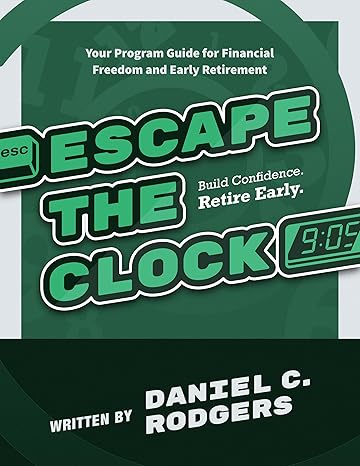

Daniel C. Rodgers’ Escape the Clock is a comprehensive manual that redefines how we think about work, wealth, and retirement. The book meticulously guides readers through the journey of achieving financial independence and embracing early retirement. It draws from the author’s personal experiences and professional expertise in program management. By blending narrative elements with practical advice, Rodgers provides a roadmap to reclaiming time and crafting a purpose-driven post-work life.
What stands out most about Rodgers’ writing is its clarity and relatability. He opens the book by describing the suffocating grind of the modern work-life cycle—a sentiment many can resonate with. The chapter “Trapped by the Clock” is particularly compelling as it details the emotional and physical toll of overwork. Rodgers’ candor about his own struggles adds authenticity, and his emphasis on financial independence as a means of reclaiming life makes the narrative deeply motivational. At times, some of his anecdotes cover similar ground, which can slightly soften the impact of his otherwise sharp insights.
The book’s strength lies in its structured approach to financial planning. Rodgers simplifies intimidating financial concepts, breaking them into digestible steps. Chapters like “Build Your Program for Financial Independence and Early Retirement” are treasure troves of tips—whether it’s calculating a financial baseline or setting measurable goals. I appreciated how the book demystifies investment jargon, though some of the more detailed strategies, like leveraging dividend stocks or rebalancing portfolios, might feel a bit complex for beginners. I think a slightly greater focus on balancing technical advice with simpler explanations could have made these sections more approachable.
Rodgers also shines in promoting a holistic vision of retirement. Instead of framing it as an end, he encourages readers to view it as a beginning—a chance to pursue passions and give back. The chapter “Retire Purposefully” is a standout, brimming with ideas for leading a fulfilling post-retirement life. There is a noticeable focus on ambitious goals, which might feel a bit lofty for readers seeking a more straightforward or minimalist approach to retirement.
Escape the Clock is an inspiring and meticulously detailed guide that will resonate with anyone determined to break free from the rat race. I feel it’s ideal for professionals in their 30s to 50s who are financially savvy and open to detailed planning. If you are looking for a practical framework paired with emotional encouragement to achieve early retirement then I think this book is a must-read.
Pages: 356 | ASIN : B0DPLP1D1V

The Investor’s Warp Whistles


In a landscape crowded with investment options and overwhelming amounts of online (dis)information, having a reliable source of insight is invaluable. Sean Dempsey’s The Investor’s Warp Whistles stands out as a bold and unconventional financial guide that challenges the status quo of traditional investing. Blending personal interests—like his love for Super Mario 3—with practical financial advice, Dempsey crafts a straightforward, witty, and refreshingly no-nonsense approach. From the very first page, he makes it clear that he won’t bog readers down with clichés or generic motivational fluff.
Written in a conversational tone and sprinkled with humor and sarcasm, The Investor’s Warp Whistles is an engaging read. Dempsey’s use of pop culture references, such as a well-placed Yoda quote, adds a layer of levity, making complex financial concepts accessible and even enjoyable. His clear and direct writing style helps break down jargon into manageable pieces, which makes it easy for readers of any financial background to follow along. For those accustomed to more formal finance literature, the casual tone may feel unusual, but it’s precisely this informal, approachable style that enhances the book’s appeal.
Dempsey doesn’t shy away from questioning conventional financial wisdom. He advises readers to rethink standard practices like saving for retirement through a 401(k) or prioritizing early mortgage payments. Instead, he advocates for finding creative “cheat codes” for wealth-building, much like using a Warp Whistle to skip levels in a video game. His approach is grounded in avoiding speculative investments and steering clear of blindly following trends, which he likens to traps that lead investors astray. By focusing on research-backed strategies—such as investing in “Dividend Aristocrats” and employing his Wealth Pyramid concept—he offers a refreshing alternative to traditional advice.
One of the book’s many strengths is Dempsey’s contrarian perspective. He questions the accepted norms of financial management and invites readers to think differently, offering a fresh take on building wealth. His ability to simplify complex topics without sacrificing clarity ensures that even those with limited financial knowledge can easily follow along.
The Investor’s Warp Whistles is more than just a financial guide; it’s a candid, irreverent manifesto for rethinking how we approach investing. Provocative and entertaining, the book provides a fresh roadmap for those ready to challenge the status quo. It’s a thought-provoking and enjoyable read that has the potential to revolutionize how people view and manage their investments. Dempsey’s unique style and insightful commentary make this a must-read for anyone looking to shake up their financial strategies and think outside the box.
Pages: 246 | ASIN : B0DFW58HNS
Wealth Your Way: A Simple Path To Financial Freedom
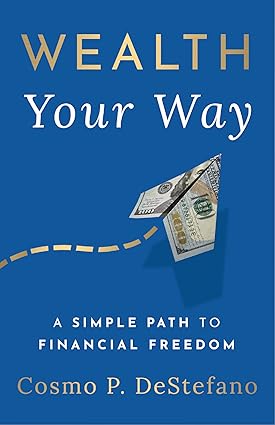
In Wealth Your Way, Cosmo P. DeStefano challenges the conventional starting point of financial inquiry. Rather than diving straight into the intricacies of investment, he encourages readers to first understand the ‘why’ and ‘how’ behind their financial aspirations. A central theme of the book is the significance of setting precise financial objectives and tailoring a unique plan to fulfill those ambitions. DeStefano illuminates the essential difference between daily savings and long-term wealth accumulation. He introduces an intuitive four-bucket system for financial management, where Bucket A focuses on long-term investments, while Buckets B to D address daily expenses.
The book also elegantly debunks the myth that a hefty income is synonymous with wealth. DeStefano underscores that while income is a result of one’s job, wealth is a testament to one’s financial acumen and decisions, accumulating over time. At its heart, Wealth Your Way propounds the ultimate goal of financial independence, enabling individuals to fulfill their desires without the shackles of earned income.
DeStefano’s writing is commendably straight and to the point. He adopts a practical and direct approach, demystifying intricate financial notions for the everyday reader. Enriched with thought-provoking quotes and insightful anecdotes, the book offers an immersive reading experience. The narrative structure is methodical, guiding readers seamlessly through the author’s wisdom. What truly stands out is DeStefano’s tone – it’s simultaneously informative, motivational, and conversational. By sidestepping dense jargon, he ensures his insights are accessible to a diverse readership.
Targeted at both financial novices and those with a foundational understanding, Wealth Your Way is a treasure trove for anyone from young professionals embarking on their careers to those charting their retirement course. In essence, DeStefano delivers an engaging, practical, and empowering guide to wealth creation, advocating for informed financial decisions and the dream of financial autonomy.
Pages: 238 | ASIN : B09XP7383J
Tales of the Profitable Trader
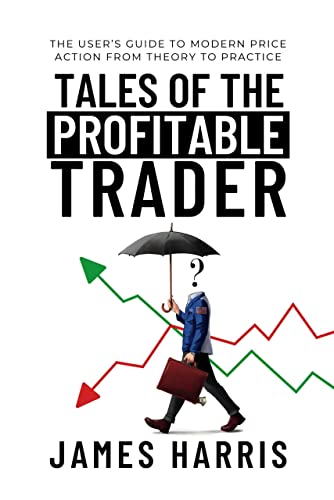
The world of stock trading can often appear daunting, yet, when navigated correctly, its rewards are undeniably compelling, especially for the entrepreneurial spirit. It is a field brimming with potential, but many shy away from it, deterred by the perceived complexities and a lack of understanding. Addressing this gap is James Harris’s exemplary book, Tales of the Profitable Trader: The User’s Guide To Modern Price Action From Theory To Practice.
Harris embarks on a mission to demystify stock trading for beginners and seasoned investors alike, seamlessly navigating through its labyrinthine intricacies. I appreciate how he begins the journey with basic concepts, gradually building upon these to tackle the more nuanced aspects of trading. Readers are not only endowed with valuable knowledge but also imbued with inspiration drawn from the author’s experiences.
In the initial sections, Harris acclimatizes the reader to the technical dynamics of trading, covering the gamut from basic knowledge acquisition to setting appropriate expectations. He probes essential questions such as the worth of becoming a trader, the patience required, and the immediacy of benefits. By providing articulate answers backed by practical guidance, Harris effectively instills confidence in the reader. He eschews rigid technicality, adopting a more conversational and relatable style that resonates deeply, highlighting the tangible value of stock trading with authenticity and warmth.
The latter parts of the book – Parts II, III, and IV – delve into the meatier, seldom-discussed aspects of stock trading. Harris masterfully addresses trade executions, market instruments, market orders, trailing stop orders, and contemporary topics like cryptocurrency and stock options. His insightful coverage of market cycles and trading psychology is particularly noteworthy, cementing his book as a comprehensive guide.
Most compelling are his reflections on emotional trading, gambler mentality, trader psychology, and discipline. While these sections are primarily aimed at traders, they bear insights of universal applicability, making them invaluable to professionals across various business fields.
In Tales of the Profitable Trader, James Harris provides an exhaustive yet highly accessible overview of stock trading. From understanding the rudiments to achieving proficiency, his book is a treasure trove of practical wisdom. It’s a remarkable resource that will refine your skills and broaden your perspective, especially if you keenly apply the knowledge shared. Because of its lucid content and the author’s forthright writing style, I recommend this enlightening exploration into the vibrant world of stock trading.
Pages: 380 | ASIN : B0BYF4Q1TN



 LITERARY TITAN