Blog Archives
It is Complete
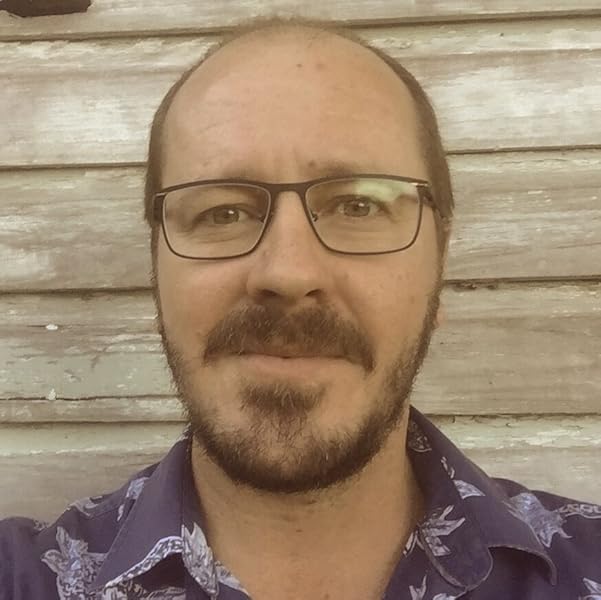
End of Morrow is the gripping conclusion to the trilogy following the lives of an English archaeologist from 1850 AD and a Guardian of the East from 2300 BC whose actions will determine the fate of humankind. What was the initial idea behind this story, and how did that transform as you were writing the trilogy?
The initial idea for the conclusion of the trilogy was born during my first research phase. I identified the Akkadian period, circa 2300 BC, as an ideal time setting. King Sargon of Akkad also stood out as a fascinating antagonist. He was building the world’s first empire and this was changing the known world. I thought, what if this God-King was challenged and not by another ruler but by an individual? This was the seed for the David vs. Goliath battle that would take me two decades to complete. My research was ongoing. I wanted to ensure that my story adhered to historical knowledge of the period and, importantly, King Sargon’s fate. The greatest transformation in my perceived path to the trilogy’s climax occurred through the individual characters taking on lives of their own. Everything is interconnected and I marvelled at the way the characters worked with or against each other towards the inevitable end.
What was one of the hardest parts in End of Morrow for you to write?
The hardest part in writing the final novel in the trilogy was telling myself that it was complete. There was part of me that did not want to let it go. I’m a perfectionist, so I was examining all the character arcs and conflicts. I reworked the end of the final chapter and I was emotional when I re-read this part. When I shared the new end with my partner, she told me that she liked the character Fred Baker for the first time. That was my sign that it was complete.
Where do you see your characters after the book ends?
I feel that the characters in my novels took on lives of their own that were somewhat outside of my control. In writing, I would always ask the character what they would do? I believe readers will be able to easily imagine the future lives of those who survive. The futures of some key characters are purposely left ambiguous and this is because life is ongoing and I want these characters to live on in their active state, rather than as a person who once lived.
What is the next book that you are working on, and when will it be available?
My next novel is set much closer to home in a small country town in Australia. I wrote a screenplay for this story when my trilogy was being edited, so it will be an easy write for me. I’m not ready to reveal the idea but I can tell you that it involves a butcher, a kangaroo, a reporter and, ultimately, the whole world. It is based on a true story and I hope to film a documentary to accompany the novel. My prediction is that it will be available in 2025. I look forward to sharing updates with my followers.
Author Links: GoodReads | Twitter | Facebook | Website
1850 AD. English archaeologist Fred Baker has identified the location of the lost city of Assur. To lay claim on the site he must venture into the heart of the Ottoman Empire. Luckily, he has something rarely afforded to archaeologists, the written accounts of ancient guides-the Guardians of the East.
2300 BC. Kar, a Guardian of the East, has travelled west to the Great Sea to rescue a peaceful people from Akkadian domination. If successful, he can pursue his ultimate quest, fighting the illusive God King, Sargon, thus challenging his mortality. King Sargon has his own plans and a second assault on the Guardians’ homeland looms.
East and West clash in this final book in the Guardians of the East trilogy. The mystery of the Tree and all that will be hereafter is revealed. Here be told the fate of the Guardians, the fate of the last God King and the inherent fate of all humankind.
End of Morrow


J.P. Manning’s End of Morrow takes readers on an exhilarating journey through a world steeped in intrigue, featuring a gripping conflict between the Guardians of the East and the formidable God King, Sargon. At its core, the narrative centers around the resolute guardian, Kar, whose mission to rescue the Pledians from Akkadian domination sets the stage for a tale of epic proportions. Kar’s determination to expose the vulnerability of the authoritarian God King, Sargon, and spark a revolution is nothing short of inspiring.
The narrative seamlessly shifts between past and present, with the year 1850 AD serving as the backdrop for the adventures of archaeologist Fred Baker and his team. Their quest to uncover the lost city of Assur by delving into the ancient tales of the Guardians adds a layer of intrigue that keeps readers eagerly turning the pages. What truly shines in End of Morrow is the unwavering sense of purpose that drives the characters. Their conviction that their lives hold profound meaning influences every decision and action, making their defiance of Sargon’s oppressive rule all the more compelling. Witnessing the Guardians’ bravery in a seemingly futile war, all fueled by their sense of purpose, adds depth to their characters.
Manning’s meticulous attention to cultural details enriches the narrative, immersing readers in the diverse beliefs and practices of the Guardians, Gutians, and Akkadians. This rich cultural tapestry enhances the overall story, providing a vivid and immersive reading experience. While End of Morrow is a standout novel in a trilogy, I believe it’s worth noting that new readers might benefit from a more comprehensive introduction to the characters and their relationships. I feel the assumption of prior knowledge can be a bit challenging for those unfamiliar with the series, but this does not diminish the story.
End of Morrow is a captivating tale that will resonate with mature readers who appreciate a blend of fantasy, historical fiction, and narratives that pit underdogs against almost impossible odds. This book delivers a thrilling and culturally rich adventure that is sure to leave a lasting impression.
ASIN : B0CNMYPWLL

A Humbling Journey
Enter the Bull’s Burrow follows the Guardians as they try and rescue villagers taken as slaves, and Kar, who must decide where his duty lies. What was the inspiration for the setup of your story?
The set-up for this story was my first book in the trilogy, Eleven Arrows (2020). Kar, the protagonist, was born in a time of great change—the expansion of the Akkadian Empire in 2300 BC. His character journey involves understanding his place in the world. He is conflicted by learned ideals and his own sense of justice. I think this is a universal dilemma that we all face to some degree in our lives. Do you follow the expected path or walk your own way?
How has character development for Kar changed for you through the series?
This is an interesting question because once Kar was created he took on a life of his own. He found a voice in Book 1 and I feel like he told me what he needed to do or say next, especially when he is asked to speak for himself at the Guardian table. Arman, a secondary protagonist in the novel, also became real to me. I feel like I know him and I hope the readers feel this connection with him too.
What did you enjoy most about writing this book?
What I enjoyed most was exploring what would happen if all these diverse characters, the Guardians, were grouped for an ultimate journey. Kar was too young to be a part of the conversation in Book 1, Eleven Arrows. I name Enter the Bull’s Burrow the heart of the novel trilogy because the Guardians of the East, all that are left, show themselves for who they truly are. They are flawed but I think there is a beauty in each character’s weakness.
Has writing and publishing a book changed the way you see yourself?
Brilliant question. What first springs to mind is the view that even fiction writers only write about personal experience. I could not believe this idea given the concept of my novel trilogy. Over time, however, I started to identify connections. For example, I met the tallest person I’ve ever seen when I was told to go to a particular bar to find him. I transferred this experience in Book 1, Eleven Arrows. Like Kar, I lost my mother when I was just becoming a man. Writing a historical fiction trilogy as a new author is not something I would advise. That said, I am so glad I took this path. I explored the ancient past that was not taught in school. I explored the meaning of life that is still debatable. I learnt more about myself and identified my own strengths and weaknesses. My final book in the trilogy, End of Morrow, has been published. I think I’m still processing the journey. I’ve been humbled by the journey but at the same time I’m extremely proud of my endeavour.
Author Links: GoodReads | Facebook | Website
From a hidden tower, east of the Zagros Mountains, a cohort of experienced Guardians embark on a deadly mission west to rescue villagers thought taken as slaves. Kar, the youngest Guardian man, must decide whether his duty is to protect those who remain at the tower or another tribe in peril.
Millennia later, in Cairo 1850 AD, English archaeologist Fred Baker follows an account of the Guardians’ journey beyond Nineveh, believing it could reveal an undiscovered city-the ultimate dig site. If he can identify it before his meeting with the Egyptian librarian who loaned him the ancient manuscript, a daring journey in the footsteps of the Guardians awaits.
J.P. Manning’s second novel awakens the ancient past in splendid detail, leaving no sword unsheathed in book 2 of the Guardians of the East trilogy.
Enter the Bull’s Burrow (Guardians of the East, Book 2)

Enter the Bull’s Burrow, the second entry in J.P. Manning’s “Guardians of the East” series, expertly marries history with fantastical adventure and rich mythology.
Nestled within the sprawling canvas of the Akkadian Empire, Manning’s prose dances poetically, ensnaring readers within a luminous and enigmatic realm. The narrative deftly intertwines ethereal supernatural elements with the timeless conflict of deities and mortals, forging a tapestry of wonder that captivates from start to finish.
Manning crafts characters, notably Kar – the fledgling Guardian, with intricate care. Their layers of personality and ambition are unveiled with grace, stirring deep emotions as they grapple with the challenges of persecution and existential threats. The mounting suspense, rooted deeply in the characters’ visceral fears, ensures the readers are constantly engaged.
Manning navigates between two intertwined eras: the Guardians’ odyssey in 2300 BC and the 1850 AD exploits of English archaeologist Fred Baker. This duality injects an intriguing depth into the narrative, forging a bridge between antiquity and a more recognizable past. Manning’s meticulous historical nuances and evocative imagery resurrect the bygone era with astonishing vitality.
Enter the Bull’s Burrow stands as a testament to J.P. Manning’s narrative brilliance, making it an essential read for fans of historical fiction and fantasy alike. It is a great recommendation for readers in pursuit of a deeply enriching literary journey.
Pages: 504 | ASIN : B09KC4T1JG
The Meaning For Life
Eleven Arrows follows an archaeologist in 1850 AD who discovers an ancient manuscript that could change what the world knows about history. What was the inspiration for the setup of your story?
The ancient manuscript idea came later. I have always been fascinated by ancient history and the origin of our world, but the inspiration for this story was more to do with writing an adventure story. In my first trip overseas, as I’m sure many can relate, I experienced an awakening to new experiences and cultures. This awakening brought back my early desire to be an author. The story I started writing was about a boy who grew up in an ancient village of guides. I liked the idea of this happening at a time when you could load what you belonged on a horse or camel and venture into the unknown to find your place in the world. The antagonists for the story were immediately obvious—anyone or thing that would prevent peaceful travel or new settlement. The antagonism needs to grow in a good story and I chose an antagonist in the form of one who stopped people from living wherever they liked, a ruler. I did not know who this ruler was or the exact setting when I started writing. Before I began my research, I created my protagonist, a boy who wanted to discover the world and learn everything. The inclusion of the Archaeologist, Fred Baker, came after I had realised I was not writing a simple story. I had set my story in the ancient past and research was required. The real setup came in the research phase. People didn’t write stories back then, or did they? I wanted to know of the oldest story ever written.
What kind of research did you do for this novel to ensure you captured the essence of the story’s theme?
I knew I had a journey of research ahead of me before I continued my protagonist’s journey. When I returned to Australia, I was distracted from my tertiary studies by the story I had started. I shared the idea for my story with my cousins and a girlfriend of a cousin, they are now married, was interested. She was also studying and worked part time at the Museum. Her assistance was invaluable in my research phase. We spent several days at the University of Queensland library. Margaret (acknowledged in all my books) would search the shelves and bring texts to my desk. Through this process, the Akkadian period, the world’s first empire, was identified as an ideal setting. What also grabbed my attention was repeated mention of a tree of life. This initial research allowed me an entry to the greater story. Ongoing research continued for the next decade. With the advent of the Internet, research became easier. One of my most common searches was etymology. I also researched religious stories and their origins.
The themes I was exploring became clearer to me through a cyclical journey of write, read, research and write again. I enjoyed the process. I’m not one to rush what I care about. The great Library of Alexandria grabbed my attention. Stories from all over the world were recorded there and the demise of the library is still debatable. My character, Fred Baker, was introduced as a means to authenticate the narrative. With his introduction, I was able to label the time and set the scene. Fred, disliked by some readers, has a journey of his own to complete. 1850, an age of discovery and a time when bandages from mummified people was exported as kindle is not to be ignored.
What were some themes that were important for you to explore in this book?
The most important theme to me was meaning, the meaning for life. It is still my first question, often phrased as why? Familial bonds, friendship, truth, duty, destiny, death and change all play a role. In high school I was fascinated by the introduction to the Sumerians and the Egyptians and then it quickly moved to the Romans and Greeks. I understand why education does not dwell on early civilizations. We don’t know enough. The Akkadians were the world’s first Empire and I‘m glad Margaret told me to publish. So many don’t know about this period of history. I might not have either if I didn’t dive into the rabbit hole. And it’s a free dive. My editors might have questioned some content but only in relation to historical accuracy and grammar. More detail has been added in revisions before publication. Would the same story have been told if it went through a publishing house? Enjoy. The ultimate question is answered.
Is this the first book in the series? If so, when is the next book coming out, and what can your fans expect in the next story?
Eleven Arrows is the first book in the trilogy. Enter the Bull’s Burrow was released in 2021. End of Morrow has been released recently. Readers can expect visceral settings and real characters from an ancient past. Book 1 establishes Kar and his journey as a Guardian. Book 2 sees Guardians head west and Kar make life-changing decisions. Book 3 has Kar and the Guardians face the greatest test.
Author Links: GoodReads | Facebook | Website
2300 BC. The Akkadians have blazed a trail of death and destruction through the Sumerian city-states as they carve out the first empire the world has ever seen. Barbarian raids and bandit attacks plague the outskirts of the burgeoning empire. From the chaos, a tribe emerges and establishes their reputation as Guardians — protectors of innocent traders. When an Akkadian army crosses the mighty Zagros Mountains, to forge a stronghold in the East, only the Guardians stand in their way.
Millennia later, in 1850 AD, English archaeologist, Fred Baker, becomes embroiled in this ancient past when he learns of a manuscript that survived the fall of the Great Library of Alexandria. His authentication of the text could challenge written history but he must also tread carefully or risk losing more than his reputation.
Eleven Arrows (Guardians of the East, Book1)


In J.P. Manning’s novel Eleven Arrows, we journey between two distinct yet intricately intertwined epochs: the flourishing Akkadian empire of 2300 BC and the adventures of English archaeologist Fred Baker in 1850 AD. Manning crafts a multi-layered narrative rich in detail, plunging readers into a meticulously rendered universe.
While the initial chapters set in 1850 AD may seem somewhat extended, they deftly lay the groundwork for an enthralling dive into history. Through the eyes of young Kar, we become intimate spectators to the saga’s unfolding events.
Eleven Arrows truly excels in its vivid portrayal of characters, settings, and emotions, forging a deep bond between the reader and the narrative. Manning’s storytelling seamlessly marries simplicity with depth, a testament to his prowess with prose. Central to the tale are themes of kinship, camaraderie, and the embrace of transformation, elements that deeply resonate on a human scale. As the story ends, we are left poised on the precipice of what promises to be a riveting series, hungering for the next book to come.
While Eleven Arrows is very entertaining, with its robust storyline, evocative characters, and gripping themes, I think the pacing of the early Victorian era chapters are absorbing but could benefit from more conciseness.
Eleven Arrows is a remarkable introduction from J.P. Manning, and an absolute must-read for fans of historical fiction. Its universal themes centered on familial bonds and the essence of embracing evolution make it an unputdownable literary treat.
Pages: 252 | ASIN : B09K4SJ7V6


