Blog Archives
Mussolini’s Puppet Government

Jigsaw: Beginnings follows a group of students on a trip to Italy who stumble into the secrets of a WWII teleportation experiment, forcing them to unravel a conspiracy where history and the present collide. What were some sources that informed this book’s development?
Excellent question. I did a great deal of research on the Italian Resistance Movement, OSS espionage and Holocaust rescue efforts at the time and general area, Mussolini’s Puppet Government in Salo following his rescue by the Nazis in 1943, and overtures to get Spain to join the war on the Axis side. I felt these were neglected parts of history that needed greater exploration. I also have visited Voltri on two occasions when I was younger. My Great Aunt and Uncle (my Grandmother’s brother) lived there and I wanted to make this a quasi-tribute to that side of the family. I also drew from personal experiences and other people I know like my parents, grandmother, siblings, and friends to fill in the character development. The names of the student’s characters came from children that attended the charter school I once owned.
Colonel Angelo and Professor Klein are morally complex characters. How did you develop their motivations?
Klein represents that part of history where Conservative Jewish Palestinians had, at first, a productive relationship with Mussolini’s Government in the 1920s and 1930s. As Italy’s government became more openly Anti Semitic in its subservience to Hitler, Jews who thought Mussolini had backstabbed them were more prevalent. That is how I developed Klein. I do not want to say much about Angelo here because he has an arc that readers would see in the second and third books in the series, Warheads and Full Circle and I do not want to spoil that.
The Italian settings feel incredibly vivid. Did you visit these locations, or was your research primarily historical?
As mentioned in the first question, I have visited Voltri and Genoa several times. While I based some of the scenes on personal experience like visiting the Villa and going to the Genovese port, I did still have to research the areas and the history to fill in the gaps and round out the historical plot of the story.
Were there any real-life wartime experiments that influenced the teleportation aspect of the story?
Not to my knowledge. I know there were rumors of the Philadelphia Experiment in the 1940’s and the German time machine Bell program but those did not influence the plot.
Author Links: GoodReads | X (Twitter) | Facebook | Instagram | Threads | Website | Amazon
High school history buffs Noah Patterson and Mariah Fischer can’t wait to get to Italy. Their plan? To explore as much as they can and have loads of fun. What they face, however, is mind-blowing when they get shot at by the Italian Black Brigade.
Running for their lives, they quickly realize that they’ve somehow been transported to Italy, circa 1943. But how?
Humiliated by defeat and rescued by Hitler, Mussolini plans to win the war at all costs. Pushing forward relentlessly, he has a secret weapon: teleportation. But a failed experiment with the device draws Noah and Mariah back in time. Now they must find a way to stop Mussolini’s “New Roman Empire” and return to the present they know—if it’s still there.
The fight for reality starts now…Jigsaw Beginnings is an adrenaline-driven, YA time travel series perfect for action and adventure enthusiasts.
Jigsaw: Beginnings: Second Edition
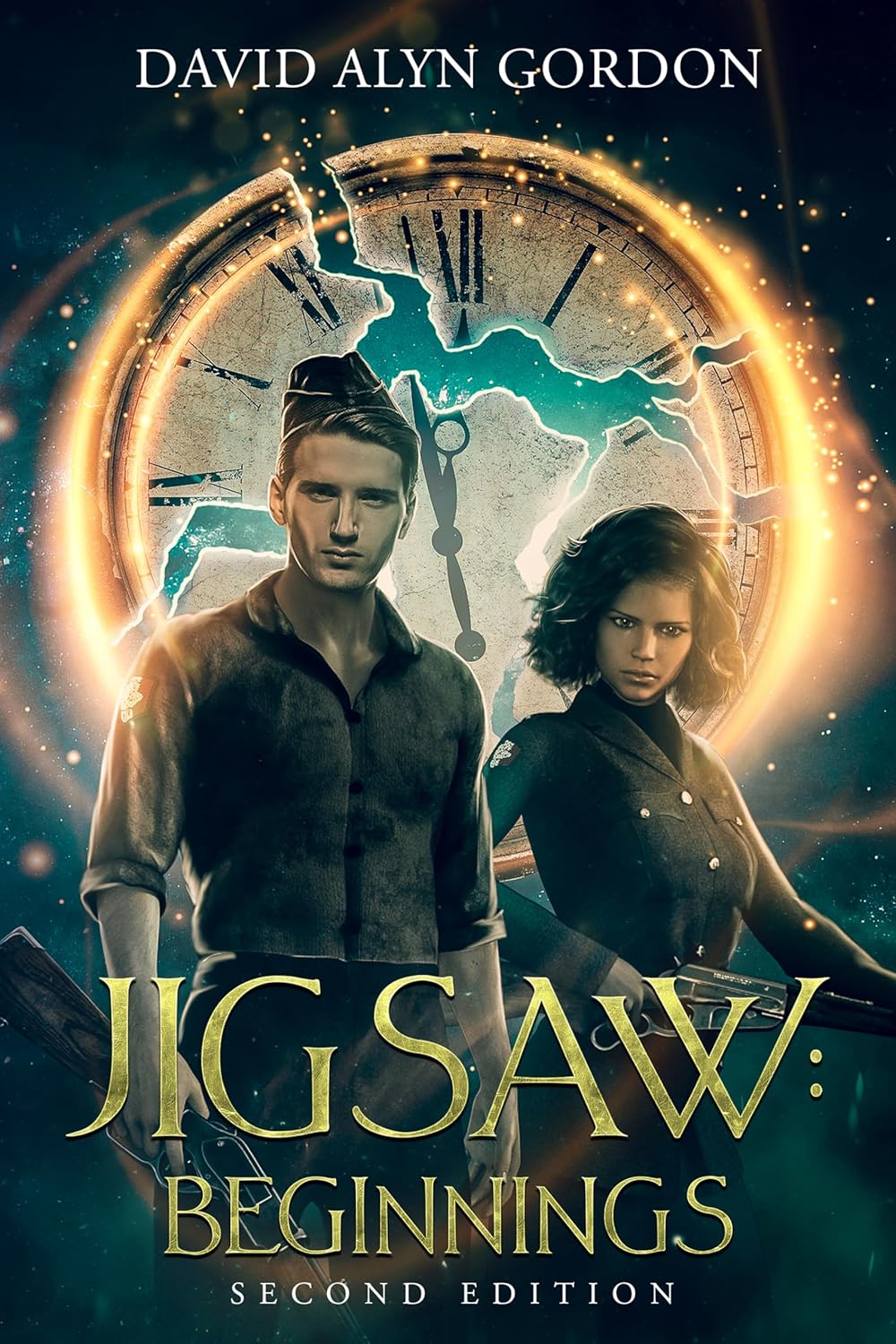

David Alyn Gordon’s Jigsaw: Beginnings is a multifaceted tale that intertwines historical intrigue with modern-day adventure. The narrative pivots between World War II, where a dangerous teleportation experiment is being developed, and a contemporary group of students embarking on an educational trip to Italy. The book blends a tense scientific conspiracy with a coming-of-age travel story, creating a gripping exploration of history’s long shadow on the present.
The writing switches between sharp historical drama and lighthearted modern banter, giving the book an eclectic rhythm. The wartime scenes, particularly the character of Colonel Angelo and his ruthless manipulations, are chillingly vivid. I found the prologue’s depiction of Dr. Saberstein’s sacrifice compelling, it sets a gripping tone for the stakes involved. On the other hand, the contemporary sections featuring Noah and Mariah capture a different energy, one that’s humorous and relatable. However, at times, the transitions between these two tones feel abrupt, and I wished for smoother integration.
Gordon’s characters are distinct and memorable. Colonel Angelo and Professor Klein stand out with their moral complexities, especially Klein, whose reluctant collaboration with the Fascists is both heartbreaking and thought-provoking. On the other hand, the modern characters sometimes feel a bit familiar, with certain dialogue reflecting common teenage tropes. Still, moments like Mariah’s near-accident in Genoa inject genuine tension, reminding us how history and danger intersect in unexpected ways.
The book excels in its portrayal of the setting. Gordon paints Italy, both past and present, with a vibrant palette. From the chaos of wartime Voltri to the bustling charm of modern Genoa, the locales feel alive. I appreciated the juxtaposition of the students’ carefree tour with the weighty historical secrets beneath their feet.
Jigsaw: Beginnings is a bold and ambitious story that will appeal to fans of historical fiction and young adult adventure alike. Its vivid settings and compelling stakes make it a rewarding read. I’d recommend it to anyone who enjoys a mix of historical depth and modern relatability, especially readers curious about how past actions ripple into the present.
Pages: 196 | ASIN: B092YS1SSJ




 LITERARY TITAN