Blog Archives
The Interchange
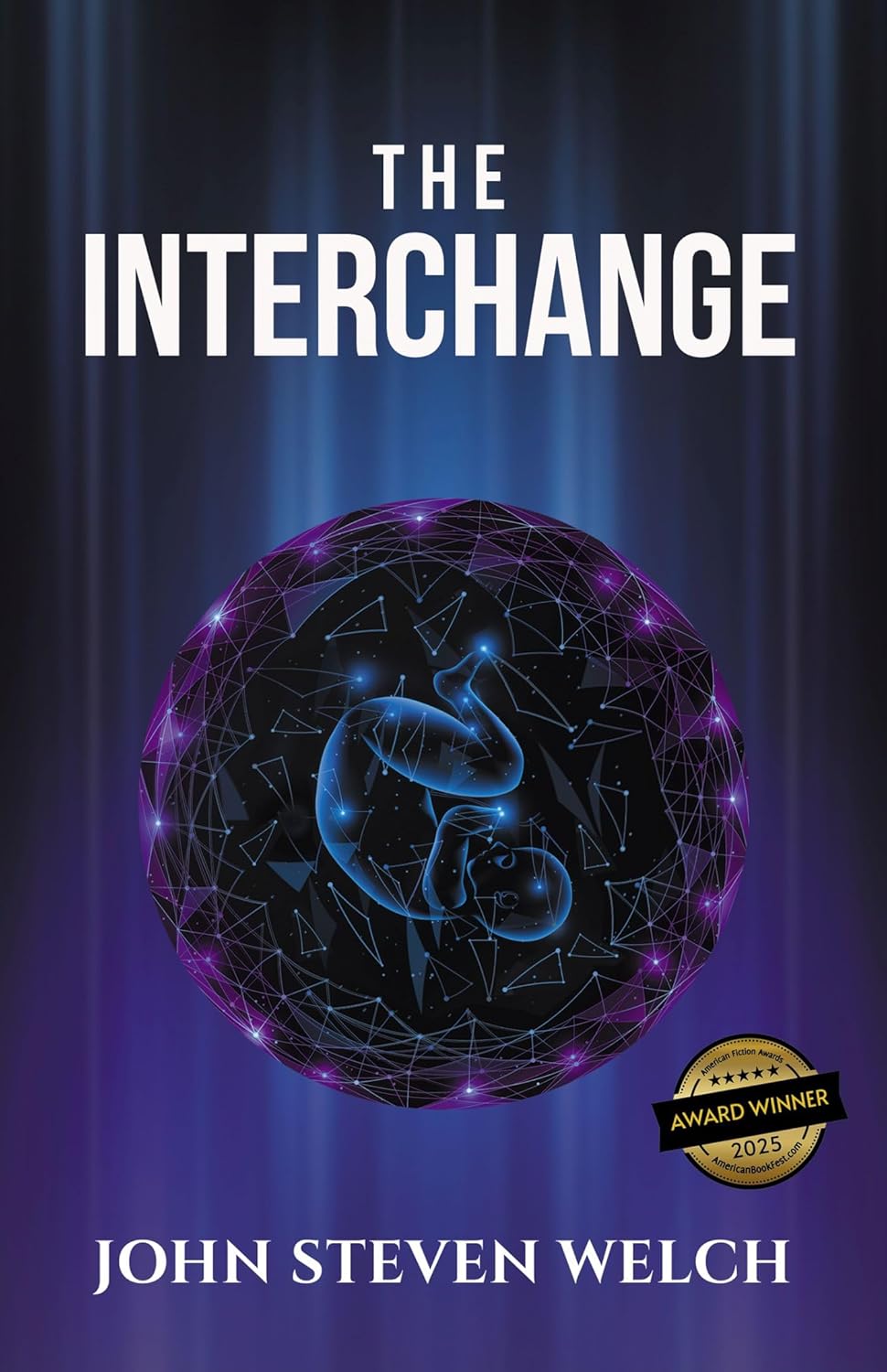

The Interchange imagines a future where identity, family, and power collide in a society rebuilt from catastrophe. It follows Manx Aureole Agnor, a formidable warrior and state leader, as she wrestles with her role in a rigid social order defined by “The Interchange,” a system that categorizes people not by sex but by inherent nature. Against the backdrop of political rituals, national pride, and underground resistance movements, Aureole finds herself torn between her public duty and private doubts, especially as she confronts forbidden desires for motherhood in the “Old Ways.” The story weaves battles both physical and emotional, building a world that is at once grand in scale and deeply personal.
The writing is bold, vivid, and often unflinching, painting scenes of spectacle and violence with almost cinematic flair. Yet the real tension lives in the quieter spaces, where Aureole questions her bond with her son or feels jealousy toward her brother’s easy grace. Those moments struck me harder than the boxing matches or military intrigues. At times, the prose leaned into exposition, explaining the rules and history of New America in detail, but I found myself forgiving it because the ideas were fascinating. The balance between action and introspection kept me engaged, even when I felt the narrative tugging me in too many directions at once.
Emotionally, I went back and forth. Sometimes I admired Aureole’s strength, her drive, her pride. Other times, I felt an ache for her vulnerability, her longing for something she could never fully claim. That push and pull made the book feel alive to me. The ideas here about gender, control, science, and rebellion aren’t just intellectual exercises. They play out in flesh-and-blood relationships, in a mother’s coldness, a grandmother’s pride, a child’s distance. I’ll admit, I got frustrated with the world’s rigidity, and at times even with Aureole herself, but maybe that’s the point. The book isn’t about offering comfort. It’s about showing what happens when systems try to define the deepest parts of who we are.
I’d recommend The Interchange to readers who enjoy dystopian or speculative fiction that asks hard questions rather than giving easy answers. The Interchange reminded me of the sharp social critique in The Handmaid’s Tale and the futuristic ambition of Brave New World, though it carries its own distinctive blend of raw emotion and political spectacle. If you’re drawn to stories of power, family, and identity, and you don’t mind sitting with some discomfort, this book has plenty to offer.
Pages: 238 | ASIN : B0DTZJ3SLP

Dreams Long Unrealized

The One Who’s Gonna See You Through follows a Black gay man who grows up in the Washington DC area with a nontraditional upbringing. Gregory’s story is so well written that it is like reading a memoir, not a work of fiction. Was there anything from your own life that you put into the characters in your novel?
Certainly, some aspects of my life inform characters and settings in the novel. For example, my father did stand trial for murder when I was a youngster and my parental situation in childhood was similar to GJ’s. However, many other aspects of the novel have been fictionalized.
What were some themes that were important for you to explore in this book?
A Coming-of-Age story that explores early awareness of one’s sexuality.
An African-American father figure of a gay son who was not homophobic.
Dreams long unrealized can still be achieved if they are kept alive in one’s soul.
What is the next book that you are working on, and when will it be available?
My next novel is still in the ideas phase of conception so best to leave it there till it is realized as a manuscript.
Author Links: GoodReads | Facebook | Website | Amazon
GJ’s young life progresses, and he is thrust forth into circumstances both familiar and violently surreal, from typical bullying to standing as the principal witness in a murder trial to defend his father. Colorful characters like wild Uncle NapPo, the seemingly unflappable Miss Carrie, and his father’s employer, the curious Mr. Blu, inform him of life’s complexity.
The wide-eyed boy grows into his teens and twenties and is altogether victimized, loved, and enlightened, leading him to experience the full range of gay life. GJ learns the culture and codes of Washington’s insular Black gay bar scene as the teen partner of a man in his thirties. As GJ starts to relish his gay existence, becoming more confident with his gay identity and his family’s unconventionality, he continues to question himself, fighting self-doubt and consternation about fitting into Black respectability norms or the mainstream world. GJ’s adult existence and early professional life extend into the integrated world of Dupont Circle gay bars and Georgetown professional offices, where he finds the love of his life and soulmate.
The One Who’s Gonna See You Through is a work that bridges the commercial/literary divide. The gay interracial theme here is seldom explored, and the absent mother/loving father configuration brings a different lens to this work. The approach to the story in The One Who’s Gonna See You Through sets the more familiar trope of the angry, Black, homophobic father aside and abandons the more well-trodden storyline of steadfast single Black motherhood. By story’s end, GJ recognizes that his father’s early and invaluable acceptance of difference laid the foundations for the happiness and realization he has experienced as a gay man throughout life. He resolves within himself that he must finally accept his legitimacy as both a Black man and an upper-middle-class one.
The One Who’s Gonna See You Through

The One Who’s Gonna See You Through by John Steven Welch opens with a poignant scene: Gregory reflects on his father’s incarceration for murder, setting the stage for an exploration of his challenging yet formative years. Growing up in a predominantly black neighborhood with an absent mother and a single father, Gregory faces the complexities of his community with resilience. Despite his peers’ taunting and the local gossip, he cultivates a demeanor of kindness and a passion for volunteering, finding solace in his few but meaningful friendships.
Among the significant influences in his life is Miss Carrie, an elderly woman who becomes a surrogate mother figure, enriching Gregory’s life with her wisdom and support. The narrative deepens as Gregory, who is gay, confronts discrimination within his community, adding layers to his personal and social struggles. Welch masterfully blends elements of fiction with the introspective depth of a memoir, offering readers a vivid window into communal life and personal perseverance. The neighborhood’s vibrancy comes alive through anecdotes about Gregory’s neighbors, whose interactions are reminiscent of shared secrets and collective support. The novel not only navigates the hurdles of Gregory’s youth and adult life but also intersperses humor and valuable life lessons throughout, making it not just a compelling read but also an inspiring one. This book resonates deeply, mirroring real-life struggles and triumphs, and is a noteworthy addition to contemporary fiction.
The One Who’s Gonna See You Through offers a deeply personal yet universally resonant journey through the highs and lows of Gregory’s life, showcasing the enduring power of resilience and the importance of community. John Steven Welch’s narrative prowess shines as he weaves a story that is as much about overcoming adversity as it is about the impact of those we meet along the way. This novel invites readers into the heart of its characters’ lives, making it a memorable read for anyone interested in stories of personal growth and communal bonds.
Pages: 229 | ASIN : B0CHNBP76L




 LITERARY TITAN