Blog Archives
Kisses, Family & Hope


Sophie Bartow’s Kisses, Family & Hope: A Small Town Later-in-Life Mystery Romance combines mature romance, family reconciliation, and an unfolding mystery in the close-knit setting of Swan Harbor. At the center of the novel are Ava King and Finn Reade, two people in their fifties who’ve already lived complicated lives before seriously considering a future together. Ava is rebuilding her life after a stroke forced her to reconsider years spent placing work and obligation ahead of her own happiness. Finn, meanwhile, has created a successful and respectable life while keeping significant pieces of his past hidden. Their relationship develops alongside a mystery involving anonymous threats, a stolen painting, Finn’s former identity, and secrets reaching back generations. The result is a story in which romance and mystery serve the same larger subject: how people decide what parts of their past will shape their future.
Ava is particularly effective as the emotional center of the novel because her conflict involves more than finding a romantic partner. For much of her life, she has been conditioned to behave according to what her powerful family expected of her. Her stroke gives her a second chance, but Bartow doesn’t treat personal change as instantaneous. Ava still worries that pursuing Finn might interfere with her repaired relationship with her daughter, Emma, and her attraction to him recalls an earlier relationship that caused considerable pain. Her gradual willingness to accept friendship, family, romance, and a place in Swan Harbor gives the story much of its emotional movement. One of the novel’s recurring ideas is captured in the line, “When your heart speaks, it’s best to listen.” The phrase appears in different contexts throughout the book, and its repetition works because nearly every major character is being asked to trust something that can’t be completely controlled or guaranteed.
I think the book’s strongest quality is the way it treats family as something continually built. Ava and Emma are repairing a damaged mother-daughter relationship, Finn’s sons are learning more about the father they thought they understood, and previously unknown relatives complicate several characters’ ideas of where they belong. The historical story of Hope Swan and Ian Jones expands that theme across generations, connecting present-day romances with an unfinished relationship from Swan Harbor’s past. Bartow gives considerable space to secondary characters, conversations, community gatherings, and existing relationships, which makes Swan Harbor feel populated. Sometimes the number of relatives, historical connections, romances, and ongoing storylines requires close attention, particularly for a reader entering the series with this volume. Still, that density supports the novel’s emphasis on interconnected lives.
Kisses, Family & Hope is a warm, character-driven later-in-life romance with a substantial mystery woven through its family story. Ava and Finn’s relationship is appealing because neither character approaches love as a blank slate. They bring regret, fear, children, former relationships, secrets, and established identities with them, making their decision to build a life together feel like a conscious choice. Finn’s declaration, “I feel like I’ve been waiting to love you my entire life,” expresses the romantic heart of the book, but the novel gives that sentiment weight by showing what both characters must confront before they can act on it. By the Thanksgiving gathering near the end, the book’s central ideas have converged in a home filled with several generations, newly discovered relatives, reconciled relationships, and future marriages. Bartow presents hope not as passive optimism, but as the willingness to risk happiness after experience has supplied plenty of reasons to be cautious.
Pages: 386 | ASIN : B08M36BPS7

Kittens, Puppies & Love


Sophie Bartow’s Kittens, Puppies & Love is a small-town romance that mixes a slow-building relationship with an animal-centered mystery and a large cast of Swan Harbor regulars. Veterinarian Emma Foster arrives in town determined to build her practice and keep her life firmly under control, while detective Killian Reade has spent years relying on charm, confidence, and emotional distance. Their first encounters are prickly and funny, mostly because Emma has little patience for Killian’s practiced flirtation. What makes the story work is that their attraction doesn’t immediately erase those differences. Instead, the book lets them circle each other, misread each other, become friends, and gradually discover the people behind the defenses they’ve both learned to use.
The animals are woven surprisingly deeply into that process. The kittens, puppies, injured dogs, rescued cats, and other veterinary cases give Emma and Killian reasons to work together, but they also reveal character. Emma is at her most open when she’s caring for an animal, while Killian’s awkward attempts to learn scientific animal names, handle tiny kittens, and understand veterinary life show a softer side of him long before he’s comfortable talking about his past. At the same time, a series of suspicious incidents involving dogs develops into the book’s mystery. That plot becomes increasingly serious as Killian searches for a connection between the cases, and its eventual resolution brings the book’s recurring interest in identity, masks, and hidden pain into sharper focus. The solution is deliberately dramatic, so readers who prefer their mysteries grounded in quieter realism may find that portion of the story more heightened than the romance surrounding it.
Bartow’s approach reminded me of Robyn Carr’s Virgin River books, especially in the way the town itself becomes part of the love story. Like Carr, Bartow surrounds the central couple with friends, relatives, coworkers, local businesses, weddings, dinners, and people who have opinions about everybody else’s romantic life. Swan Harbor feels less like scenery and more like an ongoing community that Emma has to decide whether she wants to belong to. Bartow’s version is lighter and more openly playful, with recurring animal jokes, flirtatious banter, pop-culture references, and Killian’s increasingly enthusiastic education in all things feline and canine. There’s also a strong series feel to the supporting cast, since many side characters arrive with histories and relationships of their own, giving the sense that Emma and Killian’s romance is one chapter in a much larger Swan Harbor story.
The book is interested in letting people revise the stories they’ve told themselves. Emma begins with a life organized around goals because goals feel safe, while Killian has convinced himself that charm without attachment is enough. Their relationship gradually asks both of them to make room for something less controllable. Family relationships receive similar attention, particularly as Emma reconsiders her complicated history with her parents and Killian confronts the experiences that shaped the man he became. By the time the romance reaches its payoff, the engagement feels connected to more than attraction. It represents Emma choosing community and emotional risk, and Killian choosing commitment over performance. Kittens, Puppies & Love is a warm, busy, affectionate romance about two guarded people discovering that love can grow through friendship, trust, shared responsibility, and, apparently, an impressive number of kittens.
Pages: 354 | ASIN : B08CQGFY8F
Experiences and Memories Shape Us

The Silver Screen follows an elderly widower trapped in a strange world of abandoned theaters, where he meets a woman who helps him uncover the truth he has kept hidden. What was the inspiration for the setup of your story?
One cold winter day, I was driving to work and saw that the old, abandoned downtown movie theater was being renovated. I started thinking about how many small towns in the world probably have an old theater like that and how many of them are probably crumbling into disrepair. Then my mind started to wander into uncharted territory. I asked myself, “What if all those theaters were somehow connected?” After work that evening, I sat down and wrote the opening scene. The next day I wrote the scene where Wyatt touches the screen and steps into the hallway of doors. Then I was off and running.
I think the pain of having recently lost my grandfather, who suffered from dementia, bled through quite a bit when I was drafting this novel. Combine the speculative nature of the theater and the doors with loss and regret, and that’s where the idea started.
The novel spans war, family, marriage, trauma, aging, dementia, and death. How did you decide which parts of Wyatt’s life were essential to understanding him?
Wyatt’s story really started as a “life review”. I wondered, “What does a man at the end of their life wish he’d done differently? What memories do they treasure, and what memories do they wish they could forget? I knew early on that Wyatt would be spending a lot of time looking back. I knew that’s what those doors were almost immediately.
I started thinking about the older folks I knew; I thought of the things my grandfathers had been through, and I started to understand that Wyatt was a man who’d been through more than most people could imagine. He was an amalgam of all the trauma and loss I could throw at him, but also moments of peace and joy. I didn’t want him to come off as a “hero” character but rather a man who did the best he could, like most of us. June really is the “hero” of this story.
The essential parts of Wyatt seemed to revolve around his relationships. Emma, June, Russell, Hersch, and Wyatt Jr. were characters that drove Wyatt’s stories. Without them, he’d have been a sad, lonely old man. He spent long portions of his life running from trauma, so I had to include some of that as well. Like real life, there’s good and bad, and without the bad, the good wouldn’t seem as sweet. Wyatt had to have both good and bad experiences, because we all have good and bad experiences. But as he was stuck in a kind of purgatory, it seemed he was destined to focus more on the bad than the good; enter Emma, who reminds him of so much good he’d forgotten.
Memory is central to both the mystery and the emotional story. What interested you about exploring the relationship between memory and identity?
Our experiences, our memories, shape our identity. Wyatt is a clear example of this. The combination of war, love, anger, and torture turned him into the man he became. If he hadn’t gone to World War II, he may never have been a photojournalist. His entire life could have been different. Then, at the end of his life, he’d have had a different set of memories, regrets, and he’d have had a different hallway of doors to comb through. I guess, in the end, Wyatt was trying to come to terms with things he wished he’d done differently. Things it was too late to change. And that interests me. In my own life, there are already things I wish I’d done differently; what will that feel like when I’m 88? How will the choices I make today alter my future identity?
Did writing about Wyatt’s long life change the way you thought about aging, memory, or relationships?
Relationships and experiences create richness in our lives that no material possessions could ever mimic. They’re more valuable than any amount of money, and when we get old and see our own deaths coming, they’re all we really have. I used to think memory was the only thing we had that no one could take away. Then I watched my grandparents suffer through dementia. I think that’s what scares me most. At some point, people with dementia have their experiences and relationships taken. I saw my grandparents go from knowing me, to calling me my cousin’s name, to not knowing me at all. It’s like when the repo man comes to take a car, but so much worse; it’s your whole life. You don’t remember your family; you don’t remember the things you’ve done. Hell, maybe you don’t even remember that you’ve died, and you’re just stuck living with bits and pieces of the life you’d once lived.
If writing this story changed me at all, it made me more willing to risk a little bit, in order to live the life I want to live, to experience the things I want to experience before I get too old to enjoy them.
Author Links: GoodReads | Facebook | Website
The Silver Screen
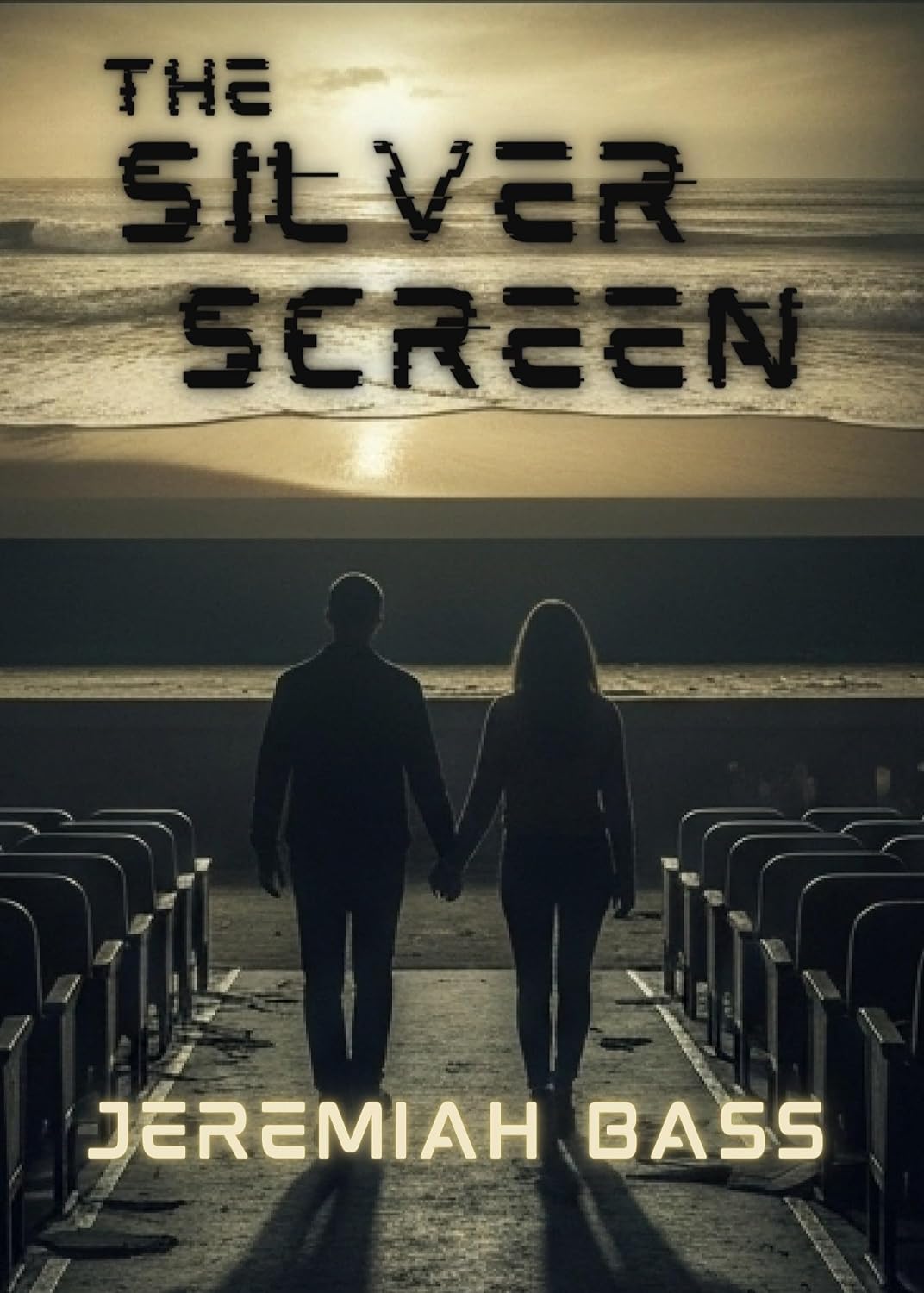
Jeremiah Bass’s The Silver Screen is a contemporary supernatural fantasy with a strong romantic core, but its real subject is memory and the strange ways people reshape their lives after death. Wyatt Gaumond believes he’s an eighty-eight-year-old widower living in an abandoned Minnesota movie theater, even though his body has mysteriously stopped aging. He can charge old cinema screens with “lifeforce” and step through them into an endless hallway of doors, each opening onto another theater somewhere in the world. When he encounters Emma, a sick and frightened young woman who increasingly resembles his late wife, their journey turns into an exploration of Wyatt’s past, his fractured mind, and the truth about where they are.
Wyatt is a compellingly difficult narrator. He’s funny, abrasive, protective, arrogant, traumatized, and often unreliable, sometimes within the same scene. His memories stretch from childhood and World War II to Vietnam, family losses, dementia, and his long marriage to June. Emma’s chapters gradually challenge his version of events, giving the story emotional tension beyond the central mystery. Their marriage feels especially convincing because Bass treats it as a lifetime of affection, secrecy, irritation, sacrifice, and mutual dependence. The book understands that loving someone for decades means knowing their tenderness and their damage, even when neither person knows how to talk about either one.
The novel’s closest popular relative may be Mitch Albom’s The Five People You Meet in Heaven. Both books use the afterlife as a place where a person must revisit a lifetime, understand old wounds, and accept that it’s time to continue onward. Bass’s approach is rougher and more expansive, with profanity, violence, war memories, horror imagery, and an elaborate mythology built around abandoned theaters. The hallway of doors is a terrific central image because it works as supernatural transportation, a map of Wyatt’s memory, and a reminder of all the choices he can’t make again. Where Albom tends toward fable, Bass writes more like a storyteller unpacking decades of family history at the kitchen table, wandering occasionally but finding revealing details along the way.
The Silver Screen takes its time, especially when Wyatt recounts wars, assignments, relatives, and old grievances. That breadth makes the middle feel heavy in places, but it also gives the final revelations real weight. The mystery eventually becomes less about how the screens work and more about why Wyatt needs to believe they work. Once Emma understands that they’re both dead and that Wyatt has become trapped in an in-between world shaped by dementia and grief, her mission is heartbreakingly clear: she has returned to help the man she loved recognize his life and let it go. The ending earns its sentiment because Wyatt doesn’t simply recover a few happy memories. He accepts the fear, cruelty, love, regret, and joy as parts of one full life, making the book a moving supernatural drama about being remembered, being forgiven, and finally being ready to leave.
Pages: 317 | ASIN : B0FV7M23ZM
Our Past and Our Memories

Forgiveness: A Novel centers around a seventy-year-old artist who finds herself revisiting the defining moments of her life—memories shaped by love, loss, and difficult moral choices. What was the inspiration for the setup of your story?
After I wrote What a Trip, the prequel to Forgiveness, I couldn’t stop wondering what happened to Fiona after the book’s ending. I missed her and wanted to learn more. With an abundance of time on my hands during the latter part of the Pandemic, Fiona began speaking to me, telling me her story and how the present and past had shaped her life.
I also wanted to explore and contrast the social and political climates of the 1970s with those of today. What better way to do that than with my favorite protagonist?
Fiona spends much of the novel reconsidering choices she made decades earlier. What interested you about the process of looking back on one’s younger self?
We are nothing without our past and our memories. As important as it is to “live in the moment,” those moments are a product of the infinitesimal choices we make each day.
Fiona achieved success in her life, but at a great personal cost. The fiftieth anniversary of her friend’s death, coupled with the Pandemic and her husband’s injury, helped her come to terms with the finite quality of life.
No one gets to age seventy without regrets, but what’s most important is how we handle them. I’ve come to believe forgiveness is freedom. I’m sure Fiona came to that realization also.
The Vietnam War, the draft, women’s rights, COVID-19, and January 6 all shape Fiona’s life. Why was it important to connect personal experiences with larger historical events?
We are all shaped by the times in which we live. History is more than dates, wars, and public figures. It’s how those events affect every aspect of our lives, from the food we eat to our cultural and personal beliefs.
The Vietnam War and the draft affected all young men of that era and their families. Many lost their lives; others like Fiona’s husband, Reuben, stood up for their anti-war beliefs and emigrated to Canada. Had Fiona not been influenced by the women’s rights movement, she wouldn’t have had the courage to follow him.
COVID-19 changed our culture and our lifestyles more than any event in the last seventy-five years. Life suddenly became more fragile, and the time we spent in isolation gave us time to reflect on our past and current way of living. Fiona spent that time coming to terms with her personal history and forgiving herself for events long gone.
Images from the January 6 Insurrection will stay with us forever. The democracy we’ve taken for granted could disappear if we don’t stand up for our rights and freedom. Fiona and her husband were personally affected by the event.
While writing Forgiveness, I asked myself whether the Vietnam War era or the present was more politically charged, more dangerous. Sadly, I feel we have more to fear today.
If Fiona could offer one lesson to readers about regret and renewal, what would it be?
We can’t change the past; we can only change how we view it. Life is too short to live with regret. Fiona’s art helped her come to terms with forgiving herself and her loved ones. For those of us who don’t have a creative outlet, we can journal, meditate, seek counseling, or share our stories with loved ones.
Renewal can happen at any time, at any age.
Author Links: GoodReads | Instagram | Facebook | Website | Amazon
On New Year’s Eve 2020, as political unrest erupts in Washington, D.C., seventy-year-old Fiona Goldberg confronts a reckoning far closer to home.
When her husband, Reuben—a journalist covering the January 6 Insurrection—is injured, Fiona is left alone with the past she has spent decades trying to quiet. The memories return in fragments: the Vietnam War protests that first bound them together, a fatal accident that shaped her youth, an affair that nearly destroyed their marriage, and a secret she has carried in silence for nearly half a century.
As Fiona revisits the choices that defined her life—love, betrayal, ambition, motherhood denied—she begins to question the stories we tell ourselves about loyalty, aging, and redemption. Against a backdrop of American political upheaval, Forgiveness explores the intimate terrain of a long marriage and the fragile architecture of memory.
A continuation of the story begun in What a Trip, this literary novel examines what it means to grow older with someone who knows your deepest failures—and whether true forgiveness is ever complete.
For readers of thoughtful, character-driven literary women’s fiction, Forgiveness is a meditation on regret, resilience, and the courage to confront the truths that shape us.
Forgiveness: A Novel

Susen Edwards’s Forgiveness is a contemporary women’s fiction novel centered on Fiona O’Brien, a seventy-year-old artist whose memories of love, loss, and moral compromise resurface during the first days of 2021. The novel begins fifty years after Fiona survived the New Year’s Eve collision that killed her best friend, Melissa. As she plans a series of paintings about forgiveness, she revisits her decision to follow her anti-war activist boyfriend, Reuben Goldberg, to Canada during the Vietnam War. Their years in Toronto, later separation, eventual marriage, and present-day life in Greenwich Village form an expansive portrait of a relationship shaped by both devotion and secrecy.
Edwards structures the story through frequent movement between the early 1970s and the politically unsettled winter of 2020–21. Fiona’s recollections reveal her estrangement from her parents, her difficulty establishing an identity apart from Reuben, an affair, an abortion she conceals, and the professional ambitions that give her an independent sense of purpose. The historical settings are more than scenery. The Vietnam draft, changing attitudes toward women’s health, the COVID-19 pandemic, and the January 6 attack on the Capitol all reinforce the novel’s interest in how private lives are altered by public events. Fiona’s conviction that “I’m a survivor” captures the resolve that carries her through repeated periods of displacement and reinvention.
The novel’s greatest strength is its sustained attention to an older woman examining her life with unusual candor. Fiona’s art provides a persuasive organizing metaphor, since each planned work requires her to transform an experience rather than simply remember it. Her reflections also give forgiveness a demanding definition. It involves recognizing responsibility, releasing blame for events beyond one’s control, and accepting that love can coexist with serious failures. The therapist’s observation that “We’re all human and fallible” becomes central to Fiona’s gradual willingness to extend compassion to her parents, Reuben, and herself. Edwards’s direct prose and conversational dialogue keep these ideas accessible, while Fiona’s self-questioning gives the narrative emotional continuity across its long time span.
The novel delves deep into Fiona’s feelings and historical circumstances, and its many flashbacks slow the momentum of the present-day plot. Yet the deliberate pace also suits a story about a woman sorting through half a century of experience. The later chapters deepen the marriage by allowing Fiona and Reuben to disclose what each has carried silently, making their reconciliation feel grounded in knowledge rather than sentiment alone. Forgiveness is an emotionally open account of aging, artistic self-examination, and a partnership that survives because its participants finally confront the full complexity of their shared past.
Pages: 378 | ASIN : B0GX2Z38G5
The Last Pirouette: A Novel in Three Acts

Janette DeFelice’s The Last Pirouette is a psychologically charged work of contemporary women’s fiction and family drama set inside the demanding world of professional ballet. The story centers on Victoria, a former dancer who has poured her abandoned ambitions into her gifted teenage daughter, Delia. When Delia earns a prestigious opportunity in New York, what looks like a career breakthrough exposes a deeper struggle over identity, control, and the difficult boundary between devotion and possession. The novel’s theatrical structure, presented as a story in three acts, fits its preoccupation with performance, fate, and the roles people play for one another.
The mother-daughter relationship gives this ballet novel its emotional force. Victoria can be intrusive and frustrating, but DeFelice lets us see the grief, trauma, thwarted ambition, and genuine love beneath her behavior. Delia is just as carefully drawn. She loves the physical and artistic experience of dance, yet she’s unsure whether the life built around it belongs to her. That tension makes the book more than a familiar coming-of-age story. It becomes a sharp examination of how a parent’s sacrifices can turn into debts a child never agreed to repay, and how hard it can be to separate your own desires from the expectations that shaped you.
DeFelice’s background in dance is evident in the detailed descriptions of technique, rehearsal, injury, and the strange combination of pain and transcendence that ballet demands. Readers who enjoy dance fiction, psychological fiction, and mother-daughter novels will find plenty to absorb here. The recurring birds, rain, mirrors, wings, and prophetic visions give the narrative a dreamlike, sometimes surreal quality, while the alternating timelines show how unresolved experiences repeat themselves across generations. Some passages linger over physical sensation and interior thought, but that intensity suits characters who understand their lives through movement and through bodies that are constantly being trained, judged, desired, and pushed past their limits.
As the novel grows darker, its early sense of possibility becomes increasingly uneasy, and the closing act carries the momentum of a tragedy whose warning signs have been visible all along. Even so, The Last Pirouette remains deeply interested in choice, autonomy, love, and the question of whether people can stop handing their pain to the next generation. It’s an emotionally demanding literary family drama with a vivid ballet setting, complicated women, and a theatrical sensibility that makes every revelation feel as though it’s happening under stage lights. The result is unsettling, intimate, and likely to stay with readers who appreciate character-driven fiction that doesn’t look away from the damage people can do while believing they’re acting out of love.
Pages: 328 | ASIN : B0FWZX8Z64
Mari’s Light Burning Bright

Kaitlyn Marquart’s Mari’s Light Burning Bright is a young adult contemporary fiction novel about Mari, a teenage girl trying to live with memories of childhood abuse, self-harm, a family move, and the fear that she may never feel whole again. As the sequel to Amber Luna My Bright Light, the book follows Mari after Camp Evergreen as she enters Northstar Wellness Center, meets other young people carrying their own pain, and slowly begins to understand that healing is not a straight path. It is messy. It is brave. And sometimes it starts with simply letting someone sit beside you.
Mari’s voice is raw without feeling forced, and Marquart gives her room to be angry, funny, scared, judgmental, tender, and wrong. I appreciated that. Teenagers are not tidy people, especially teenagers in crisis, and the book does not try to polish Mari into someone instantly inspirational. Her thoughts loop, flare, retreat, and return. That rhythm felt honest to me. The scenes at Northstar could have easily become heavy in a flat way, but the author balances them with small flashes of humor and human detail, like Scrabble games, awkward meals, and characters who are much more than the reasons they are there.
I also found myself thinking a lot about the author’s choices around faith, family, and recovery. Mari’s Mormon background is not treated as a simple answer or a simple problem, which makes the story more interesting. Her family loves her, but they often miss what she is trying to say. That hurt to read because it felt real. People can care and still fail to understand. The book is candid about pain, but it is careful with it. It doesn’t turn Mari’s suffering into a spectacle. Instead, it keeps asking a quieter question: what does it take for someone to believe she is worth saving when shame has been speaking louder than everyone else? The answer comes slowly, through therapy, friendship, memory, music, and the fragile courage to try again.
I would recommend Mari’s Light Burning Bright to readers who appreciate reflective young adult fiction with emotional depth, especially stories about mental health, trauma recovery, friendship, and finding a voice after silence. It’s not a light read, and readers sensitive to self-harm or childhood abuse should approach it with care. But for those who value hopeful, character-driven fiction that understands healing as a long walk rather than a sudden rescue, this book has a steady glow.
Pages: 153 | ASIN : B0H56ZX1V8


