Blog Archives
The People of the Mid-Ohio Valley

Town and Country: Voices from the Mid-Ohio Valley is a collection of short stories centered around life in a Midwestern small town. What inspired you to write this collection?
The ten stories in Town and Country were written and published in various journals over a number of years starting in 2019. So the collection developed gradually, but the stories were inspired by the locale and people where I grew up. I’ve turned the town of Parkersburg, WV, and the nearby rural communities of Lubeck, Washington, and New England Ridge into the fictional Parkeston and Locust Hill, respectively. Faulkner had his Yoknapatawpha County; Thomas Hardy had Wessex; I have Locust Hill.
Is there anything from your own life included in your stories?
Very much so. In addition to the locale, the character of Livia in “The Postmistress” is based on one of my aunts—my father’s sister. She did indeed operate the local post office from her parlor and was famous for her feisty personality. Also, the general store featured in the companion stories “Disorder” and “Penny Candy” was real, with cats in the front window and penny candy in jars. Along with my schoolmates, I waited there for the school bus to come and take us to the high school on the far side of Parkersburg.
Is there one story that stands out for you? One that was especially enjoyable to craft?
Oh yes, that would be “Penny Candy.” I intended it to contain a tribute to the people of the Mid-Ohio Valley—actually the entire collection is that. But I put the words of the tribute in the mouth of Pastor Beattie as he tries to comfort the distraught Lorna Crandall, who continues to be haunted by the ghost of her son killed in Vietnam. Pastor Beattie tells her, “There’s good people here in Locust Hill, as you yourself just said. So many angels, all in their own way. As good as any I’ve seen in this world. I can say that for certain.” And I hope the people who read Town and Country will see that too.
Can we look forward to more work from you soon? What are you currently working on?
You can, but I’m not so certain about the “soon” part. I’m working on a sci-fi-paranormal-inspirational story that requires quite a lot of research. The protagonist is a chemical engineer who replaces the deceased head of research in a chemical laboratory. The deceased chemist, famous for his invention of rejuvenating tires (i.e. regrown their treads), urges his successor from the Afterlife to turn his talents to medical discoveries rather than industrial ones. To complete the novel, I just need to come up with a plausible explanation of the Afterlife and a plausible cure for cancer. No problem! The working title is The Covalence of Love.
Author Links: GoodReads | X (Twitter) | Facebook | Website | Amazon
In this collection of short stories, the reader encounters ordinary people struggling with a variety of extraordinary problems that threaten to change their lives: an elderly widower confronting a life of regrets, precocious children threatened with separation, a middle-aged couple facing the loss of their generations-old general store, and many others. Read Town and Country and meet the people of the Mid-Ohio Valley—people you may very well recognize from your own hometown.
Humans are Living Mysteries
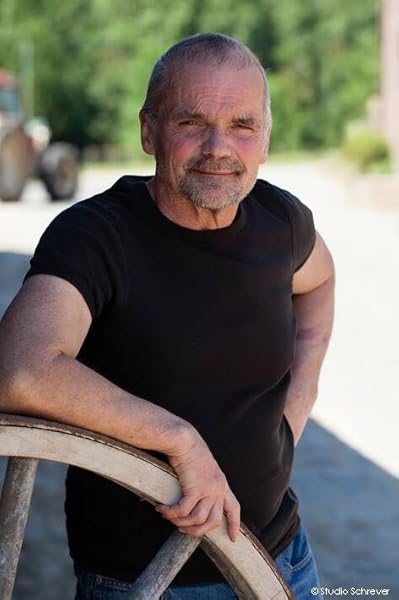
Scars of The Heart is an influential collection of short stories that delve into the profound impacts of physical war and the psychological impact of violence on humanity. What made you write a story about this topic? Was anything pulled from your life experiences?
I have been a travel writer from 1990 to 2003 and wrote New Journalism texts about conflict zones in the world (contributions that report on events taking place, but in a literary, subjective way). I visited Somalia, Liberia, Bosnia, Sudan, Gaza, Iran, Iraq, Mozambique, Kosovo, Lebanon, and Myanmar… to name a few. I got very close to the atrocities of war, its physical but also its mental consequences. I thought I could handle them, but these days I have PTSD symptoms. They have become more bearable with time, but I can’t forget people’s suffering in war circumstances. In my eyes, I was a “war tourist” who shared their life for a couple of weeks and disappeared again while they were doomed to stay in hellish places. My anger, my shame, remorse, sadness, and despair fuel my stories.
What are some things that you find interesting about the human condition that you think make for great fiction?
When you think about it, humans are living mysteries: contradictory, unpredictable, chaotic. Great fiction tries to create a holistic image of our ambiguity. I believe no other art form is more proficient for this task. Great fiction asks the reader to feel what is hidden between the words so that the voyage into the depths of our being – the maze in our souls, if you like – is an honest, compelling exploration for the reader and the writer. Therefore, great care must be given to the choice of words, their ambiguity, and the rhythm of the sentences. This mixture is called style, and it is necessary to pick up glimpses of the hermetic, sometimes angelic, sometimes demonical, poetry that drives our lives. Great literature is a mixture of empathy, relentless challenges, and mighty victories, yet already tainted with the treason of our egos.
What themes were important for you to explore in this book?
Although they take place in different eras and countries, the background of the stories deals with violence, greed, sexual conquest, and our amazing capability to lie to others and ourselves. Probably you’re thinking now: “And love? Where is love?” Oh, it’s there, sometimes at the brink of obsession or tragedy, sometimes fueling our inner loneliness and addiction to happy dreams and delusions. It is said that readers like happy endings. So sorry to disappoint: when I wrote this collection, the tragic and sad endings even took their toll on me, so I want to advise the reader to read each story at intervals and not right after each other.
What is the next book that you are working on, and when can your fans expect it to be out?
“The Firehand File,” my next book, is set in Berlin in 1921. Let me give you the blurb of the Dutch mother version of the novel so you have the broad outline.
1921. Berlin is a city of extremes. Political violence plagues the streets during the day. A serial killer whom the media call “The Skinner” roams the streets at night. It is suspected that he is a rabid World War I veteran, but he remains untraceable. In this human pressure cooker, the relationship between the famous Flemish DADA poet Paul Van Ostaijen and his impetuous girlfriend Emma Clément is on edge. Like hundreds of thousands of others in Berlin, they live in poverty and are addicted to cocaine and other drugs.
When Van Ostaijen, on a high whim, steals the Feuerhand Obsession file in the apartment of the spy Elise Kraiser, the poet sets in motion a series of dramatic events that shed surprising light on a politician who is rapidly gaining influence: Herr Adolf Hitler.
Carly Rheilan, my translator, scores a fantastic – and poetic! – job. However, the novel’s second part is hard to translate because I tried to use the same manner of Van Ostaijen’s spoken language, a mixture of Antwerp dialect from the twenties with French and German words. “The Firehand File” is a literary suspense novel but also a homage to Paul Van Ostaijen, who revolutionized poetry in the Roaring Twenties. We hope to have the translation finished at the end of this year so that the novel can come out in 2025.
Author Links: GoodReads | X | Facebook | Website
Through ten stories set in different countries and eras, Van Laerhoven takes us through the destructive consequences of our passions as a common thread, from contemporary Syria to Algeria in the 1950s, and the civil war in Liberia to the uprising in Belgian Congo in the 1960s.
The ten stories in SCARS OF THE HEART highlight the dark side of love, which fuels our violence, inner loneliness, and greedy egos.
Scars 0f The Heart


Scars of The Heart by Bob Van Laerhoven is a compelling collection of short stories that delve into the profound impacts of war. The initial stories, set in various war eras, are particularly devastating, highlighting the unquantifiable effects of war on the human psyche. Through these narratives, Van Laerhoven transports readers to the shattered worlds of war-torn individuals, offering poignant glimpses into their lives and struggles.
The author takes a unique approach to representing human nature, weaving tales that feature a diverse cast of characters, including aliens, painters, friends, enemies, and exploring themes of betrayal, loyalty, greed, love, and revenge. This eclectic mix adds depth and variety to the collection, ensuring that each story is distinct and memorable. Van Laerhoven’s writing style is reminiscent of the macabre and powerful prose of Roald Dahl. His stories shock and captivate, blending mysticism with stark reality. Although fictional, these tales resonate with truths about the human condition. Not all stories are set on battlefields, but the sense of war—whether physical or psychological—permeates the collection. The settings range from the war-torn Middle East to World War II and Nazi Germany, bridging past and present to create relevant and relatable narratives. I finished the book with immense respect for the author’s raw and heartbreaking portrayals of reality. The non-war stories are equally compelling, showcasing Van Laerhoven’s versatility and skill in crafting riveting tales.
Fans of Roald Dahl or Edgar Allan Poe will appreciate the beautifully crafted stories in Scars of The Heart. For those who enjoy well-constructed plots and complex characters, this collection is a must-read. I highly recommend this book to anyone who can endure the psychological turmoil and pain depicted, as it offers profound insights into the atrocities and resilience of life.
Pages: 245 | ASIN : B0CX5S8NJZ

Inspiration Comes From All Over
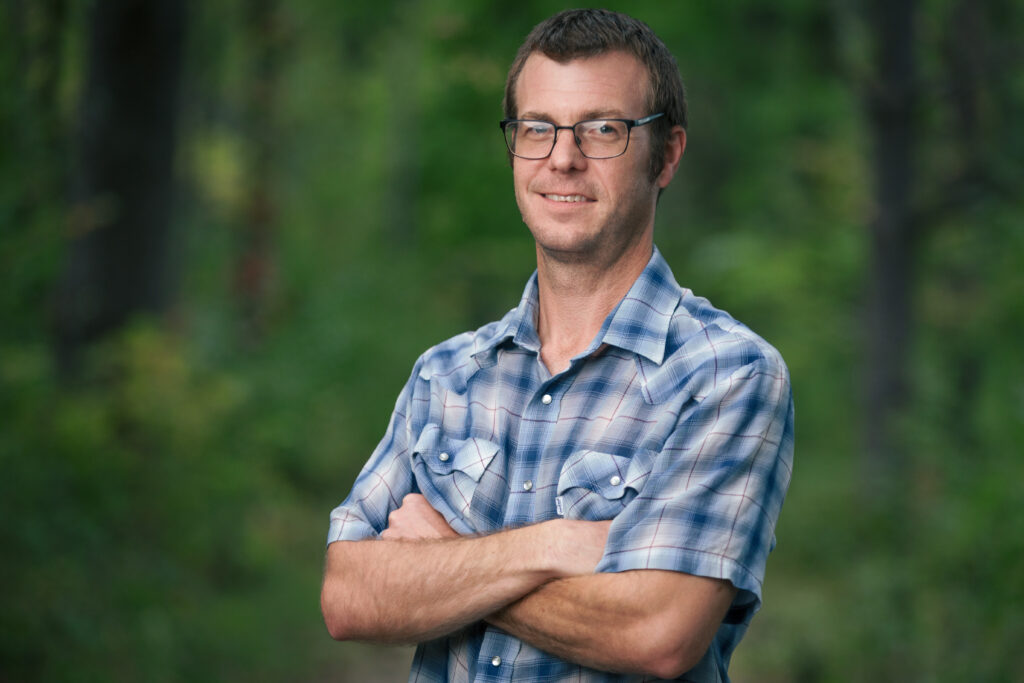
Replacement Parts is a collection of short stories featuring a cast of characters struggling with personal demons and societal expectations in small-town America. What was the inspiration for your collection?
This book was so many years in the making, it’s difficult to say the direct inspiration. Part of it is pulled from stories I hear from people around me. Veterans told me their war stories, inspiring a piece in the collection. My neighbor is a police officer and told me details about his night shifts. Friends and students who worked in group homes for troubled kids told me some horrific, as well as funny, tales. Each turned into a story in the book.
Also, part of it was from when I taught in a small town where the main source of employment, a factory, was shut down, affecting the community, which became the inspiration for the town of Dexton in the book.
Another was the fact that I published each story independently, threw them into a manuscript, and a writer friend noticed the stories had similar characters and plot points. So, instead of feeling like a one-trick pony, there was potential for a linked collection following a novelistic arc between the characters over several years/generations.
Then there’s just living in Iowa, with its turbulent weather—floods and droughts, blizzards and tornados—and endless landscape, as well as it’s working class roots, that informed the backdrop of every sentence.
Do you have a favorite story in Replacement Parts? One whose characters especially resonate with you
That’s a tough one—but I’d have to say my favorite story is Birmingham House, the third story in the collection. It takes place in a teenage group home and is told in 10 scenes, each narrated by a different character—each with a distraught past so that every vignette moves to a quick climax. Some characters established earlier in the book reappear in the home. Others are introduced for the first time, only to arrive again later in the collection. The setting really spoke to me: these stories of kids with traumatic backgrounds, all struggling and acting out, which on the surface makes them look like ‘bad’ kids. So finding the heart and humanity behind these facades was an inspiring experience.
As for characters, I love Geoff, a young boy who appears late in the collection and befriends a new girl suffering from cancer. I admire his innocence and big heart. But my favorite character is probably Hannah—she was the first character I framed the collection around—she’s tough and funny and vulnerable, so I let her guide the book by kicking it off in the first story, reappearing several times throughout, and finally ending the book.
I find that authors sometimes ask themselves questions and let their characters answer them. Do you think this is true for your characters?
It’s true, as I write I have no answers, just questions as I discover things—but I don’t know if there’s ever any answers either. In fact, when I feel a story is close to offering a moral, advice, an answer to a big question, I often veer away from this impulse in order to open up more questions by the end—so hopefully the reader will walk away pondering the story, wrestling with it, as opposed to feeling one way about it.
Also, by doing this, you can explore the complexity behind people. For instance, Carl is a character who appears several times throughout the book—and may be the most unlikable character. So, he was fun to write, and it gave me the responsibility to find his humanity—try to understand why he does certain things most would find ugly.
Same with Geoff, who is maybe the most likeable character—how can his innocence be a problem? He’s a ‘good kid’, but he makes mistakes, refuses to stand up for a friend—and how often do we all fall into that fear?
So some easy answers I want to complicate. And some questionable characters will hopefully become easier to identify with by the end.
Can fans look forward to more fiction works from you soon? What are you currently working on?
Short stories are my passion. But I’m trying some new things—at least for me—when it comes to style, structure, and adding more humor my writing.
And I’m working on a novel based on three points of view, based on a family suffering loss. Plus, there’s comic book museums, and conservative Christian high schools, and new-age retreats, and road trips, and Ouija board séances, and….in other words, it’s a bit of a crazy mess right now—but also a fun work in progress.
Author Links: GoodReads | Facebook | Instagram | Website
The local sheriff searches for a missing girl while trying to reconcile with his estranged daughter. A returning soldier, haunted by violent visions, finds his hometown no longer feels like home. When a girl loses her mother, she forges an unlikely family with a mysterious drifter and a man claiming to be her father. Within a center for troubled teens, intersecting narrators get caught in purgatory between the past and future. And in the title story, a child befriends a sick classmate, forcing the boy to pick sides in a school that shuns weakness.
In Replacement Parts, a debut collection by Marc Dickinson, we witness a recurring cast of characters as they navigate their way from adolescence to adulthood. Intimate in nature but novelistic in scope, these twelve linked stories span the generations, each replacing the next until everyone is finally forced to face their own dark history.
Replacement Parts

Replacement Parts, by Marc Dickinson, is an evocative collection of interconnected stories that dive into the complexities of life in small-town America. Each story is a vignette of struggle and resilience, showcasing characters often on the fringes, dealing with their demons while seeking redemption or struggling to survive. Through themes of addiction, family dynamics, and societal expectations, Dickinson paints a raw and poignant picture of the human condition.
From the outset, I was struck by the raw authenticity of Dickinson’s writing. The characters are meticulously crafted, each with a distinct voice and palpable presence. For instance, the portrayal of Jill and her haunting scars in one of the stories is not just a physical description but a gateway into her psyche and past traumas. The visceral imagery used here, like scars “lined up on her thigh like chalk marks along a cell wall,” captures the essence of her pain and endurance.
I enjoyed how Dickinson explores familial relationships that are often strained and complex. The tension in the story involving Hunter and his mother is almost tangible as he navigates his path to redemption after a history of violence. The narrative deftly illustrates how past actions cast long shadows, affecting present interactions and future aspirations. Hunter’s internal struggle and his mother’s palpable fear during their drive home are heart-wrenching and realistic, making their reconciliation attempts deeply moving.
Dickinson also excels in highlighting the harsh realities of addiction and its ripple effects on families. The narrative thread of a mother pimping out her son to feed her addiction is particularly harrowing. The portrayal is unflinchingly direct, shedding light on the desperate measures taken in the grips of addiction and the lasting scars it leaves on those involved. The delicate balance Dickinson strikes between depicting these grim realities and maintaining a sense of empathy for his characters is something I think readers will truly enjoy.
Replacement Parts delves deep into the lives of its characters with unerring honesty and compassion. Marc Dickinson’s storytelling is both brutal and beautiful, capturing the essence of human frailty and resilience. This book is highly recommended for readers who appreciate literary fiction and who do not shy away from the darker aspects of life but still find moments of hope and redemption amidst the chaos.
Pages: 215 | ASIN : B0D5BXDWNM
Little Jungian Puzzles
Geographies is a collection of short stories featuring characters from varied backgrounds and areas of the world all dealing with loss, grief, and the consequences of their choices. What inspired you to write this anthology?
Well, it didn’t happen all at once. These stories were written over a long period of time – around ten to fifteen years. The inspiration for writing each one differed, and the experience of realizing each story was distinct. The only exceptions would be the two stories – “Geographies” and “Slipstream” – which are linked stories; but they were also written years apart. I would also say, during those years, my writing style was evolving and changing as well. It was a bumpy road with a lot of ups and downs along the way. Anyway, I just kept working, writing, and sending out stories. I always had in mind I’d publish a collection one day, but I didn’t really know what that would be like.
Finally, I began gathering my work together, both published and unpublished stories. As I did, I don’t know quite how to put it, but the stories began to speak to me. Again. Assembling them together, side by side, reawakened me to my characters and the ideas of grief and loss the stories contained. I realized there were subtle similarities many of the stories shared – metaphorical, thematic, and also with respect to characters. Things like images of maps, ideas in a couple of stories about displacement and the meaning of home, the ways in which memory is a map, and how it shapes our sense of time and the places in which they happen. I felt as if I’d made a kind of tapestry, over time. It surprised me. I hadn’t expected that. You just never know how things like this will go until you’re doing it.
Are there any emotions or memories from your own life that you put into your characters’ lives?
Yes and no. I sometimes think of my stories as little Jungian puzzles. You can’t avoid running into your own psychic wellsprings when writing. I view fiction as an encounter with both truth and imagination. For me, the making of fiction always involves shaping a story through what I think of as a kind of ephemeral, half-lit inner theater of memory and emotion which is then synthesized and animated by imagination – or what I might call psychic imagination. I think there’s a liminal space of waiting and listening that exists between the writer and her characters, once the story is set in motion. It involves a complex interplay of so many things.
In “High Grass” for instance, I drew on a lot of my own childhood memories from our family’s years in West Texas – hazy and elusive memories that served as a kind of portal into the world of that story. But what happens in the story is purely fiction. Once I found my way in, I allowed my imagination to realize the story. On the other hand, in stories like “The White Cliffs Hotel” and “A Bowl Full of Oranges,” it took much more in the way of what I guess I’d call imaginative emotional empathy, especially with respect to my characters – both elderly men. I came to them by starting with places I knew – the old hotel in Dover, England and that little apartment in New York. From there, I stayed with them, as if I were keeping company with them. Slowly, like the peeling of an onion, they revealed themselves to me. Was that my memory and my emotions at work? Perhaps. I think as I wrote these stories, I was responding as much to the place as I was to the character being in that place.
Do you have a favorite among the short stories in your collection or a character that you especially loved writing for?
Oh, gosh, that’s a tough one. I guess of the stories “The List” is one of my favorites. There is much about it that came together so quickly, which was unusual for me. I’m a slow writer. Anyway, I wrote it in a matter of days, and while I did some revising and tinkering here and there, it is largely as I first wrote it. I think it was the voice. I just liked it. As for a character, I think I would say it is the boy, Louis, from “Some Kind of Day.” I loved him. He’s a scrappy, mischievous, and happily oblivious kid, a bit of a schemer who also senses things about the grownup world he doesn’t fully understand and can’t really articulate – that grownups lie and are hypocrites; the fear he hears in his grandmother’s voice; his mother’s anxieties and simmering anger, and the shadow the death of his father has cast over the entire family.
What is the next book you are working on, and when will it be available?
It’s one story at a time for me. I don’t know what the next book will be. I’ll just keep working and see what happens.
Author links: GoodReads | Website | Amazon
Geographies is a captivating collection of stories that explore the profound impact of places on the human experience, delving into the complexities of aging, childhood and family life and the scars left by war.
A man returns to the shores of Dover, England, where decades earlier he experienced his first awakening of adolescent desire and longing. A pair of orphaned siblings face off with a rattlesnake in the West Texas plains. In the title story, an aging father visited by his daughter holds close the frail maps that recall his experience as a wounded WWII paratrooper and give rise to a painful dreamscape that renders him a helpless witness to loss while in a companion story the daughter is touched by the realization that for her long-divorced parents their wartime bond remains a deeply felt imperative.
Traversing the post-war decades from the tumultuous sixties to the present day, Geographies takes readers on a poignant and evocative journey across diverse landscapes, exploring the mysterious interplay of place and memory, loss and grief. These are stories imbued with lyricism and warmth, with characters whose vulnerabilities and resilience shine as they navigate the twists of fate and hidden regrets that shape their lives.



 LITERARY TITAN