Blog Archives
The Mystery of Connection

Prima Nocta explores soul connections and relationships by way of interconnected stories presented from various perspectives and within different historical settings. Where did the idea for this unique novel come from?
It grew from questions I couldn’t quite let go of: how we misunderstand each other, how connection forms, and why certain relationships feel inevitable. And… what defines a soul? I was particularly drawn to the idea of “fated” connections, but not confined to a single lifetime. Using the concept of samsara (the cycle of birth, life, death, and rebirth), I imagined the same two souls meeting again and again across centuries, each time shaped by different circumstances, yet drawn together by something deeper.
Structurally, I wanted to explore that idea through multiple historical settings: grounded pasts, recognizable presents, and speculative futures. Examining how perspective shifts radically between two people experiencing the same moment. The result became a kind of metaphysical echo: the same connection, refracted through time, culture, and identity.
What are some things that you find interesting about the human condition that you think make for great fiction?
Interesting? More like fascinating!
What fascinates me most is how subjective experience is.
Two people can live through the same moment and walk away with entirely different truths. The tension between shared reality and individual perception is where I find the most compelling stories.
I’m also drawn to the mystery of connection: that instinctive sense of recognition we sometimes feel with a stranger. It defies logic, yet feels undeniable. Even in something as structured as dating, we often know within minutes whether a connection will mature or fade. That raises a deeper question: what, exactly, are we responding to?
There was a lot of time spent crafting the character traits in this novel. What was the most important factor for you to get right in your characters?
Voice was everything.
Each character needed to feel fully inhabited: distinct not only in personality, but in language, rhythm, and worldview. Language shapes perception, so their diction had to reflect their time, culture, and internal life. Dominique, for example, would never use a word like “guillotine” (it hadn’t been invented yet).
It also had to reflect who they were as a person. To write them honestly, I couldn’t remain at a distance. I had to step into each character’s experience and live it as fully as I could.
And, truthfully, many of those moments stayed with me. I found myself emotionally affected while writing them. Even found myself in a few restless nights, concerned for a character even though I fully knew what would happen to them.
Can we look forward to more work from you soon? What are you currently working on?
Yes! Another novel set in the Prima Nocta universe is currently in beta review. While it connects to the first book, it stands entirely on its own.
It follows Dominique, one of the central figures, as he takes on a lifelong journey across medieval Europe and Asia, ultimately arriving at a Tantric ashram in the Himalayas. It’s a ‘bildungsroman’ in the truest sense: a story of both physical and spiritual transformation. The people who guide him along the way, especially two amazing women who shape his spiritual journey, are also central to the plot.
Where Prima Nocta explores connection across lifetimes, this next work explores what it means to seek understanding within a single life… and what must be surrendered to achieve it.
And yes, there’s more beyond that. Another book is in development, and a fantasy trilogy is beginning to take shape.
Author Links: GoodReads | Website | Amazon
What if your soulmate existed — again and again — across centuries, worlds, and lifetimes, but each time, something went wrong?
Prima Nocta is an emotionally rich novel that explores love at its deepest level — beyond time, beyond reason, and beyond the body.
Told through twelve sensual, interconnected stories that span from medieval France to a fractured but hopeful future, this book invites you into the lives of six couples:A hunted scholar and a witch who sees his soul.
A grieving Japanese lord and a geisha who knows too much.
A serf’s daughter haunted by dreams, and the Duke who shares them.
A gangster, a trollop, a writer, a physicist… and the threads that bind them all.
Through reincarnation, mysticism, quantum theory, and raw human longing, these lovers must discover not just each other, but also the truth behind reality itself.
This novel is deep, lyrical storytelling about:Fated soulmates
Sacred sexuality
Emotional and spiritual healing
Metaphysical mystery
What early readers are saying:“A celebration of human connection that left me in happy tears.”
“Sensual, intelligent, and unforgettable.”
“Imagine if Cloud Atlas and The Time Traveler’s Wife had a love child — this would be it.”
For readers who love:Deep love stories with spiritual and metaphysical undercurrents (and spicy moments)
Stories that challenge the essence of love, connection, memory, destiny, and time
Mature content advisory: Contains emotionally intense adult themes and explicit sensuality.
Learn more at: https://djprattauthor.com
Connie’s White World


Connie’s White World is a debut short story collection by Sam Newsome, saxophonist, educator, and what you might call a jazz anthropologist of the human condition. The book gathers ten interlocking stories set in the world of jazz: a white pianist rattled by a racially charged review, a beautiful but undisciplined busker haunted by ambition he never quite answers, a classically trained soprano who sheds her mother’s legacy for a sequined alter ego at a Chinatown dive bar, an aging educator whose memory dissolves even as the music remains, a saxophonist who stops playing after an accident that kills a girl. These characters live at the margins of recognition, talented, conflicted, sometimes sabotaged by their own psychologies, and Newsome traces the grain of their private lives with the attentiveness of someone who has spent decades listening. As he explains in his liner notes, he rewrote these stories as jazz: short clauses, Baldwin-style em dashes, rhythmic disruptions. The prose swings because it was designed to.
What I liked most was Newsome’s refusal to adjudicate. He gives every voice its weight, even the uncomfortable ones. The opening story, “Connie’s White World,” places us inside a white jazz pianist grappling with a career-defining accusation that her music has “strained out Black culture,” and Newsome neither exonerates her nor condemns her. She is by turns defensive, self-aware, and achingly honest about her own limitations, and the story’s power comes precisely from that honesty. “Letter to the Editor” operates as a bracketed epistolary duel between a Black saxophonist and a white critic, and Newsome lets both men reveal themselves through escalating salvos until neither is fully right and neither is fully clean. The book is most alive when it refuses easy resolution. “The Legacy of Mr. Mosley” is perhaps its finest achievement, a portrait of a jazz educator undone by dementia, cared for by a son-in-law who can’t bring himself to call him “Dad,” still tapping two and four in wingtips on a nursing home deck while Chet Baker drifts from the speakers.
Some stories, particularly “Tone-Hole Love,” narrated from a saxophone’s perspective, feel more like impressionistic experiments, and a few of the romantic subplots arrive and depart quickly. The prose occasionally tips from rhythmic restraint into something closer to purple heat, especially in scenes of physical intimacy.
Readers drawn to literary fiction, jazz fiction, and character-driven short story collections will find much to admire here, particularly those who have appreciated James McBride’s The Heaven & Earth Grocery Store for its portrait of music and community, or Colson Whitehead’s early work for its cool, socially observant prose. Newsome writes from inside the jazz world in a way most fiction doesn’t; his characters argue about voicings and sidemen with the specificity of people for whom these things are genuinely at stake. Connie’s White World is an unmistakably alive debut, proof that when a musician decides to write, the silence between the notes can carry as much meaning as the notes themselves.
Pages: 136 | ASIN : B0GJN1117N

Oral Histories

Coal Dust on Purple Asters is a trilogy of short fiction centered around the hardship and hope found in the coal country of rural Kentucky. What was the inspiration for the setup of your story?
My mother grew up as a coal miner’s daughter in Knott County, Kentucky, during the 1930s and 40s. While her family’s reality was often defined by hardship and poverty, my grandmother’s stories also sparkled with the resilience of people who found dignity and contentment despite those struggles. As a writer, I felt a natural pull toward those memories. While the stories in this collection are fictionalized, there is a deep kernel of truth in each one that honors my family’s history.
Coal is both a livelihood and a threat throughout the book. What conversations or research influenced how you portrayed the tension between pride in mining and its human cost?
It is a profound contrast. In the 1920s and 30s, the mines were treacherous — thick with dust and the constant threat of roof collapses. Yet, for many, the mines offered a “decent” living that farming or blacksmithing simply couldn’t provide. There is a specific kind of pride in doing a dangerous, difficult job well, and the men who entered those tunnels with pickaxes felt that deeply. My portrayal of this tension was heavily influenced by the oral histories passed down through my mother’s family, capturing both the physical toll on the land and the quiet pride of the workers.
Despite loss and hardship, the book keeps returning to hope. How do you balance darkness and grace in your storytelling?
I believe the human spirit naturally gravitates toward the light. The mining families of that era faced immense obstacles, but they didn’t face them in isolation; they lived in tight-knit, fiercely supportive communities. By focusing on that communal strength, the “grace” emerges naturally. It’s about showing how people cling to one another in the dark, how the sun still manages to break through a cloud of coal dust.
What is the next book you are working on, and when will it be available?
I enjoyed the short story format so much that I am currently completing another trilogy of fiction. This new project remains in the same time period but shifts the setting to the farmlands of Northeast Tennessee. There isn’t a firm release date yet, but I’ll share more updates soon!
Author Links: GoodReads | Facebook | Website | Amazon
In “Rain on Chinquapin Holler,” Wiley Hicks’ heart is torn between his mountain-bred wife and a perfumed city woman who represents everything he both desires and despises. Meanwhile, bootleg whiskey offers both escape and enslavement. A devastating flood forces impossible choices that leave no one unscathed.
“A Sprig of Purple Asters” follows May Owens, whose unemployed miner husband vacillates between pride and despair while their sons’ bellies grow hollow. When her opportunistic brothers arrive, May’s desperate gamble saves her family by nearly destroying it.
The final story — “Red Snow in the Kentucky Woods” — follows young James Herald Gibson who, after losing his father and brother to a mine collapse, vows never to descend below ground himself, whatever the cost. His choice spirals into a decades-long mystery of family secrets and unbearable guilt.
Throughout, characters speak in the lilting cadence of mountainfolk whose poetic speech preserves the rhythms and phrases of their Elizabethan ancestors.
Coal Dust on Purple Asters: A Trilogy of Short Fiction
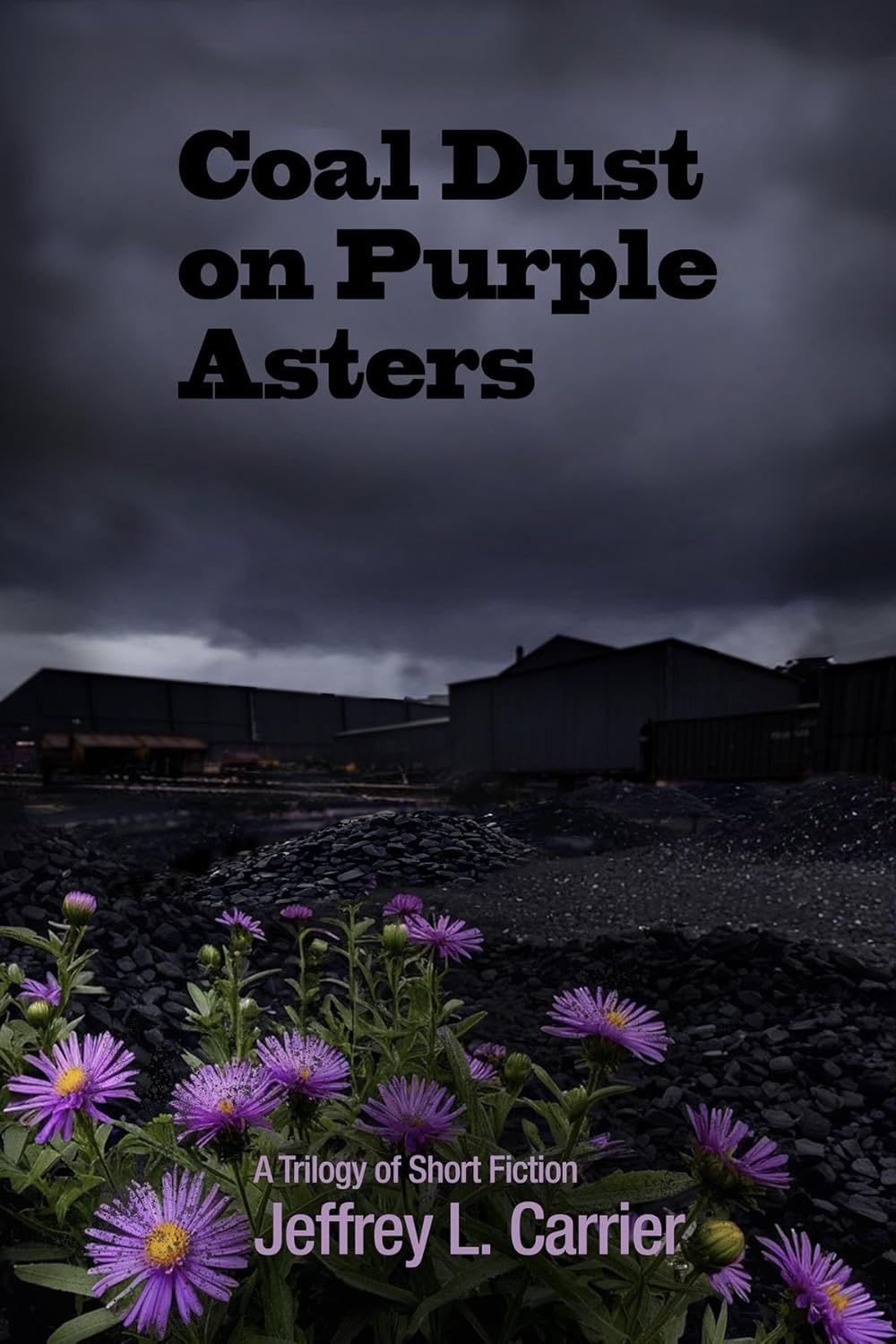

Coal Dust on Purple Asters is a linked trio of stories set in a small Kentucky coal county, framed by a brief, personal introduction from the author about his own mountain family and the memories that shaped him. We follow Vergie Hicks and her girls as a cheating husband, a sudden flood, and an act of sacrifice tear their home apart. Then we move into the Depression years with May and Zeke Owens, their hungry boys, two wild outlaw brothers, and a house fire that burns away more than old boards yet leaves a stubborn core of hope. In the final story, the focus widens to miners like Clarence Gibson, his friend Estill, and the schoolchildren in Jip Creek, and we see how coal, danger, and pride wrap around several generations in the same valley. Across all three pieces, the book keeps circling the same things: coal dust and purple asters, hard work and tiny bright bits of beauty. The result feels like one long family album, even when the characters change.
I felt the writing land in a very sensory way. The pages are full of simple images that linger, like hens clinging to rafters while floodwater rises, or a child hanging to a branch above churned mud, or a Purple Heart medal turning up in warm ashes beside a few cracked teacups. The scenes are clear in my head, almost like I watched an old film instead of reading a book. I liked how the dialogue keeps the Appalachian speech patterns without turning the characters into jokes. The rhythm of that talk feels loving and careful. Sometimes the descriptive passages run a little long for my taste, and the similes stack up, so a scene can feel heavy when the emotion is already strong. Even then, I never felt lost. The pacing in the flood chapter in particular stays tight, so the dread just builds and builds until the house finally goes. By the time Wiley dives back into that mess to reach his family, I was rooting for him and dreading what I knew was coming.
What I really liked, though, were the ideas underneath the stories. There is a hard look at men who drink, drift, and hurt the people who love them, but there is also room for them to be brave and soft in their last moments. Wiley is both the man who cheats and the man who saves. Zeke is the father who cannot keep steady work and also the man who stands in front of his burned-out house and says they will build again. I liked how the book never lets poverty turn into a simple tragedy tale. The people bend. They scheme. They do questionable things to keep food on the table and keep danger away from kids. May’s decision to set her own home on fire so her brothers will stay away is wild and a little shocking, and I could still feel the tight knot of fear that pushes her there. I also enjoyed the way the last story steps back and talks about mining itself, about pride in the work and the pull to leave for the sake of your lungs and your children. Hearing Clarence talk about coal like faith while Estill talks about coal like a slow death gave me that uneasy feeling you get when two truths sit side by side and both sound right.
The book would be a strong fit for readers who enjoy regional fiction, family sagas in short form, or historical stories about working people and small towns. If you like character-driven plots, clear scene-setting, and stories that do not flinch from trouble but still reach for grace, this will likely work for you. I would recommend Coal Dust on Purple Asters to anyone who wants to spend time in a vivid place with flawed, stubborn, loving people and to anyone curious about the human cost behind those old coal seams and mountain stories.
Pages: 89 | ASIN : B0G8RX9NV8
Six Stories Up- Tales of Whimsy, Imagination, and Hey, A Little Satisfying Comeuppance

Six Stories Up is a lively collection of short tales that bounce between playful fantasy, sharp humor, and a soft punch of moral comeuppance. Each story stands on its own, from the rain-soaked artistic swirl of 1920s Paris to a Vietnam vet’s barroom confession, to a smart-mouthed seagull convincing a fisherman to take a swim. The book wanders through imagination with a kind of wink that says, stay loose, anything can happen here. There is trickery at times and reflection at others, and by the end of each tale, I felt that small, satisfying click of a truth landing where it should.
I enjoyed the author’s voice. It feels relaxed and mischievous, almost like someone at the far end of a bar spinning stories just for the fun of it. The writing moves fast and never takes itself too seriously. I got pulled in by the rhythm of it. Scenes like the boisterous café in Paris or the smoky bar in Seattle feel alive because the dialogue snaps and the characters talk like people who actually exist. I was grinning at the chaos around Tinkham in Paris, and then sinking into the slower, thoughtful mood of the old veteran’s tale in The Doppelganger War. The book shifts tones with ease, and I enjoyed that unpredictability. It kept me alert, never quite sure where the next turn would land.
And the ideas, honestly, surprised me. At first, I thought I was settling in for pure entertainment. Instead, I found myself thinking about belief, about luck, about the lies we tell ourselves to get through life. That talking seagull cracked me up, but it also made a point about trusting the wrong voices. The stories play with morality in a lighthearted way, but they still sting a little when the consequences show up. I liked that combination. I could sense the author having real fun with these characters while still nudging me to look a little closer. That balance made the whole collection feel richer than I expected.
I would recommend Six Stories Up to readers who love quirky short fiction with personality. People who enjoy clever twists, fast dialogue, and a mix of humor with heart will get a kick out of this book. It is great for anyone who wants something playful yet thoughtful, something that can make them laugh and then make them pause for a second. I had a good time with it, and I think anyone who likes stories that wander off the well-worn path will too.
Pages: 251 | ASIN : B08KXSX4WP

Prima Nocta: A Mystical Quest for Love
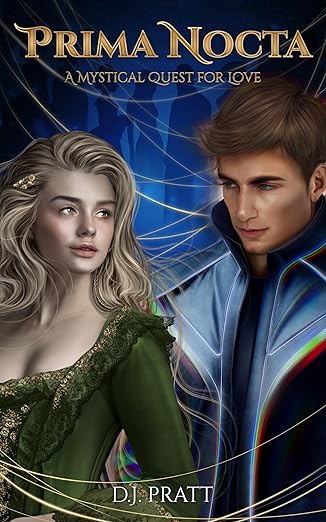
Prima Nocta is a sprawling, intimate, and deeply passionate novel that moves through time and culture to explore the idea of soul connections, those rare and fated relationships that transcend logic, distance, and even death. Through a series of interconnected vignettes told from different perspectives and historical settings, the book traces recurring meetings between soulmates over centuries. It begins with a hunted philosopher in 16th-century France and moves to a grieving daimyō in Edo-period Japan, a nobleman in Renaissance England, and onward into modern and future lives. Each tale crescendos in a moment of intense emotional and erotic connection, all part of a larger narrative arc about love, memory, and the spiritual bonds that tether us across time.
From the very first page, I was struck by the raw emotion Pratt brings to the prose. It doesn’t hide behind elaborate metaphors or highbrow literary tricks. Instead, it opens its heart right to you. The writing is so personal. There’s a genuine ache that lives in every chapter. I felt it most in the quiet moments, those simple exchanges of glances, the gentle touches, the characters’ longing to be seen and understood. The dialogue doesn’t try to be clever. It tries to be true. And it is. That’s what makes it hit so hard. It’s not clean or tidy. It’s messy and complicated and bursting with yearning. The characters aren’t perfect, and neither are their lives, but the connections they form are electric. You believe in them. You want them to win. Even when they can’t.
There’s something haunting about the way Pratt weaves the spiritual and the physical. These aren’t just love stories. They’re meditations on fate, identity, time, and what it means to truly know someone. The way the book blends sensuality with existential questions is bold and surprisingly tender. It’s not erotica for the sake of titillation. It’s about finding divinity in the act of connection. The erotic scenes feel earned, not gratuitous. They’re emotional revelations just as much as physical ones. And that’s where the book shines most. It dares to suggest that sex, love, and meaning are all wrapped up in the same tangle, and I completely bought into that.
The pace is slow in places. It lingers, it wanders, it reflects. But if you’re someone who likes your stories soaked in feeling and not afraid to be a little weird or mystical, you’ll find something special here. I’d recommend Prima Nocta to readers who crave emotional intensity, who love deeply romantic fiction with spiritual undertones, and who are open to a narrative that feels more like a journey than a destination. This book isn’t afraid to look you in the eye and ask big questions.
Pages: 333 | ASIN : B0F1YTBGR1
True Change

Common Sense & Other Tales of Disillusionment is a collection of short stories that peels back the layers of ordinary life to reveal the people who are breaking down under the weight of their own choices & circumstances. What was the inspiration for this collection of stories?
Coming off writing my book before this one, BE NOT AFRAID, I’d had the desire to work in a shorter form. BE NOT AFRAID was an incredibly taxing, and thorough, and ambitious project. So, I knew fairly soon after that I wanted to produce a collection. Originally, I’d only wanted to do four stories, but my mother convinced me to do a fifth (lol).
What were some themes that were important for you to explore in this book?
Well, right off the bat, disillusionment was the overall compass for each story. When I began writing the collection, I was experiencing a good deal of it in my personal life and wanted to explore characters entering into their own bouts of disillusionment, where they always believed life would go one way but, instead, was going another, and not for the better, and, try as they may, they only seem to make it worse. I’m one of those readers who does not read to escape but reads to see the world reflected, the more brutally honest, the more I’ll enjoy it. So, naturally, that’s what I write 🙂
Was it important for you to deliver a moral to readers, or was it circumstantial to deliver an effective book?
Everything I write begins as a premise argument, usually around a unique belief I have of the world. For instance, one might look like this: People are incapable of true change vs People are capable of true change. And I will design characters to embody behaviors and decisions for both sides of that argument, so the story is a compelling one. In the first short story of the collection, “DRIVE YOU TO VIOLENCE,” the premise argument was–Family will drive you to violence vs Family will drive you to compassion. Characters dance on both sides of that premise 🙂
What is the next book that you are working on, and when will it be available?
At the moment, I’m nearing completion of a Fargo-esque crime novel, which I plan to serialize on my substack in the coming months. The working title, which is totally subject to change, currently is THE FIRE YOU’RE DRAWN TO.
Author Links: GoodReads | Amazon
A mother’s patience turns to quiet rage as family secrets unravel.
A filmmaker loses his grip on reality while chasing his masterpiece.
In a near future where machines mimic emotion, humanity itself begins to fracture.
And in the haunting remains of a lost documentary, a vanished man’s voice echoes long after he’s gone.
Each story in AJ Saxsma’s acclaimed collection is a slow descent into disillusionment—where hope flickers, truth corrodes, and the familiar becomes unrecognizable. With a masterful blend of literary fiction, dark realism, and quiet horror, Saxsma confronts what it means to live honestly in a world built on denial.
Fans of Shirley Jackson, Raymond Carver, and Flannery O’Connor will find themselves captivated by Saxsma’s unnerving portraits of love, loss, and human fragility. If you crave stories that unsettle as much as they illuminate, Common Sense & Other Tales of Disillusionment will stay with you long after the final page.
Time to Publish

The Long Red Hair and Other Short Stories is a collection of short stories, flash fiction, essays, and some true stories, shifting seamlessly between humor, nostalgia, and reflection. What was the inspiration for this collection of stories?
I felt it was time to publish a collection.
How did you decide on the themes that run throughout your book?
There were no particular themes. The author notes best describe what happens in the book.
Were there any stories that were particularly difficult to write? If so, why?
Writing about both childhood and adult sexual abuse, such as in my story, “Evie’s Shadows,” was challenging.
What is the next book that you are working on, and when can your fans expect it to be out?
I am in the process of writing a novel. Sorry, no spoiler on the topic. It is going slowly. I hope to complete it within a year.
Author Links: GoodReads | Facebook | Website | Amazon
I am indebted to the many good folks taking part in various writing groups who have included me over many years. We shared our work, listened to others’ writing, and offered writing prompt suggestions; some of the fiction stories here originate from these suggestions.


