Blog Archives
Paddy and the Banshee: A Mythical Memoir Unlike Any Other


Paddy and the Banshee blends memoir and myth in a way that feels both strange and familiar. The book follows young Paddy as he is pulled between New York, rural Ireland, and the harsh mix of reality and imagination that shapes his early years. His world is full of upheaval, poverty, folklore, and fear. The Banshee becomes a symbol of everything he cannot control and everything he tries to understand. The story moves through his childhood with vivid moments of danger, loss, superstition, and humor, and it frames his memories as an adult who still feels the shadow of that mythical scream.
The writing is direct, clear, and unpretentious, and sometimes it even feels like a conversation you might overhear in a pub. I liked how the author shifts between the innocence of a child and the reflection of a grown man who is still trying to sort out what was real. Some scenes hit hard. The candle in the abandoned house. The black comb. The headless chicken sprinting across the yard. They all have this strange mix of terror and comedy that only childhood can produce. I felt pulled in by those moments because they were told with such honesty. Nothing felt polished or dressed up. It was messy and raw, and that made it work.
The book handles fear in an interesting way. The Banshee is a myth, but it is also trauma. Sometimes the writing circles that idea gently. Other times it just charges straight at it. I appreciated that. There is a kind of tenderness hidden beneath the darker scenes, like the book is trying to comfort the boy Paddy used to be. The writing is simple, but the emotions underneath it are not. The mix of family chaos, superstition, and survival created a kind of tension that stayed with me. It reminded me how kids make sense of things long before they have the words for them.
I felt like the book had given me a glimpse into a childhood shaped by folklore, hardship, and imagination all tangled together. I would recommend Paddy and the Banshee to readers who enjoy memoirs that feel unfiltered and a little wild, and to anyone who appreciates stories where myth serves as a mirror for real life. It is especially suited for readers who like cultural folklore, coming-of-age stories under pressure, and the strange ways childhood fear can linger long into adulthood.
Pages: 196 | ASIN: B0FMHFH1GY

Embrace the Challenge
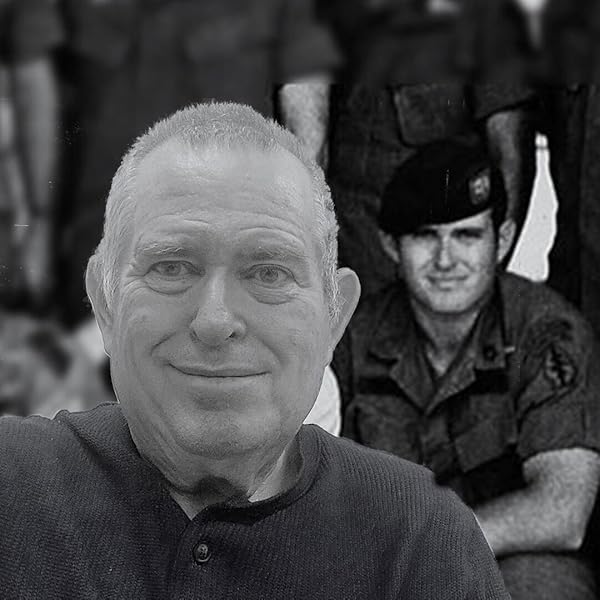
In Surviving the Stroke, you share your journey to recovery following a hemorrhagic stroke as well as actionable advice for those coping with the daily challenges of rehabilitation. Why was this an important book for you to share?
There is a saying ‘knowledge is power.’ While I was in the ICU for that first week and the rehabilitation hospital for three weeks, there was a lot of knowledge passed on, however, most of that knowledge was not about predicting the future as it related to recovery and rehabilitation. While I’m sure the information was available, but at the time I thought it would have been nice to have some of that information. After the rehab hospital, I was in outpatient therapy for 10 months. I met other stroke victims during that time and it was there that I decided to write the book because we all had shared experiences and agreed that there was not a good supply of resources to prepare us for the day-to-day future in being prepared for, and what to expect during recovery, rehabilitation, and later.
I appreciated the candid nature with which you told your story. What was the hardest thing for you to write about?
This is a good question and in hindsight, I think the hardest part was probably in the beginning when I discussed the actual stroke experience and my conversation with God. I think that was because in the moment of the stroke occurring, there was uncertainty of what was happening and if I was dying, or what was happening, therefore I think that was probably the most difficult.
What is one misconception you believe many people may have about recovering from a stroke?
During interactions with other stroke victims at outpatient therapy, we discussed this subject and there are some misconceptions relating to the severity of a stroke. The term mini-stroke is used a lot and I think when people hear the word, stroke, they automatically associate it with mini-strokes and celebrities like Hailey Bieber who appeared to be fine afterward and returned to their activities. Although, there are other celebrities like Randy Travis who have severe strokes, paralysis, and other challenges, and they fade away from the public eye.
In outpatient therapy, there was a woman in her first week and she was similar to me in the severity of the stroke. Her employer called her twice in the previous week asking when she was returning to work, which was upsetting to her and demonstrated to us a lack of empathy, a lack of understanding, and the reality of what a stroke really is.
What is one thing you hope readers take away from your experience?
There is a section in the book “I Quit,” that discusses quitting and dying. My hope is that when a stroke happens, it is not the end of the world. A positive attitude coupled with occasional humor can overcome life’s challenges. Do not give up, do not quit, and embrace the challenge ahead.
Author Links: GoodReads | X (Twitter) | Facebook | Website | Surviving the Stroke | Amazon
Surviving the Stroke: A Minute with God: A Recovery and Rehabilitation Guide
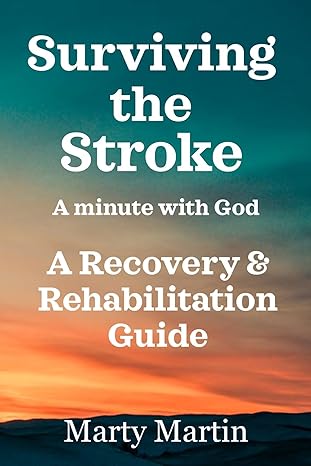

Marty Martin’s Surviving the Stroke: A Minute with God is both a recovery memoir and a practical guide for those navigating the turbulent aftermath of a stroke. The book chronicles Martin’s harrowing experience with a hemorrhagic stroke and his extensive rehabilitation journey, weaving personal anecdotes with actionable advice. From the initial trauma to the daily realities of therapy and family dynamics, Martin lays bare his vulnerabilities, offering hope and camaraderie to readers facing similar struggles.
What struck me most was Martin’s ability to blend raw honesty with humor. Early in the book, his description of the initial moments of his stroke—his leg buckling and his puppy, Izzie, licking his hand as he struggled to reach his phone—is both heart-wrenching and oddly endearing. This balance of gravity and levity continues throughout, making the narrative compelling and relatable. Martin’s conversational tone, especially when recounting his struggles with spasticity and the quirks of therapy, makes you feel like you’re sitting across from a friend who’s baring their soul.
One of the standout sections is Martin’s emphasis on attitude as a critical factor in recovery. He doesn’t shy away from admitting his initial struggles with self-pity but quickly pivots to the importance of embracing his new reality. The book shines in its actionable advice for stroke survivors and caregivers. From navigating hospital protocols to understanding the “toddler effect” of relearning to walk, Martin’s insights are grounded in lived experience. I found his tips on overcoming spasticity and the benefits of speech-to-text technology particularly useful.
Surviving the Stroke is more than a memoir; it’s a lifeline for those grappling with the aftermath of a stroke. Martin’s candid storytelling, bolstered by his unwavering determination and faith, makes this book a valuable resource. I recommend this book to stroke survivors, caregivers, and even medical professionals seeking to understand the human side of recovery. If you’re looking for a guide that mixes practical advice with heartfelt storytelling, Marty Martin’s journey will leave you inspired and better prepared to face life’s toughest challenges.
Pages: 111 | ASIN : B0DQHT2658


