Blog Archives
Mental Health Facility
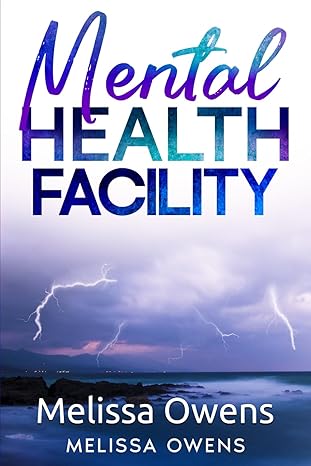

Melissa Owens’ Mental Health Facility is a masterful exploration of the dark undercurrents in the mental health industry. Through four harrowing stories, Owens exposes the ethical dilemmas, systemic flaws, and human cost of a field often shrouded in silence. This thought-provoking collection delves deep into the challenges faced by both workers and clients, presenting an unflinching critique of an institution that struggles to balance humanity with profitability.
Each story stands as a distinct yet interconnected piece, delivering impactful narratives that are as compelling as they are unsettling. In “Rachel’s Story,” ambition erodes integrity, illustrating how personal gain can compromise professional ethics. “I Trust My Clients” examines the delicate balance between loyalty to coworkers and the responsibility to protect clients. “Treat Me with Some Respect” highlights the grim consequences of prioritizing corporate image over safety, while “Nurse Ratchet” unveils the betrayal of an oath, leading to turmoil that echoes through the system.
Owens writes with precision and depth, bringing the cold, clinical backdrop of mental health facilities vividly to life. Her descriptive prowess draws readers into environments marked by sterility, monotony, and concealed chaos, setting the perfect stage for the narratives’ unfolding tensions. Themes of power, neglect, and moral ambiguity permeate each story, encouraging reflection on the industry’s impact not just on individuals but on the broader community. The book’s strength lies in its multifaceted approach.
Owens crafts well-developed characters and engaging storylines, ensuring each narrative holds its own while contributing to the overarching critique. Her meticulous pacing and sharp insights keep readers engrossed, blending stark reality with immersive storytelling. The tone, though stern, is balanced by the humanity of her characters, making the work both enlightening and deeply emotional.
With Mental Health Facility, Owens delivers an essential commentary on an often-overlooked sector. Her ability to weave gripping stories with social critique creates a book that is as informative as it is compelling, leaving readers with much to ponder about the complexities of mental health care.
Pages: 103 | ASIN : B0DJNPZGZ8

Understood, Validated, and Supported
Force Majeure follows a young woman struggling with mental illness as she embarks on a new chapter in her life in Geneva. What was the inspiration for the setup of your story?
Even though I took some liberties in the portrayal of certain events, the book is based on real-life experiences of mine. It began as an ordinary account of moments that I initially had no intention of sharing with the world. But in trying to deal with the experiences portrayed in the book, I understood that writing them allowed me to better cope with them. And with the help of disguising it as fiction to make it more entertaining, it could help others cope with similar experiences, too. That was the main drive for writing the story: the aspiration to share this story with others so that someone, somewhere, might feel understood, validated, and supported.
The writing in your story is very artful and creative. Was it a conscious effort to create a story in this fashion, or is this style of writing reflective of your writing style in general?
Because I am quite an impatient person who loses focus embarrassingly quickly, the shift in writing styles came as an opportunity to write the kind of book that I would have liked to have read, using the changing writing styles to keep audiences surprised and hopefully engaged. On this matter, a quote that has always really spoken to me is from renowned filmmaker Quentin Tarantino, who always gives the same advice to new filmmakers: “Go and make the movie that nobody has seen because you haven’t made it”.
The use of cinematic tools and various writing styles also gave greater insight into the character of Carla, her creativity, and her way of conceiving and perceiving life. Cinema is in her veins, which inevitably influences her at all times, like writing an entire screenplay out of the premise of waiting in line at the bank. And the use she makes of these different styles allows us to know a little better how she copes with the world around her.
Carla’s battle with her mental health shows the complexity of this illness, the good moments and the bad, and how they blur together, often unseen to those on the outside. What is one thing about mental illness that you think is misrepresented in the media?
The fact that depression is always apparent and visible. Quite often, it is worn in secret by people who everyone thinks have a great, happy life. Depression and its effects are hard to notice because those who suffer it often try to hide it. We can see it in our younger generations, with suicide being the leading cause of death among young people, at least in Spain. Nothing happens until it does, and everyone wonders how this could have happened. There is greater attention being paid to the importance of mental health nowadays, but I think that far more can be done in terms of raising awareness about the universal impact of depression, the importance of seeking help, the feasibility of recovery, and the necessary creation of safe spaces for people to express themselves without fear of judgment.
What is one thing that you hope readers take away from Force Majeure?
That suicide should no longer be a taboo word and we should be able to discuss it as openly as in the book. So my hope is readers are able to find in this book a way to better cope with their inner demons and a way to understand and support all others who are fighting hard to do so.
Author Links: Goodreads | Amazon
When Carla moves to Geneva for an internship, she is entering a new chapter of her life: a new career, new friends, new opportunities. However, she has no idea of what the future holds for her. Little does she know that this is the beginning of the end: a twisted rollercoaster ride of highs and lows that will find her at a breaking point.
A masterful debut, Force Majeure is a heartbreakingly poignant, yet razor-sharp and darkly witty glimpse into the reality of living with mental illness.



 LITERARY TITAN