Blog Archives
Nurse Florence®, What are Regulatory T-Cells or Tregs?


Nurse Florence, What are Regulatory T-Cells or Tregs? by Michael Dow transforms a simple school lunchroom scene into a clever gateway to immunology, inviting young readers to follow a friendly conversation that demystifies the immune system. Nurse Florence introduces Regulatory T-Cells, “Tregs” as the body’s quiet guardians, the cells that steady our defenses by controlling infections and calming immune overreactions. The book walks readers through where these cells originate, what they do, and how they relate to concepts such as lymph nodes and cytokines. With Shav Wright’s bright illustrations and Dow’s approachable explanations, complex biology becomes surprisingly easy to grasp.
Dow excels at making dense scientific material feel natural for children. Instead of overwhelming readers with technical detail, he leans on recognizable characters and a familiar school setting, allowing the science to unfold gently through dialogue. The Nurse Florence series consistently exudes warmth, and this installment continues that trend. Here, the discussion around Tregs not only informs but sparks curiosity, steering clear of flat, textbook-style delivery.
A standout strength of the book is Dow’s willingness to trust his audience. He introduces authentic scientific vocabulary without diluting its meaning, choosing instead to integrate new terms into conversation so that young readers absorb them with confidence rather than intimidation. The scenarios illustrating how Tregs work make the biology feel tangible, giving kids a bridge between real-life experiences and scientific ideas.
Shav Wright’s illustrations contribute an energetic visual layer that helps unpack challenging concepts at a glance. Additional features, a glossary, journaling prompts, and activity sections, invite readers to keep exploring after the story ends, extending learning beyond the narrative.
If anything may give very young independent readers a moment’s pause, it’s the occasional technical term. Still, the book’s encouraging tone naturally promotes curiosity and discussion, making it a strong choice for shared reading. In the end, Dow offers an engaging and effective introduction to a vital piece of immune science. Parents, teachers, and librarians seeking to spark early interest in health, biology, or STEM will likely find this book an excellent fit.
Pages: 66 | ISBN: 1300816317

Nurse Florence®, What Do Hormones Control?

Nurse Florence, What Do Hormones Control? by Michael Dow invites young readers into the fascinating world of hormones through a lively exchange between Nurse Florence and a circle of inquisitive students. The narrative moves quickly yet smoothly, guiding children through what hormones are, how amino acids help create them, and why these chemical messengers influence everything from appetite and growth to mood and sleep. Clear explanations, approachable language, and an assortment of fun facts, food examples, and real-life scenarios help anchor the concepts. Emily Daugherty’s illustrations further illuminate the material, turning complex biology into something both welcoming and enjoyable.
Dow’s approach is inventive and well-paced, offering an accessible entry point into a topic that can easily overwhelm. Framing the lesson as a casual lunchroom conversation softens the science and creates a sense of ease, as though readers are simply listening in on a friendly chat. Nurse Florence serves as a confident and reassuring guide, encouraging curiosity and giving children the freedom to explore scientific terms and medical ideas without intimidation.
Clarity stands out as one of the book’s defining strengths. Technical words, amino acids, homeostasis, and others, are introduced thoughtfully and woven into everyday dialogue, complete with pronunciation guides to support young learners. Vivid, relatable examples, such as signals traveling from the stomach to the brain to announce hunger, help translate abstract science into something tangible. Dow’s commitment to building health literacy is unmistakable, extending from his careful explanations to his emphasis on real dietary sources of the nutrients that support healthy hormone function. Rather than relying on oversimplification, the book presents a genuine, interconnected view of the body, linking hormones to emotions, physical development, sleep patterns, and reproduction.
Emily Daugherty’s artwork enriches each chapter, giving readers visual anchors for the chemical structures and processes described on the page. A glossary and journal section at the end offer additional layers of engagement, transforming the book into a resource that can grow with young readers. While certain scientific terms may stretch the vocabulary of the youngest audience members, the narrative encourages discussion and welcomes adult guidance, making questions a natural part of the learning journey.
Nurse Florence, What Do Hormones Control? lays a solid foundation for budding interest in science and personal health. Families, educators, and school libraries will find it a valuable tool for nurturing curiosity and helping children build an early understanding of how their bodies work.
Pages: 66 | ISBN: 1300839228
Nurse Florence®, Tell Me About Adipose Tissue.
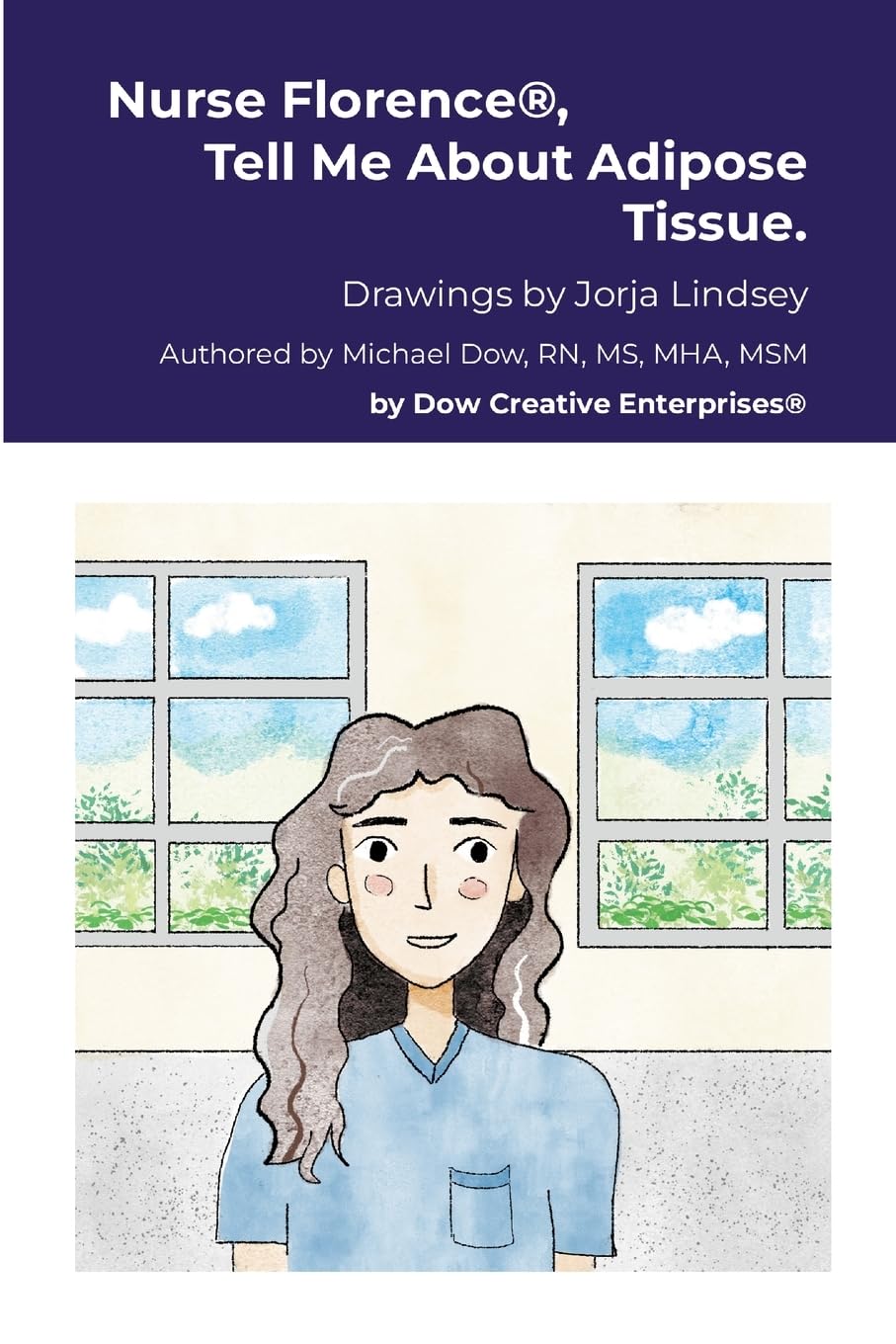
Nurse Florence, Tell Me About Adipose Tissue is a short, friendly children’s book that follows three girls, Jean, Condi, and Sonia, as they chat with Nurse Florence in the school cafeteria and learn what body fat actually does. The book moves from simple ideas, like fat acting as insulation, to surprisingly detailed explanations of hormones such as leptin, adiponectin, and estrogen. It mixes everyday examples with easy visuals and keeps the tone warm and encouraging throughout.
As I read it, I found myself smiling at how casually the story slips into teaching real medical concepts. The girls talk about insulation in houses and then flip right into insulation in the body, and somehow that transition feels natural and kind of cute. When Nurse Florence shows them an illustration and explains that adipose cells are “big and round because they hold fat inside,” the moment is simple but strangely satisfying in its clarity.
I also appreciated how the book doesn’t shy away from more advanced ideas. For example, the section about hormones, like leptin telling the brain to reduce appetite or adiponectin helping regulate blood sugar, surprised me. Even though the ideas get pretty heavy, the book keeps things breezy. It never feels patronizing, which I really appreciated. Michael Dow genuinely believes kids can manage real science, even when the vocabulary gets a little hefty or awkward.
Another moment that stuck with me was the reminder that the body is interconnected, that if one system changes, another reacts. Nurse Florence explains homeostasis in a calm, almost cozy way that I didn’t expect for such a big idea. It gave the book a bit of emotional weight and left me thinking. The closing page, where the girls reflect that having too little or too much fat can hurt the body, hits a balanced note without being preachy.
I’d recommend Nurse Florence, Tell Me About Adipose Tissue to curious kids, parents who like reading science together, and teachers who want approachable STEM material. It’s simple, sweet, and surprisingly informative, and even as an adult I walked away with a tiny spark of “hey, that was fun to learn.” The tone is warm, the drawings are gentle, and the science is real.
Pages: 62 | ISBN : 1300911441
Nurse Florence®, What is Sickle Cell Disease or Sickle Cell Anemia?

Nurse Florence: What Is Sickle Cell Disease or Sickle Cell Anemia? offers a clear and structured introduction to a complex medical condition, presented through a narrative designed for young readers. The book follows a student named Condi, who seeks information from her school nurse after learning that her baby cousin has been diagnosed with sickle cell disease. Through their conversation, the book walks through the genetics, symptoms, complications, diagnostic methods, and treatments associated with the illness. The format blends accessible storytelling with straightforward explanations, resulting in an educational resource that feels both purposeful and sincere.
As I read, I appreciated the author’s commitment to clarity. The explanations are direct, and the writing avoids ambiguity. When Nurse Florence notes that sickled red blood cells survive “10 to 20 days instead of 120 days,” the significance of that difference becomes immediately apparent, even for a younger audience. Condi’s questions, such as when she asks if she can be tested for the gene, lend the dialogue an authenticity that makes the information easier to absorb. The tone remains calm and reassuring, which supports the book’s mission to educate without overwhelming its readers.
I was also struck by the book’s willingness to address serious complications with precision. Topics such as acute chest syndrome, stroke symptoms, gallstones, and avascular necrosis are presented plainly, without sensationalism. When Nurse Florence explains that stroke symptoms can include paralysis on one side of the face or body, I found the frankness notable for a children’s text. Rather than feeling out of place, these details reflect a respect for young readers and an understanding that many families affected by sickle cell disease must confront these realities directly.
Recommendations regarding hydration, nutrition, avoidance of extreme temperatures, physical activity, and preventive care offer a sense of agency. I found the emphasis on emotional and community support, such as speaking with a therapist or joining support groups, especially meaningful. These sections remind the reader that living with sickle cell disease extends beyond medical management; it also involves fostering resilience and connection.
When Condi eagerly shares what she has learned with her mother, the book leaves the reader with a sense of empowerment and understanding. It reinforces the idea that knowledge can help reduce fear and encourage informed conversations within families.
I would recommend Nurse Florence®, What is Sickle Cell Disease or Sickle Cell Anemia? to elementary and middle school students, parents seeking to build health literacy, educators looking for accurate medical explanations, and even adults who want a concise overview of sickle cell disease. Its blend of approachable narrative and well-organized information makes it a valuable resource for a wide audience interested in understanding this condition.
Nurse Florence®, What are Signs Something is Wrong with My Kidneys?

Nurse Florence®, What are Signs Something is Wrong with My Kidneys? is a friendly, kid-focused walk-through of kidney basics and early signs of kidney trouble. The story follows three curious girls, Jean, Condi, and Sonia, as they chat with Nurse Florence in the school cafeteria and learn how kidneys work, why they matter, and what warning signs to look out for. The book mixes simple explanations, gentle illustrations, and clear examples, making a complicated topic feel surprisingly easy to absorb.
I found myself smiling at how straightforward the storytelling is. The moment where Nurse Florence explains that kidneys filter “a large bathtub full of fluid every day” made me sit back in awe, because that’s an image that sticks with you. I also loved that the book doesn’t dodge real medical words, like nephron and electrolyte, but still manages to keep the mood light. It never feels stuffy or lecturing, just honest and clear. I appreciated that balance, and I think kids will too.
The way the book lays out the symptoms feels powerful but genuinely useful. When the book mentions muscle cramping as a sign of electrolyte imbalance or foamy urine being linked to excess protein, it made me think about how many adults don’t even know these things. The writing offers small moments of surprise without ever trying to alarm the reader. Even the bit about puffy eyes, something almost everyone has dealt with, feels like a friendly nudge to pay attention to your body. I liked how the examples are simple but surprisingly memorable.
The characters’ responses help maintain a warm and inviting tone. When the girls conclude by saying that understanding their bodies “makes you feel empowered,” the sentiment resonated with me. It’s sweet but also real, there’s an emotional lift to it. The book consistently conveys the message that understanding one’s health is both possible and meaningful, a sentiment I found genuinely moving. And the illustrations sprinkled throughout add a nice bit of charm without distracting from the information.
I’d recommend Nurse Florence®, What are Signs Something is Wrong with My Kidneys? to curious kids, parents who like reading educational stories together, or anyone who wants a friendly intro to kidney health without digging through medical websites. It’s simple, upbeat, and surprisingly engaging.
Pages: 69 | ISBN : 1300886765
Nurse Florence®, Tell Me About the Occipital Lobe

The story centers on Jean, Condi, and Sonia, three inquisitive children eager to understand how the brain functions much like a video camera. Nurse Florence becomes their guide as she introduces the occipital lobe and its essential link to the eye, the partnership that makes sight possible. She moves steadily deeper, revealing how the retina and neurons work in concert. Her explanations clarify how the brain interprets color and distance, and how spatial processing helps us recognize shape, texture, and detail. All of this unfolds through the intricate signals passed from eye to brain.
Dow structures the book with a clear purpose: to empower young readers with scientific language early in life. He aims to stretch their vocabulary and broaden their intellectual horizons. His hope extends even further, that exposure to these concepts will inspire children to eventually explore careers in STEM fields. Some may argue that the terminology is ambitious for young readers, yet it feels like an intentional step toward long-term success. Children absorb information rapidly; their developing brains welcome precision. Learning how the body works, with accurate terms, gives them a strong foundation for later understanding.
Reading this book taught me more about vision than I ever gleaned from a standard biology course. The comparison between a camera and the occipital lobe struck me as unexpectedly insightful, illuminating how closely the two systems mirror each other in purpose and design. YunTse Lee’s illustrations elevate the experience further. The placement of the occipital and temporal lobes becomes immediately clear, and the artwork itself, clean, vibrant, and thoughtfully composed, beautifully supports the narrative.
The book is rich and engaging, and it also introduces a few non-scientific words that can help broaden young readers’ vocabulary. These words present exciting opportunities for learning and curiosity across different age groups. Dow’s storytelling is lively and well-structured. The plot flows naturally, and the three young protagonists embody the boundless curiosity children often display after discovering something fascinating.
I highly recommend this book to parents who want to nurture their children’s understanding of how we perceive the world. It invites young readers into the wonders of the human brain, offering both knowledge and inspiration.
Pages: 73 | ISBN: 1300881984
Nurse Florence®, Tell Me About the Bladder.

Nurse Florence®, Tell Me About the Bladder is a warm, easygoing children’s book that explains how the bladder works through a simple lunchtime conversation between three girls and Nurse Florence. The story mixes everyday school life with clear medical teaching, so kids learn about urine, bladder signals, and healthy bathroom habits without feeling overwhelmed. It’s straightforward, friendly, and built to make anatomy feel normal rather than awkward.
I liked how smoothly the author blends casual dialogue with real science. Sonia mentioning she “really had to go to the bathroom” sets up the whole discussion, and Nurse Florence jumps right in with a clear explanation of how the bladder stretches and signals the brain when it’s about half full. It feels like the kind of natural conversation curious kids might actually have, and the mix of school-day chatter with anatomy lessons works surprisingly well.
I was also impressed by how direct the book is. When Nurse Florence talks about strong-smelling urine being a sign of infection, the information is simple and non-scary. The same goes for advice not to urinate constantly without urges because it can make the bladder more sensitive. I appreciated how open and practical the writing is; it doesn’t tiptoe around bodily functions, and it doesn’t make them awkward. Kids get clear facts they can use.
Some of the boldest parts ended up being my favorites. The book openly mentions topics adults usually avoid with kids, like why you shouldn’t hold urine too long or how older adults often wake at night to urinate. It even explains that women may leak urine for a while after giving birth. I honestly didn’t expect that level of honesty in a kids’ book, but I admire it. It normalizes real experiences and gives kids vocabulary they’ll eventually need.
By the time the girls head back to class talking about what they learned, the book leaves you with a sense of calm, curiosity, and confidence. It’s educational without being heavy and caring without being sugary.
I’d recommend Nurse Florence®, Tell Me About the Bladder to elementary-age kids, teachers, parents, and even pediatric healthcare workers who want a friendly, no-nonsense way to teach anatomy. It’s perfect for curious young readers and for adults who appreciate clear, warm explanations of how the body works.
Pages: 51 | ISBN: 1300907142
Lifelong Learner

Nurse Florence®, What is a Mast Cell? follows three curious schoolgirls and their approachable school nurse, who discuss mast cells and their role in the immune system. What inspired you to write about this topic?
Nurse Florence® seeks to spark a global movement of health promotion and literacy. We explore how the human body works in each book, as well as discuss disease topics with our numerous disease-related books. We will be publishing around 700 books in the series, and this topic finally came up to the top of the list of books needing to be written.
How did you decide what to include and leave out in your Nurse Florence books?
Writing the Nurse Florence® books is an art since we don’t want to overload kids with too much science information, but we need to bring college-level information down to a fifth grader’s level. Every book is a little complicated to write, and I decide what to include out of inspiration from my illustrator’s drawings. Disney might say they have Disney magic to help produce their movies, while we have DCE magic to produce Nurse Florence® books to help even adults stay engaged with each page of the books.
What was the most challenging part of writing these books, and what was the most rewarding?
The most challenging is to decide what info to include, and the most rewarding is getting feedback that whole families are learning from each book.
What is one thing that people point out after reading your book that surprises you?
Grandparents have even said on GoodReads that they are learning. I was surprised at first since I thought I was writing just for kids. I’m happy to hear that everyone is learning. Being a lifelong learner is so important in the world that we live in.
Author Links: GoodReads | Website | LinkedIn | YouTube | Nurse Florence Project | Amazon




 LITERARY TITAN