Blog Archives
The Value of Mercy

Mercy Town follows a reporter returning to her rural hometown, who digs into the town’s latest development project, where she is forced to unearth and deal with the long-buried trauma of her younger brother’s accidental death. What was the inspiration for the setup of your story?
My inspiration came from a short story I published many years ago, “When the Sun Kissed the River.” The story ended with the accidental shooting of Bean, Margaret’s younger brother. It focused on the beauty of the natural world and how the arrival of spring stirred joy and excitement in a young boy’s heart. At his sister’s urging, he walked to the little bridge at just the right moment to see the water below sparkle like diamonds. What was a magical moment was also a sudden tragedy. The short story’s ending was not the true ending. I wanted to know what happened to the family and to the town after such a tragic accident and what impact it had on everyone.
I enjoyed the depth of the main character, Margaret. What was your process to bring that character to life?
Bringing Margaret to life was all about exploring the relationships she had with her family, the people of Waunasha, and most powerfully, with Mr. Kipp, the man who accidentally shot her younger brother. Her life emerged through raw, honest dialogue and the emotional weight carried in those exchanges. I focused not only on what she said and did, but also on what she thought—the inner dialogue that revealed her doubts, grief, and resilience. The interactions and private thoughts make a character real.
What were some themes that were important for you to explore in this book?
The value of mercy and the power of unconditional forgiveness were the top two themes that were important to show in this story.
Where do you see your characters after the book ends?
After the book ends, the characters are still healing. Even though it has been ten years since the accidental shooting, the intense emotions of the Payne family and the residents of Waunasha will gradually find a place to settle, finding forgiveness along the way, but never forgetting. Margaret will continue writing feature stories for the newspaper, but with more of an emphasis on how a single, life-altering event can ripple through an entire community. Her parents will feel a new sense of freedom as they learn to accept mercy and forgiveness. The people of Waunasha move on, remembering Mr. Kipp with a more compassionate understanding.
Author Links: GoodReads | Facebook | Website | Amazon
After years away, Margaret Payne returns to her rural northern Wisconsin hometown on a work assignment, only to find it still haunted by the tragic accidental shooting of her younger brother, Bean. Amidst the lingering pain, Margaret uncovers plans for a development on Dell Landing, a hill home to generations of Indigenous people—including Mr. Kipp, the reclusive man responsible for Bean’s death.
With her mother trapped in denial, her father consumed by anger, and a town bitterly divided, Margaret must confront both the past and the present, rising tensions. Facing Mr. Kipp will test everything she believes, but before it’s over, Margaret will discover the freeing power of unconditional forgiveness—even for her brother’s killer.
A poignant, redemptive tale, Mercy Town reminds us how forgiveness, even in the deepest sorrow, heals wounds, binds us as human beings, and remains truly unconditional.
Mercy Town
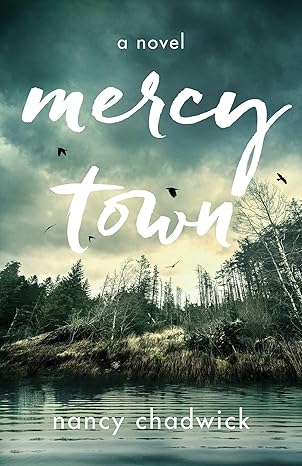

Nancy Chadwick’s Mercy Town is a tender and stirring story about grief, forgiveness, and the roots that keep us tethered to home, whether we like it or not. It follows Margaret “Ret” Payne, a reporter who returns to her rural hometown of Waunasha, Wisconsin, under the guise of a journalistic assignment. As she digs into the town’s latest development project, she’s forced to unearth the long-buried trauma of her younger brother’s accidental death and confront the emotional wreckage that followed. It’s a story that swings between past and present, personal memory and community reckoning, heartbreak and healing.
Reading Mercy Town hit me harder than I expected. Chadwick’s writing is patient. Her prose breathes, settling deep into the emotional grain of things without ever rushing. She’s especially good at capturing the feel of a small town. Its rhythms, its silences, its gossip, its grudges. The scenes between Margaret and her husband Jesse are warm and believable, full of the kind of understated affection that makes a relationship feel real. And Bean, Margaret’s younger brother, is rendered so vividly in memory that his absence aches. Chadwick doesn’t just tell us what loss looks like. She lets us sit with it, wander around inside it, and see how it shapes a life.
Some scenes leaned on introspection and repetition, and the back-and-forth between timelines occasionally blurred the story’s forward motion. Still, I appreciated that the book didn’t sugarcoat the complexity of grief. Margaret isn’t always likable, and she doesn’t have all the answers. But that’s what made her journey resonate. There’s something relatable in her hesitation, in the way she avoids her pain until it corners her. The way Chadwick threads this emotional unraveling through the lens of a journalist chasing a story made for a compelling structure.
I’d recommend Mercy Town to readers who enjoy quiet, character-driven novels with emotional depth. If you’ve ever carried the weight of unfinished grief or struggled to forgive someone (including yourself), this book will feel like a gentle, persistent tug at your heart. It’s not a fast read, but it’s a worthwhile one.
Pages: 248 | ASIN : B0DVD27S8R

Family Dynamics of a Sisterhood
The Wisdom of the Willow follows the lives of four sisters and their parents, who explore the direction of their lives and how their experiences all flow together. What was the inspiration for the setup of your story?
The most outstanding response I received from my first book, Under the Birch Tree, a Memoir of Discovering Connections and Finding Home was that my story was relatable. I took these reader responses and used theme as a premise for writing The Wisdom of the Willow. Developing the characters using alternating first-person POVs who faced relatable life challenges was a way for the reader to take a deep dive into the characters and into the story. Family dynamics of a sisterhood may not always be positive, but there is a bond there that can be traced back to when it was made under the willow. The tree is a guiding force throughout their journeys in finding their places.
Were you able to achieve everything you wanted with the characters in the novel?
Yes! My goal was to create characters, sisters, who were different from one another, who had different goals and paths to find where they want to be. The sisters are individuals, yet their family is their center. Though Margaret initially poses as a strong, influential matriarch, later, her illness shows a vulnerability which she handles with grace and acceptance.
What were some themes that were important for you to explore in this book?
As also a memoir and personal essay writer of the natural world and how we connect with it, I wanted to show themes in a simple way: using a tree as a character. The natural world poses as a character that unites the story. It was important for me to show the different paths in life we take, how to navigate them, and continue on, how linked we all are nature and to our family.
What is the next book that you are working on, and when can your fans expect it to be out?
My next book, Mercy Town, is about an accidental shooting, an unforgiven killer, and ten years later, a divided town finds mercy. It is expected to be out in the fall of 2025, also by She Writes Press.
Author Links: GoodReads | Facebook | Website | Amazon
Years after leaving the nest, now in their early forties, the Dowling women find themselves faced with changes that will define their lives. Debra, the oldest, is shattered when she is asked for a divorce. Rose, who has long hidden her true self, finally begins to evaluate her pattern of being in uncommitted relationships. Linney fears losing Magnolia, the magical shop where she works. Charlotte, the youngest, is the only one who knows their mother is terminally ill and has been charged by her with keeping it a secret. And Margaret, now faced with the greatest of challenges and struggling with whether she has done enough to help her daughters find their way in life, calls them all to the family home to reunite under the willow one last time.
A metaphorically rich and reflective tale of sisterhood and strength, The Wisdom of the Willow is a story of hope and healing, of the choices that shape our lives, and the challenges we all face as we seek to find our places in the world.
The Wisdom of the Willow


In The Wisdom of the Willow, Nancy Chadwick weaves a poignant narrative centered around the lives of Margaret and Joe and their four daughters. The novel begins with a symbolic gesture as Joe plants a willow tree in their yard to celebrate their burgeoning family and new home, setting a tone of rootedness and growth that resonates throughout the story.
The plot unfolds through the perspectives of the four sisters, each distinct in their aspirations and struggles. Charlotte, the youngest, grapples with her future in business administration, while Debra, formerly a magazine worker with a penchant for travel, faces a personal and professional crossroads. Linney finds contentment managing a beloved shop in Chicago, contrasting with Rose, an aspiring actress whose ambition drives her narrative.
Central to their journeys is their mother, Margaret, whose terminal illness is a closely guarded secret known only to Charlotte. Margaret’s role as advisor and confidante, with many pivotal scenes unfolding under the willow tree, adds depth to the family dynamics. The tree itself becomes a silent witness to the sisters’ trials and triumphs, embodying the novel’s themes of familial bonds and personal growth. Chadwick excels in creating well-rounded characters, from Linney’s nurturing nature to Debra’s authoritative demeanor, often attributed to her role as the eldest sibling. The narrative’s shift between each sister’s point of view allows a comprehensive exploration of their individual and collective challenges. The novel resonates particularly with those who have experienced the complexities of sustaining long-term friendships and the simplicity of life in a close-knit community.
The Wisdom of the Willow is a thoughtful exploration of family, identity, and belonging, recommended for readers who enjoy contemporary fiction that delves deeply into the nuances of sisterhood and personal development.
Pages: 304 | ASIN : B0C9HJWKTZ




 LITERARY TITAN