Blog Archives
Baker Vaughan


Baker Vaughan is a contemporary family saga that follows a man in his fifties who leaves a polished but hollow life in New York, heads to Idaho, and tries to reclaim a calling to the priesthood that he abandoned decades earlier. From there, the novel opens outward into his past and present at once: family history in Virginia, old love, public shame, church politics, private guilt, and the stubborn hope that a person can still change late in life. What stayed with me most is that this is not a story about reinvention in the glossy sense. It is about excavation. Baker is not building a brand-new self. He is digging through the rubble of the one he kept dodging for years.
What I liked most about Hotchkiss’s writing is that it trusts conversation, memory, and moral mess more than plot tricks. The book has a big emotional reach, but it usually moves in a human scale, one uneasy conversation, one humiliating mistake, one remembered kindness at a time. I found that effective. Baker can be self-aware and self-deceiving in the same breath, which made him feel real to me. The prose often lingers on place, class, church ritual, and family texture, and that gives the novel a lived-in quality. I could always feel the author’s investment in these people, and that sincerity carried me through.
This book does not treat religion as wallpaper or as an easy source of wisdom. It treats faith as something tangled up with vanity, longing, performance, grace, and the need to be forgiven without always knowing how to earn it. That made the novel feel sharper to me than a simple redemption story. I also liked the way the family saga side of the book deepens the present-day drama. Baker’s mother’s alcoholism, the pressure of class and expectation, his early sense of calling, and the old relationships that still shape him all give the story weight. You can feel how the younger Baker never really disappears. He just ages into a more complicated man.
Baker Vaughan will resonate with readers who enjoy character-driven fiction, church and family dramas, and novels that care more about conscience than speed. I would recommend it to people who like literary fiction with a strong emotional backbone, especially readers drawn to stories about second chances, spiritual restlessness, and the long shadow of earlier choices. It’s reflective, sometimes raw, and patient in the way it lets a life unfold. The people most likely to appreciate it are readers willing to sit with an imperfect man and watch him try, fail, remember, and keep reaching anyway.
Pages: 337 | ASIN : B0GWRRNGSR

The Nest: Where Wildflowers Grow


The Nest: Where Wildflowers Grow is a novel about refuge: Tara creates a sanctuary called the Nest for women escaping the spiritual and emotional brutality of “the Wasteland,” and the book follows both the rhythms of life inside that haven and the healing of women like Glennon, all inside a larger frame story in which an elderly woman comforts a lonely child, Rebecca, by telling her this tale. What unfolds is less a plot-driven novel than a sustained act of witnessing. It’s a story about trauma, recovery, female solidarity, and the moral intelligence of tenderness, with nature not merely as backdrop but as scripture, medicine, and mirror. By the time the book circles back to Rebecca and her mother, the point feels clear: survival is only the beginning, and real healing asks for memory, gentleness, and a return to what is most alive in us.
Fields writes as though she means every word with her whole heart, and that kind of emotional directness can be surprisingly disarming. I was moved by the recurring domestic tenderness of it all: the camomile tea, the warm almond milk, the sweet potato fries, the cat padding from cabin to cabin, the women feeding one another both literally and emotionally. Those details give the novel its pulse. I also admired the generosity of its vision. The Nest itself is imagined not as a fantasy of perfection, but as a counterworld built from care, slowness, and attention. There’s something appealing about the way the novel insists that being listened to, being fed, being believed, and being allowed to rest are not minor comforts but radical conditions for becoming whole.
The writing often reaches for a devotional tone, and sometimes I found that beautiful, even transporting. Fields can really land an image when she slows down and lets it breathe. The wildflowers growing through cracks, the oak tree folded into the cabin’s structure, the willow that once held Tara at rock bottom, all of that has real symbolic force. But there were also moments when the novel’s ideas felt stated rather than dramatized, as though the characters were carrying a philosophy they needed to voice plainly instead of discovering it in messier, more surprising ways. I didn’t mind the earnestness, actually. I think earnestness is one of the book’s virtues. The book believes in healing, intuition, and moral clarity, and while I found that conviction moving, I also felt the novel was strongest when those beliefs emerged through lived moments.
The Nest: Where Wildflowers Grow is a novel that wears its heart openly, and whether that works for a reader will depend on how willing they are to meet it on those terms. I was. I came away feeling that the book’s finest achievement is solace. I’d especially recommend it to readers drawn to reflective, healing-centered fiction, to stories of women rebuilding themselves in community, and to anyone who wants a novel that feels less like a spectacle than a hand held steadily in the dark.
Pages: 198 | ASIN : B0GQ4QNSTD
A Tale for the Shadows
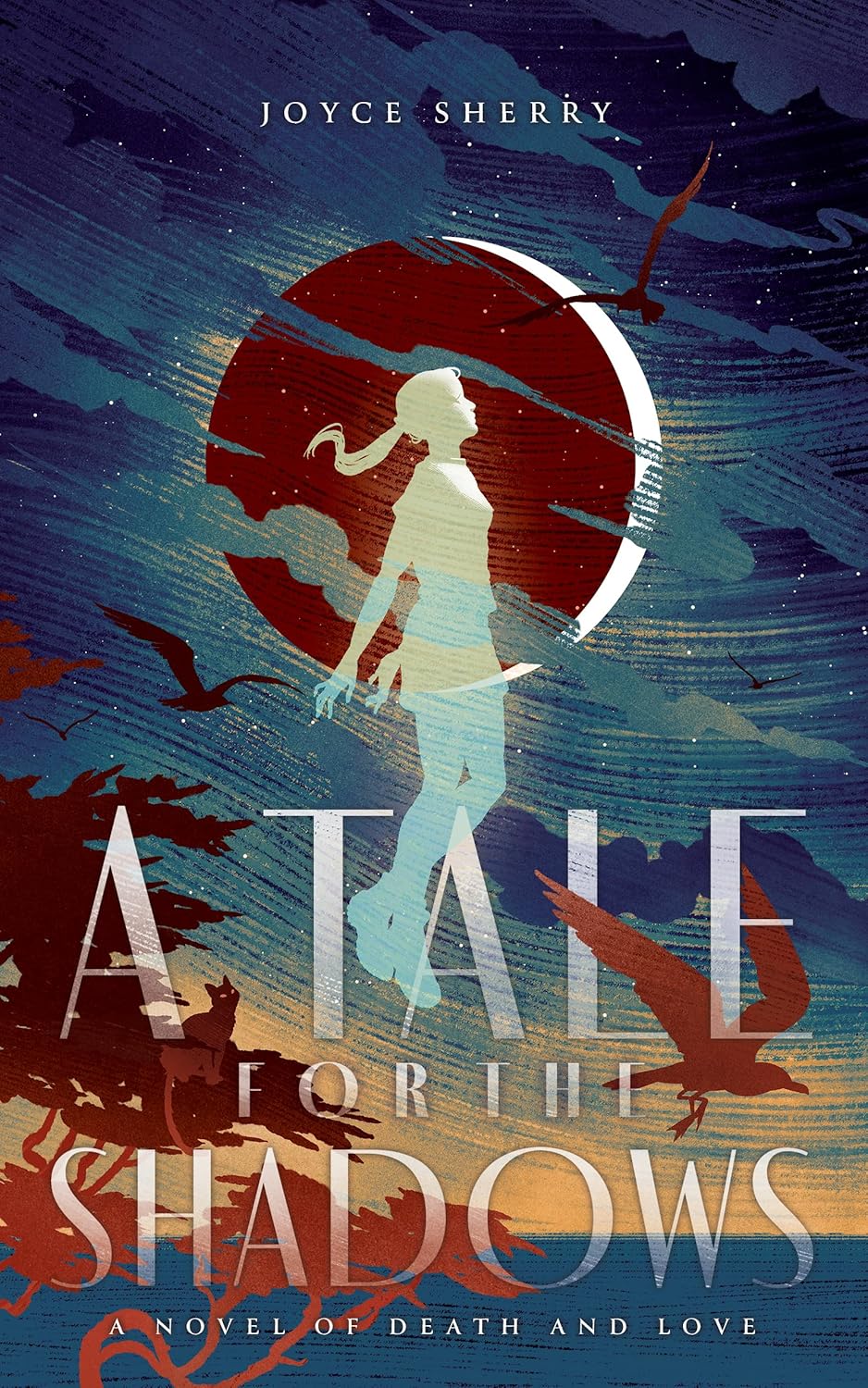
A Tale for the Shadows is a paranormal fantasy novel with a strong gothic streak and a surprisingly tender emotional core. It begins with murder, which sounds blunt because the book is blunt about it: Sarah Sommers is killed by her husband, becomes a ghost, and from there the story opens outward into something larger about grief, loneliness, survival, and connection. As her ghostly life unfolds, she becomes Senka and crosses paths with Silas, a hunted vampire, while another thread follows Finn, a sick teenage boy in a hospital, listening night by night to a story that may be doing more than simply entertaining him. It is a book about death and love, just as the subtitle promises, but it is also about what keeps a person, or spirit, moving when they have every reason to stop.
Author Joyce Sherry writes in a way that feels intimate without getting precious, and that is not easy to pull off in fantasy. The book has ghosts, vampires, ancient rules, and real danger, but the language keeps bringing everything back to feeling. A cabin smells wrong. A hospital room feels long after visiting hours. Loneliness sits in the air. That grounded quality made the supernatural parts easier to trust. I also liked the author’s choice to frame the novel through storytelling itself. The repeated sense that stories “want” to be told gives the book a self-aware quality, but it never turns smug. It feels more like someone sitting across from you and saying, let me tell you what happened, and meaning it.
I found myself especially drawn to the way Sherry handles character. Senka could have been written as pure vengeance, Silas as pure brooding, and Finn as the sentimental heart of the book. None of them stay that flat. Senka grows into someone more thoughtful and more brave. Silas has the old-world vampire sadness you expect from the genre, but he is not just a dark silhouette in a doorway. He is wounded, weary, funny in flashes, and very human in the ways that matter. Finn, meanwhile, gives the novel an anchor. His scenes keep the book honest. They stop it from drifting too far into mood for mood’s sake. I also appreciated that the novel takes its big ideas seriously without dressing them up in heavy language. It asks what love looks like after betrayal, whether pain has to define a life, and what it means to keep choosing existence. Big questions. Quietly asked.
I would recommend A Tale for the Shadows most strongly to readers who like paranormal fantasy, gothic romance, and character-driven supernatural fiction that cares as much about emotional healing as it does about eerie atmosphere or mythic stakes. It will appeal to people who enjoy vampire and ghost stories but want something softer around the edges and more reflective at heart. I came away thinking this book understands that darkness is only interesting if there is some light pressing against it. That balance is what gives it its pull. It is thoughtful, strange, and sincere, and for the right reader, that combination will feel like being led into the dark by someone who knows exactly where they are going.
Pages: 292 | ASIN : B0FBYTKMSB

Questions Remain Unanswered

- Genluminati follows a group of brilliant young scientists who invent a DNA-based religion as a cynical experiment—only to lose control of it when belief spreads, and a charismatic prophet emerges. Did the concept begin as satire for you, or did you always see it turning dark?
It started as an experiment as well. I was fascinated by cult and religious leaders, the power they wield over people, and what may be happening in their own hearts as events unfold, especially if they know that all they proclaim is not true. The weight of responsibility, the mental balance, and the unexpected consequences.
I didn’t know how things would turn out, but the characters started on an innocent enough path; however, power and curiosity are also powerful influences that lead to chaos.
The book asks whether belief can ever be “controlled.” What fascinates you about belief as a force?
Belief is a powerful force; it can inspire people to do amazing things they wouldn’t attempt without faith, but it can also lead people to do horrible things, including hatred, discrimination, and war. In Genluminati, I try to explore what people hungry for faith would accept and do in pursuit of their beliefs. What are the limits the “religious leaders” can cross, and what would they tell themselves?
How much did social media, viral movements, and online communities influence the story?
In Genluminati, social media helps build a community, amplify Genluminati beliefs, and strengthen its economic network. However, social media can amplify marginal social movements, synthetically foster a sense of belonging, and be dangerously exploited to manipulate and abuse people.
What do you hope readers are left thinking about once the book ends?
I would like people to think more independently about their own beliefs, not allow themselves to be manipulated. I would like people to consider the consequences of the pranks we sometimes pull, and, last, I would like us to think more about the responsibility for our own actions. I would like people to have enjoyed the thriller, but to know that, beneath Genluminati, many moral and ethical questions remain unanswered.
Author Interview: GoodReads | X | LinkedIn
What begins as a cynical experiment—a mix of curiosity, ambition, and a desire to stay connected—quickly grows beyond anything they intended. Their “innocent” idea spreads, gathering followers who take the message far more seriously than expected. A single misinterpreted “divine” insight sets off a chain of events that spirals toward real harm, forcing the founders to confront what they started and the responsibility they tried to ignore.
A story about science, belief, and the fragile line between fascination and fanaticism.
The book describes the overreaches of religious and governmental institutions that continuously endanger our ability to act as free, autonomous, and thoughtful individuals.
Genluminati

D. T. Levy’s Genluminati is a nervy “what-if” thriller disguised as a confessional novel. What if a handful of clever, disillusioned grad-school types decided, half as satire, half as experiment, to manufacture a faith based on science, and then discovered that belief is a force you don’t get to control once you’ve unleashed it?
The story is framed by Matt, the narrator, hiding in the Mayan jungle in Chiapas, running a small B&B, and trying to write down everything before the past catches up with him. This structure works well. The jungle calm gives the book a haunted stillness, and Matt’s voice, at once analytical and self-justifying, keeps the reader in that uneasy space between confession and rationalization.
At the center are five friends whose intimacy becomes both their strength and their blind spot. The early chapters capture the particular chemistry of smart young scientists who feel allergic to inherited dogma, bonded by private jokes and a shared disdain for proselytizers. That anti-religious posture isn’t just characterization, it’s the novel’s ignition source. Their contempt for fanaticism curdles into a challenge: if people will believe anything, why not prove it?
The spark comes after they encounter protests outside a research institute: anti–stem cell rhetoric mixed with mystical claims about souls, punishment, and “reincarnated scientists.” From there, in a boozy, half-serious brainstorm, Matt blurts the idea that becomes the book’s central sin: “We should create a new religion… A religion based on scientific data.” The author nails the moment when irony crosses into commitment: everyone laughs, but the laughter is the mask that lets them move forward without admitting what they’re doing.
As a concept, I think Genluminati is deliciously contemporary. A pseudo-spiritual path built on DNA as scripture, with techniques that blend meditation, chanting sequences, and guided fantasy, self-help language with a biotech sheen. The novel’s best satirical bite comes from how plausible the packaging feels. The author understands that modern devotion often arrives wearing the costume of wellness, optimization, and insider knowledge.
But the book refuses to stay a satire. Once Daniel is in the mix, the project gains the one ingredient that turns a movement into a religion: a charismatic figure. The text makes his function explicit; he becomes “Our Guide,” the “Spiritual Leader,” the centerpiece of gatherings marketed to followers hungry for an embodied authority. This is where the story’s interpersonal dynamics matter. Emma and Daniel appear as a couple for a time, and that relationship becomes a fault line inside the founding group. Meanwhile, Ben’s long-simmering love for Emma and Daniel’s possessive reaction create a pressure-cooker atmosphere that threatens not just friendships but the stability of the religion itself.
I think the author’s sharpest insight is that power doesn’t only corrupt through greed. Here, the founders insist they aren’t driven by ambition. They claim it began as “a confrontation against fanaticism… a joke, to see how far people would go, how far we would go.” That “how far we would go” is the chilling part. The experiment becomes a mirror, revealing their own appetite for influence.
And then come the consequences. The book’s darker, more urgent second life. Daniel begins to believe his role on a deeper level. Matt and the others start talking about him as someone who thinks he’s a prophet, and the group’s fear shifts from embarrassment or exposure to real-world harm. Matt voices the dread plainly: it’s not only about Daniel’s mental health, but what he might do “with his followers.”
That fear culminates in an extreme act: they remove Daniel from the movement, effectively holding him in captivity, with the stated aim of protecting him and protecting the public from him. The ethical knot here is the novel’s most provocative tangle. The founders started by playing at gods of meaning; by the time they’re isolating their own “prophet,” they’ve drifted into the logic of authoritarian control, deciding who gets freedom, who gets silenced, and what risks justify coercion. Even their strategic calculus has an eerie realism: will Daniel’s disappearance weaken the faith, or make him a martyr and strengthen it?
The book also widens its lens to show collateral damage. Followers spinning theories, offices overwhelmed by calls, people unsure how to proceed without someone “dictating the agenda.” In other words, belief doesn’t evaporate when the founders panic. It mutates, decentralizes, and keeps moving.
Genluminati succeeds most when it leans into that escalation from witty premise to grim inevitability. The friendships feel textured and messy, the Boston-to-jungle framing gives the narrative urgency, and Daniel’s transformation into a focal point of devotion is handled with believable menace. The novel sometimes explains its themes as directly as it dramatizes them. Matt can be self-aware in ways that smooth over ambiguity. Still, that’s also consistent with a narrator trying to justify himself while confessing.
Genluminati is a cautionary tale for an era addicted to viral ideas. You can invent a religion as a prank, but you can’t prank people into believing. Belief is already waiting for a container. Levy’s five friends build that container, and the novel’s sting comes from watching them realize, too late, that they’ve built something that can build back. If you like the morally fraught, idea-driven suspense of Dan Brown’s The Da Vinci Code, the philosophical sci-fi edge of Blake Crouch, or the cultish social unease of Dave Eggers’ The Circle, you’ll find Genluminati a smart, darkly propulsive read, and an easy recommendation for anyone drawn to stories about belief, influence, and the dangerous consequences of playing with power.
Pages: 480 | ASIN : B0FZ998JBT
Lunch Tales: Teagan

From the very first page of Lunch Tales: Teagan, I was pulled straight into Teagan Quinn’s world. The book begins with warmth, ease, and a glimpse into a contented life, marriage, motherhood, and family. Then suddenly, that life is shattered. Her husband dies in a freak accident, and we follow her through the crushing grief that follows. We see her try to put one foot in front of the other. There’s love, loss, friendship, heartbreak, and a tentative hope that life can still hold beauty, even when it feels like the world has gone cold. The story unfolds through Teagan’s eyes as she faces widowhood, single motherhood, and the slow, painful path toward healing.
Reading this felt like listening to a friend spill her heart. Teagan’s voice is honest. Author Lucille Guarino doesn’t palliate grief. It’s raw, messy, and stretches out longer than you’d think. What I loved most is that she doesn’t turn Teagan into a saint. She’s angry. She’s tired. She lashes out. She feels selfish. She feels broken. But she keeps trying, and that’s what makes her feel real. The writing is clean, almost conversational. At times it’s quietly poetic, but mostly it’s grounded, warm, and intimate. And while the story could easily slip into melodrama, it doesn’t. The emotions feel earned. I laughed. I cried. I caught my breath in parts. There were scenes I had to reread just to sit with the weight of them.
What surprised me was how much I came to love the side characters. Suellen, Bridget, even Luke. Everyone felt like someone I’d met in real life. The friendships, especially among the lunch moms, were such a balm. They held her up when she couldn’t stand. And while there’s a flicker of new romance by the end, it’s not rushed or forced. It’s more like a door left slightly open. The book isn’t about moving on. It’s about moving forward. There’s a big difference. And Guarino nails that. She doesn’t give us a fairytale. She gives us the slow, stumbling rhythm of real healing.
I’d recommend Lunch Tales: Teagan to anyone who’s ever had to start over when they didn’t want to. It’s a gentle, moving story for readers who crave depth and feeling over plot twists and speed. I found that the book reminded me somewhat of The Light We Lost in its raw emotional core, and it had echoes of Still Me with its theme of rebuilding life, though it carries a gentler, more hopeful tone overall. I think this book is for women who understand how complicated love is. And how precious.
Pages: 288 | ASIN : B0FR582BPJ
Connection vs Performance

The Influencer’s Canvas follows an elite nail artist from London who is invited to an exclusive Maldives retreat for elite creators, where, while she does their nails, she documents their hidden lives. I think this original idea is intriguing. How did you come up with this idea and develop it into a story?
The idea came directly from my work. I’ve been doing nails for influencers and celebrities in London for years, and there’s something about the intimacy of that process: having someone’s hands in yours for an hour whilst they’re away from their cameras. That’s when people drop their guards completely. I started noticing this pattern. Their online personas were completely different from who they became during our sessions.
X, my nail artist character, first appeared in Polished Edges as someone who collects these unguarded moments. When I was developing her story arc, the Maldives retreat setting felt natural because I’d heard about these exclusive influencer events where the performance pressure is even more intense. The isolation, the competition, the need to create content even whilst supposedly relaxing: it creates the perfect pressure cooker for masks to slip.
The lives of social media content creators are intriguing, as is their die-hard followers’ obsession. What aspects of the human condition do you find particularly interesting that could make for great fiction?
The performance of authenticity fascinates me. We’re living through this moment where being ‘authentic’ has become a brand strategy, where people curate their vulnerability for maximum engagement. There’s something deeply human about our need to be seen and loved, but social media has commodified that need.
I’m drawn to characters caught between who they are and who they think they need to be to survive. The influencers in my book aren’t villains; they’re people trapped in a system that rewards them for turning their lives into content. That tension between genuine connection and strategic self-presentation feels universal now.
I found this novel to be a cutting piece of satire. What is one thing that you hope readers take away from your book?
I hope they start questioning the difference between connection and performance in their own lives. The book is satirical, but the real target isn’t individual influencers: it’s the systems that turn human relationships into metrics.
If readers think more critically about what they consume online and what they share themselves, that’s success. We’re all performing to some degree now. The question is whether we can still recognise ourselves underneath the performance.
What is the next book you are working on, and when can fans expect it to be released?
I’m working on Project Mirror, which takes these themes into speculative territory. It’s about a world where beauty becomes algorithmic: people subscribe to facial features and get software updates for their appearance. My protagonist is a technician who fixes glitches in people’s neural aesthetic systems.
What unsettles me is how plausible it feels when you look at where beauty technology is heading. We’re already filtering ourselves in real-time during video calls. Neural implants for aesthetic modification seem like the logical next step.
No firm publication date yet, but I’m deep into the writing process. The research keeps making my fictional dystopia look conservative.
Author Links: GoodReads | Facebook | Website
What you’ll find insideConfessions at the manicure table
Each chapter is a fresh set of nails and a fresh secret, from burnout hidden beneath flawless French tips to crypto fraud masked by liquid-gold chrome.
High-gloss social satire with a beating heart
Picture White Lotus colliding with The Devil Wears Prada, written in micro-cinematic detail and edged with sly wit.
A thriller of algorithms and aesthetics
Beneath the sunsets and “sustainable luxury” hashtags lurks Project Chimera, an AI experiment that scores every guest’s malleability. Recommendation: neutralize or recruit.
Sensory prose that sparks the feed
Sharp dialogue, vivid color palettes, and scroll-stopping quotes perfect for BookTok or Instagram.
Perfect for readers whoScroll Instagram before they blink and wonder what is real
Devour sharp, contemporary fiction like Crazy Rich Asians and Such a Fun Age
Love luxury-world settings, moral gray areas, and plot twists that sting like acetone on a paper cut
Will the polish crack, or will the algorithm win?
The Influencer’s Canvas peels back the gel-coat glam to expose the messy, human nailbed beneath, then asks whether authenticity can survive once the cameras stop rolling.
One retreat. Two weeks. A million followers waiting.
Swipe in if you dare.
The Influencer’s Canvas
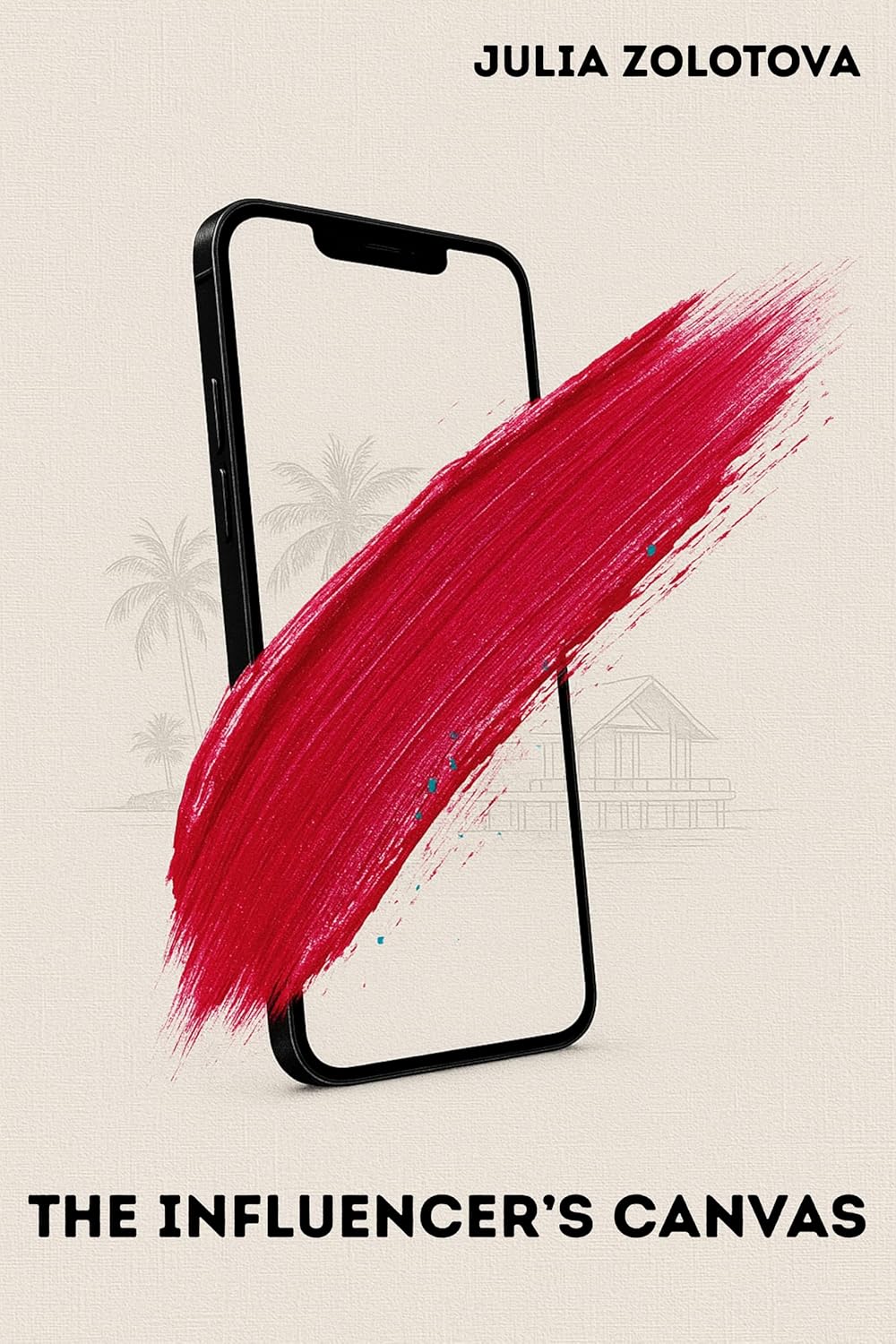
Julia Zolotova’s The Influencer’s Canvas follows the story of Miss X, a nail artist in London who moonlights as a secret observer of the influencer elite. Through her eyes, we’re pulled behind the glittering façade of social media perfection into a shadowy, often absurd retreat called Elysian Fields. The book begins with her being invited to this exclusive Maldives getaway, not as a guest but as staff, which provides the perfect cover for her ongoing project of documenting influencers’ hidden lives. As she paints nails, she extracts confessions, each one staining her metaphorical canvas. The novel is part satire, part social critique, and part psychological thriller. It starts like a sly comedy of manners and gradually spirals into something darker, with undertones of surveillance, manipulation, and existential dread lurking beneath the pastel filters and hashtags.
I found myself laughing at the sharp wit in Zolotova’s writing, especially when she skewers the hollowness of influencer culture. The exaggerations feel absurd yet somehow believable, and the sarcasm keeps the prose lively. At the same time, there’s a humanity beneath it all that surprised me. The influencers are ridiculous, but they’re also broken and vulnerable. Watching them unravel during the so-called digital detox was oddly moving. I caught myself sympathizing with characters I initially rolled my eyes at, which I didn’t expect.
There were moments when the cynicism felt relentless. Sometimes the satire veered so sharply it almost cut through the story itself, leaving me more amused than invested. But then a line of vulnerability or fear would slip in, and I’d be pulled right back. The pacing was also unusual, swinging from slow, detailed observations to sudden bursts of drama. At first, I thought it was uneven, but eventually I realized it mirrored the chaotic rhythm of online life, the lulls, the surges, the constant undercurrent of performance.
The Influencer’s Canvas is clever, biting, and unexpectedly tender. It’s a book for anyone curious about the machinery behind the glossy feeds and hashtags. I’d recommend it especially to readers who enjoy satire with teeth, people fascinated by social media’s impact, and anyone who likes their fiction served with equal parts glamour and grit.
Pages: 104 | ASIN : B0DFX3Q3VC


