Blog Archives
Truth is Important

Based on a true story, Daughter of Warriors follows a young Osage woman whose journey is marked by family devotion, forced assimilation, oil wealth, violence, and the enduring search for safety. What inspired you to build the novel around her story?
I grew up in Kansas City where my mother’s best friend – and my Godmother – was a beautiful, generous Osage woman. I adored her. Because of the oil found on the Osage reservation, she was very rich. As an Osage woman she was the target of racism. As a wealthy woman she was the target of fortune seekers. As an orphan and only child, she was alone trying to fight both. When she died in her early forties, I was a typically dramatic — and completely devastated — teenager, and promised her that one day I would write her story. When that time finally came and I started doing research, one of my early discoveries was a newspaper story in the Milwaukee Sentinel, “America’s Richest Indian Heiress Dies of Too Much Money.” It was as racist as it sounds. It was about her mother, Mary. I knew then that I had to write Mary’s story first. Mary is my protagonist, Lucy, in DAUGHTER OF WARRIORS.
The novel vividly portrays Osage life, the oil boom, and the Reign of Terror. What kind of research did you undertake to ensure those events were represented with care and authenticity?
I did research for years. I went to Pawhuska, the capital of Osage County, Oklahoma, and spoke to many. I went to Kansas City (I live in LA now) to revisit the places where the story takes place. I ran everything past my Godmother’s daughter, who is active in Osage and Indigenous issues generally. I spent a very long time online following any thread I could find. And I am now the owner of dozens of books I ordered and read about the Osage, about Native American Boarding Schools, about this country’s First People, and, of course, the Roaring Twenties in Kansas City, where I first encountered the woman who was to become my narrator, Loula Long Combs.
A word about Loula: I fell in love with this indomitable Kansas Citian at about the same time I was learning how strongly many Indigenous People object to the idea of others telling their stories. Loula became my narrator to make it clear that while the story is written by a white woman, I don’t pretend to understand what Lucy— or any other Native American — experienced. But history, as it’s taught in most schools and written in most books, doesn’t truthfully tell the colonization story — or how completely prejudice continues today. And truth is important. It’s the only way we can change the future.
If readers finish the novel remembering one idea or emotion, what do you hope it is?
That, contrary to what we’ve been taught — and seen in most movies and TV series — Colonizers and Settlers weren’t the good guys. Native Americans were here first. They believed God was in everything: rocks and mountains, seas and rivers, all living creatures. They honored everything accordingly. They had sophisticated trade systems with other tribes and Nations. They had a sophisticated culture that worked well for them — but it wasn’t OUR culture. We took their land and killed nearly all of them as we took it. Yes, they fought back. Of course they did. But arrows are no match for bullets. I want readers to realize that colonization was cruel. That white people considered the First People less than human and treated them accordingly. That the way we treat Indigenous People still is unconscionable.
What is the next book that you are working on, and when will it be available?
I’m now writing my Godmother’s story and calling it, at least for now, COYOTE’S EYES. Her mother, frightened for her child’s safety, sent her to a Catholic Boarding School in California. She lived in California for nearly twenty years, allowing me to tell stories of the Tongva tribe and of old Hollywood before she returns to Kansas City. It should be available by the middle of next year.
Author Links: GoodReads | Facebook | Instagram
Seeking sanctuary in 1920s Kansas City, Lucy marries Edward Walsh, an Irish lawyer who promises protection amidst the city’s thriving jazz scene and the powerful Pendergast political machine. But safety is an illusion, and the shadows of Oklahoma follow her, claiming those she loves and threatening her young daughter, Nevie. Caught between her spiritual heritage and the sophisticated wickedness of a world that views her as a “savage,” Lucy must make an agonizing choice to ensure her daughter’s survival.
In this gripping tale of loss and legacy, one woman must navigate the quicksand of corruption and bigotry to protect her heritage-and her child.
The Last Pirouette: A Novel in Three Acts


Janette DeFelice’s The Last Pirouette is a psychologically charged work of contemporary women’s fiction and family drama set inside the demanding world of professional ballet. The story centers on Victoria, a former dancer who has poured her abandoned ambitions into her gifted teenage daughter, Delia. When Delia earns a prestigious opportunity in New York, what looks like a career breakthrough exposes a deeper struggle over identity, control, and the difficult boundary between devotion and possession. The novel’s theatrical structure, presented as a story in three acts, fits its preoccupation with performance, fate, and the roles people play for one another.
The mother-daughter relationship gives this ballet novel its emotional force. Victoria can be intrusive and frustrating, but DeFelice lets us see the grief, trauma, thwarted ambition, and genuine love beneath her behavior. Delia is just as carefully drawn. She loves the physical and artistic experience of dance, yet she’s unsure whether the life built around it belongs to her. That tension makes the book more than a familiar coming-of-age story. It becomes a sharp examination of how a parent’s sacrifices can turn into debts a child never agreed to repay, and how hard it can be to separate your own desires from the expectations that shaped you.
DeFelice’s background in dance is evident in the detailed descriptions of technique, rehearsal, injury, and the strange combination of pain and transcendence that ballet demands. Readers who enjoy dance fiction, psychological fiction, and mother-daughter novels will find plenty to absorb here. The recurring birds, rain, mirrors, wings, and prophetic visions give the narrative a dreamlike, sometimes surreal quality, while the alternating timelines show how unresolved experiences repeat themselves across generations. Some passages linger over physical sensation and interior thought, but that intensity suits characters who understand their lives through movement and through bodies that are constantly being trained, judged, desired, and pushed past their limits.
As the novel grows darker, its early sense of possibility becomes increasingly uneasy, and the closing act carries the momentum of a tragedy whose warning signs have been visible all along. Even so, The Last Pirouette remains deeply interested in choice, autonomy, love, and the question of whether people can stop handing their pain to the next generation. It’s an emotionally demanding literary family drama with a vivid ballet setting, complicated women, and a theatrical sensibility that makes every revelation feel as though it’s happening under stage lights. The result is unsettling, intimate, and likely to stay with readers who appreciate character-driven fiction that doesn’t look away from the damage people can do while believing they’re acting out of love.
Pages: 328 | ASIN : B0FWZX8Z64

Daughter of Warriors


Daughter of Warriors, by Kimberly Kirkland Seidman, is a historical fiction novel based on a true story, following Lucy Walsh, a young Osage woman whose life is shaped by family love, forced assimilation, oil wealth, violence, and the constant search for safety. Told through Loula Long Combs, a woman looking back on Lucy’s life with affection and regret, the book moves from Lucy’s childhood on the Osage reservation to the dangers that follow her into adulthood, marriage, motherhood, and Kansas City society. At its heart, this is a story about survival, but also about what it costs to survive when the world keeps taking from you.
What I enjoyed most was how patient Seidman is with Lucy’s interior life. The novel doesn’t rush her pain, and it does not flatten her into a symbol. She’s frightened, proud, tender, guarded, lonely, and sometimes frustrating in ways that feel deeply human. I appreciated that the book gives equal weight to the small moments, like horses, family meals, childhood friendships, and quiet prayers, because those details make the later losses land harder. The historical fiction genre works well here because Seidman uses story to make history feel close. Not safely tucked away in a textbook. Close enough to hurt.
I also found myself thinking a lot about Loula as the narrator. That choice gives the book a reflective layer, almost like listening to someone confess what she understood too late. There is guilt in her voice, but also care, and that gives the novel a steady emotional pulse. At times, the book is heavy, especially in its treatment of boarding schools, racism, murder, and the predatory greed surrounding Osage headrights. But I didn’t feel the heaviness was careless. Seidman seems intent on showing how violence can be public and private at the same time, how it can live in laws, polite rooms, newspapers, marriages, and silence. That is a hard idea, and the novel sits with it.
I would recommend Daughter of Warriors to readers who appreciate historical fiction with moral weight, emotional depth, and a strong sense of place. It will especially appeal to those interested in Osage history, Native American stories, early twentieth-century America, and character-driven novels about trauma, memory, and resilience. This isn’t a light read, but it’s a worthwhile one. It feels like the kind of book you finish quietly, then keep thinking about afterward.
Pages: 520 | ASIN : B0H3WTRV44
Socio-Cultural Challenges
A Beautiful Sunrise follows a determined girl from Ipole, as her pursuit of education challenges tradition and becomes a moving story of resilience, women’s independence, and generational change. What was the inspiration for the setup of your story?
My Mum is my biggest inspiration for writing A Beautiful Sunrise. I grew up in Nigeria, and I am truly fortunate to have been raised by a strong, hardworking mother who valued education. I am also proud to say that in time her legacy will not only live in the children she raised with strength and purpose, but in the countless lives she helped transform through her unwavering dedication as an educator.
In addition, I am lucky to be surrounded by other wonderful women who have positively influenced and helped to shape my life – my sisters, my aunt, friends, and my late grandmother.
Professionally, my training and work in the health sector also helped me develop a strong passion for women’s and girls’ issues. In addition, I am privileged to have pursued graduate degrees in the US that allowed me to further explore women’s and children’s health issues. This experience deepened my conviction that education is not only a pathway to opportunity, but a powerful social determinant of health. Unfortunately, millions of girls are still out of school across the globe, so I chose to use creative writing as a modality to lend my voice to a cause that is close to my heart.
I started writing A Beautiful Sunrise, many years ago, but the Covid pandemic lockdown helped me make the decision to finish it. It took a bit longer than I wanted because of school and work. Nonetheless, this delay also gave me a chance to tap into the skills I gained from my Media and Medicine training at Harvard to see this novel through to its publication.
How did you approach balancing Abi’s personal coming-of-age journey with the broader cultural and historical issues in the novel?
I grew up in Nigeria, so I understand the landscape and a lot of the socio-cultural challenges that women and girls face in that part of the world, and this influenced my writing. As a young girl, I recognized that male children were highly valued in many families and communities. Sadly, I also saw that not every child got the opportunity to go to school. Sometimes decisions were largely influenced by resource constraints, and this meant families had to choose who got those opportunities. I must say things have improved societally from the way they were a couple of decades ago, but overall, gender inequality still persists.
The village, schoolrooms, farms, and family compounds feel central to the story. Were these details drawn from research, memory, oral history, or a mix of sources?
In writing A Beautiful Sunrise I drew on my understanding of Nigerian culture, my memories of the communities I grew up around, and the places I visited. Additionally, I did a lot of research and tapped into my imagination as I created fictional places. I chose to use fictional villages and communities because this allowed me to use more of my imagination. Besides, my hope was that when the book is released to the public, no community would feel singled out or denigrated in my attempt to address serious societal issues of women and girls.
What do you hope readers take away from Abi’s journey and the idea that educating one girl can affect an entire community?
As people read about Abi’s journey, I hope that families across the globe will fight with more commitment and dedication for opportunities for all their children, regardless of their gender. Additionally, I also hope that more women and girls would make tougher choices to keep fighting for their goals so they can all achieve their full potential. Lastly, I would like more leaders of organizations to rise up and offer support for girls’ education and women’s empowerment programs, and the time to do this is now. I invite you all to join me at the Grit and Spunk Impact Lab as we continue this conversation and effort.
Author Links: GoodReads | Facebook | Website | Amazon
As a young woman, Abi marries the love of her life, her relationship with Ijachi is turbulent. Family pressure dictates that only sons would carry on his legacy, leading Ijachi to take on additional wives. Abi navigates the complexities of her marriage while raising their children and continues to pursue her education despite resistance from her husband and his family.
When Abi finds herself immersed in a new culture and inspired by opportunities to advocate for women like herself, she finds the courage to face the reality of her failing marriage and wonders whether she can embrace a new, promising relationship.
Forgiveness is Key

Second Chance Highway follows a young woman fleeing an abusive relationship with her infant daughter, who drives west in search of the mother who abandoned her and discovers that escape is just the beginning of healing. Why was a road trip the right structure for this kind of emotional and spiritual journey?
Ginny was stuck, but because of her supernatural encounter with TC, she realized she needed to be in another place, both physically and mentally. How better to get to your destination? You take a road—preferably one that leads you to the correct destination. I took a road trip to gather information for this novel. We planned nothing. We simply climbed into the truck and took off, much like Ginny did. Frankly, I’ve never had a more rewarding experience.
Faith is central to the novel. What role do “unexpected helpers” play in Ginny’s transformation?
They play the role of being the hands and feet of Jesus, so to speak. They help her overcome doubts, fears, and the trauma that led her to the destructive relationship with her abusive fiancé. God put them in her path just to keep her on the path He sought for her.
The relationship between Ginny and her mother carries a lot of weight. What drew you to that dynamic?
Thankfully, my mother never abandoned me. She is an excellent mother. However, in my years as a writer, I’ve met people who struggle with past, very deep wounds caused by people who were supposed to protect them. In some cases, these traumas have led to self-destructive behaviors that have kept them, at least for a while, from pursuing the call on their lives. Forgiveness is key to wholeness and healing. It’s a message I discuss a lot—probably to remind myself of my own unforgiving heart.
I hope the series continues in other books. If so, where will the story take readers?
I’m writing another book now, but it tells the story of another fictional character, Lulu, who is grappling with the effects of a disintegrating family.
Author Links: GoodReads | X (Twitter) | Facebook | Website | Amazon
Ginny Carmichael feels trapped in her abusive relationship until an otherworldly visit ignites her determination to break free. With her baby daughter in tow, she embarks on a courageous road trip that not only takes her away from danger but also leads her to unexpected kindness, genuine connections, and profound forgiveness.
Along the way, she meets a compassionate waitress, a spirited aunt, and ultimately her estranged mother, who may hold the key to her healing. As Ginny approaches her destination-and the truth about her worth-she discovers that escape was never the destination. Wholeness was.
Second Chance Highway is a poignant tale of faith, friendship, and the path to restoration and redemption, and is the sequel to the award-winning Always Think of Me.
Trade-Offs

Crossfire follows a high-powered executive who is struggling to juggle corporate pressure, family expectations, and the uneasy beginnings of an environmental partnership that pushes her boundaries. What was the inspiration for the setup of your story?
I am fascinated by the impact of each choice we make in life, and each benefit requires a sacrifice, no matter how small. I wanted to use the green energy debate to show how small decisions really add up over time. For the series inspiration, I think we have so many books focused on coming-of-age stories, decisions that define the original trajectory of a life in early adulthood, but few dealing with middle age, which is where I wanted to focus. This first book series looks at a woman in the middle of her life, reflecting back on all those trade-offs she’s made—like choosing career over family, or balancing what she believes about the environment with what’s actually practical. I was most inspired by the idea that all these choices we think are separate actually connect and end up shaping where we land in life, but one or two different decisions can change everything at any point.
There was a lot of time spent crafting the character traits in this novel. What was the most important factor for you to get right in your characters?
It was important that Moirin, the main character, remained deeply committed to her convictions while being unyieldingly tough and independent in the workplace, yet vulnerable and yearning in her personal life.
What were some themes that were important for you to explore in this book?
This series explores the experiences of women in midlife, and a common theme is the impact of life choices, such as prioritizing work over having a family or vice versa. I wanted to explore this with the extra layer of the moral, ethical, and financial choices made on behalf of a corporation. Every choice each of us makes impacts not only what we expect, but often has implications we could have never imagined. The results end up being our legacy in life, and the ultimate choices Moirin made.
What will the next book in that series be about, and when will it be published?
The next book in the series follows Jo Sanderson, Moirin’s best friend, who is dealing with the midlife financial challenges of a widow who loses her job, but a deeper struggle is at play with overcoming decades of loss and grief. As a result of her history, she developed a people-pleasing personality, constantly seeking to support the dreams of others, even those deceased, at the sacrifice of her own. It’s another story of growth that has a lot of cowboy and Wyoming outdoor influences. It will be available by mid-year 2026.
Author Links: GoodReads | X (Twitter) | Facebook | Website | Amazon
Everyone around her marked the passage of time through celebrations of weddings, anniversaries and graduations, measuring life success through joy in family portraits. Everyone else had a life with husbands and wives, children, grandchildren. Moirin has a cat named Orson.
After decades spent building her grandfather’s Denver-based energy company into an international corporation, she’s poised to be the next CEO, when the Board of Directors announced a rigorous vetting process, ostensibly to avoid nepotism. It should have been a formality, but the challenges of an environmental impact study, resolving a string of increasingly suspicious management issues, and a vindictive business associate aren’t helping her pass their scrutiny.
When she meets a state brand inspector and team roping cowboy, his pragmatic outlook and life philosophy challenge her ideas about environment, life, and legacy. On the verge of achieving everything she’d worked for, Moirin Garrett wonders – had she made the right choices in life? At this stage, was it too late to change her legacy?
Should Have Told You Sooner
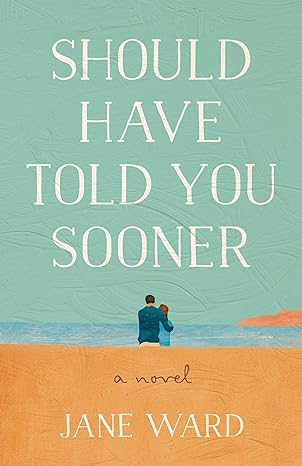
Should Have Told You Sooner is a layered story about family secrets, fractured love, and the tug-of-war between past choices and present consequences. At its heart is Noel, a museum professional navigating divorce, motherhood, and a career-defining opportunity abroad. Interwoven with her journey are letters from a boy in Leeds who slowly learns the truth about his adoption. The alternating voices expose the pain of what is spoken too late and what is left unsaid altogether. It’s a book that ties personal identity to memory, regret, and the relentless need for truth, while reminding us that silence in families can echo across decades.
I found myself swept up in Noel’s storyline most of all. She is flawed and frustrating, yet deeply human. Her desire to claim her career while holding onto her stepdaughter felt messy and real. The scenes with Alice carried such emotional weight that I felt the sting of rejection right alongside Noel. At the same time, I felt anger at her evasiveness. The title fits perfectly, so much of the pain in the book comes from words that were never said out loud until far too late. Ward’s writing style is sharp but also tender, with a knack for making small domestic details shimmer with meaning. Sometimes the prose slowed down with repetition, yet I rarely minded because it mirrored the weight of memory and hesitation.
What lingered with me most, though, was the emotional thread of the boy’s letters. His innocent hope and later confusion as he uncovered his past had a rawness that pulled at me. Those chapters broke up Noel’s present-day turmoil in a way that heightened both storylines. I found myself wanting to protect him, while also feeling frustrated at the adults around him who thought hiding the truth would shield him from pain. That mix of sadness and frustration stayed with me even after I finished the book.
Should Have Told You Sooner is a moving exploration of the cost of silence and the bravery it takes to speak truths we’ve buried. I would recommend this book to readers who enjoy contemporary fiction about family, adoption, and second chances. It will especially resonate with anyone who has felt the weight of secrets in their own family or who has struggled to balance personal ambition with love and responsibility.
Pages: 256 | ASIN : B0FDBLX3BD
Targets of Public Scrutiny

In Out of the Crash, tragedy brings together two families when an author’s son strikes and kills a cyclist with his car. Where did the idea for this novel come from?
Out of the Crash was inspired by two separate but similar tragedies that occurred in my hometown. I watched the aftermath of each incident unfold and read comments on social media in awe of how bold (and cruel) people could be. As quickly as the local media reported on the stories, people formed conclusions about the alleged offenders. What they were doing at the time of the accident. What kind of people they were. And what type of punishment they should endure. Despite a legal system built on the principle of innocent until proven guilty, the drivers of each car became targets of public scrutiny. Ultimately, some of those conclusions had merit; others did not. But it made me sad how easily people jumped to the worst-case scenario. I felt compelled to speak out but didn’t know how.
I also couldn’t help peppering myself with questions about how I would feel if wrapped up in similar circumstances. What if someone I love had sustained injuries in one of those crashes? Or someone close to me had been behind the wheel of one of those cars?
As a mom, I pictured myself trying to defend one of my kids if they’d been responsible for someone else’s grave injuries or even their death. Would I wholeheartedly support my child’s actions under any circumstance? Would I accept the truth even if it destroyed the future I’d foreseen for my family? And how much consideration would I give to the pain suffered by the victim and the victim’s loved ones?
What are some things that you find interesting about the human condition that you think makes for great fiction?
There are countless contexts where I see people taking unyielding sides. It’s black or white. Right or wrong. Us versus them. Life doesn’t seem that clear-cut to me, and storytelling provides the opportunity to give voice to those who might be misrepresented or misunderstood.
In writing Out of the Crash, I set out to convey how multi-faceted the human experience can be—to debunk any suggestion that there’s ever only one side to a story. In a time when the media bombards us with compelling headlines and summary talking points—typically just scratching the surface of a news event—it’s more important than ever to at least avoid passing judgment until the whole story becomes clear.
What are the pivotal moments in the story that you think best define Caroline and Ethan?
Caroline’s character arc is pretty gradual throughout the story. Still, one of the most pivotal moments occurs when she talks with Kyle’s attorney, Valerie, about their different cancer journeys. At this point, Caroline starts to see what everyone around her has seen for years—that she closed herself off from the ones who love her most as she underwent treatment. She put up a wall instead of accepting help from the people around her, like Valerie had done, and channeled her energy toward a career revolving around advocacy for others. The distance she created backfired when she tried to be there for her family after the crash as they’d learned to live without needing her attention.
A pivotal moment for Ethan occurred much earlier in the story when he learned about his mom’s past struggles with alcohol. This realization shocked him to his core and made him question whether he ever really knew his mother at all. Before that moment, he believed they were so close, making her sudden death even more devastating, as now he’ll never have a chance to talk with her about why she never confided in him about something so significant.
What is the next book that you are working on, and when will it be available?
I’m currently working on a book titled Iris Inked. The story revolves around an older woman who is forced to leave her cherished home due to a degenerative disease. She forms an unexpected friendship with a young aspiring social media influencer, who encourages her to share the stories behind her tattoos in a YouTube series. As their bond deepens, both women are compelled to confront their regrets and the challenges that come with embracing change. The book can be compared to The Seven Husbands of Evelyn Hugo by Taylor Jenkins Reid and the classic Fried Green Tomatoes at the Whistle Stop Cafe by Fannie Flagg. My first draft is almost complete, and I hope to start pitching/querying it in early 2026.
Author Links: GoodReads | X (Twitter) | Facebook | Website | Amazon


