Blog Archives
Hard Evidence
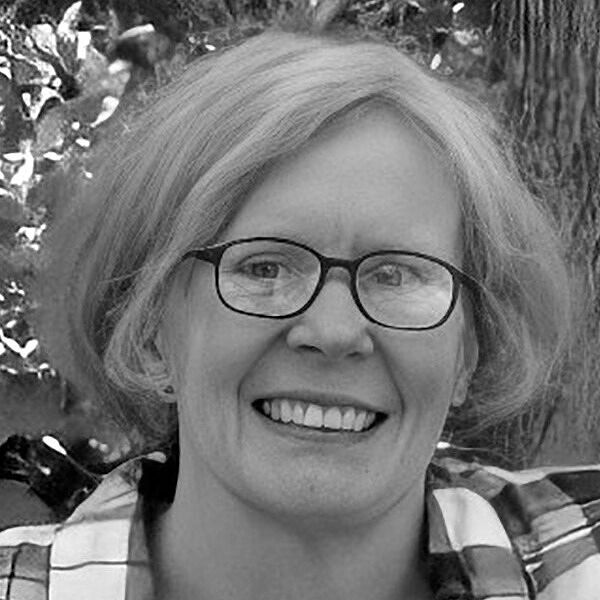
Red Anemones follows a woman’s search for her buried Jewish heritage, unfolding into a multi-generational story of love, resilience, and moral awakening across 20th-century Germany and America. What inspired you to explore your genealogy, and how did that journey shape Red Anemones?
Since I come from a small family, I’ve never been particularly interested in genealogy. There aren’t that many of us that I know about, especially on my mother’s side. Both my parents were the youngest in their families by nearly a generation, so I never met my grandparents or very many extended family members personally on either side, and in most cases, have never seen pictures of them, so I’ve never given any of them much thought.
Then, one cold and rainy Sunday afternoon in late winter of the second year of the COVID crisis, for reasons that involve boredom but otherwise remain a mystery to me, I decided to search my maternal grandmother’s name on a genealogy site, and one thing led to another. I learned that her mother, Bertha Michael, immigrated from Germany, passing through Ellis Island late in the 19th century. Finding that her surname was of Jewish origin, I learned that 446 records containing that surname end in Holocaust death records. Further investigation suggested that 49 of these individuals were likely either directly or indirectly related to my great-grandmother and, by extension, to me. I sat with the emotional chaos and horrifying realization that I had family members who died in Nazi death camps, induced for more than a month, allowing it free rein to sort itself out.
Discovering I was a matrilineal Jew confirmed something I’d long suspected, had hard evidence to support, and was thrilled to know is true. But this was all I knew, because throughout her life, each time I tried to talk to my mother about it, she was struck deaf and refused to acknowledge this reality in her life – and in mine.
Meanwhile, Bertha has taken up rent-free residence in my head and refuses to leave. Ultimately, I determined I had no choice except to write her story as best I could imagine it, given I knew almost nothing about her.
The novel balances historical scope with intimate emotional depth. How did you find that balance in your writing process?
Once I decided to write Bertha’s story, it took on a life of its own, and I just followed the characters wherever they wanted to go, letting them do what they wanted to do and say what they wanted to say. I was merely the vehicle through which they expressed themselves, and I encouraged them to write their own story with the least amount of interference possible from me. They were all very articulate, which made my job much easier.
Nathalie’s internal struggle between duty and freedom feels personal. Was she drawn from your own experiences or someone in your family’s history?
Good question! My best guess is that on some level, nearly every woman of Nathalie’s generation struggled with the conflict between what they wanted for themselves and what society, culture, family, and religion demanded of them. It seems to me this struggle is historical, universal across generations, and endemic to the female experience, and in that sense, there is a personal component to Nathalie’s struggle. However, I made different choices than she felt she could make.
While women today have more freedom, choices, and opportunities than Nathalie did, many continue to face the challenge of balancing what they want for their lives with what others expect of them. What’s very interesting to me on a personal level is that my mother, her sister, and her brother all graduated from major colleges/universities, which was almost unheard of for women, and for many men, in early 20th-century America, and was an expectation that was passed down to me.
The prose feels deliberate and lyrical. Which writers or works most influenced your style and storytelling voice?
This is a hard question to answer because my characters define the style and voice of the story themselves. I focus my efforts on character development, then put the characters in charge of the story, get out of their way, and let them tell it however they want to. If I disagree with where they’re going, I invite them to take a walk so we can discuss it, with a view toward finding common ground we can both live with. My intention always is to create characters who, one way or another, are good storytellers, then let them do what they do best.
In terms of non-fiction, David Marraniss is one of the most beautiful writers I’ve ever read in terms of both style and storytelling ability. His descriptions bring a story to life in ways most non-fiction writers don’t.
Fiction, however, is a little different in that there is much more room for creativity and imagination, and no two authors are alike in terms of how much control over the story and their characters they exert, how much they surrender to their characters, and how much they retain for themselves.
Author Links: GoodReads | Facebook | Website | Amazon
Natalie Barlow’s journey of self-discovery begins when her estranged mother’s sudden death releases a storm of unrevealed family secrets reaching back to pre-WWI Germany.
As Natalie navigates the complexities of her newly discovered Jewish identity and her ancestral heritage, she comes face-to-face with the early 20th-century German immigrant experience, which included strong anti-German sentiment and deep antisemitism that prevailed across America.
Through diaries and letters her mother saved, Natalie learns of the personal costs this ugly reality extracted from generations of her own family. Ultimately, she must confront the question of her own identity.
Like Israel’s red anemones carpeting the western Negev and Dvira Forest of the Judean foothills year after year, Natalie is determined, no matter the personal costs, to find the courage, resiliency, and passion to embrace the changes that bring new beginnings. Inspired by a true story.
Red Anemones
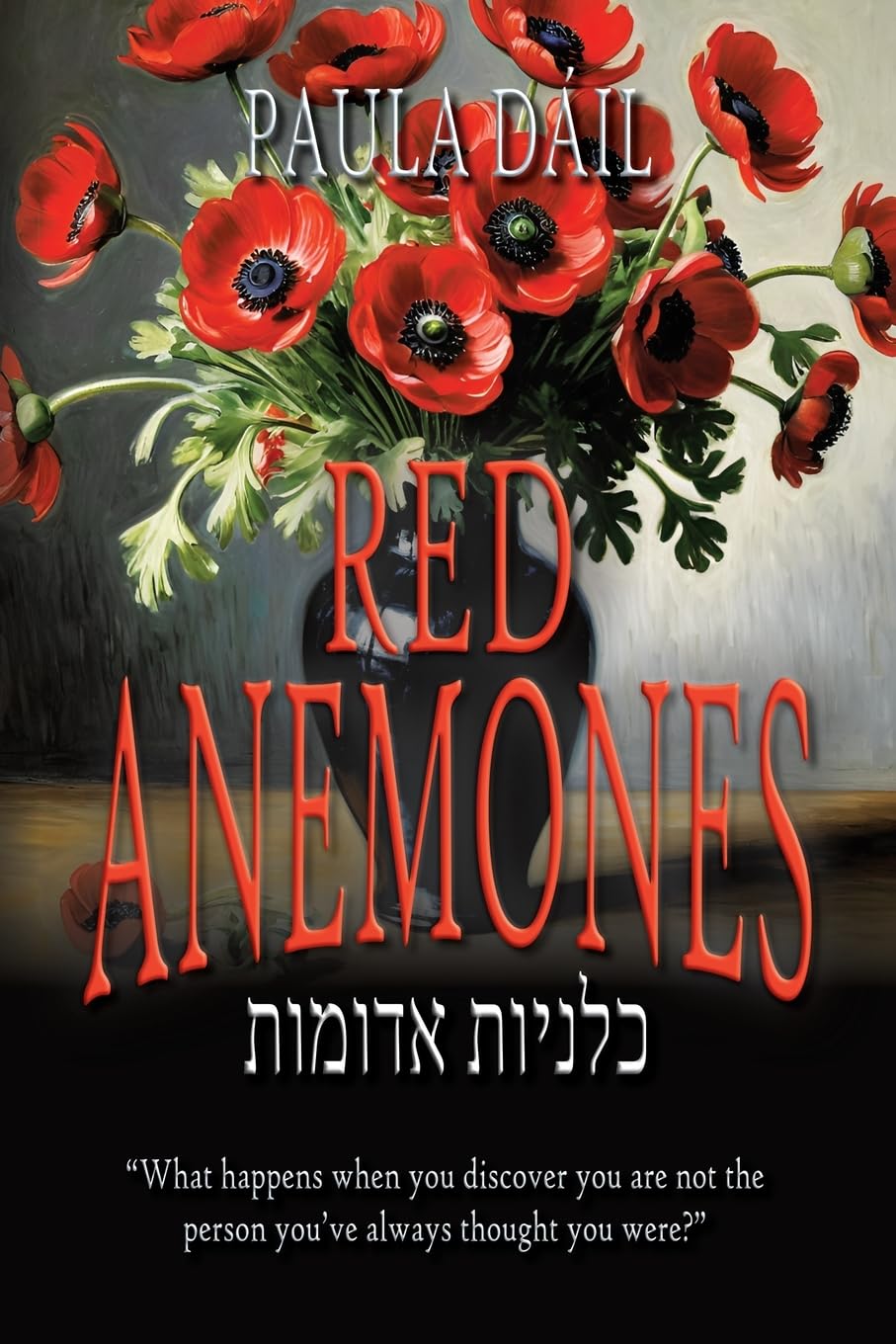

Red Anemones is a sweeping and intimate novel that traces the life of Bertha Michael and her descendants, interweaving personal discovery with historical trauma and moral awakening. The story begins with Dáil’s own genealogical journey, a quiet Sunday curiosity that unfolds into an emotional reckoning with forgotten ancestry and the Jewish identity buried in her family’s past. What follows is a rich narrative set against the backdrop of early 20th-century Germany and America, told with grace, precision, and a deep reverence for resilience. The book becomes more than historical fiction. It’s a bridge between eras, a testimony to the strength of women who dared to choose life and love amid darkness.
As I read, I found myself utterly taken by Dáil’s writing. Her prose has rhythm and patience, tight, deliberate, and quietly powerful. She writes with tenderness but never sentimentality, allowing emotion to rise naturally from her characters’ choices. I could almost feel the weight of Nathalie’s conflict between family duty and self-determination, between love and freedom. The language is lived-in, grounded, and full of quiet heat.
I was surprised by how personal this story felt, even when it stretched across continents and generations. I could sense the author’s grief and pride, her awe at discovering a lineage that had been hidden from her. At times, the story hurt to read. There were moments when I had to stop, take a breath, and just sit with the weight of it all. The brutality of history, the tenderness of memory, the stubborn hope that somehow refuses to die. Yet there’s also beauty here, a sense of redemption in the act of remembering. Dáil doesn’t flinch from hard truths, and that honesty makes the novel glow from within.
By the time I reached the final pages, I felt both heavy and lifted. Red Anemones left me thinking about identity, inheritance, and what it means to carry forward the stories of those who came before us. I’d recommend this book to readers who crave depth in their fiction, to those who love historical narratives that feel alive, human, and full of heart. It’s for anyone who’s ever looked back at their own family history and wondered what ghosts sleep in the blood.
Pages: 586 | ASIN: B0FPT7HP5H

This Has Always Bothered Me

Fearless follows a young Catholic girl who enters a Convent rather than having a family of her own. While serving God, she finds her voice to also speak out for women and reproductive rights. What was the inspiration for the setup to your story?
I wasn’t so much inspired to write this story as the story found me and occupied space in my head for a long time. Eventually, Sister Maggie Corrigan’s voice became too strong to ignore and I decided to go ahead. Once I made that decision the story wrote itself.
The impetus to sit down and begin writing came from watching society deliberately and systematically erode women’s reproductive and other rights. The fire-breathing feminist in me knew I needed to push back. I did not, however, think Roe v. Wade was in danger of being overturned when I began the book, and the fact that it was just as the book was released is coincidence.
The seeds for the story were planted during years I was an active academic poverty researcher and met strong-minded, determined nuns who toiled in the trenches of poverty every day and were staunch advocates for women. They recognized that their Church’s position on women’s reproductive rights was wrong-headed, and quietly disregarded it as they helped poor women gain control over their lives, which included control over their reproductive choices. Some nuns were more forthright and outspoken than others, but all were strong feminists without realizing it.
Behind all this is the realization that while the Catholic Church is a major player in the American social welfare system, the Church’s core message toward women, and poor women in particular, creates dependency rather than fostering empowerment. Worse, the Church’s position against women’s reproductive rights is harming the women they are proposing to help. This has always bothered me.
Maggie grew up in a traditional Catholic community and enters the Convent. As time passes her views and beliefs start to change and she becomes a voice for change. What were some driving ideals forces behind your character’s development?
Maggie is a very complicated, conflicted personality who thirsts for justice, believes what she believes and doesn’t care who disagrees with her. I don’t think anyone can truly feel that way and proceed to do what Maggie tried to do unless they are deeply wounded and very angry, and those traits defined Maggie. She tried to turn these traits into a force for good—although if asked, she would deny this.
Raising hell just because she can is another of Maggie’s traits. A good fight is in her blood, and her ability to stand her ground, even if it means provoking one is the key to her survival in the world and the family she was born into. She lacks the ordinary social and emotional filters that cause most people to think twice about what they are doing or saying. Maggie doesn’t care how others view her and is prone to knee-jerk reactions rather than thinking things through. Emotionally, this works for her often enough to keep doing it.
Maggie also personifies the reality that nuns and priests are flawed people who possess all the faults and failings everyone struggles with. There is nothing about choosing religious life that elevates them above ordinary human beings. It’s hard not to respect Maggie for what she tries to do, but she’s not very likeable.
What were some themes that were important for you to explore in this book?
This is a story about the fight for women’s reproductive rights within the wealthiest, most powerful institution on the planet. To fully grasp this, one must understand that the Catholic Church is foremost a patriarchal political institution that operates off of a political agenda designed to preserve its power on the world stage. The more Catholics there are in the world, the easier it is to maintain its power, and the surest way to increase the Catholic population is to forbid Catholic women from exercising any choice over their reproductive lives.
As a patriarchal institution, the Church always acts in its own best interests, which clearly are not the best interests of Catholic women. It is also a business whose product is selling religion in the form of hope and the promise of eternal salvation, which is a very powerful and appealing message, especially to society’s most vulnerable members. The barriers to full social and religious equality women face as the result of patriarchal dominion over society’s major policy-making institutions are substantial and extremely difficult to overcome—and the fight for women’s reproductive rights is a perfect example.
All of this said, at the heart of this story is a strong woman who fights hard every day for what she believes in, regardless of the personal cost.
What is the next book that you are working on and when will it be available?
My next book also involves the Catholic Church, which I view as an endlessly fascinating, socially dangerous institution that both promotes ideals of goodness and mercy and advocates for policies that bring great harm to women. Tentatively titled “Conflicted”, the plot involves a Catholic priest with a golden future in the institutional Church who struggles with his vocation and a Jewish woman who forces him to confront everything he believes about Christianity, the institutional Catholic Church, and relationships with women. The first draft is about 80% complete, so don’t expect it to be released before sometime in 2024.
Author Links: Amazon | GoodReads
Fearless
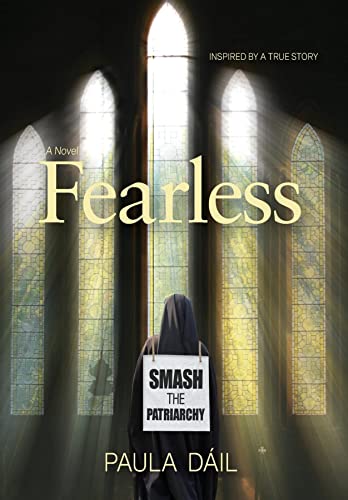
Fearless by Paula Dail is a book adapted from a real-life story. It revolves around Maggie Corrigan, a 17-year-old Catholic girl who’s the eldest of seven children in South Chicago. Oppressed by patriarchy and religious boundaries, this is an empowering tale of a woman who survived nonetheless. When she is faced with the choice of either marrying and bearing more children or joining the Convent, her choice is clear. Maggie instantly realizes that she can’t possibly raise more children, and since the cause of her mother’s death was extensive childbirth, she decides to dedicate her life to God. In the turn of events, when the wider women’s movement takes control, Maggie openly stands up for women’s reproductive rights in a male-dominated society, and that’s when people realize that Maggie Corrigan is truly fearless.
Paula Dail has written an incredible masterpiece that is one of a kind. Fearless is an empowering book that is guaranteed to wake the feminist inside you. The fact that it is based on a real-life story makes it even more special and inspiring. Dail has written amazing characters that are fun to read about. Dail’s ability to write vivid details, a realistic setting, and lovable characters made this book easier to visualize.
The protagonist, Maggie Corrigan, is a strong-headed female character who’s seen as a Saint by some and a heretic by others. She is seen surviving in a patriarchal society where she is oppressed and bound by religious obligations, but that doesn’t stop her from voicing her demands. Maggie’s fearlessness and strength to stand up for women’s reproductive rights are applause-worthy and a source of inspiration for several young women around the world who are stuck in similar situations.
Fearless contains an important lesson: no matter the circumstances, if someone is dedicated and courageous enough, they can use their voice to stand up for their rights and succeed. This stirring book is an emotional roller coaster and contains an amazing message.
Pages: 388 | ASIN : B0B5B8Z36G


