Blog Archives
Bad Americans: Part II


Bad Americans: Part II by Tejas Desai is a sprawling novel-in-stories set during the summer of 2020, after New York’s Covid lockdown, when billionaire dating-app magnate Olive Mixer gathers twelve Americans at his Hamptons estate for an experiment in romance, confession, competition, and moral exposure. Each night, a guest tells a story; in this second half, the book moves through Lisa’s #MeToo-inflected art-world account, Khassan’s provocation, Hayley’s modeling-world tale, Pritesh’s immigrant-professional odyssey, Sylvania’s fashion-and-identity chronicle, and Angela’s bruising finale, all while the frame narrative tightens around accusation, loyalty, illness, desire, and the question of who gets believed.
I admired the book most when it refused to let any character become a clean emblem. Desai is writing about America as a loud room where everyone has a grievance, a wound, a blind spot, and a microphone. The result can be abrasive, but productively so. The frame narrative has the nervous electricity of a reality show filmed inside a moral philosophy seminar: people flirt, sulk, posture, accuse, console, and revise themselves in public. I found that messy social weather more compelling than any single plot turn. The book understands that “discourse” isn’t abstract; it happens over food, sex, money, race, fear, vanity, and the old human need to be the injured party.
The novel’s appetite is almost gargantuan: it wants to absorb pandemic politics, gender conflict, race, class, immigration, celebrity, sexual harm, art, fashion, social media, tech money, and literary history all at once. Still, I would rather read a book that risks excess than one polished into anesthesia. Desai’s best scenes have a jagged vitality; they make the reader sit in contradiction instead of offering the soft chair of easy judgment.
I would recommend this to readers of literary fiction, social satire, contemporary American fiction, and frame narrative experiments, especially book clubs willing to argue rather than merely agree. Readers who enjoy the social sweep of Tom Wolfe or the polyphonic setup of The Decameron will recognize the pleasure of watching a whole culture refracted through competing stories, though Desai’s sensibility is rawer, more contemporary, and more quarrelsome.
Pages: 454 | ASIN : B0GGV7Q3TH

Mijo: We Bend, Not Break

Mijo: We Bend, Not Break opens as a multigenerational story about inherited silence, migration, and the long, uneven labor of becoming a different kind of man. Author Francisco Castillo begins in drought-stricken Michoacán with Joaquín, a boy starved for tenderness, then follows him across the border into California, through field work, fear, fatherhood, and the psychic aftershocks of survival. The book keeps widening from there, tracing how masculinity, trauma, family memory, and healing move from one generation to the next without ever feeling schematic. What stayed with me most was its belief that resilience is not hardness, but the stubborn decision to remain reachable.
What I admired first was the book’s emotional architecture. Castillo understands that generational damage rarely announces itself with grand speeches; it shows up in the hand that doesn’t quite reach back, the hug withheld, the child who learns to read distance as weather. Joaquín is drawn with real pity but not indulgence, and Antonia emerges as more than a counterweight to him: she is flint, witness, and moral pressure. I felt the novel’s strongest current in the scenes where love exists before the characters know how to perform it. That gives the book an ache that feels earned rather than manufactured.
I also liked that the prose aims higher than plain utility. At times it’s lush, but more often it lands on sharp, memorable images: labor as a language, silence as inheritance, tenderness as something nearly unbearable to touch. There are moments when the sentiment edges close to overflow, yet the book repeatedly recovers because its core insight is so recognizable: people can mistake emotional deprivation for strength, then spend a lifetime trying to unlearn the error. By the end, I felt I had read not just an immigrant family story, but a study in repair, crooked, incomplete, and therefore convincing.
I would recommend this to readers of family saga, immigrant fiction, literary fiction, historical fiction, and trauma-and-healing narratives. It will likely speak to readers who respond to the intergenerational emotional intelligence of Sandra Cisneros or the intimate family gravitas of The House on Mango Street, though Castillo is writing in a broader, more openly restorative register. This is a book for readers who can bear tenderness without mistaking it for softness. Its deepest argument is simple and durable: what we inherit may wound us, but it does not get the last word.
Pages: 216 | ASIN : B0FT6N57CG

The Original Human Beings
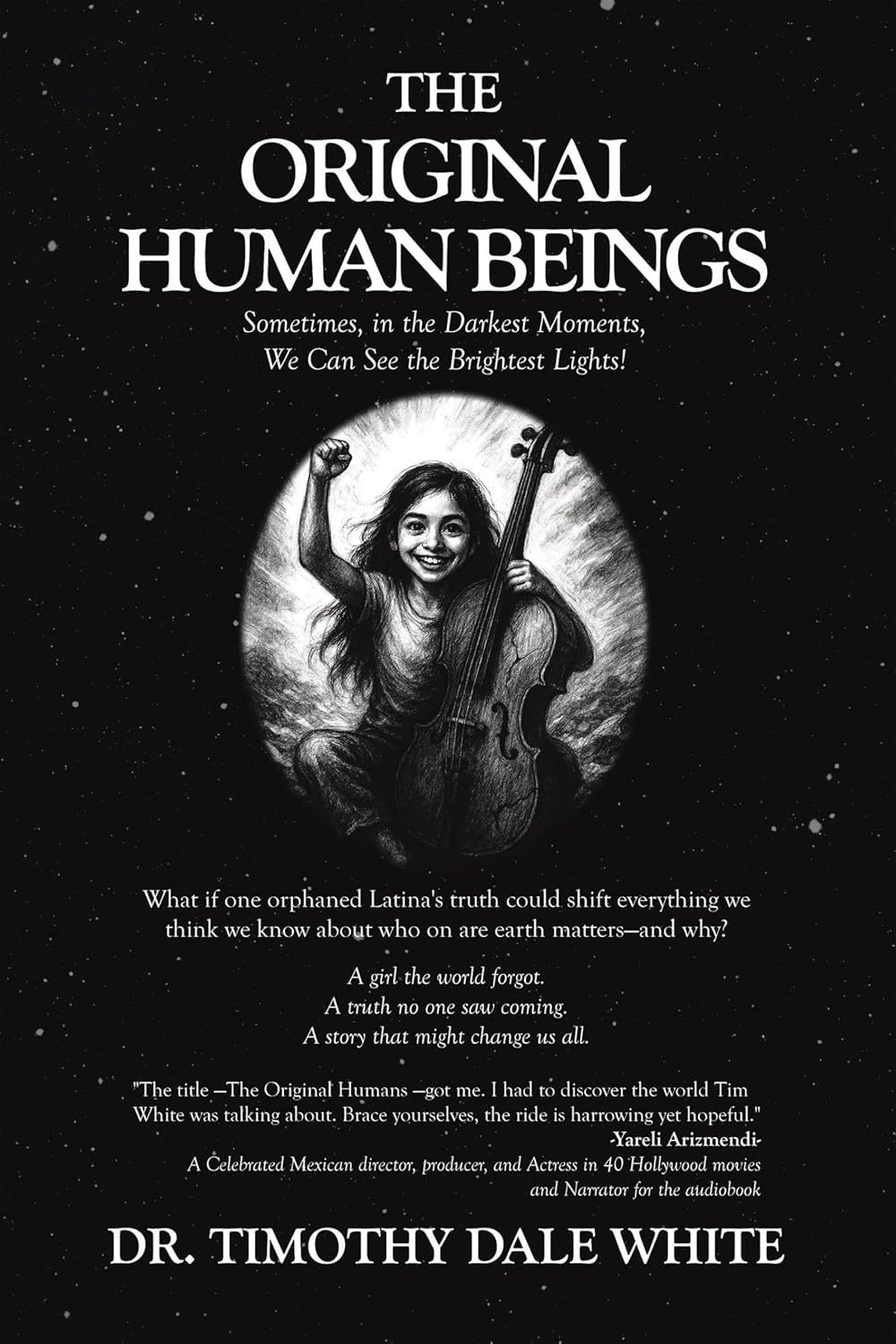
The Original Human Beings doesn’t introduce pain politely. It slams the door open and says: look. The early chapters carry the stench of the Tegucigalpa dump and the constant calculus of threat, who can be trusted, who can be bought, who will vanish. When music appears, it isn’t decorative; it’s defiance made audible, played on a soccer field that no safe child would touch.
The tenderness that surprised me most is how the novel treats naming, not as branding, but as breath. Sister Rosa’s speech about names carrying “history, hope, and resilience” is one of those scenes that feels personal. “Never” lands not as a gimmick but as a vow with splinters in it.
I also didn’t expect the book to be funny in its own way. It has moments where absurdity slips in, people being people even while the plot keeps sharpening its knives, and that contrast makes the grief hit harder. Later, when the story pivots toward chosen family and the messy work of becoming “something new,” it doesn’t pretend restoration is clean. It shows care arriving through awkward neighbors, unlikely protectors, and the weird grace of second chances.
And then there’s the part where a father figure tells Never, plainly, to stop hunting for a rescuer: “You are already enough.” It’s not self-help; it’s a hard-earned verdict delivered without sentimentality. I’ll remember this novel less for plot twists than for the way it insists, again and again, that love isn’t a soft thing. It’s a muscle. It’s practice.
If you like novels where survival isn’t just plot but a pressure that shapes every sentence, and where music becomes a second language for what can’t be said, The Original Human Beings is for you. It’s especially good for readers drawn to immigration stories that refuse tidy uplift, and for anyone curious about how Indigenous cosmology can widen a personal narrative into something elemental. Expect grit, grace, and a kind of hard-won beauty that doesn’t ask permission.
Pages: 356 | ASIN : B0G42BPC2T
Carefully Designed Mask

The Pebble in the Pond follows a woman in personal and financial collapse who seeks a fresh start in a tight-knit Virginia town where she uncovers buried family secrets and entrenched social hierarchies. What was the inspiration for the setup of your story?
The novel began as a short story for a flash-fiction challenge, and only featured Miriam and Louise. After sharing the story with an author friend, she suggested it could be a full-length novel, so I was off to the proverbial races. Like Miriam, many of us believe relocating to a new community will enable us to leave the past behind. But what if unknown elements of our past are meant to be discovered, despite the pain they may cause?
My master’s degree is in (American) History, and my focus was race, class, and gender in the 19th and early 20th centuries. Rather unwittingly, these themes found their way into my novel, which begins in 1978 – a time when the “norms” related to race, class, and gender were being challenged and re-imagined (but not without struggle). Then, as now, the tension between “tradition” and “progress” can be polarizing – that’s the backbone of this story.
The title suggests that small actions can have far-reaching consequences. When did that metaphor become central to the story?
My main character, Miriam Llewelyn, and her husband relocate to Stuarts Landing, Virginia, after sustaining financial ruin and personal loss. The move – her grandfather’s deathbed wish – was designed to represent a fresh start, yet Miriam was ill-prepared for the catty and, at times, vicious behavior she encountered from the town’s queen bee, Louise Winston Caldwell. Despite Louise’s repeated efforts to undermine Miriam, who took a job as a grocery store cashier while having the audacity to become a member of the Women’s Auxiliary, Miriam remained true to her core beliefs and character. Her integrity, authenticity, and kindness served as a mirror of sorts for the women in her orbit. Ultimately, she changes the town for the better…just by being herself.
The novel gives women space to be contradictory—generous, petty, controlling, vulnerable. Why was that complexity important to you?
Thank you for that! I’ve read far too many books in which women were treated as stereotypes – caricatures, even. Yet women are complex; what we reveal to the world is often a carefully designed mask hiding deep, painful truths that, if acknowledged and processed, can help us become better versions of ourselves. I’ve taken that journey myself and believe in the power of standing in our full authenticity, flaws and all.
Will this novel be the start of a series, or are you working on a different story?
I am currently working on the prequel, tentatively called Playing With Fire, that begins in 1927. I expect to publish it next year.
Author Links: GoodReads | X (Twitter) | Facebook | Website | Amazon
As Miriam settles in, befriending the eccentric, wealthy Webster sisters, she uncovers a decades-old family secret linking her late grandfather to the town’s most powerful household. A tragic fire, hidden adoption, and old betrayals surface, exposing rivalries that have simmered for generations. Miriam’s arrival sets in motion a chain of revelations that threatens to upend both the social order and long-held loyalties.
In a town built on tradition, Miriam must navigate ambition, jealousy, and hidden truths while finding her own place. Only by confronting the past—and choosing forgiveness—can she uncover the life her grandfather envisioned and forge her own path to belonging and peace.
Taking Risks

John B. Peoples follows a drifting man who, after splitting a lottery ticket with his boss, wins $40 million, only for his boss to disappear with all the winnings, sending him on a worldwide chase to reclaim his share. What was the inspiration for the setup of your story?
The inspiration for the story in John B. Peoples came from what might be considered an unusual place, given the book’s plot. The inspiration arose from how my mother-in-law faced her losses bravely and without compromise. In her case, a beautiful woman in her early 90s, she was stricken with cancer of the mouth. As the cancer grew, it took away her beauty and mobility. Yet she remained positive, telling me once that she was happy as long as she woke up and could wiggle her toes. That led me to want to write about how people deal with loss. Then, a “bolt of lightning” hit me and I thought about how one would feel if they won the lottery, but someone tried to take that away. A reader of John B. Peoples will see other types of loss included/covered throughout the book.
As John’s options narrow, he turns to increasingly extreme measures, including organized crime. How did you approach that moral progression?
In John’s past, even before thinking his lottery winnings had been taken, he had suffered a knee injury that made him lose out on continuing his dream of playing college football. After that he failed in marriage and lost custody of his daughter. Then, as we find him at the start of the book, he is facing the challenges of barely getting along as a divorced father with an unrewarding job and child support obligations in Los Angeles where he lives in a one-room converted garage. Finally, as he seeks to recover his share of the lottery jackpot, he becomes more and more frustrated with the limits of the justice system and the other impediments he encounters. That frustration leads John to be willing to take more and more aggressive and risky steps to obtain the justice and fairness which he feels life has too often denied him.
The novel explores the frustration of living in a society where success is unequally distributed. How consciously did you engage with that theme?
This was very conscious, at least regarding how that frustration served to motivate John. Of course, who among us, as blessed and fortunate as they might be, does not feel or see how success can be a matter of birth or luck or kissing up or devious behavior or any “unfair” circumstances?! However, when writing John B. Peoples, I did not consciously think about people and society in general, but rather about John’s character and why he might act the way he acts.
What does the novel suggest about access to justice in the modern world?
For most, the justice system, even if one can afford or be able to access it (for example through a contingency fee agreement rather than through exorbitant hourly fees), is a confusing and frustrating maze. It may be one’s first or only experience with lawyers and judges. For example, how should one choose a lawyer? What kind of lawyer would serve me best? What is a typical fee arrangement? Can the justice system get me what I want or is the system of laws and remedies limited? John B. Peoples explores all of that. And it could be suggested that it is not worth even trying to access the justice system, or that self-help may be a better or the only solution to a problem.
Author Links: GoodReads | X (Twitter) | Facebook | Website | Amazon
During his quest, John suffers a debilitating spine injury and struggles to heal physically and emotionally. Yet he continues pursuing White from Los Angeles to Paris to Marseille. Along the way, he tries navigating the legal system, meets a woman he believes he can only dream about, and eventually engages the help of organized crime. Ultimately, he is faced with the question of how far he is willing to go to retrieve and protect what is his.
John B. Peoples is more than the study of a character out to correct an injustice. It takes us on a powerful journey while examining loss, personal growth, and the everyday challenges of life in America today.
Jackdaw Affliction


Jackdaw Affliction is a literary novel with the sweep of a family saga and the bruised intimacy of psychological drama. It follows Billy from a rough-edged childhood in 1980s England through grief, family damage, love, illness, and the slow tightening grip of ataxia, while also circling the lives of Becks, Susan, and Will in ways that make the family feel less like a cast and more like a weather system that keeps changing around him. What stayed with me most is how the book moves from youthful freedom, bikes, music, and sibling closeness into something darker and more fragile, until survival itself becomes the central struggle.
Hyde writes in a way that feels unpolished in the best sense of the word, as if Billy is not performing pain for the reader but just trying to get it said before it slips away. That gives the novel a blunt force that I found hard to shake. Some scenes land because they are so matter-of-fact, even when what is happening is shocking or sad. The early sections especially have that mix of memory and menace, where a summer day, a pub garden, a family dinner, or a bike ride can turn in an instant. I also liked how music runs through the book like a private radio station in the background, giving the story texture without feeling gimmicky.
What I found most interesting, and at times most unsettling, was Hyde’s willingness to let the story stay messy. This is not a neat novel, and I do not think it wants to be. The family bonds are loving, warped, tender, and destructive all at once. Later, when Billy’s world narrows under disability and humiliation, the book becomes less about plot in the usual sense and more about endurance, dignity, resentment, and the strange loneliness of being trapped inside a body that no longer lets you move through the world the way you once did. That material could have turned preachy or sentimental, but it mostly doesn’t. It feels authentic. Candid. Sometimes ugly. And sometimes very moving.
I would recommend Jackdaw Affliction most to readers who like literary fiction that takes risks, especially books about family damage, class, memory, and chronic illness that are more interested in emotional truth than polish. Anyone looking for a clean, comforting read may bounce off it. I didn’t always find it easy, but I did find it memorable, and that counts for a lot. It feels like a novel for readers who can sit with discomfort and still listen for the human voice underneath it.
Pages: 286 | ASIN: B0GN47WWPZ
Everything We Try to Hold


Everything We Try to Hold is a work of domestic literary fiction, or family saga, told through Caroline Graham’s long memory as she looks back on the lives braided around her own: her fierce friendship with Cathy, her mother June’s unhappy marriage, the damage caused by pride and infidelity, the loss of her brother Stephen, and the way grief and love keep resurfacing across decades. The book opens with Caroline in late middle age, successful on the surface, then pulls us backward through childhood, marriage, motherhood, ambition, and old family secrets, using one discovery tied to Uncle Frank as the thread that brings the past rushing forward again.
What stayed with me most was how openly the book wants to sit with emotional history. Sometimes it feels almost as if Caroline is talking to readers directly, sorting through memory piece by piece, and that intimacy gives the novel much of its strength. I liked the way the manuscript returns to certain pressures over and over: the father’s cruelty, the mother’s quiet suffering, the steadiness of Cathy, the comfort of Uncle Frank. That repetition mirrors how family wounds actually work. They do not pass cleanly. They echo. I found myself wishing the prose were tightened in places, because the strongest scenes already have real weight and don’t need quite so much explanation. When the writing trusts the moment, especially in scenes of childhood wonder or private grief, it really works.
I also found the author’s choices interesting in how firmly the book centers women’s interior lives inside what could have been a more conventional generational drama. June’s pain, Caroline’s watchfulness, Cathy’s lifelong presence, and even Caroline’s later professional growth as a designer give the story a pulse that feels more intimate than plot-driven. There is loss here, but also endurance, self-making, and the strange way tenderness can grow in damaged ground. The late reveal involving the hidden safety deposit box and the photograph of June doesn’t explode the book so much as deepen its sadness. It asks whether the private things people hold onto are shameful, necessary, or simply human. I appreciated that the novel seems more interested in emotional residue than in neat judgment. That felt honest to me.
I would recommend Everything We Try to Hold to readers who enjoy character-centered family dramas, reflective women’s fiction, and multigenerational stories that care more about relationships than speed. This is a book for someone willing to settle in and listen. Someone who doesn’t mind a novel lingering over memory, pain, and the slow shaping of a life. Readers who value sincerity, emotional accessibility, and the sweep of a family saga will likely find a lot to connect with here.
Pages: 110
Microcosm of Our Society

Destiny and Other Follies follows a midlife consultant and his wife, a couple struggling through marital strain, waning career ambitions, and trying to find one another again. Where did the idea for this novel come from?
From life. I worked in consulting for far too many years and saw what it can do to a person, the cold dog-eat-dog brutality of it, the strain it puts on a marriage. It’s arguably the most extreme corporate experience one can have, and that compelled me to capture it on paper.
The consulting world in the novel feels both realistic and quietly surreal. What drew you to that setting?
Working as a consultant, experiencing so many different client environments, it became clear how the corporate world has impacted society, how disconnected and dehumanized it’s become. My intention was to present this world as a microcosm of our society, to depict the blurring boundaries between worklife and life.
Why was it important that the novel not remain entirely within Calder’s point of view?
It would have read more like a memoir if there had not been other points of view. It was important to show that his wife had similar experiences in her role as a retail banker. I also liked the idea of presenting their separate views about their marriage instead of only his own. Their different perspectives on the US were also important. They consider it from very different backgrounds and mindsets. Hana deserved to be a significant subplot.
What kind of reader do you imagine connecting most deeply with this book?
Readers who have direct experience with the corporate world seem the most likely. But anyone who is intrigued by the corporatization of our society would also connect with it, by the influence some of its most undesirable traits have had on us, and by what that might mean for the future.
Author Links: GoodReads | X (Twitter) | Website | Amazon
How will he tell his wife?
Younger and Bosnian, Hana feels adrift in an overwhelming America. Their relationship’s sole center of gravity is an old Weimaraner named Darwin. Terrified by her husband’s failing health and the prospect of widowhood, Hana takes a retail bank job and an interest in her one friend’s husband.
Meanwhile, Calder’s client work unravels; hints at internal sabotage mount. As the base ruthlessness of colleagues begins to emerge, so do the primal forces that drive him. His battle to salvage both dignity and career deteriorates into a thirst for vengeance, leading to unexpected revelations about his past, his world, and himself.
Destiny and Other Follies is a darkly comic, gritty yet humane portrait of misdirected lives in our corporatized age.


