Blog Archives
Beleive in the Characters

Say Goodbye, Misty Day follows a charismatic film star in the 1940s who is found dead in a Yorkshire hotel, leaving those still alive to explore questions about the cost of ambition and success. What first drew you to Misty Day as a character, even before her death?
The idea of Misty Day was born in a museum in Baku, Azerbaijan. There in the museum was a collection of the most exquisite dolls, which were handmade. It was from a doll that her basic character was created. I never saw her as a victim, she was a beautiful, strong young woman, who did not quit but fought back. The women I had in mind were Diana Dors a beautiful and talented actress. then the singularly talented actor that was Marilyn Monroe. These actors and of course Misty Day were not allowed to break free from their social structure. Misty Day was subject to hate mail and death threats and then out of jealousy was murdered. However, she was the triumphant one the end. Did she win the Oscar?
Misty is both central and absent. Do you think Misty is more a victim, a catalyst, or a mirror for the other characters?
I certainly do not consider Misty Day as a victim. Because the label stops the reader from seeing her worth. Nor is she a catalyst for the tragedy of others. She is a young woman who wanted to be something more than what she started out as. The dance that Hedda Pulse creates toward the end of the book shows us a power that has reached great heights, and she got there without stepping over others or hurting them. She is the mirror. It shows us what dreams are made from and what sacrifices you give up along the way in order to reach success. For Misty, she was determined that she would stay true to herself and that is the reflection that she would want people to see.
What were some themes that were important for you to explore in this book?
You are right when you described some of the themes as raw! especially the death of the baby. It is partly biographical, my mother had a little girl who died, before she even had a chance to live. It was the same with Michael. He struggled to life and then his death was hard to write and I recognise that it is also a difficult chapter to read. Another compelling theme was that of domestic violence and how it is dealt with. For Petal it is the constant emotional and physical abuse that oftgen reduces her to the shadows. What I did not want was that the male character, the abuser should dominate and feel that their actions can be justified. In the case of the Petal and Frank they are eventually brought back together when they realise that both of them had been played.
The nicer themes of dance and comic elements give the book a sense of Britishness and character. The names were important and I think believable because, the story is believable.
How do you hope readers think differently about fame after finishing the book?
For me fame was never the most important aspect of the book. I wanted Misty to succeed because she needed to achieve. the most important aspect that a reader can take from the book are the characters. Grace Ful, the owner of the hotel. Geoffrey and Bertha Goodegge, staunch supporters of Grace. The Schnitzel sisters and their rise and fall and eventual rise again.
The focus on the Russian theme and the joining together of a family once more after the trauma of the fall and rise of family caught in the politics of change, under a regime that hated its people. I wanted that to be powerful and joyous.
What I want the reader to take from reading the book is the joy I had in writing it. I want them to believe in the characters. I leave the ending up to you the reader, does Misty Day win the oscar? well that is up to you. For me, I have already won something by the fact that I have had some excellent reviews. I believe in this book and believe that is should be read by as people as is possible.
Author Links: GoodReads | Website
In the chaotic world of 1940s England, where ambition clashes with tragedy and jealousy lurks in the shadows, one woman’s journey to stardom defies the odds.
Misty Day, a stunning and charismatic performer, rises from the glittering lights of the Fluff Queen stage to the silver screen; she captivates hearts and provokes envy in equal measure.
But as Misty navigates the treacherous waters of fame, she is haunted by poison pen letters, death threats and emotional turmoil from those who seek to shatter her dreams. Amidst the glamour, she finds solace at the Morning Glory Hotel and in the unlikely friendship of Hedda Pulse, an exotic dancer who has known profound loss yet emerges stronger, embodying resilience and grace. Together, they confront the emotional storms of despair, laughter, and pain, each step drawing them closer to the truth about ambition and the cost of success.
Say Goodbye, Misty Day is a stirring tale that captivates the heart, exploring the depths of human emotion and the power of hope. Will Misty triumph over the darkness that threatens to consume her, or will jealousy extinguish her light? Join her on this unforgettable journey of self-discovery and empowerment, where every setback is a setup for a comeback, and every goodbye is a step towards finding oneself.
Say Goodbye, Misty Day
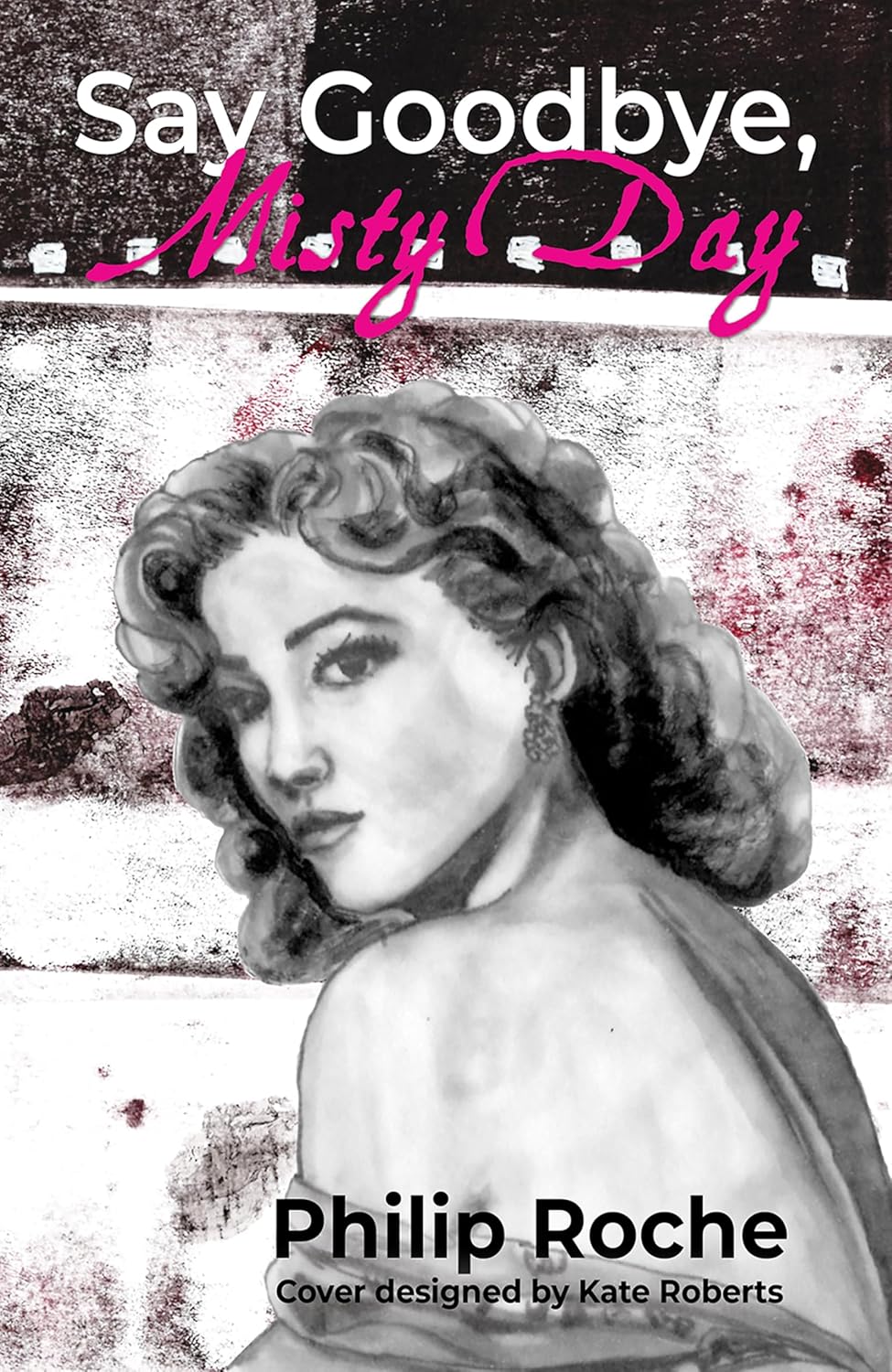

Say Goodbye, Misty Day by Philip Roche is a character-driven mystery that opens with a death already thick with theatrical melancholy. A glamorous film star, Misty Day, is found dead in a faded Yorkshire hotel, and the novel fans outward from that moment into a chorus of lives orbiting the Morning Glory Hotel. Through shifting perspectives, Roche stitches together entertainers, eccentrics, drifters, and strivers, building a social tapestry in which personal histories, buried grief, and quiet ambitions are as important as the central question of how, and why, Misty Day died.
I liked that the book seems to have an affection for its characters. The author spends time exploring them, allowing backstories to sprawl and voices to settle into their own rhythms. I found myself less concerned with narrative efficiency than with atmosphere: the tired glamour of performers past their peak, the comedy edged with sadness, the sense of lives paused in half-light. Sometimes the prose drifts, but it does so with intention, like a storyteller who knows the pleasure of taking the long way round. When the novel slows, it is usually to deepen emotional texture rather than to stall.
Emotionally, the book surprised me. Beneath its stylised wit and occasional farce lies a tenderness toward loss. Lost youth, lost children, lost chances. Some passages are blunt, even raw, particularly when grief enters the frame, and those moments ground the novel when it risks becoming overly theatrical. I admired Roche’s willingness to let discomfort stand without polish. Not every scene lands cleanly, but the sincerity is unmistakable, and that sincerity carries the reader through.
This book will appeal to readers drawn to literary mystery, character-driven crime fiction, and historical noir with theatrical flair, especially those who enjoy ensemble casts and eccentric communities. It reminded me at times of Agatha Christie’s closed-circle mysteries, filtered through the bruised humanity of a Patrick Hamilton novel. Say Goodbye, Misty Day is less about the mechanics of death than the residue it leaves behind. In the end, it feels like a slow-burning elegy disguised as a whodunit. Say Goodbye, Misty Day is a novel that mourns as much as it investigates.
Pages: 234 | ASIN : B0FYNKS2RL



