Environmental Activism
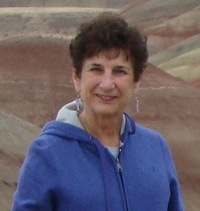
In The Water Factor, a man determined to save his drought-stricken community risks it all to steal water trucks as he strives to make access to water a human right. What was the inspiration for the setup of your story?
Anthropology and psychology degrees, serving as president of the Oregon Museum of Science and Industry, and founding the Museum Tour, an educational supply catalog, contributed to my interest in social justice activism. As a blogger and current Community for Earth Committee member, I seek to inspire the public to become environmentally aware activists. Reading Blue Gold by Maude Barlow and Tony Clarke set me on the path to exploring water issues in a time of scarcity. After learning that water was commodified in 1992 and negated as a public right, I became alarmed about its ramifications, including being traded on Wall Street.
My idea of stealing water trucks to right a wrong was a product of my imagination. It was a way to return clean water to communities suffering from corporate greed.
Native American culture is an integral part of my life and the novel. My domestic partner, Ray Losey, is a totem pole carver and storyteller. Over the years, I assisted in performances at schools, galleries, and senior centers. Warm Springs is a reservation I visited often to attend powwows, organize education programs in conjunction with the museum, and swim in their spring-fed pool. When interviewing their Emergency planning manager, he spoke of their aging infrastructure and burgeoning homeless population. We discussed their need to import water and the fires that devastated miles of profitable timberland.
Can you share with us a little about the research required to put together your story?
Creating the story was a two-and-a-half-year journey involving intense research. I read and listened to stories of criminal acts, corruption, and corporate manipulation and intertwined them into the narrative. Investigations led to the World Trade Organization’s role in getting rid of protective laws in third-world countries, enabling foreign investors to establish businesses with minimal oversight, and how the World Bank and International Monetary Fund charge interest countries can’t pay back. I read how water pipes are being tampered with to divert water to marijuana farms and how ranchers and farmers are fighting over water rights. I discovered that bottled water costs 2000 times more than tap water and that groundwater was being drained for commercial purposes. An acquaintance who works for Northwest Natural Gas confided that the company was aggressively purchasing water rights on the West Coast and discovered that utility companies nationwide were all making similar purchases. The list of abuses continues to grow in communities that ignore how their local government manages water.
Numerous tribal members assisted in authenticating passages about Native American culture. Michael (Two Feathers) Rey, a Potawatomi native, storyteller, filmmaker, and artist, encouraged me to stay true to my goal of describing how corporate takeovers compromise public access to clean water. Ed Edmo, Shoshone-Bannock poet, playwright, and consultant to the Smithsonian’s National Museum of the American Indian, ensured my descriptions of reservation life and ceremonies rang true and were respectful. I was also fortunate to receive guidance from Ed’s wife, Carol.
Five years ago, I adopted an Ethiopian/Samali immigrant family and became a grandmother to their two beautiful daughters. They, and other African acquaintances, assisted with authenticating the Ethiopian scenes.
What themes were important for you to explore in this book?
The story centers on the protagonist, James Hokama Byrne, a naive high school graduate whose eyes are opened when driving a water truck through rural communities. As he matures, he becomes a social activist working to return what should be a human right to its rightful owners.
A second theme focuses on an antagonist, Aaron Gooding, a man caught up in the manipulations of a power-hungry boss and his fight to free himself from the evil ways of his past.
Native American reservations and rural Ethiopian communities are examples of how government entities and water cartels impact disadvantaged communities.
Can readers expect to see more from you soon? What are you currently working on?
Since finishing The Water Factor, I’ve explored new ideas and themes related to environmental activism and social justice. Antheia in the Thorns, the second novel in the Rightfully Mine series, scheduled for release next year, focuses on air quality rather than water. It introduces a little-known oil product polluting the atmosphere that the U.S. refines and markets worldwide. The shocking story will keep readers on the edge of their seats.
Author Links: GoodReads | Amazon
The novel opens dramatically in 2039 with James Hokama Byrne, grandson of Chief Tahoma-Kiche, leading a team to steal water trucks and take them to the reservation where his grandparents live. The battle began years ago, when water was labeled a commodity rather than a right, and Glacier Oceanside joined the ranks of the world’s largest water cartels. Top executives didn’t count on being confronted by James Hokama Byrne, an employee the company mentored since his high school graduation. But delivering to drought-stricken farms and getting kidnapped in Ethiopia changed the young man’s outlook. When the Glacier Oceanide started draining aquifers on his grandfather’s reservation to send to bottling plants and marijuana farms, something within him snapped. He couldn’t remain silent.
The plot involves readers in the manipulations and crimes of water cartels, drug lords, and utility companies that operate openly and with little oversight. Going by his middle name, Hokama, the hero is challenged to make access to clean water a human right, not a commodity exploited by private corporations. The story is exciting, radical, and urgent, involving love affairs, murder, and kidnapping. If you like action with a touch of romance, and if you cry for misused populations, you won’t want to miss this call to action. To ensure authenticity, Eichinger met with members of the Warm Springs Indian Reservation in Oregon and was assisted by Native American Smithsonian consult and Ethiopian families.
Posted on May 11, 2024, in Interviews and tagged author, book, book recommendations, book review, book reviews, book shelf, book trailer, bookblogger, books, books to read, booktube, booktuber, ebook, goodreads, indie author, kindle, kobo, literature, Literature & Fiction, Marilynne Eichinger, nook, novel, read, reader, reading, realistic fiction, story, The Water Factor: A Rightfully Mine Novel, Thrillers & Suspense, trailer, writer, writing. Bookmark the permalink. Leave a comment.



 LITERARY TITAN
Leave a comment
Comments 0