Blog Archives
Consider My Perspective

Her Masks & His Truth follows a former television star struggling with infertility and a fraying marriage who meets a serene political canvasser, who leads her into a life-altering encounter with Christ. What was the inspiration for your story?
I have always questioned God and His existence. Who are we as humans? Why are we here on earth? What is the purpose of our existence? Why are there so many different explanations and theological contradictions in the world, and why has humanity yet to reach a consensus?
I have often wondered how humanity has progressed to such a high level of understanding in scientific theories, yet the idea of someone or something creating this world still perplexes us. Since I was a teenager, I have had questions about God. What distinguishes me from animals if all I do is eat, drink, sleep, reproduce, and eventually leave this world?
My achievements and education led me to become arrogant enough to refuse to even hold a Bible. Religious men and their man-made rituals made me despise the concept of seeking God. As the granddaughter of Armenian genocide survivors, born and raised in Lebanon, I became frustrated with God, wondering where He was to protect the 1.5 million Armenians who were martyred for their Christian faith in 1915—including the entire families of both my grandparents.
I developed a strong aversion to Jesus Christ, fueled by a combination of pain and resentment. The only information I heard about Him came from religious leaders who manipulated people through fear and ignorance. I refused to blindly obey or follow theological interpretations spread by religion, like a parrot controlled by fear and obligation, without ever truly understanding God’s character.
By coincidence, nearly three years ago, I met a Christian who followed only the Bible and refused to mix human traditions with biblical truth.
I was curious to learn what he believed. My curiosity led me to admire the Bible, which not only contained truth but also offered scientific explanations that engaged with the world’s science. Whenever I challenged the Bible, I found my questions answered within its pages.
I was surprised to discover that the Bible was ahead of its time, with prophecies that contained dates and specific mathematical revelations I could read, study, and comprehend. When I finally found answers to what had been tormenting me my entire life, I decided to share my newfound joy with the world.
My greatest surprise came when I began to learn about Jesus Christ of Nazareth as presented in the Bible—a figure who bore no resemblance to the characters portrayed in movies. I decided to stand up for the truth of the Bible and write my novel, Her Masks & His Truth. My hope is that it will encourage Christians who love Jesus to pick up the Bible and study it for themselves and also inspire atheists—just as I once was—to read the novel and consider my perspective, since I once stood where they are now.
My relationship with Jesus Christ inspired me to write this book—a relationship founded not on emotions, but on proven facts, logic, and understanding.
Jesus Christ is not only for Christians; He is for everyone. If He is meant for someone like me, then surely He is meant for all.
Jesus Christ is not complicated—people are.
The title suggests concealment and revelation. What are Anna’s primary “masks?”
Anna’s primary masks are two types, as you read in the story. The first type is the mask of arrogance she had worn as result of her new worldly achievements in North America after leaving her achievements in the Arab world. This time, starting from scratch and getting awards and being noticed in North America had made her so arrogant that she had been denying her writer’s block and not realizing that it isn’t about writing more books but about seeing what really is missing in her mind and heart—that is, knowing and understanding that not everything you need you will find where you are searching. The second mask was the mask of denial, based on biases and assumptions based on the shows she had witnessed in her life by people who claim to be sharing the word of God, who are religious men in whom she had seen nothing Godly, and also judgmental assumptions and bias for the truth of the Bible and the reality of who Jesus Christ is.
The novel moves between domestic conflict and doctrinal reflection. How did you manage those tonal shifts?
In my view, domestic conflict and doctrinal reflection are deeply intertwined. Our core beliefs—whether shaped by the Bible, personal faith, or even a rejection of faith—inevitably influence how we navigate family life, resolve conflict, and engage in debate. In the novel, Anna’s journey illustrates this connection: her understanding of biblical truth begins to shape her outlook, decisions, and relationships at home. Even when she was an atheist, that worldview formed the foundation of her domestic interactions. Ultimately, everyone lives from a central set of beliefs, whether consciously chosen or not, and these beliefs become the lens through which we experience both everyday conflicts and the larger questions of meaning and purpose. By showing how Anna’s doctrinal reflections impact her domestic world, the novel highlights the inseparable link between what we believe and how we live.
What do you hope skeptical readers take away from Anna’s story?
My novel “Her Masks & His Truth” invites readers on a journey of honest questioning and courageous self-examination.
Anna’s story is not just for skeptics, but for anyone seeking deeper meaning—atheists, the deeply religious, and those somewhere in between. Through Anna’s intellectual struggles and heartfelt doubts, the book powerfully explores how our beliefs—whether grounded in skepticism, tradition, or faith—shape our lives, our conflicts, and the way we see the world.
What makes this story compelling is its refusal to offer easy answers. Instead, it challenges readers to consider whether they are living by inherited rituals, unexamined disbelief, or a personal search for truth.
Anna’s transformation unfolds as she moves beyond skepticism and tradition, encouraging us to reflect on whether our beliefs are truly our own. The novel urges readers to go beyond surface-level faith or doubt and to ask the difficult questions that can lead to genuine understanding.
Ultimately, this book is for those willing to think for themselves and to step outside the comfort of the majority. It is an invitation to discover that the truth is not about conforming to tradition or rejecting faith, but about courageously seeking a personal relationship with what is true. Anna’s story will resonate with anyone who dares to ask, to seek, and to find. I hope that not only skeptics but also atheists and people who are very religious take away important points from the story.
Author Links: GoodReads | Website | Amazon
An unexpected encounter turns Anna’s world upside down.
It begins with a stranger, a globally recognized influencer and celebrity against whom she has long harbored resentment.
The story unfolds as Anna’s curiosity drives her to welcome him into her life, undeterred by the potential for intense criticism.
Anna’s uninhibited spontaneity, which led her to leave her successful career as a public figure in the Arab world to marry her beloved Joe, continues to be a recurring theme.
Although she has hated the stranger her entire life, she now starts loving him with all her heart, soul, and mind.
With unwavering courage, Anna feels compelled to bend her knee before the stranger. Yet now, she finds herself isolated and turning everyone against her, including Joe.
Anna makes yet another impulsive move and decides to become a bride for the third time. However, the price of being with the stranger means that she must leave behind her burgeoning lifestyle and thriving career in North America.
It’s a turning point. The burning question lingers: Is the stranger truly worth fighting for?
Emotional Fabric

When the World Held Its Breath follows a family whose comfortable day-to-day lives are turned upside down when COVID rears its ugly head and threatens everything they hold dear. Did you begin with the idea of a pandemic novel, or with the emotional arc of a family under pressure?
I began with the emotional arc of a family under pressure rather than the idea of writing a pandemic novel. The pandemic was the circumstance — the crucible — but the heart of the story has always been about family. I have always believed deeply in the strength of family bonds. In my experience, when love within a family is genuine and resilient, it becomes a shield against even the harshest crises. That strength is not accidental; it is nurtured daily, often quietly, and very often by wives and mothers who hold the emotional fabric of the household together.
When my wife and I contracted COVID-19, we experienced firsthand how fragile life can suddenly feel. Those were frightening days. Yet what stands out most in my memory is not only the illness, but the way our family rallied around us — offering encouragement, support, and unwavering presence. Their strength carried us through. That lived experience shaped the novel. I used the pandemic as the backdrop, but the true focus of When the World Held Its Breath is what happens inside a family when external forces threaten to tear it apart — and how love, when it is strong enough, can hold everything together.
What was the most challenging part of writing Laura’s ICU storyline?
The most challenging part of writing Laura’s ICU storyline was balancing medical accuracy with emotional authenticity. I spent a great deal of time researching the progression of severe COVID cases — the stages of respiratory decline, the medical interventions, the terminology — because I wanted the portrayal to feel real without becoming clinical or detached.
But research was only one part of the challenge. The deeper difficulty lay in writing the scene where the doctor explains Laura’s worsening condition and prepares Harrison for the possibility of losing her. That conversation had to carry immense emotional weight. It needed to feel devastating, yet restrained. Honest, yet not melodramatic. David’s reaction in that moment was especially complex to write. I rewrote those passages many times because I did not want the medical explanation to interrupt the narrative flow or feel like an informational pause. It had to remain part of the story’s emotional current — not a break in it.
Ultimately, the challenge was ensuring that the ICU scenes did not simply describe illness but conveyed what it feels like when hope begins to slip and a family is forced to confront the unimaginable.
What conversations are you hoping to spark about misinformation and trust during trying times?
One of the conversations I hope to spark is about how fear alters the truth. During times of crisis, uncertainty creates a vacuum, which is often filled by speculation, misinformation, and narratives that promise simple answers to complex realities and sometimes, made-up narratives.
In 2020 and 2021, when fear was widespread and information was evolving daily, many people turned to social media not just for updates but for reassurance. Unfortunately, it was and is fertile ground for doubt, rumor, and conspiracy theories. What fascinated me — and concerned me — was how quickly these narratives spread and how deeply they influenced trust: trust in institutions, in science, and even within families.
The novel touches on these tensions because misinformation does not remain abstract. It enters homes. It shapes decisions. It strains relationships. I hope readers will reflect on how we determine what to believe in moments of uncertainty — and how we can protect both truth and human connection when they are under pressure. The book is not about judging anyone; it is about examining how fragile trust can become when fear dominates the atmosphere.
Can we look forward to more work from you soon? What are you currently working on?
Yes, I am currently working on my next novel, and I’m deeply excited about it. While it is still taking shape, it explores a timely and thought-provocative theme that reflects the complexities of the world we live in today. Much like When the World Held Its Breath, it will focus on human relationships, emotional resilience, and the choices people make under pressure.
Without revealing too much, I can say that it examines differences that divide us — and the deeper commonalities that ultimately bind us together. I believe it will spark meaningful conversation and, I hope, resonate strongly with readers across cultures and generations.
Author Links: GoodReads | Amazon

As COVID-19 transforms from distant news to deadly reality, the Harrisons retreat behind their doors, believing caution will keep them safe. The lockdown forces them into unprecedented proximity—four people confined together, stripped of their escape routes to work, school, and social life. Tensions simmer as David’s work pressure intensifies, and Laura must balance her work with the family’s well-being. The teens chafe against restrictions, and small irritations magnify into explosive conflicts. The question was not whether they could survive the virus. The question was whether they would survive each other.
But then Laura catches the virus, and within days, she’s fighting for her life on a ventilator, her family separated by a glass partition, helpless to reach her.
David faces immense pressure and impossible choices: saving his company versus his wife in the hospital, maintaining his ethics versus corruption that offers easy solutions, and being a father, taking care of the children, when he’s barely holding himself together. Ultimately, David broke down. Seventeen-year-old Ethan and fourteen-year-old Sophie watch their invincible parents crumble, growing up overnight as their world collapses around them.
But their ordeal has just begun. When Laura finally wakes up, she doesn’t recognize her family. Her memory is gone, scattered like puzzle pieces, and she must painstakingly reassemble it. In this crisis, it’s the family bond that keeps them together.
“When The World Held Its Breath” is an intimate portrait of one family’s journey through COVID-19, America’s darkest modern crisis. This story explores love tested by unimaginable circumstances, highlighting a nation discovering its capacity for indifference, selfishness, and extraordinary generosity. It also shows ordinary people learning that resilience isn’t about being unbreakable, it’s about helping each other in crises.
Rich with authentic detail and emotional depth, this novel captures not just what we endured during the pandemic, but why and also who we became because of it. For anyone who lived through those terrifying months, this is the story of how we found our way home—and how America, despite losing more than a million lives to initial missteps, ultimately rose to the occasion and helped the world control the pandemic.
When the World Held Its Breath
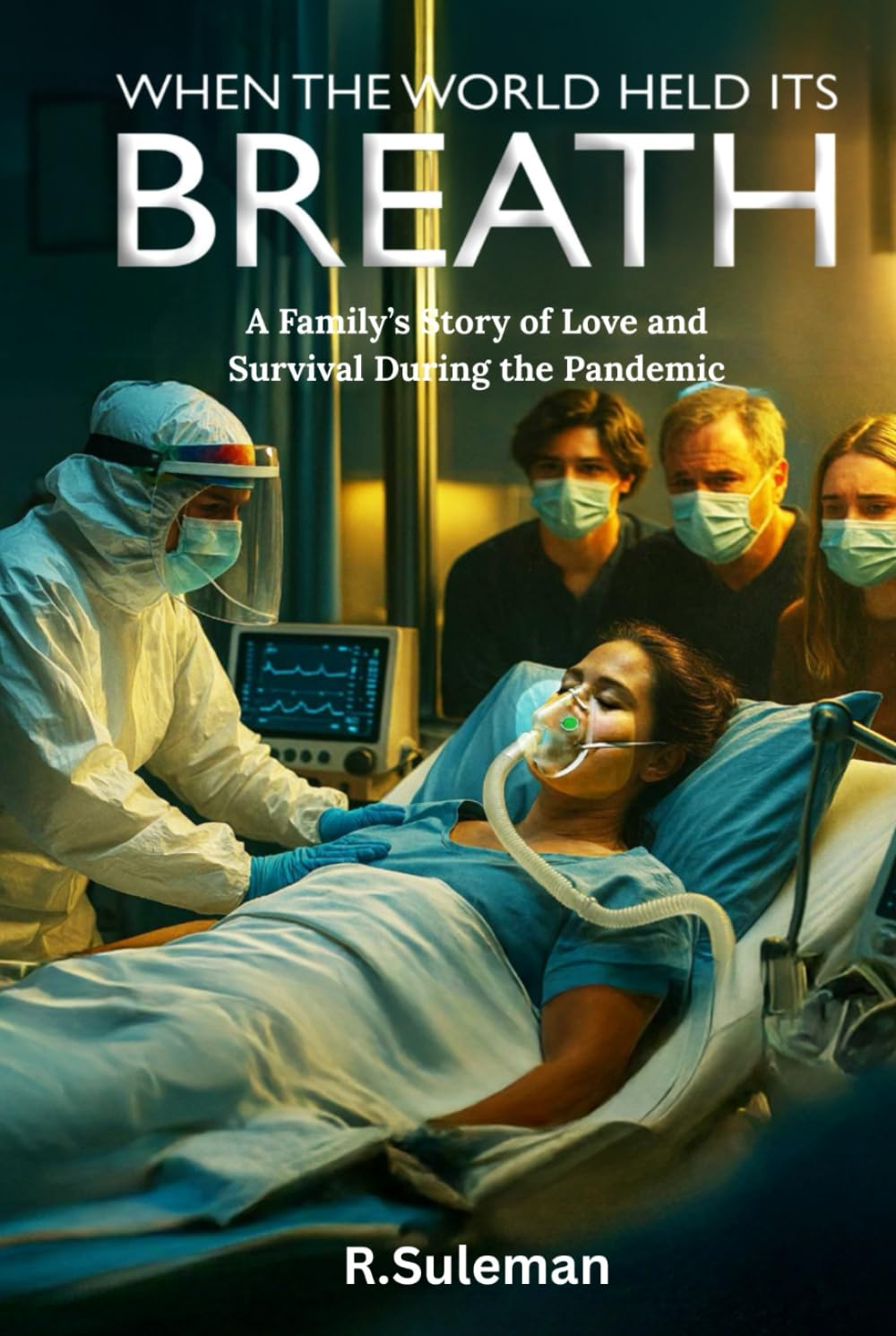

In When the World Held Its Breath, author R. Suleman tells a sweeping, close-to-home story about the Harrison family as COVID moves from distant headlines to a force that reshapes everything they thought was stable. We start with their comfortable suburban rhythm, work pressures, teenage drama, and the sense that life is busy but manageable, and then we watch that “manageable” feeling crack under lockdowns, fear, and the slow grind of uncertainty. The plot tightens around the family’s hardest stretch when Laura’s illness turns severe and she ends up in the ICU on a ventilator, leaving David and the kids in a kind of suspended, breath-held waiting room of dread and hope. By the end, the book moves toward recovery and aftermath, asking what “back to normal” even means when normal has been burned down and rebuilt. Genre-wise, this sits in contemporary family drama (pandemic fiction with a literary-leaning, emotionally driven core), and it will likely appeal to readers who liked the intimate, relationship-first approach of Wish You Were Here more than the big-society lens of Station Eleven.
I liked how committed the narration is to the day-to-day texture of a family under strain. It’s not chasing shock for shock’s sake. Instead, it keeps returning to small moments, arguments over school and responsibility, the way parents try to “be steady” even when they are scared, the way kids act tough until they don’t. There’s a steady, almost cinematic clarity in the opening domestic scenes, and that groundwork matters because later, when the world narrows to hospital glass and medical updates, you already know what’s at stake. The book sometimes leans into explanation, especially when it steps back to name what a moment “means” for society or history. That did not ruin it for me, but I did notice it. I found the story strongest when it trusted the characters to carry the emotion without summarizing it for me.
I also appreciated the author’s choices about what the book is and is not trying to do. It’s upfront that the Harrison family is fictional, and that the goal is the human response to crisis, not a clinical chronicle of the pandemic. That framing helps, because the novel keeps circling themes that feel painfully familiar: the illusion of control, the way privilege can soften the edges of life until something comes along that ignores status, and the way fear spreads faster than facts. I was especially struck by the recovery arc, not as a neat victory lap, but as a long, uneven rebuilding, with memory gaps, “brain fog,” and the strange tenderness of learning your own life again. And I liked that the book doesn’t dodge social fractures either, like vaccine distrust and misinformation, but it keeps those debates grounded in dinner-table conversations and personal consequences.
I felt the book had earned its quieter ending: a house full of people, a Thanksgiving gathering, a sense of gratitude that is not naive because it remembers exactly what it cost. I’d recommend this most to readers who want a family-centered, emotionally direct pandemic novel, especially anyone who lived through those years and is ready to look at them with clear eyes, or anyone who enjoys contemporary family dramas where the biggest battles are love, fear, and the effort it takes to keep showing up for each other. If you want a grounded story about how a crisis breaks a family open and then, slowly, helps stitch them back together, this one will land.
Pages: 380 | ISBN : 978-9699896361

Misadventures of Growing Up

Lost in Bone Cave follows a girl and her scientist father on an underground research adventure that turns her curiosity into newfound courage. Where did the idea for this story come from?
In my much younger years, we enjoyed exploring Bone Cave from the entrance inside an abandoned quarry outside Lewisburg, WV. I can assure you, the details in the pinch are quite true! I can remember wondering if the cave crawl would ever end, and the feeling of freedom you got from just getting to stand up. Almost every chapter in each book I write comes from adventures I’ve taken.
Were you a fan of adventure series as a middle-grade reader? What were some of your favorites?
I was a reader of different types of adventures. I loved Laura Ingalls Wilder and read every book in the series multiple times. Of course, C.S. Lewis and his chronicles were a favorite. For dealing with the misadventures of growing up, I’d turn to Judy Blume.
I appreciated the incorporation of educational elements into Syd’s story. What was your research process as you prepared to write this installment of the series?
Each book I write addresses a challenge our world is facing due to environmental change and its impacts. The Bat Conservation and Rescue of Virginia has a story about a bat named Lucy (my blue heeler’s name) who has White Nose Syndrome. I was hooked and wanted to know more about the deadly impacts of this disease. This was also just five years post-COVID, when we all had strong memories of breathing through a mask. It all fell into place that this would be the cause my book would hopefully draw attention to.
Where will Syd take readers in the next book? When can we look forward to seeing it released?
Book #4 in the Adventures of Syd will be released in fall 2026….Rescue on Tangier Island! Syd and her dad are off to help a fellow scientist who is working with crabbers on Tangier Island. What they don’t know when they head across the bay is that not all on the island want company, or that they will be tasked with the rescue of a furry friend.
Author Links: GoodReads | Facebook | Website | Amazon
In addition to introducing mechanical equipment and skills needed for spelunking, the story serves as a reminder of our impact on the environment and how we can be more considerate stewards of our surroundings. Vandalism is seen, and Syd is conscientious about the glow sticks she has left on the cave floor that could be littering. Readers are introduced to a caving map legend, various cave features, cave formations, and STREAM (reading added) challenge at the end.
The Cost of Remembering

The Symbol: Awakening follows a fierce prosecutor dedicated to combating violence against women who, along with her allies, fights to dismantle systemic oppression and bring justice to survivors. What was the inspiration for the setup of your story?
The Symbol: Awakening was born from real-life pain. As a Brazilian attorney, I worked for years supporting women who survived gender-based violence. I carried their stories with me, their silenced voices, their broken systems, and their quiet resilience. Eventually, those truths demanded a fictional home. The futuristic Council is a metaphor for the institutions that failed them. Louise is a mirror: she’s a prosecutor trying to do the right thing in a world that punishes those who dare to speak.
It’s not just a dystopia. It’s a cry for justice.
What were some of the trials that you felt were important to highlight Louise’s development and shape her into the woman she is now?
Louise’s development is rooted in trauma and contradiction. I wanted to show a woman who fights for justice but is also broken by the system she serves.
She loses her mother to domestic violence. She carries a symbol of resistance (the button) since childhood. She trusts the law, then watches it collapse under silence and control. Her most important trials are emotional: learning to trust again, to remember who she is, and to embrace her voice even if it puts her in danger.
Her strength is not in being fearless. It’s in being terrified and still choosing to act.
What were some themes that were important for you to explore in this book?
There are many layers, but five themes are central:
• Systemic violence against women
• Institutional silence and complicity
• The cost of remembering (trauma)
• The complexity of justice
• Hope as resistance
The book also explores power through language, memory, and surveillance. Who gets to tell the truth? Who gets believed? What happens when silence becomes law?
I wanted to write about pain, but more than that, about transformation through pain.
Where does the story go in the next book, and where do you see it going in the future?
In Book II, Louise will no longer work within the system; she will rise against it. She becomes the public voice of a growing rebellion, but that comes with consequences. Enemies will rise from both sides. The movement she inspired begins to fracture.
The second book is about navigating power without becoming what you fought against.
Author Links: GoodReads | Website | Instagram | Amazon
Since childhood, Louise has carried a button inherited from her mother, a silent symbol of resistance against tyranny and violence against women. The book follows her journey through pain, discovery, and courage as she investigates crimes, exposes the Council’s lies, and confronts deep human dilemmas. Alongside allies like Emma, Joe, and Sam — the latter a mysterious man torn between his past and a chance for redemption — Louise finds herself at the center of a plot involving conspiracies, assassinations, and the darkest secrets of power.
Space to Heal

That Kind of Girl follows an anxious and overwhelmed physician who meets a stripper-slash-therapist whose fearless confidence leaves her to question if having it all is worth the price of losing herself in the process. What was the inspiration for the setup of your story?
The inspiration for That Kind of Girl came from seeing the women around me trying to balance the chaos of demanding careers and motherhood. I started writing the book when I was a new mother trying to weave parenting into my life as a physician. I wanted to explore what it truly means to “have it all” and the toll it can take on a woman’s sense of self. The dynamic between the anxious physician and the fearless stripper-therapist is a way to highlight different approaches to confidence and self-acceptance. Ultimately, my hope is to inspire women to find something they love—something that grounds them and brings joy—amidst the overwhelming demands of their lives. It’s about rediscovering yourself when the world expects you to be everything to everyone.
Opal’s struggles with balancing a career, marriage, and family are relatable to many women today. Are there any emotions or memories from your own life that you put into your character’s life?
Absolutely. I often pull emotions from real life into my writing. I want the reader to experience the wide range of emotions they find on the page, often messy, but most of all the joy and levity that comes with not having to do this alone. One memory from my own life that made it into the book was writing a text message filled with four-letter words about my boss and accidentally sending it to my boss instead of my husband.
What were some themes that were important for you to explore in this book?
One of the core themes I wanted to explore in That Kind of Girl is that a person is never just the sum of their past mistakes. We all carry regrets and moments we wish we could change, but those don’t define us. Redemption, I believe, truly begins with forgiving yourself—allowing space to heal and grow beyond what’s happened. Through the characters’ journeys, I wanted to highlight that self-forgiveness isn’t easy, but it’s essential for reclaiming your sense of worth and moving forward with courage and hope.
What is the next book that you are working on, and when can your fans expect it to be out?
Turbulent Skies is about a woman days away from her wedding when her fiancé has an accident that leaves him on life support. Things go from bad to worse when his ex shows up and reveals they never legally divorced, she has medical decision-making power, and she wants to pull the plug. The book is expected to hit shelves in 2026.
Author Links: GoodReads | X (Twitter) | Facebook | Instagram | Website | Amazon
Will she sacrifice herself to keep everyone she loves happy?
Doctor Opal Collins is anxious and overwhelmed. So when her husband threatens to leave her
unless she finds the time to add a baby to the chaos, she digs deep to impress her boss and earn a
sanity-saving promotion. And though she’s excited by the spark between them, she knows she
should be offended when her boss suggests she trade her body for the job.
Thrilled when she earns the coveted position after setting boundaries in their scandalous affair,
Opal’s complicated dual relationships have her humming with tension. But with the tangled web
of deceit and affection already woven, she fears there’s no way out without betraying her vow to
do no harm.
Has her people-pleasing persona destroyed her dreams, or can she cling to a vestige of self?
That Kind of Girl is a wickedly witty work of women’s fiction. If you like emotional tension,
laugh-out-loud humor, and beautifully crafted prose, then you’ll adore Jacey Bici’s unexpectedly
sweet journey.
Out of the Crash
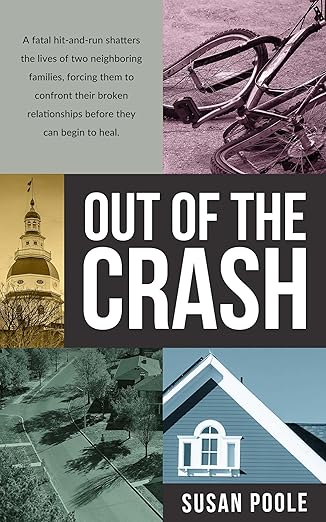
Susan Poole’s Out of the Crash is a riveting novel that begins with a sudden tragedy and spirals into an emotional reckoning for two families in the small town of Shawnee Springs. Caroline Beasley, a breast cancer survivor and bestselling author, returns from a motivational speaking event only to find her son Kyle in a tailspin. At the same time, Ethan Shawver, a high school senior, learns that his beloved mother, Amy, has been fatally struck by a car while biking, a car driven by Kyle. The book follows the emotional fallout, not just from the accident itself, but from the long shadows of grief, guilt, and family strain that it casts. Told through alternating perspectives, it weaves a tense and heartfelt portrait of trauma and how lives can fall apart and rebuild after a single moment.
I was completely pulled in by Poole’s style. Her writing has a natural rhythm, unforced and full of small, familiar details that make the characters feel like people I know. The dialogue felt real, awkward, warm, and messy, and the use of social media and group texts to open the story made it like something from the present day. Caroline’s complicated: resilient but vulnerable, confident but riddled with guilt. Watching her struggle with motherhood, ambition, and marriage felt all too real. Ethan’s side of the story was just as gripping. His pain was raw, unfiltered. The scene when he finds out about his mother’s death actually made me tear up. There’s something honest in how Poole handles grief. Not in a grand way, but in the everyday chaos it causes.
The middle dipped slightly as characters circled the same emotions, and I found myself wanting more movement in the plot. But then again, real grief doesn’t follow a tight arc, and maybe that’s the point. The book is strongest when it focuses on the interior lives of its characters. It doesn’t rely on big twists. It leans into emotional honesty, which is brave and a little brutal. There are moments when I didn’t like the characters much, Kyle’s denial, Jordan’s detachment, Caroline’s self-righteousness, but I never stopped caring about them. That’s the magic. Poole makes it hard to look away even when things get uncomfortable.
I’d recommend Out of the Crash to readers who appreciate layered family stories that don’t shy away from hard truths. If you liked Little Fires Everywhere or Ask Again, Yes, this one will be right up your alley. It’s a book for people who aren’t afraid to sit in the middle of the storm and wait for the quiet to come. And if you’ve ever been a parent, a child, or someone trying to hold it together when your world is falling apart, this story will resonate with you.
Pages: 291 | ASIN : B0F89DSZHM
Paraclete Hills Vacation Bible Camp: Prayers, Praise and Perfect Pranks
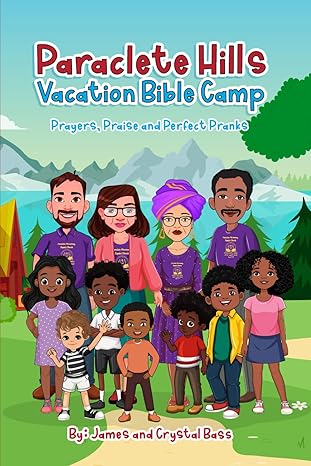

Paraclete Hills Vacation Bible Camp, by James and Crystal Bass, is a sun-drenched, laughter-laced ride through summer camp. It follows six lively kids—Annabelle, Ariel, Zion, Bo, and twins Big Jay and Little Jay—on their hilariously mischievous, often heartwarming journey of faith, friendship, and epic pranks. Through silly escapades like fart-sounding balloons in Bible class and googly eyes on school supplies, they explore what it means to grow, learn, and bond in ways that go beyond marshmallow roasts and canoe races.
I loved how genuine this story felt. The kids aren’t perfect. They make a mess, push boundaries, and pull off pranks that would give any camp counselor pause. But they’re never cruel. Their balloon prank during Pastor Coleman’s Bible lesson had me laughing. But even better was how the adults handled it—with humor, a touch of wisdom, and a good-natured lecture that turned the chaos into a lesson about kindness. That balance—fun without meanness, correction without scolding—made this more than just a goofy camp story. It felt real. Like a place I wish I’d gone to as a kid.
Then there was the moment Micah the Menace arrived. A toddler armed with the appetite of a vacuum and the tantrum power of a hurricane? Genius. But it wasn’t just for laughs. The counselors flipped the script on the pranksters. Watching the kids learn humility through a pint-sized storm named Micah was both hilarious and surprisingly touching.
As the story moved into the later chapters, especially “The Apology and Making Amends” and “A New Kind of Fun,” it honestly got me a little misty-eyed. The kids’ decision to write apology letters and then organize a camp-wide talent show? That hit home for me. It reminded me of how we grow up in spurts—first we laugh, then we reflect. That campfire scene, with everyone clapping and singing, wrapped the whole thing up in the best way possible—warm, sincere, and full of love.
If you’re a parent, a youth group leader, or anyone looking for a story that teaches lessons without preaching, Paraclete Hills Vacation Bible Camp is a treasure. It’s especially perfect for middle-grade readers who want humor with heart. Think Diary of a Wimpy Kid meets Sunday school. This book made me laugh, smile, and think, and I’d happily recommend it to anyone who believes that joy, mischief, and growth can all live in the same chapter.
Pages: 58 | ISBN : 978-1963737837


