Blog Archives
Quiet Revelation

The Soul Octopus Analogy is a spiritual meditation that uses the image of an octopus to rethink the soul, reincarnation, the afterlife, past lives, and the mystery of human suffering. What first inspired the image of the octopus as a metaphor for the soul?
The octopus came to me as an image long before I understood why. It surfaced in a moment when I was trying to make sense of why a single human life feels larger than its own story – we carry memories that seem older than our years, emotions that feel inherited from somewhere unseen, and intuitions that arrive like echoes from another room of the self.
The octopus offered a kind of quiet revelation. One being, many arms – each exploring its own path, each sensing its own world. I recognized something essential about the soul: its multiplicity, its extensions, its ability to live many experiences while remaining one consciousness.
The octopus image was offering a lantern from the deep, crystallizing how the soul moves through existence with many gestures at once. In its presence, I recognized that consciousness is not a single flame but many lights, each reaching outward to touch a different corner of experience.
The octopus metaphor didn’t feel invented. It felt remembered. As if that ocean creature had always been a map of the soul’s architecture, waiting for someone to notice.
How does your understanding of reincarnation differ from more traditional beliefs?
I see reincarnation as a widening, not a returning. Traditional views imagine a soul stepping from one life to the next, like pages turning in a long book. My impression is quieter and more fluid: one soul extending itself into many lives at once, each a living arm of the same consciousness.
In this view, past lives are not behind us – they are beside us, moving in parallel, learning in their own landscapes. What we feel as intuition or Deja vu may simply be the faint ripple of another limb of the same soul brushing against our awareness. Reincarnation becomes less a cycle and more a constellation of experiences held by one center.
How do you respond to readers who approach the book from a skeptical perspective?
I welcome skepticism. The Octopus Analogy was never meant to be a doctrine. It is a metaphor – a way of seeing the soul that can be held lightly, exploring gently, or set down without consequence. Skepticism is simply another form of curiosity wearing a cautious coat.
I tell readers that they don’t need to believe in the metaphor for it to be meaningful. They can treat it as a thought experiment, a symbolic map, or a quiet invitation to consider the possibility that the self is larger than it appears. If the image resonates, wonderful. If it doesn’t, the reader still engaged in a new way of thinking, and that alone has value.
Are there aspects of consciousness or spirituality you hope to explore in future books?
That’s a particularly good question – because there are many to explore. The Octopus Analogy opened one chamber of the soul’s architecture, but there are others – the nature of intuition, the origins of memory that feel older than our years, the quiet mechanics of suffering and how it shapes the evolution of the self.
I want to explore the coherence of spiritual identity: how souls remain whole while expressing themselves through many lives, relationships, and emotional histories. I’m drawn to the role of Spirit Guides – not as mystical beings, but as structural companions within the soul’s larger system of learning.
Future books will continue mapping these unseen geographies. Not to offer answers, but to enlarge our understanding of consciousness and the subtle ways our inner lives may be far more expansive than we imagine.
Author Links: GoodReads | Amazon
In The Soul Octopus Analogy, readers are invited on a journey that is part story, part meditation and part mirror. This is not a book of easy answers – it is a philosophical fiction that asks us to sit with questions that shape our lives, identity, grief, memory and the shifting currents of transformation.
Through imagery and imagination, the narratives explore how we come to know ourselves in a world that constantly remakes us. The Octopous – fluid, elusive, and infinitely adaptable – becomes a living metaphor for the human condition; stretching into the unknown,retreating into the shadows, and surfacing with new forms of meaning.
This is a book for readers who crave depth, who want fiction that lingers after the last page. It is a voyage where philosophy and story interwine and where readers may find a reflection of their own hindden chambers.
The Octopus Analogy – The Soul’s Endless Dance Across the Web of Creation


The Soul Octopus Analogy is a brief but expansive spiritual meditation that uses the image of an octopus to rethink the soul, reincarnation, the afterlife, free will, soulmates, past lives, and the mystery of human suffering. Bud Megargee imagines the soul not as a single traveler moving neatly from one lifetime to the next, but as a vast, many-limbed consciousness whose tentacles may live, learn, wound, heal, and remember across different times and dimensions. The book moves through that idea with a kind of dreamy insistence, from the “Chamber of Threads,” where a soul reviews love, fear, peace, hate, divine intention, karmic events, and the overseer, to later reflections on soul guides, time slips, near-death experiences, and the strange mercy of beginning again.
The octopus metaphor could have felt gimmicky in less sincere hands, but here it becomes a surprisingly elastic vessel for questions that are difficult to hold in ordinary language. I found the sections on the blueprint of a life and free will especially affecting because they give pain a shape without reducing it to punishment. The example of abandonment as a wound that might lead someone toward bitterness, therapy, or healing work felt emotionally honest to me. I don’t need to accept every metaphysical claim literally to appreciate the compassion inside the idea. The book keeps returning to the possibility that our lives are not random debris, but neither are they locked scripts.
The writing is at its best when it leans into image and atmosphere. I liked the way Megargee asks the reader to “pack light but pack deep,” to bring questions rather than answers, and to imagine the afterlife as an ocean rather than a fortress. There’s a lyrical, almost trance-like quality to those passages, and the recurring language of tides, threads, vibrations, and chambers gives the book a distinct inner weather. The discussion of evil as unintegrated pain is moving and humane, but I wanted a deeper wrestling with the real brutality of suffering. Still, I admired the book’s willingness to be strange. It doesn’t apologize for its mysticism, and that gives it a certain fragile courage.
I came away from The Soul Octopus Analogy feeling both challenged and quietly soothed. It’s rewarding for readers willing to sit with metaphor as a doorway into reflection. Its conclusion leaves the soul feeling less like a fixed object and more like a living current, unfinished, porous, and deeply connected to others in ways we may only sense in flashes. I’d recommend it to spiritually curious readers, seekers drawn to reincarnation and afterlife speculation, and anyone who enjoys reflective books that treat mystery not as a problem to solve, but as a companion to walk beside.
Pages: 92 | ASIN : B0H1PFXZ1H

I’m on Assignment! – An Alternate View of Past Lives, the Impact on Our Current Lives, Soul Mates, World History, and the Akashic Records


In I’m on Assignment!, Diane Marie Taylor blends spiritual memoir, metaphysical inquiry, and personal testimony into an unconventional exploration of reincarnation, soul mates, karma, cell memories, the Akashic Records, and the hidden continuity she believes links individual lives across centuries. The book moves from practical reflections on life purpose and forgiveness into deeply personal material, including her mental health struggles, her frightening COVID-19 hospitalization, her working-class childhood, motherhood, divorce, and her conviction that past lives, including connections to the House of Bourbon and Marie Antoinette’s world, shape the patterns of the present.
Taylor writes with a startling lack of varnish, and that directness gives the work much of its pulse. Her account of COVID-19, especially the moment she arrives at the emergency room and realizes her body may no longer be under her command, has a raw, lived-in terror that stayed with me. I also appreciated how often humor becomes her lantern in dark rooms. She can move from grief, suicidal ideation, or family pain into a line so earthy and mischievous that the whole page suddenly exhales. That tonal risk may not work for every reader, but for me it made the voice feel unmistakably human, less like a polished lecture on spirituality and more like a long, bracing conversation with someone who has survived enough to stop pretending.
I found the central metaphor of life as an “assignment” genuinely useful, especially in the way it reframes hardship as experience rather than punishment. Her discussions of forgiveness and karma are at their strongest when they turn away from abstraction and toward moral responsibility, urging the reader not to confuse justice with revenge or pain with identity. The historical reincarnation material is the most polarizing part of the book. Taylor’s claims about recognizing souls from the French court, Marie-Thérèse, Diane de Poitiers, and others are presented with conviction, and I found myself reading those sections as a deeply personal spiritual map.
I finished I’m on Assignment! with a sense of having encountered an author who isn’t merely explaining a belief system, but offering the architecture of how she has survived her life. Its sincerity gives it a radiance. I’m on Assignment! is best suited for readers open to metaphysics, reincarnation, Akashic Records work, and spiritually framed memoirs, especially those who appreciate humor braided through pain. It’s an intimate, unruly, and often affecting book, and I’d recommend it to readers who are willing to meet it on its own personal terms.
Pages: 166 | ASIN : B0DFLPCLFD
Lord, Lord – a heavenly mystery
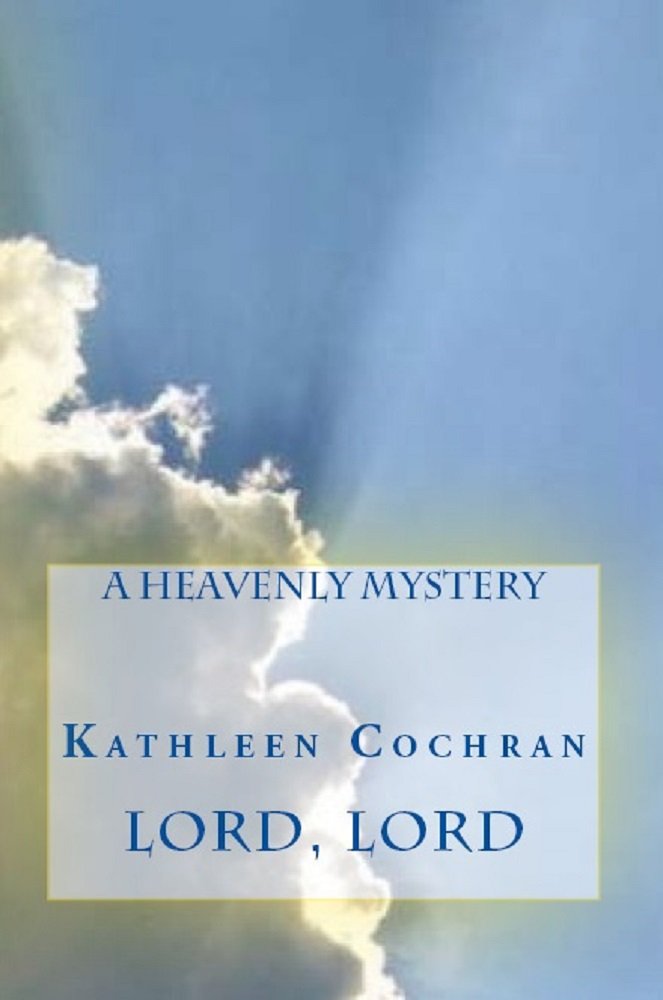
Lord, Lord – a heavenly mystery tells the story of Liza, a small-town reporter who suddenly finds herself in Heaven after her untimely death. What follows is not a harp-filled, cloud-floating afterlife but a layered, curious introduction to eternity where angels sip tea, Heaven looks like an Ivy League dean’s office, and “tourists” are given soft landings before judgment. Through conversations with Michaela, her welcoming angel, Liza begins to unpack her life, her choices, her loves, and her mistakes, all while navigating the strange mix of humor and gravity that this version of the afterlife offers.
Author Kathleen Cochran writes with a conversational ease, almost like sitting down with a sharp-witted friend who isn’t afraid to poke at your doubts and faith. The dialogue carried most of the story, and it was both quick and playful, though sometimes it wandered so much I caught myself rereading passages to stay grounded. Still, there were moments that stopped me in my tracks, like when Michaela explained the Bible as a kind of recruiting tool.
Liza’s questioning sometimes circled back on itself, and a few of the explanations felt a little more direct than I expected. Still, the story would then shift into a tender memory or drop in a line of humor that caught me off guard in the best way, and those moments made me appreciate the guidance rather than resist it. The balance between skepticism and belief felt real. I never doubted Liza’s cynicism because it sounded so much like my own inner voice when I wrestle with faith.
By the end, I felt like I’d been through both a lighthearted play and a quiet sermon. It isn’t a book for someone who wants tidy theology or a straight path to answers. It’s better suited for readers who like their mysteries with a side of laughter, who don’t mind Heaven being described with Persian rugs and Waterford lamps, and who want to explore faith without losing the messiness of doubt. I’d recommend it to anyone who enjoys thought-provoking fiction with a spiritual edge, especially if they don’t mind a story that feels more like a conversation than a plot-driven march.
Pages: 168 | ASIN : B0161ZHCWQ


