Blog Archives
On A Sundown Sea: A Novel of Madame Tingley and the Origins of Lomaland


When I first closed the final page of On a Sundown Sea, I sat with the feeling that I had been walking alongside Katherine Tingley, a woman caught between the raw struggles of the 19th century and her own restless visions of something more. The novel takes us through New York’s crowded tenements, the snowbound Great Blizzard of 1888, and finally into the swirl of spiritualism, social reform, and theosophy that defined her life. It is a story of Katherine’s yearning for justice, for connection, and for the dream of a golden city by the sea where harmony might prevail.
What struck me first about this book was how alive the writing felt. The historical detail pulled me in, yet it never read like a lecture. The voices of the poor at the mission, the creak of an empty bread cart, even the sound of a baby crying outside in the cold stayed with me. I admired the way author Jill G. Hall let Katherine be complicated, fierce and brave, but also vulnerable, flawed, and often unsure. The visions Katherine experiences could have been written as distant or mystical, but instead they felt immediate and human, even tender. I could sense her exhaustion, her longing to believe they meant something.
There were moments when the pacing slowed, especially when the story lingered on Philo’s inventions or the details of household frustrations. I found myself wanting to move back to Katherine’s work at the mission or her encounters with William Q. Judge, which carried a spark. Yet in a strange way, even these slower stretches made me feel more connected to Katherine, because life itself rarely moves in clean arcs of drama. It’s messy, filled with distractions, petty disappointments, and small betrayals, and the novel captured that truth.
I came away deeply moved by Katherine’s journey. Her search for meaning felt familiar to me, and I imagine it will resonate with many others who’ve ever wondered if they were meant for more than the roles life handed them. I would recommend On a Sundown Sea to readers who enjoy historical fiction rooted in real social movements, but also to anyone who loves a story about resilience and the desire to build a better world. It is a thoughtful, heartfelt novel, and though it is set in the past, it left me thinking about the present in fresh ways.
Pages: 384 | ASIN : B0DV6T8P8M

Seasons in Manana

Seasons in Manana tells the story of Alan Cook’s childhood years in Hawaii during the early 1970s. It mixes memories of baseball, schoolyard lessons, friendships, and family life with the shadow of darker cultural forces at the time, including counterculture unrest and the infamous Patty Hearst kidnapping. Baseball runs through the book like a backbone, but so does the tension of being a young outsider learning how to belong in a place that’s both paradise and something more complicated. What begins as a nostalgic recount of sandlot games and Little League gradually unfolds into a narrative with loss, trauma, and the bittersweet pull of memory.
Reading it, I felt a lot of warmth for the way Cook captures childhood. The thrill of hitting a ball over the fence, the pride of finding your place on a team, the confusion of first crushes and cultural clashes. The writing is simple and straightforward, yet it carries weight. At times, I laughed out loud, especially at the awkward moments with teachers, neighborhood kids, and those backyard fields of dreams that turn into battlefields. Other times, I found myself sitting with the heaviness of tragedy, the way innocence bumps up against a world that isn’t always kind. The book doesn’t try to polish everything. That makes it more real, and it pulled me in deeper than I expected.
What I also appreciated is the honesty in how Cook admits his own shortcomings and misconceptions as a kid. It’s not just sports fiction, though the baseball parts are excellent; it’s also a reflection on identity, on being the “haole” outsider, and on the cultural shifts of the 70s. The mix of humor, nostalgia, and darker threads keeps the story from ever being flat. Sometimes the pacing wanders, but even then, I didn’t mind. It felt like sitting with someone who tells stories the way they come, with tangents and side notes that only add to the charm.
I’d recommend Seasons in Manana to anyone who loves baseball stories, but also to readers who enjoy coming-of-age tales set against vivid backdrops. It’s great for people who grew up in military families, or who know the strange feeling of belonging everywhere and nowhere. If you like fictional memoirs that balance nostalgia with honesty, this book is worth your time.
Pages: 257
Daughters of Havah: Matriarchs of the Messiah Vol. 1
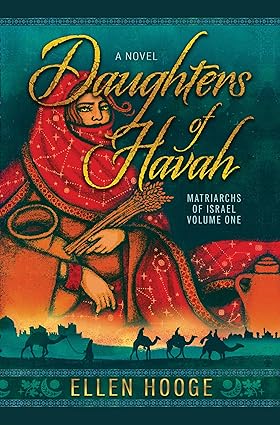
From the very first chapter, Daughters of Havah pulled me into the lives of women who have long stood in the shadows of biblical stories. Author Ellen Hooge gives voice to Sarah, Rivkah, Le’ah, and Tamar, letting them speak in their own tones, with their own desires, doubts, and fierce hopes. What might have been footnotes in scripture become flesh-and-blood portraits. These women are no longer silent; they are complicated, flawed, and yearning, moving through dusty tents, sacred groves, and perilous journeys. It is history, imagination, and scripture braided together, and it reads both like an epic novel and a meditation.
I found myself surprised by how personal the writing felt. The prose is vivid and full of sensory detail, and there’s a rhythm to it that sometimes feels almost like oral storytelling. At moments, I was swept up by the beauty, almond blossoms, desert winds, the hush of a Presence in the night. Other times, I bristled at the starkness of choices made by men, the bitterness of barrenness, the violence and betrayal. Yet that tension is exactly what made it powerful for me. It didn’t smooth over the rough edges; it sat with them. I appreciated how the book never tried to modernize these women but instead let them breathe within their own world.
What also struck me was the emotional honesty. The women rage. They question God. They long for love and for children. They despair, and they laugh again. I could feel my chest tighten when Sarai spoke of being bartered away in Egypt, and then I could feel warmth when she walked with Avram under the almond trees. These aren’t distant holy figures; they are painfully human, and in that humanity, I felt something deeply sacred. Hooge’s style makes you stop and think about your own life, about pride and faith, and how we tell our own stories. At times, the language is almost poetic, at times blunt, but it always rings with truth.
This isn’t light reading, but it is rewarding. I would recommend it especially to readers who love historical fiction that dares to wrestle with faith, culture, and the inner lives of characters too often left voiceless. If you enjoy novels that make you feel as much as they make you think, and if you like stories that root themselves in history yet speak into the present, then you’ll enjoy Daughters of Havah.
Pages: 302 | ASIN : B0DPVSQZBQ
Interior Demons

The Reluctant Womb is an emotional novel about three women whose lives are shaped by love, loss, and the brutal lack of reproductive freedom in the decades before Roe v. Wade. This seems like a very personal story for you. How hard was it to put this story out in the world for people to read?
It wasn’t hard at all. It just seemed the right story to tell. Roe v. Wade had just been overturned, and women were facing the same problem today that women faced when the events in this story took place. One of the women, on whom the character of Thea is based, had recently sent me copies of the letters she’d received from Chris in 1963, and I felt compelled to include some of them in the story, so Chris’s actual voice could be heard. I began to see parallels—how the three women’s (“girls” in those days) own birth stories influenced who they became as young women, and the choices they made. The actual stimulus for writing it came from someone in a movie group I belong to. We’d just watched a film about a 17-year-old girl who seeks an abortion. One woman thought it was unoriginal. I began telling her the story of my two friends who got pregnant in 1963, and by the time I’d told her a few facts about their situation, the woman broke in saying, “Now that’s a movie I’d love to see!” I couldn’t write a script, but I could tell the story, fictionalized. That’s actually what pushed me to begin writing. Most of the story is fiction, built around facts and educated guesses.
There was a lot of time spent crafting the character traits in this novel. What was the most important factor for you to get right in your characters?
The most important thing for me was to get right was how much these three women cared about each other. After that, I wanted to distinguish them by other characteristics—the type of family they grew up in, what they looked like, their values, their various strengths, their interior demons. Having known them both, this wasn’t difficult.
What were some themes that were important for you to explore in this book?
Obviously, the main theme is the difficulty of unwanted pregnancy presented for women pre-Roe v. Wade. But also the central themes facing young adults in the 1960s: the Bomb, Civil Rights and interracial relationships, the Vietnam War, and the widespread appearance of drugs. Also, the Pill, which presented a struggle for many young women who’d been taught to remain a virgin until their wedding night.
What is one thing that you hope readers take away from The Reluctant Womb?
I think the one thing I want readers to take away is that, although abortion should be legal, it is not a simple solution. And neither is adoption. I tried to show this in the character of Chris, who was tormented by not knowing who her birth parents were and choosing abortion to end her pregnancy rather than having her child adopted. With Thea, I tried to show it with the daughter she reunites with nearly fifty years later, when she hears her daughter’s story. But primarily, I tried to show it when Cilla learns she was nearly aborted (which is my own story), and has to struggle with her pro-choice stance and the fact that she helped Chris through her abortion. It brings home to Cilla that her life would have been destroyed if her mother had succeeded. This is, in my opinion, the moral core of the story. Her resolution, that, because it’s impossible to choose between the rights of the mother and those of the fetus, that neither has more “rights”—means that the government has no business making a law making abortion illegal. But this also means that, if fully realized, it’s the most painful decision a pregnant woman will ever make. My more grandiose hope, I suppose, is that this book will help to narrow the chasm between those rigidly opposed to abortion and those who feel it is a woman’s right to choose.
Author Links: GoodReads | Facebook | Kirkus | Website | Amazon
In 1963, three college friends at the University of Michigan are on the cusp of adulthood, full of dreams and discovering their place in the world. But when two of them become pregnant, they face an impossible reality: abortion is illegal, birth control is hard to come by, and society is quick to judge.
Set in the years before Roe v. Wade, The Reluctant Womb follows these young women as they grapple with love, shame, secrecy, and the consequences of choices no one should be forced to make alone. Against the backdrop of the sexual revolution, shifting gender roles, and political unrest, their stories illuminate the emotional and societal weight of unplanned pregnancy in a time when women had little agency over their own bodies.
Based on true events and written by one of the women who lived them, Pamela Blair’s novel is both a poignant coming-of-age story and a timely reminder of how much—and how little—has changed.
For readers of historical fiction, women’s fiction, and memoir-style novels, The Reluctant Womb is an unforgettable story of resilience, friendship, and the fight for reproductive freedom.
A CHOICE THAT WASN’T A CHOICE
I Just Start Typing

Hunting the Red Fox follows an aspiring writer who is collecting interesting life stories, who winds up interviewing a smooth-talking Southern gentleman with a lifetime of secrets to tell. What was the inspiration for the setup of your story?
I decided early on that I wanted the story to revolve around a fictional character during the 1950’s who was first and foremost a gentleman in the traditional, grandest manner in which that term used to exist. I also wanted him at his core to be one of the “strong, silent types” as they used to be called. I wanted a guy who was recognized by others as a “man’s man” and “ladies’ man,” in a non-piggish sort of way, without a hint of ego or self-promotion. Above all, Perry had to be likeable.
Also, I wanted in the character of Perry someone who was very good or above average at virtually everything he did without being the best at anything. At the same time, I didn’t want everything he did to necessarily be good. I wanted him fundamentally to be principled and seek to do good and right even if that was not technically the legal course of action. In other words, I wanted the internal struggle between the right thing to do and the legal thing to do. The last thing I wanted Perry to be was someone who was flawless. Quite the contrary as it turns out.
Lastly, I wanted a character who seemed by circumstances mostly out of his control to plausibly meet the most bewildering array of real folks or pop up in the oddest of places throughout the 1940’s and 1950’s.
Was there anything from your own life that you put into the characters in your novel?
Let me start out by saying that no character in the book is a take-off of anyone in real life. They are all figments of my imagination. I’m sure most of them are cobbled together pieces of real folks from my own life experiences but I didn’t take any one person in my life, change the name and insert them into the fray.
I did, however, use the name of a few deceased family members sort of in tribute to them. For example, my mother’s maiden name was Mace. Hence, Roger Mace, the aspiring writer. My father’s father was named, believe it or not, Solomon Goldsborough Tyler. Hence the jeweler in Savannah named Solomon Goldsborough.
Having said that, to a limited extent my father served as a partial inspiration for Perry Barnes but only as it relates to the time in which he lived. My father was born in 1925 which coincided almost exactly with Perry’s age because that was the time frame I wanted to cover in the book. Using my father as a reference for timing made it easier in affixing dates to the happenings in the book. My father was a great man in my mind. However, Perry is not at all based on my father.
There were no other real-life figures who inspired Perry unless you consider where I got his first name to be “real life.” I have always been a tremendous fan of the old Perry Mason series. I suppose I borrowed the main character’s first name from this fictional television character. The rest of the traits or characteristics of Perry Barnes are an amalgam and/or composite of qualities and features contrived in my mind.
When you first sat down to write this story, did you know where you were going, or did the twists come as you were writing?
In a big picture sense the direction of the narrative from the beginning was always intended to be a work of fiction. Plain and simple. I was going to make it up. All of it.
Gradually, over the course of an hour, before a word was committed to paper, this morphed into a work of historical fiction. As such, by definition, the totality of the story was going to involve mistily melding fictional characters, times and places with real people, times, events and localities in a plausible way so the reader can’t immediately discern fact from fiction. On some level the book was successful at this because I have had more that one person relay to me that they spent more than a little time researching while reading to figure what was real and what was made up.
I think it’s important to understand that this was my first attempt at writing a book. I didn’t know how to write a book. So, I made an outline of about three or four ideas for character names and a potential story line in the briefest of terms. I don’t know about others, but I found out quickly that’s not how I write. It’s not really a conscious thing with me. I can’t sketch out a story in advance then try to write to that plan. I sit down at a computer and simply type and attempt to describe the movie that is playing in my mind. My fingers often have a difficult time keeping up with what I see in my brain in picture form.
When I start typing at the top of a page, I literally have no plan or idea as to what may fall out of my head by the end of the page. This often results in characters, events or places that had not previous come to mind on any prior level. I can’t explain it more simply than that.
Oddly enough, the thing I was most concerned about in the beginning was my ability to write dialogue between characters. Once I started typing the motion picture scenes playing in my head the conversations were simply there and seemed to write themselves. I just tried to write how people speak in real life. I think my second book benefits from this “technique” even more because it is more dialogue driven. I’m only a third of the way through book number three and I think that may be true for that one as well.
Back to that very first day. I sat down to start this book I stared at the first line of the first page and eventually, without any other preconceived plan in place, typed out “The last jewel heist of my career was the biggest and best by far – the Mecklenburg Diamond. Ever hear of it?” It was an effective attention grabber. To this day I don’t know where that came from.
I liked it. That one line led me to create a conversational narrative between Perry and Roger Mace whereby the story was going to be revealed more or less in a confessional style. It was also going to involve at least one jewel theft from which I thought I could build some action and tension in the story.
This sentence also gave the impression that Perry was something he really was not in the end: a bad guy, desperado, rogue, habitual criminal, etc. The eventual story would set the record straight on that score and Perry was later revealed to be more of a Robin Hood type thief, not that it makes things any better I suppose but I think the readers think otherwise.
From that first day forward I ditched any preconceived plans or ideas and just typed the movie playing in my head. I don’t consciously feel inspired, happy, melancholy or any host of other emotions while I write. I don’t try to include any messages, hidden motivations, build tension or have an agenda of any kind. My head fills with ideas while my fingers struggle to get it all down on paper before the thoughts and pictures vanish, which they eventually do. I do go back numerous times to edit the text naturally but it’s less about content than grammar, word choice or phrasing.
What is the next book that you are working on, and when can your fans expect it to be out?
I have written a second book that has been completed since November 2024. My publicist wisely told me to let it sit on a shelf until Hunting the Red Fox has had a chance to run its course. It most likely won’t be out until this time next year for that reason.
This second novel, called “An Invitation to My Past,” is a time travel story taking place back and forth mostly between current days and the late 1970’s. At the time I shelved that novel this past November, I felt the narrative was at least as captivating as Hunting the Red Fox. It is mostly a love story with a palpable level of tension related to the consequences of the time travel. I believe I got better the second time around and the writing is tighter, and the relationships are compelling and entirely believable.
A third novel is about a third of the way done. I can’t exactly tell you yet what this is about because my brain hasn’t yet shown my fingers the entire movie of the story.
I have also received numerous requests from readers of Hunting the Red Fox for a sequel. Significant consideration is now being given to a potential sequel which is going to wreak havoc with my tee times and ongoing retirement.
Author Links: Facebook | Website | Email
All the while he is befriended by the most bewildering array of characters, some real, some not, who add marvelous vignettes of clever humor, situational intrigue, and steamy romance as he earnestly pursues the one goal he covets most: finding true love, martial companionship and family.
Demons Were Banished
Storms is a heartfelt coming-of-age tale where eight-year-old Annie Ryan faces the emotional turbulence of family, loss, and identity during a storm-ridden caravan journey across 1970s Australia. What inspired you to tell this story through the eyes of an eight-year-old?
I felt that it would have more of an impact if it were told by the person who was the same age, rather than as a retelling from the benefit of the perspective of age. These events happened to the child, not the adult, and as time passes, we tend to gloss over events. I didn’t want that for Annie. These events were real for her, and they needed to remain that way.
How much of Storms is drawn from your own life, and what was the most difficult part of the book to write emotionally?
The book is a fictionalised account of my own experience as an 8-year-old travelling in a caravan with the rest of the family. Most of the events are real, with a few exceptions. For example, my stepfather didn’t die until I was pregnant with my fifth child; however, in Storms, he does meet an untimely end. The most difficult part to write emotionally was the sexual assault scene. My original draft had it all in graphic detail, but this was for my own benefit and was my way of expunging the event from my life. I was then able to sit back and write it so that it would still have an impact, but the graphic detail was no longer there. Although it was emotionally draining to write, it was also cathartic, and those particular demons were banished.
The metaphor of storms is used throughout. Was that a conscious framework from the start, or did it evolve as you wrote?
Yes, indeed it was. It was a stormy time from the perspective of the weather, which became a metaphor for the events of the whole year. Just like storms have their calm centres, so too did that year. This only made the turbulence of the key events stand out more. And like all storms, the storms of that year did end in rainbows and sunshine – literally and figuratively!
What is the next book that you are working on, and when will it be available?
That’s a very good question! I find myself at a bit of a standstill now, overwhelmed by all the stories I have in progress, and unable to focus on just one. I’d like to write Annie’s sequel, Snake in the Grass, and will do that soon. Before that, though, I hope to have a collection of Private Investigator/Detective stories ready for May 2026, but I will have to get a move on if I am to do that!
Author Links: GoodReads | X (Twitter) | Facebook | Website | TikTok | Amazon
Leaving their home in Brisbane, Australia, at the height of the 1974 floods during intense cyclonic weather, the Ryans set off on their epic journey, traveling ahead of the storms everywhere they go.
But storms of the heart are more difficult to navigate, and Annie faces more tragedy and heartache in this one year than a young girl should in a lifetime.
Award-winning author, Phoebe Wilby, was raised in Australia. She has lived in several countries and considers herself a ‘citizen of the world’.
Storms is her debut novel, following two short story collections and a memoir.
Hunting the Red Fox

W. Kenneth Tyler, Jr.’s Hunting the Red Fox is a captivating blend of memoir, oral history, and tall tale, centered around a fictionalized interview with Perry Barnes, a smooth-talking Southern gentleman with a lifetime of secrets to tell. What begins as a simple attempt by aspiring writer Roger Mace to collect interesting life stories quickly evolves into something much bigger: an odyssey through a shadowy past involving golf legends, World War II covert missions, romance, betrayal, and an alleged jewel heist. Framed by Perry’s recollections, the book unfolds like a front-porch storytelling session, rich with charm, exaggeration, and confessional wisdom.
I was drawn in by the writing. Tyler has a real ear for voice. Perry Barnes feels so authentic, I kept forgetting this was fiction. The dialogue sparkles. It’s smooth, sharp, funny. And while some of Perry’s tales stretch believability, the way they’re told makes you want to believe them. The pacing is tight in all the right spots, and the narrative flow, zigzagging through time, memory, and golf courses, is handled with grace. At times, the prose gets almost poetic, especially when touching on themes of regret, legacy, and the slippery nature of truth. It’s like listening to your grandfather spin a yarn, and just when you think he’s done, he throws in something wild that makes your jaw drop.
Perry’s life is so full of colorful twists, from covert wartime ops to high-society cons, that it sometimes borders on unbelievable. I kept asking myself, “Is this guy for real?” But then again, maybe that’s the point. The blur between truth and performance is the whole game here. And Roger, our narrator, is no fool, he questions everything right along with the reader. It’s a smart move, and it kept me from getting too cynical. The later chapters dip into melodrama a bit, especially when the big reveals start rolling in. Still, it’s all forgivable. The storytelling voice is just that strong.
Hunting the Red Fox is an enjoyable read. It’s clever without being smug, emotional without getting sappy, and grounded in the kind of nostalgic, detail-rich Americana that makes you want to go sit on a front porch and watch the sunset. I’d recommend this book to anyone who loves character-driven storytelling, golf history with a twist, or stories about redemption wrapped in mystery. It’s not just a story about one man’s wild past, it’s about how we make sense of our lives and the stories we choose to tell. If you’ve got a soft spot for Southern charm, mystery, and a narrator who can hold a bourbon and a secret with equal style, this one’s for you.
Pages: 300 | ASIN : B0F1FW1KKQ

Unspoken

Unspoken is a deeply personal and emotionally raw autobiographical novel that follows the harrowing journey of two boys, Williams and Tega, who suffer and survive sexual abuse. Told through alternating narratives, the book plunges into the terrifying silence many male victims are forced to live with, capturing the confusion, betrayal, and eventual resilience that arise in the aftermath of trauma. At its core, this is a story about reclaiming power, finding one’s voice, and pushing back against a society that often ignores or mocks male victims of abuse.
Emecheta writes with a kind of honesty that cuts to the bone. He tells it like it is. I found myself angry, gutted, even ashamed at times, not at the victims, but at the adults who failed them and at the systems that let abusers slip through unnoticed. The storytelling isn’t polished in a literary sense, but it’s blisteringly authentic. The language is raw and emotional, which works in its favor. His use of direct narration, flashbacks, and interior dialogue brings you so close to the trauma that you almost want to look away, but you can’t.
Healing isn’t linear, and trauma tends to loop, not walk a straight line. What the book lacks in polish, it makes up for in courage. There’s nothing easy or neat here, and it doesn’t try to give false closure. The characters don’t get perfect justice, and the parents don’t suddenly transform into loving, attentive caregivers. It felt real, and maybe that’s why it hurt and helped so much.
But what I really appreciated was that this book didn’t just stay in the trauma. It showed the fight to break free. The courage it took to speak. The relief of being believed. And the stumbling, uneven path toward healing. It made me cry, yes, but it also made me hopeful. Emecheta’s honesty is unflinching, but his compassion is just as powerful. The story doesn’t just expose the abuse. It shines a light on what it means to reclaim yourself after being broken.
Pages: 98 | ISBN : 978776291X



 LITERARY TITAN