Blog Archives
Real-World Stories

Strategic Opportunities for Bridging the University-Employer Divide explores how universities and employers can collaboratively transform graduate employability. Why was this an important book for you to write?
Having worked as a graduate recruiter in industry and as an academic researcher focused on employability and sustainable careers, I have seen firsthand the challenges universities and employers face. While recruiting for an investment bank, I noticed how stretched university career services were, often struggling with limited resources to support thousands of students. At the same time, the high turnover of graduate recruiters made it difficult for universities to build lasting relationships with employer contacts. On top of this, competition between companies for talent and between universities for league table rankings often inhibits meaningful collaboration. Quite simply, despite playing a critical role in shaping students’ futures, career advisors and graduate recruiters frequently operate in isolation. Yet, the need for collaboration has never been more urgent. The COVID-19 pandemic intensified the demand for career and mental health support, while employers struggle to attract and retain early career talent in an increasingly competitive job market. In response, I wrote this book to bridge the university-employer divide and provide pragmatic guidance for stronger partnerships. A key feature of the book is its Lived Experience Insights, which share real-world stories from career advisors, academics, and recruiters worldwide. These accounts capture the challenges professionals have faced, the actions taken, and the lessons learned. By bringing theoretical perspectives to life through these insights, my goal was to inspire real change and help create a career ecosystem that empowers students to navigate uncertainty and build fulfilling, sustainable careers.
How can universities practically begin to build students’ “social and psychological capitals” within existing resource constraints?
That is a great question, especially given the growing demand for career and well-being support from students, with universities often lacking the resources to provide one-on-one guidance. One of the most effective ways to address this challenge is by tapping into the power of peer mentoring. While not a replacement for professional career or well-being services, peer mentors can provide an accessible first point of contact, helping students navigate challenges and directing them to additional support when needed. Embedding employability and well-being into the curriculum is another powerful approach. When career advisors and academics work together, they can integrate career development and resilience- building activities into classroom teaching and assignments, reaching students at scale in a way that individual appointments never could. Imagine a student expressing interest in a specific industry but feeling lost because they do not know anyone in that field. A peer mentor or classmate might respond, “I know someone who works in that industry. Would you like an introduction?” At that moment, students are not just expanding their networks; they are also strengthening their confidence and sense of belonging. These informal connections can be transformative, particularly for those who might not have industry contacts through family or personal networks. Building social capital in this way naturally fosters psychological capital. When students face challenges, knowing they are not alone makes a huge difference. Hearing real stories from peers, career advisors, or lecturers about others who have overcome similar obstacles can be incredibly reassuring. These shared experiences help students develop resilience, giving them the confidence to navigate setbacks. University career services and lecturers can further amplify this by leveraging their industry connections. By facilitating networking opportunities and offering guidance on handling rejection and career uncertainties, these industry contacts can help students develop the mindset and relationships needed to thrive in an unpredictable job market. For anyone interested in supporting students in developing these and seven other forms of employability capital, you might like my book Developing Employability Capital in University Students: A Pragmatic Guide (Routledge, 2025; Literary Titan Silver Award Winner, March 2025).
What do you see as the biggest misconception employers have about recent graduates entering the workforce?
One of the biggest misconceptions is that it is solely the university’s responsibility to produce work-ready graduates. While universities equip students with valuable resources to enhance employability, their primary role is to teach students how to learn, adapt, and think critically rather than to replace the need for on-the-job training and ongoing personal development. Related to this, another oversight by employers is underestimating the breadth of experience graduates bring. Employers often focus on internships and paid work, but many students gain valuable forms of employability capital through volunteer roles, leadership in university societies, and project-based coursework. The experience is there, but recent graduates may need guidance in articulating how their skills transfer to the workplace. This is where stronger university-employer partnerships can make a real difference. If employers want work-ready graduates but feel they are not finding them, developing structured talent pipelines, such as industry-led projects, mentoring programs, and paid work experience opportunities, can help bridge the gap. These experiences strengthen students’ social and psychological capital, as well as their cultural and market-value capital, making them more confident and workplace-ready from day one.
In your opinion, what first step should a university take today to begin bridging the divide you so thoroughly outline?
Universities need to shift from a mindset of competition to one of collaboration. Instead of fixating on league table rankings, institutions should look for opportunities to work together, such as by sharing employer connections, best practices, and resources. No single university can tackle the employability challenge alone, but by recognizing the interconnected and interdependent nature of universities, employers, and students, they can create a stronger, more inclusive, and sustainable career ecosystem. This kind of collaboration benefits everyone. Graduates gain access to a wider network of opportunities, employers engage with a more diverse talent pool, and universities enhance their ability to support students at scale. By taking the first step toward partnership rather than competition, universities can drive long-term change in how graduates transition into the workforce.
Author Links: GoodReads | Website | IGI Global | Amazon
Success is a Choice
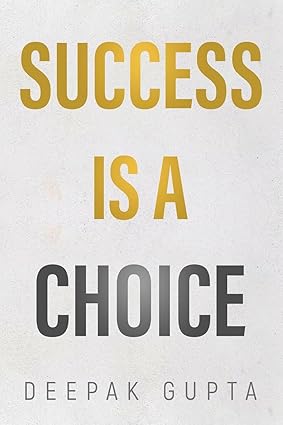

Success Is a Choice, by Deepak Gupta, initially presents an ambitious premise that might appear to simplify life’s complexities. Yet, as one delves into the pages, the simplicity unfolds into a clear, actionable philosophy. Illustrated through engaging narratives like the opening story of Tom and Dan, who, despite their differing circumstances, discover their capacity to significantly alter their career paths. This theme of empowerment resonates throughout the book, offering readers a practical framework to elevate their professional lives.
Gupta excels in character development and narrative flow, crafting relatable and nuanced characters whose vulnerabilities foster a genuine connection with the reader. This openness not only enriches the reader’s experience but also enhances the delivery of key insights intended to spur transformative growth. The author’s deep understanding of human behavior and interpersonal dynamics is skillfully reflected in both the interactions among characters and the engaging prose that draws readers into a reflective and immersive journey. The book’s practicality is one of its strongest suits. Gupta’s extensive experience and passion for mentorship shine through in the accessible and succinct presentation of concepts designed to be inclusive of readers at any career stage—from beginners to seasoned professionals. The title cleverly plays a dual role, sparking curiosity or challenging the reader’s preconceptions, thereby drawing them into a deeper exploration of the content.
Success Is a Choice serves as an essential guide for those navigating the corporate world, emphasizing that personal and professional growth often requires introspection and a proactive stance. Deepak Gupta’s keen observations and compelling writing style make this work not just a book but a resource for continuous reference. It encourages readers to take command of their paths to success, offering wisdom that is both profound and accessible, proving invaluable for anyone looking to enhance their career trajectory.
Pages: 188 | ISBN : 1804395633




 LITERARY TITAN