Blog Archives
Healthy Minds, Healthy Nation: How Meditation, Shamanism, and Indigenous Healing Can Tap into Your Light Within and Change the World
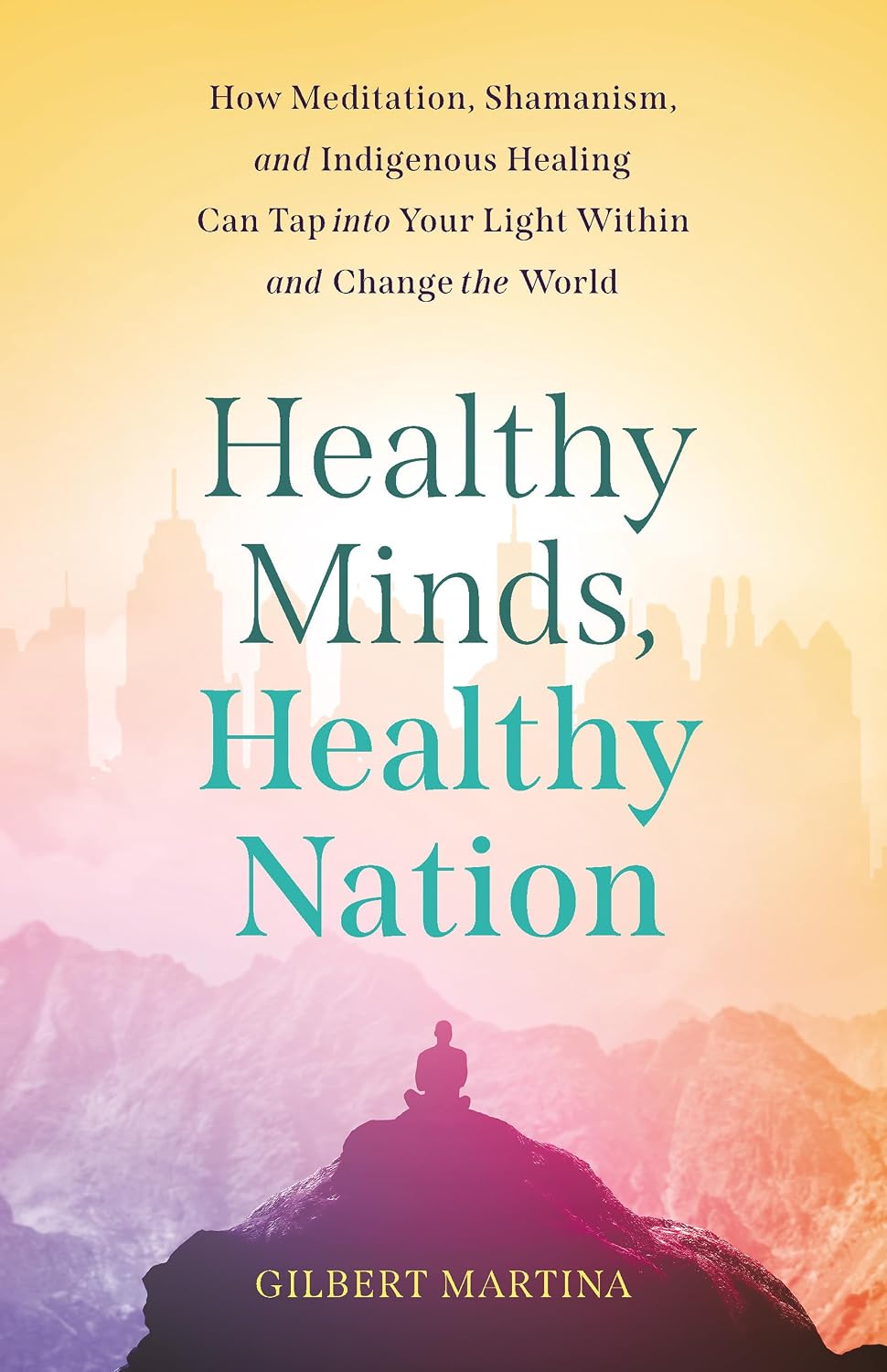

Healthy Minds, Healthy Nation, by Gilbert Martina, is a personal, spiritual, and socially minded exploration of the idea that healthier societies begin with healthier individuals. Martina builds the book around his own experiences with grief, chronic pain, professional pressure, family trauma, and leadership in Curaçao, then connects those experiences to larger questions about consciousness, morality, and collective well-being. The book moves through four broad stages: establishing the foundations of a healthy mind, examining how trauma can affect whole societies, describing spiritual awakening, and introducing practices such as Transcendental Meditation, shamanism, and Indigenous healing. What makes the book especially personal is that Martina rarely presents these ideas from a distance. His parents, marriage, career, physical pain, and Curaçaoan heritage are woven directly into his argument, so the book reads partly as memoir, partly as a guide to spiritual development, and partly as a reflection on leadership.
One thing that was most interesting to me was the way Martina moves between individual trauma and national history. His discussion of Curaçao gives the book a strong sense of place, particularly when he considers slavery, colonialism, discrimination, political power, and the long psychological effects of historical wounds. He argues that unresolved trauma can shape not only individual behavior but also relationships, institutions, leadership, and entire communities. That argument becomes more compelling when Martina connects it to his own life, including his mother’s fight against discrimination, his professional battles over integrity, and his struggle to separate what he calls the ego from the true self. The Papiamentu sayings passed down by his mother are especially memorable because they turn abstract ideas such as honesty, discipline, humility, resilience, and responsibility into something lived and specific.
The book becomes more explicitly spiritual as it progresses, especially in its treatment of meditation, energy healing, shamanic practice, chakras, ancestral trauma, vision quests, and ayahuasca. Martina treats neuroscience, psychosomatic medicine, spiritual experience, and Indigenous healing as parts of a connected picture of human health. That gives the book a distinctive confidence and makes his worldview easy to understand, even when some of the scientific and spiritual claims are presented with different kinds of supporting evidence. His strongest material tends to come when he describes what these practices have meant in his own life. Still, the central thread remains clear: healing requires attention to mind, body, relationships, history, and spirit, and personal transformation matters because it changes the way a person acts in the world. By the final chapter, Martina turns that idea toward moral courage, arguing that an awakened person should be willing to speak up against injustice and choose principle over fear, status, or money.
I recommend Healthy Minds, Healthy Nation to readers who are interested in spirituality, meditation, holistic approaches to healing, personal transformation, and values-based leadership. It will also have particular appeal for readers interested in Curaçao and the Caribbean, especially those thinking about how colonial history and inherited trauma continue to shape modern communities. Martina writes with the conviction of someone trying to make sense of his own life while also offering that meaning to others, and the book’s warmth comes from that personal investment. By the conclusion, his message has become both intimate and ambitious: quiet the mind, care for the body and soul, loosen the hold of ego, heal what has been carried from the past, and let that inner work influence families, communities, and nations. Readers who enjoy books that bring memoir, spirituality, leadership, cultural history, and self-development into the same conversation are likely to appreciate it most.
Pages: 246 | ASIN : B0GP4Y8JF2

From Battlefield To Breakthrough: The Foundation Taking Authority Over Your Mind And Identity


Kristina Gibbons’s From Battlefield to Breakthrough is an expansive Christian workbook centered on spiritual formation, mental renewal, and the believer’s identity in Christ. Gibbons presents spiritual warfare as a daily discipline shaped by Scripture, prayer, repentance, discernment, and obedience. The book moves from recognizing destructive thought patterns to developing practical habits involving prayer, the Armor of God, fasting, rest, and remembrance. Its progression gives the reader a clear sense of movement from self-examination toward a more confident and sustained practice of faith.
The workbook’s most effective feature is its integration of teaching with structured participation. Gibbons regularly follows biblical instruction and personal testimony with written questions, prayer prompts, declarations, habit-building exercises, and multistep sections called “Rounds.” Readers are asked to identify recurring lies, trace their origins, find relevant Scripture, and translate what they’ve learned into specific actions. Her statement that “You do not earn identity. You stand in it” captures the book’s central conviction that spiritual authority begins with receiving one’s position in Christ.
Gibbons writes with urgency, warmth, and pastoral directness. Her battlefield, courtroom, armor, and property metaphors give abstract theological ideas a concrete vocabulary that readers can apply to their inner lives. Repetition is an essential part of this method because the workbook treats transformation as the result of consistent practice. Its discussions of neuroplasticity support this emphasis by connecting repeated patterns of thought with the biblical renewal of the mind. The book also demonstrates valuable discernment when it distinguishes among spiritual attack, unrepented sin, and emotional wounds, guiding readers toward responses appropriate to each situation.
From Battlefield to Breakthrough is a substantial devotional training resource for Christians who want a disciplined framework for examining their thoughts, strengthening their prayer lives, and applying Scripture to recurring struggles. Its combination of theological instruction, personal reflection, and practical exercises makes it particularly suitable for extended individual study, mentoring relationships, or small groups. One of its most balanced insights appears late in the workbook, where Gibbons describes rest as an act of trust that releases the outcome to God while maintaining faithful obedience. That emphasis completes the book’s larger vision of spiritual maturity as an active, humble, and sustainable way of living.
Pages: 291 | ASIN : B0H58KPNC2
Decoding Genius: The Unexpected Lessons of After-School Chess Club

Decoding Genius is an engaging exploration of chess as a training ground for memory, strategy, resilience, preparation, and self-belief. Dan Shapiro approaches the game as both a curious newcomer and a devoted father, using his son Harry’s experience in after-school chess club as the doorway into a much larger story. The book moves with the shape of a chess match, from opening to middle game to endgame, while introducing readers to the history, personalities, and intellectual habits that have made chess compelling for more than a thousand years.
Shapiro has a gift for making big ideas feel personal and easy to grasp. His portraits of figures such as Miguel Najdorf, the Polgár sisters, Garry Kasparov, and Adriaan de Groot bring chess genius down from the clouds and show the practice, pattern recognition, discipline, and emotional control behind extraordinary performance. He also reaches beyond the chessboard, drawing memorable connections to music, engineering, boxing, aviation, magic, and artificial intelligence. These stories give the book its momentum and make its lessons useful even for readers who’ve never played a serious game.
The heart of the book is the relationship between Shapiro and Harry. What begins as a father trying to understand and support his twice-exceptional child becomes a warm account of shared discovery, growth, and changing roles. Shapiro writes candidly about his own struggles as a beginner, the fatigue and frustration of tournaments, and the strange joy of watching a child become better than his parent. Harry’s voice, especially near the end, gives the book humor, clarity, and emotional weight. His belief that improvement comes from practice, determination, and patience captures the book’s central idea without making it sound like a lecture.
Decoding Genius is ultimately a thoughtful invitation to see chess as more than a pastime. It presents the game as an accessible laboratory for learning how to think, prepare, recover, focus, and act with greater agency. Parents will find plenty to consider here, but the book’s appeal reaches anyone interested in how ability grows and how excellence is built one deliberate move at a time. Decoding Genius turns the chessboard into a map of human potential, showing that brilliance isn’t a mystery to admire but a practice we can begin.
Pages: 138 | ASIN : B0H46YFYN9
I’ve Made Plans

Mia J. Hanks’s I’ve Made Plans chronicles the author’s life after leaving a twenty-nine-year marriage marked by coercive control, emotional abuse, and covert narcissism. Beginning with the finalization of her divorce, Hanks shifts the focus from the dissolution of the marriage to the demanding work of creating a life beyond it. Her account follows a series of practical and emotional turning points, including confronting intimidation, rebuilding self-worth, establishing boundaries, managing isolation, and rediscovering personal freedom. When she leaves the courtroom with the realization that “My future now belonged to me,” the statement becomes the foundation for everything that follows.
The memoir’s greatest strength is its use of specific, everyday experiences to illustrate the lasting effects of abuse. A compromised storage unit, a bag of circus peanuts, a solo road trip, a broken thermometer, and an airplane journey all become meaningful markers of recovery. These episodes show how control can shape seemingly ordinary decisions and how reclaiming those decisions can restore confidence. Hanks writes in a candid, accessible voice that gives the book the intimacy of a personal conversation while maintaining a clear sense of purpose. Her willingness to examine her own people-pleasing, fear, guilt, and complicity in maintaining appearances adds depth to the narrative.
Each chapter is organized around a lesson, such as “Self-care is not selfish,” “Boundaries are necessary,” or “Freedom is priceless,” and many conclude with a journal prompt. This structure makes the book both a memoir and a reflective guide for readers navigating divorce, trauma, or major personal change. The later glossary, diagnostic criteria, list of covert narcissistic traits, and support resources extend its practical value. Some ideas recur across chapters, but the repetition reflects the gradual nature of recovery and reinforces the central themes of self-trust, autonomy, and deliberate healing.
I’ve Made Plans is ultimately a grounded account of reconstruction. Hanks presents healing as a collection of choices rather than a single transformative moment, and the construction of her new home provides an effective final metaphor for rebuilding her identity. Her concluding reflection, “I already love this life not because it is perfect, but because it is mine,” captures the memoir’s emotional center. Honest, encouraging, and thoughtfully structured, the book offers survivors a recognizable portrait of life after abuse while showing how freedom can be strengthened through boundaries, faith, self-care, and purposeful action.
Pages: 92 | ASIN : B0GX31KVYT
The Stonecaster

The Stonecaster, by Dillon W. Buck, is a modern parable about James, a sensitive boy who receives a mysterious stone that changes color according to the state of his heart. Through childhood wounds, college temptation, heartbreak, work, leadership, marriage, grief, faith, and entrepreneurship, James learns that life is shaped less by what happens to him than by the quality of his response. The stone becomes less a magical object than a mirror, teaching him that every choice sends ripples outward.
I appreciated how the book uses a simple allegorical device without letting it become merely decorative. The color-changing stone could have felt too tidy, but Buck gives it emotional utility: blue for peace, red for misalignment, gold for purpose. It becomes a private weather system, a way for James to notice what he is carrying before he releases it into the world. I was especially drawn to the early chapters, where James’s pain as a misunderstood child is rendered with enough tenderness to keep the lesson from feeling sermonized. The book is at its strongest when it lets discomfort sit on the page before translating it into wisdom.
What also stayed with me was the book’s insistence that growth is not a single luminous breakthrough, but a repeated return. James fails, forgets, chases the wrong things, confuses intensity with love, and mistakes validation for worth. That gave the story some necessary grain. I found the later sections more openly instructional, and at times the parable edges close to motivational speech, but its sincerity carries it through. The most affecting movement is James’s shift from striving for worth to living from it. That idea gives the book its spine, and it turns the final chapters into something calmer than triumph: a kind of earned stillness.
Readers who enjoy inspirational fiction, personal growth books, leadership parables, faith-based self-help, and coming-of-age stories will find The Stonecaster inviting and useful. It belongs beside books like Paulo Coelho’s The Alchemist or Andy Andrews’s work, though Buck’s focus is less on destiny as a far horizon and more on the daily discipline of response. This is a book for readers who want a story that behaves like a compass, gently but persistently turning them back toward intention. The Stonecaster reminds us that the life we build begins with the ripple we choose to send.
Pages: 119 | ASIN : B0H1N8BWDL
Success Is Within You: Creating the Destiny of Your Life

Success Is Within You: Creating the Destiny of Your Life is an earnest and spiritually grounded guide to personal transformation, one that argues that success begins not with circumstance but with the creative power of the human mind. Author Michael W. Jackson frames achievement as an inward awakening shaped by faith, clarity, dreams, gratitude, disciplined action, and service to others. Moving through chapters on defining success, partnering with God, asking better questions, choosing excellence, cultivating happiness, practicing gratitude, and becoming an “agent of creation,” the book offers both reflection and practical exercises, often returning to the image of the reader as someone already carrying an immense, divinely rooted capacity for growth.
What stayed with me most was the book’s insistence that success is intimate before it is visible. Jackson’s examples have a personal, conversational quality, from his memory of watching Jimmy Page perform and giving up guitar lessons because he felt he could never reach that level, to the story of “Jean,” who studies hard but also prays for guidance before exams. These moments give the book its warmth. They make the larger ideas feel lived rather than merely declared. I appreciated how often Jackson tries to pull achievement away from spectacle and back toward the soul. His point isn’t only that a person can win a prize, build a career, or manifest a dream, but that the inner posture matters: faith, self-belief, disciplined imagination, and the willingness to begin with whatever is already in your hands.
The writing has the cadence of a motivational sermon crossed with a personal development workbook, and at its best, that combination gives the book a steady pulse of encouragement. Jackson writes with sincerity, and there’s a generous emotional current beneath the instruction. I felt that most strongly in the sections on gratitude and contribution, where success widens into something less self-centered and more humane. The idea that “you are the gift” becomes one of the book’s more resonant claims, especially when paired with everyday examples of teaching, serving customers, sharing knowledge, or giving anonymously like a “contribution ninja.” The book’s ideas are unapologetically faith-forward, and its worldview depends on a deep confidence that God, the universe, and the human mind are aligned toward possibility. That conviction gives the work its force. Even when the language grows emphatic, the underlying feeling is tender: Jackson wants the reader to stop shrinking, stop waiting, and see life as something that can be consciously shaped.
I came away feeling that Success Is Within You is less a conventional self-help book than a heartfelt call to spiritual agency. Its strongest passages are those that join aspiration to responsibility, reminding the reader that dreams require journaling, research, education, practice, adjustment, and continuous action. I admired the way Jackson returns again and again to beginnings: start where you are, ask the question, write the dream down, take the next step, give thanks, and begin again. This is a hopeful, reflective, and deeply encouraging book, and I’d recommend it to readers who enjoy faith-based personal development, especially those looking for a warm companion in clarifying their goals, strengthening their self-belief, and approaching success as both an inner practice and an outward contribution.
Pages: 84 | ASIN : B07964RYZG
TRAUMA RECOVERY: Integrating Biblical and Psychological Perspectives for Emotional, Relational, and Spiritual Wholeness

Karen Gustafson’s Trauma Recovery is a faith-centered and research-informed guide to understanding trauma and healing from it. The book brings together biblical reflection, psychology, attachment theory, personal experience, and practical recovery tools in a way that feels sincere and purposeful. Gustafson writes from both professional training and lived grief, which gives the book a grounded, compassionate voice.
This is a book about wounds and restoration. Gustafson explains trauma as something that can affect the brain, body, spirit, emotions, relationships, identity, and even a person’s relationship with God. Early on, she writes, “Post-traumatic emotions can last for years, but it’s possible to understand and recover from them so that they don’t last a lifetime.” That sentence captures the book’s steady tone: trauma is taken seriously, but healing is treated as real and reachable.
One of the book’s strongest threads is the comparison between the biblical parable of the four soils and the psychological framework of attachment styles. Gustafson returns to this image often, using it to show how environments shape people and how healthier emotional and relational “soil” can be cultivated over time. The gardening metaphor works well because it keeps the discussion of trauma from becoming abstract. It gives readers a simple way to picture growth, damage, patience, and repair.
The book is also practical. Chapters move from the impact of trauma into recovery, covering emotional healing, differentiation of self, relational repair, and recovery in one’s relationship with God. Gustafson’s tone is often instructional, but it stays warm because she’s clearly writing for people who may be carrying pain. When she says, “There is no better reward than seeing those who have been trapped in trauma symptoms experience the benefits of trauma recovery!” it reflects the book’s larger sense of mission.
Trauma Recovery is a thoughtful resource for Christian readers who want a bridge between counseling concepts and biblical faith. It’s part teaching guide, part devotional reflection, and part recovery roadmap. Gustafson gives readers language for what trauma does, but she also gives them a hopeful picture of what healing can look like: deeper self-compassion, safer relationships, renewed faith, and a life that can grow again.
Pages: 466 | ASIN : B0H4WN84NV
Injustice: My Story

In Injustice: My Story, Dr. Iris Wright recounts a life shaped by early instability, teen motherhood, a devastating false accusation, and the long, bruising work of reclaiming her name, her daughter, and her sense of self. The memoir moves from her childhood in the Booth Street projects, where she learns too young how bias and abandonment can mark a child, into the shattering experience of being accused of burning her daughter after what began as a mother’s urgent response to a skin infection. From the cold reduction of her identity to SBI Number 00400319, to the refusal of a ten-year plea deal, to the four-year custody battle that follows, Wright frames her story not as a clean triumph over suffering, but as a hard-won account of survival, faith, motherhood, and becoming what she calls a Black Diamond.
Wright has a preacherly cadence, full of repetition, declarations, and lines that feel carved out of lived pain. That style circles the same truths, especially around resilience, pressure, and purpose, but I found that repetition revealing. Trauma does repeat itself in the body. It returns, insists, asks to be named again. The strongest passages are the ones where concrete memory grounds the lyricism: the teacher who failed her despite correct work, the stormy night with broken windshield wipers, the burning logs placed around her car, the obscene message written across her windshield, the daughter asking when she was coming to get her. Those moments have a pulse. They make the broader reflections feel earned.
I also appreciated the complexity of the book’s central ideas. Wright writes about faith and destiny with conviction, but the memoir is most affecting when it refuses easy consolation. Her victories are not simple victories, and I respected the way the book lets grief and gratitude sit in the same room. Its moral force comes from that tension. Wright isn’t asking the reader to pity her. She’s asking us to understand what systems do to human beings when labels become stronger than truth.
I felt that Injustice: My Story was less a conventional memoir than a testimony, one that turns personal anguish into a language of witness. It’s intimate, wounded, forceful, and maternal, with a voice that keeps reaching toward healing. I’d recommend it to readers drawn to memoirs of survival, wrongful accusation, motherhood under pressure, faith-rooted resilience, and the long aftermath of institutional harm. This is a book for people who understand that becoming unstoppable doesn’t mean nothing hurts you. It means you kept rising with the hurt still speaking.
Pages: 146 | ASIN : B0GX2YQT32


