Blog Archives
How Not to Behave

How to Host a Unicorn: A Tale of Hospitality and Manners follows a unicorn that enjoys structure and quiet, who visits his bear friend that has a drastically different idea of fun and has to learn how to be a good host. What was the inspiration for your story?
There’s a funny and quirky backstory. I was working on a scene for one of my nonfiction projects. In the late 1950s, Soviet Premier Nikita Khrushchev invited UN Secretary-General Dag Hammarskjöld to his villa at Sochi. Khrushchev behaved rather boorishly, and I thought to myself, “In a different context, this could actually be a good teaching moment. How not to behave with a guest. How not to host a unicorn.” And so, Nick the Bear and Dag the Unicorn have an experience with manners and hospitality that neither will soon forget.
What were some educational aspects that were important for you to include in this children’s book?
I think in Western society, extroversion is still seen as the “norm,” as the “desirable way of being.” Introverts and HSPs, particularly children, can feel left out or ostracized if they don’t wish to yell, stomp, get loud, perform sociability, etc. So one thing I wanted to do with Dag the Unicorn is to show that it’s perfectly fine to enjoy solitude, tidiness, a quiet afternoon with a book, and so forth.
From the hospitality perspective, I also wanted to show that when you host a guest, you must consider their feelings, too. Hosting doesn’t mean bringing someone into your space and forcing them to do all the things you want to do. You must be conscientious of the other person. For instance, Nick thinks a boisterous, wild surprise party is a lot of fun. Dag doesn’t. As a host, you can ask the guest, “Do you enjoy parties? Would you like a large group of people to talk to, or would you prefer a quieter night to watch a movie?” As an introvert myself, the quiet night of movie-watching would always be my top pick!
What scene in the book did you have the most fun writing?
The scene where Dag is in the bathtub. He discovers all of the water is cold, the soap is basically unusable, and the towel is the size of a handkerchief. I had a similar experience once when I stayed with a friend who told me I needed to buy my own towels and washcloths (and a bathmat, too). Then we have Nick jiggling the knob impatiently and lurking in the hallway. It’s a reminder that even though someone is a guest in your home, they still need a modicum of privacy—and basic necessity items.
Is this the first book in the series? If so, when is the next book coming out, and what can your fans expect in the next story?
Yes, it’s the beginning of the How to… with a Unicorn series. The next book, How to Christmas with a Unicorn, will release in November 2026, in time for the gift-giving season. Dag goes home to visit his parents for Christmas. His brother and sister-in-law arrive with their three wild children, who proceed to go nuts in the house: pulling the cat’s tail, trying to tear down the Christmas tree, yelling, and banging the piano keys while Dag tries to play. It’s highly relatable for any introvert or HSP who’s gone home for the holidays and found the experience chaotic and entirely too noisy.
Author Links: GoodReads | Facebook | Website | Amazon
Nick is a bear who… doesn’t.
When Nick invites Dag for a visit, he means well—but his idea of hospitality includes stomach-churning boat rides, chaotic surprise parties, and a bath towel the size of a handkerchief.
Dag does his best to stay gracious. Nick tries to show a good time. Somewhere between the fish feasts and the chandelier-spinning owl, Nick discovers what it really means to be a good host—and a good friend.
How to Host a Unicorn is a cozy, gently funny picture book about mismatched personalities, mutual respect, and the quiet strength of thoughtful souls. Within these pages, you’re invited inside a world with wit, wry humor, and plenty of fun.
Rendered in hand-drawn, imperfect illustrations that celebrate character over mechanical polish, the art honors the heart of the story itself: that real beauty lies in sincerity, not perfection.
Ideal for sensitive kids, introverts, and the adults who were once that kind of child, this story celebrates kindness and friendship without noise, unicorns without glitter, and emotional intelligence without preaching.
Yowie Dreaming: A Tale of Friendship and Adventure
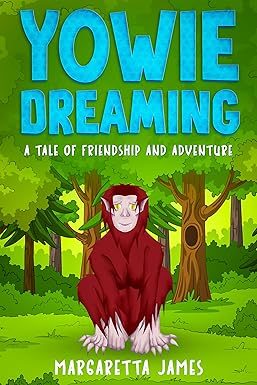

Yowie Dreaming is a delightful and unexpected gem of a story set in rural Queensland, following the reluctant city-girl Paisley Parkinson as she’s uprooted from Brisbane and planted in Kilcoy, a place famous for its folklore, forests, and, most notably, its elusive Yowie. What starts as a tale of teen angst and culture shock slowly spirals into a warm-hearted, often hilarious, and surprisingly moving story about friendship, trust, community, and the mysteries of the natural world. Paisley’s discovery of a real, live Yowie, whom she and her ragtag crew name Mr. Yahoo, propels the story into mythic territory without losing its grounded, human core.
When I began reading the book, I anticipated light-hearted small-town quirks and perhaps a few humorous nods to Bigfoot folklore. However, Margaretta James delivers something far more layered. From the very first chapter, particularly in Paisley’s scathing reaction to the lackluster statue in Yowie Park. The narrative voice stood out as strikingly genuine. Paisley’s frustration, dry wit, and gradual emotional evolution as she grows more connected to the landscape, her unconventional family, and the enigmatic Mr. Yahoo are portrayed with remarkable nuance. Her perspective is compelling, intelligent, emotionally complex, and deeply relatable.
The writing is clear, cozy, and refreshingly no-nonsense. There’s a genuine rhythm to the dialogue, and nothing feels forced or overly stylized. The trio of Paisley, Mikah, and Nicco steals the show. Mikah’s chaotic, ADHD energy and Nicco’s calm, tech-assisted communication balance Paisley’s dry humor. Their friendship feels earned, not tacked on. A scene that stuck with me is when Mikah wraps Mr. Yahoo’s burnt paw in honey and bandages, just calmly doing what needs to be done. That moment of quiet kindness was more touching than any dramatic rescue scene I’ve read in a while.
The ideas in the book, especially around land, Dreamtime stories, and First Nations knowledge, are treated with deep respect but not in a preachy way. Aunty Pam is the heart of this. Her stories about the Jinibara people, the shared land with the Yowies (or joogabinna), and the need for balance really hit me. She says, “Even groups that don’t trust each other have to learn to live side by side.” That line lingered. The book isn’t just about discovering a creature. It’s about discovering connection, healing, and how stories, old and new, hold power.
By the end, I wasn’t just rooting for Mr. Yahoo to find his way home, I was rooting for Paisley, too. I wanted her to keep growing, keep questioning, and keep letting people in. The final chapters had me smiling and even when the kids were wading through literal Yowie poo and hiding a mythical beast from angry bogans. There’s whimsy here, but also heart and real stakes.
Yowie Dreaming is for anyone who ever felt like an outsider, who ever loved a mystery, or who just needs a reminder that even the wildest legends might be true. It’s perfect for middle graders, teens, and grown-ups who haven’t lost their sense of wonder.
Pages: 70 | ASIN : B0F5GW1XV3

Trying Something New

Yetis Don’t Wear Bow Ties follows a yeti who is offered a bow tie to wear and he rejects the idea at first, but then reconsiders it and gives it a try, learning something new about himself. What was the inspiration for your story?
The inspiration for this story came when on a family trip, trying to convince my son to try new foods. We were telling him sometimes you try something and end up really enjoying it! I started thinking the silly story up on the way home the next day.
What scene in the book did you have the most fun writing?
The scene where Yeti shares with his friends was my favorite. Pixy Petal and I had so much fun imagining who his buds would be and how they might don a bow tie.
What were some educational aspects that were important for you to include in this children’s book?
Just the idea of trying something new. I try to keep my books very light-hearted and fun. If there is a message, I try to keep it subtle so that the story is at the forefront.
What is the next book that you are working on and when will it be available?
The next book is going to be called Goodnight, Nessie – featuring some familiar faces! Without spoiling much, the theme will be helping a friend in need. It’ll be available in mid-March.
Author Links: GoodReads | Instagram | TikTok | Website | Amazon
Janice Hostetter’s creative storytelling and Pixy Petal’s playful illustrations weave together seamlessly to yield a hysterical story with a big heart.
Yetis Don’t Wear Bow Ties

In Yetis Don’t Wear Bow Ties, Janice Hostetter introduces readers to an endearing protagonist who initially rejects the idea of trying something new. When Yeti is offered a bow tie, his response is an immediate and firm “no.” Yet, after a moment of consideration, curiosity takes over. He decides to give it a try and to his surprise, he absolutely loves it! Soon, Yeti wants a bow tie in every color and even considers sharing them with his friends. Maybe, just maybe, stepping outside his comfort zone isn’t so bad after all.
This delightful children’s story is packed with humor from the very first page. Yeti’s exaggerated expressions and playful reactions make him an instantly lovable character, one that will entertain readers of all ages. His initial reluctance mirrors the hesitation many children feel when faced with new experiences, making his journey both relatable and inspiring. If Yeti can take a leap and try something different, perhaps young readers will feel encouraged to do the same. Through Yeti’s lighthearted adventure, Hostetter effortlessly delivers a meaningful lesson that new experiences can be exciting rather than intimidating.
Complementing the engaging storyline, Pixy Petal’s vibrant illustrations bring Yeti’s world to life. Nearly every page bursts with color, drawing young readers in and enhancing the whimsical tone of the book. The full-page artwork ensures that each moment is visually captivating, adding depth and charm to the narrative.
Yetis Don’t Wear Bow Ties is a charming, laughter-filled read that will resonate with children and adults alike. Beyond its playful premise, it gently encourages readers to embrace new experiences with an open mind. Packed with humor, heart, and dazzling illustrations, this book is a must-read for families looking to share a story that entertains and uplifts.
Pages: 52 | ASIN : B0DRDRJP2K
Giving Children Books From Their Culture

Nathan Ñeque: The Hunger Contest follows a boastful agouti who loves winning and challenges a cicada to a hunger contest, confident that he will triumph. What inspired you to write this folklore adaptation story from The Ngäbe Comarca in Panama?
The Ngäbe people do not have any children’s books about their culture per se, and they brought the original story to me to write a children’s picture book. I adapted it to my own story and gave names to their animals but kept their theme throughout the book. Created my own story. We work on the Comarca with the Ngäbe people. I wanted to have some books for the children of their own culture.
The art in this book is fantastic. What was the art collaboration process like with the illustrator Yassibel Duque?
It was great, as usual. She is adaptable and comes up with unique ideas. She also lets me have my say, and we work well together. I appreciate the camaraderie with her.
What were some educational aspects that were important for you to include in this children’s book?
I wanted to educate children on the agouti and cicada. The agouti is from Panama, and people know cicadas. I wanted to incorporate how cicadas get their food differently than the agouti. But the agouti didn’t realize how the cicada ate their “food”; the cicada only had to stay on the branch. The agouti had to hunt for his food.
I also wanted to bring out the pride, arrogance, and eventual defeat that enabled Nathan to change his perception of other animals. I wanted to keep that theme from the original Ngäbe folktale.
What next book are you working on, and when will it be available?
I am currently waiting for my illustrations for another folktale from the Ngäbes. The title of my adapted story is Benny the Boa Meets His Match. I will then get it formatted and uploaded to Amazon, probably mid-March 2025.
Author Links: GoodReads | Facebook | Website
Nathan Ñeque : The Hunger Contest-El concurso del hambre

Nathan Ñeque: The Hunger Contest by Jane E. Ruth, with illustrations by Yassibel Duque, is a bilingual (English/Spanish) children’s story adapted from a Ngäbe folk tale from Panama. The story revolves around Nathan Ñeque, a boastful agouti who loves winning. Nathan challenges a cicada to a hunger contest, confident that he will triumph. As the days pass, Nathan’s overconfidence is challenged by the cicada’s quiet endurance, leading to an amusing conclusion that leaves Nathan humbled and wiser. This tale offers a playful, yet meaningful exploration of themes like humility, persistence, and community.
One of my favorite aspects of the book is the way it brings an authentic cultural folk tale to life for modern readers. Nathan’s over-the-top confidence, shown through his loud boasts and exaggerated gestures like puffing on his pipe, made me chuckle. I could almost hear his voice declaring, “No one can catch me!” The contrast with the cicada, calm and still throughout, is not only funny but also thought-provoking. The author captures this dynamic beautifully without overcomplicating the language, making it accessible for kids while still entertaining for adults. It feels like being told a bedtime story with a moral tucked inside, which is exactly what folk tales should be.
The illustrations by Yassibel Duque are another highlight. They add so much charm and energy to the story, from Nathan’s frantic pacing on the third day of the contest to his dramatic, smoke-filled pondering on the stump. The visuals complement the text perfectly, bringing the characters’ emotions and actions to life. I especially loved the little details, like the swirling smoke from Nathan’s pipe or the serene look on the cicada’s face. It’s the kind of art that pulls you in and makes you want to linger on each page a little longer.
The story’s engaging structure uses repetition to emphasize Nathan’s growing hunger and frustration as the contest progresses, creating a vivid sense of time passing. This approach mirrors the endurance theme beautifully and helps younger readers connect with Nathan’s experience. While the steady pace might feel familiar in the middle, it builds anticipation for the satisfying conclusion, where Nathan admits defeat and learns a valuable lesson. The payoff is both heartwarming and impactful, making the journey feel truly worthwhile.
Nathan Ñeque: The Hunger Contest is a delightful read with a heartwarming message. It’s ideal for children who love animals, folk tales, or bilingual stories. The book would also be great for parents and educators looking for a fun way to introduce cultural stories from Panama. If you’re after a story that combines humor, wisdom, and beautiful artwork, this one is definitely worth adding to your collection.
Pages: 34 | ASIN : B0D8QG8JK3

Great Conversation Starter

The Gnomes of Fibberton follows a group of gnomes who count and collect all the lies and fibs that children tell, and once they reach the secret number they were assigned at birth, they are brought to live in Fibberton. What was the inspiration for your story?
The story came about one Christmas over a decade ago when my niece was telling tall tales. I wanted to share a story with her that would make her think about the consequences of lying in a creative way. So, I came up with a story about little gnomes that count your fibs and take you away to Fibberton. She kept asking how many fibs she could tell before the gnomes would come, and I told her the number was a secret to keep her in suspense! I wanted to give her something to think about each time she considered telling a fib… because you never know which one might be the fib! Over the years, I’ve told that story to other children, and every time, the kids would get really excited, start playing pretend and create games based on the story. It sparked many conversations about what counts as a fib. You could really see the kids’ minds working as they tried to figure out what they could or couldn’t get away with. After seeing so many kids enjoy the story and make games from it, I finally decided to write it down.
The art in this book is fantastic. What was the art collaboration process like with the illustrator Aadil Khan?
Considering that the first two illustrators I hired stopped working about 85% of the way through (and an 85% illustrated book is as unusable as a 1% illustrated book), I feel truly blessed to have found Aadil. His art is fantastic, he’s incredibly patient, and he does a very thorough job. I can’t say I’ve always been the easiest to work with since I’m a bit of a perfectionist when it comes to my books. Yet, Aadil has always been such a positive person! I remember a couple of times having to remind him that these are unhappy, grouchy little creatures, as he often made the Gnomes look a little too happy for their life of drudgery. It felt like a long process to ensure the images conveyed exactly what I wanted, but Aadil did not disappoint. Aadil Khan is an impressive artist and deserves a great deal of praise for his hard work and dedication.
What were some ideas that were important for you to share in this book?
The two main ideas I wanted to drive home were the importance of telling the truth and inspiring integrity. You can’t always see the Gnomes of Fibberton… but they see what you do. I wanted a magical, fairytale-like story that would ignite children’s imaginations—something playful and funny—but I didn’t want to hide the fact that lying has consequences. I also wanted the book to serve as a great conversation starter about a topic that is usually delivered in the form of a parent’s lecture. I’ve seen this approach work in my own home. While my children know the Gnomes of Fibberton aren’t real, they still talk about them and play games as if the gnomes are watching. One day, my son Sampson told his little sister, “If the gnomes are watching… you really are my best friend, Suzy.”
Is this the first book in the series? If so, when is the next book coming out, and what can your fans expect in the next story?
The Gnomes of Fibberton is the first book in the series, focusing on the downside of telling lies. The next book, The Tunnel of Truth, explores the redemption that comes from telling the truth. The Tunnel of Truth resonates with kids who are scared of the consequences of coming clean, even though it’s much more liberating and often easier than they think. I also have three more books in the works: Too Many Tall Tales, The Boy Who Didn’t Do It, and Santa’s Other Helpers.
In Too Many Tall Tales, a little girl loves telling outlandish stories, like lifting cars and flying airplanes. The Boy Who Didn’t Do It centers on a boy who always uses the oldest excuse in the book: “I didn’t do it.” Finally, Santa’s Other Helpers is a playful take on how the Gnomes of Fibberton help Santa with the naughty list by working as special agents for the “FIB”—the Fib Investigation Bureau—under the Department of Naughty. Unlike the happy elves who make toys and wrap gifts, the Gnomes of Fibberton deal exclusively with fibs.
Author Links: GoodReads | X (Twitter) | Facebook | Website | Amazon
The Gnomes of Fibberton helps children learn the importance of being honest with a magical and unique twist. Every child has a secret number of how many fibs they can tell before the Gnomes of Fibberton come to collect!
In the hidden world of Fibberton, a story unfolds about the importance of being honest, much like the lessons in Aesop’s fables. “The Gnomes of Fibberton,” tells a tale where mysterious gnomes keep track of the lies, half-truths, and tall tails of the children throughout the world. This story shows how even a small lie can cause big problems, teaching kids why it’s important to tell the truth. Just like Aesop’s fables taught lessons long ago, this book helps young readers understand why honesty matters in a fun and magical way. Sing along with The Gnomes of Fibberton by scanning the QR code inside the book.
Mr. Nap A. Lot’s Merry Christmas Adventure

Mr. Nap A. Lot’s Merry Christmas Adventure, by Shani T. Night, beautifully reinforces the values of unity, generosity, and friendship, making it a perfect Christmas read. The story follows Mr. Nap A. Lot as he strolls through streets lined with cozy houses, feeling the special magic of the nighttime air. He observes families living in harmony, laughing and singing together, their love for one another highlighting the true spirit of the season. This confirms that giving without expecting anything in return and being kind are essential aspects of Christmas. Enveloped in this magical atmosphere, Mr. Nap A. Lot shares in their joy.
Night’s unique writing style, characterized by melodious rhymes, perfectly captures feelings of happiness and kindness. The book’s varied messages emphasize that Christmas is not just about toys but also about the comfort of being at home with family. The short, positive phrases and simple language make it ideal for children learning to read. The festive theme and fun tone will undoubtedly captivate young readers. Additionally, the beautiful illustrations capture the essence of Christmas, with magical nighttime scenes, comforting moments, and joyous interactions between children and adults. While the story lacks a traditional conflict, its straightforward narrative is part of its charm, allowing parents and children to focus solely on positive thoughts.
Shani T. Night successfully reinforces family values through a fun and inspiring story that encourages imagination and creativity. The book highlights the importance of sharing, appreciating each other’s company, and keeping traditions alive. Mr. Nap A. Lot’s Merry Christmas Adventure is highly recommended for its ability to maintain joy, enthusiasm, and love for family during the holiday season.
Pages: 42 | ASIN : B0CKWHZ79N



 LITERARY TITAN