Blog Archives
Deep Emotional Lessons

The Very Angry Toolbox follows a little boy who discovers a lonely toolbox in an industrial mart and learns about kindness and second chances when he sees past its gruff exterior. What was the inspiration for the setup of your story?
Working in a store, repairing overhead intake/extract fans over a period of time, hearing people talking and saying unwelcoming things about earning money the wrong way, I came across a toolbox on a dusty shelf all alone. And just started talking to it like you do, and over a short while, I found a story in my head. That evening, I went home and wrote about my meeting in the store. Some years later, when I sold my business, I decided to write it into a story. Then I thought, maybe there are children out there who might like this story, and decided to self-publish the book.
The toolbox is one of the most memorable characters in the book. How did you create his personality?
The story came about due to the meeting in the store, and adding the tools was because the angry toolbox was not really nasty and wanted to help others.
What was the most fun part of bringing the tools to life as characters?
The most fun part about the tools was that they gave their own identity and purpose within the toolbox, allowing children to understand what each tool can do
If young readers remember only one thing from The Very Angry Toolbox, what would you most hope they take away about kindness, anger, and the power of giving someone a chance to become their best self?
What I would like for young readers to take from the book is its mix of rich narrative, deep emotional lessons, positive core values, and captivating visuals.
Author Links: GoodReads | Amazon
The Very Angry Toolbox is a delightful story that is a must-have for all children’s bookshelves. This is the perfect book for discussing feelings and emotions and considering the impact that our feelings have on others.
Teamwork

Dragon Island: Football Season centers around a group of dragons and their magical skills as they compete in a unique and action-packed football season. What was the inspiration for the setup of your story?
Actually, my younger cousins were the inspiration. I asked them if there was a specific book they wanted me to write, and they asked for dragons. I wanted to make it very personalized to them, too. I decided to go with football because its their favorite sport. They actually chose the colors, names, and formatting for the dragons, too. They were very involved, and it was so fun to do with them. They were so excited for this book, and they have said it’s their favorite, making me a very proud aunt.
Did the idea of the teams and tournament come first, or did individual dragon characters come first?
Definitely, the teams and tournament came first. The amazing Brainstorm Productions came up with the formatting for the dragons when they were working on the illustrations. Then my little cousins chose the dragons for their own characters and for each of the other characters. My little cousins were very involved in this book with their own creative ideas; it was a family event to work on. I was very lucky to have their input and to have Brainstorm Productions bring it to life.
The dragons changing colors to match their team uniforms is such a fun visual idea. How did that concept emerge?
I really did not want to do the usual and pick one for each team. To me, that’s not fun=) I like being different and coming up with creative ideas. I thought about what could make it different and fun, but not too crazy for a reader or challenging for an illustrator. That’s what made me think, “What about an ombre look, where the dragons start as one color and change into a different one when they get together for their teams?” That’s different and easy for the reader to picture. I was hoping it would be easy for whoever illustrated it, and Brainstorm Productions exceeded my expectations with it.
If children connect most strongly with one idea in the book, what do you hope that is?
Definitely the idea of teamwork. It’s there with the dragons deciding to learn sign language for their teammate who is deaf. It’s there in the playful banter between the teams, but in the end, they wing high five and go for ice cream. There’s so much emphasis on winning, and I absolutely love how my little cousins handle losing; they are so gracious about it. I am so proud of the example they set for their teammates. I wanted to showcase that in the book and have the reader see it is ok to lose and still be laughing and joking and going for dragon ice cream. I also wanted to show that if a teammate has something different, then let’s all learn how to interact. To show how beautiful embracing that difference can be. I feel like the idea of teamwork in more than one way is a lesson that can resonate with anyone. And an important lesson to teach our children. My little cousins are growing into amazing young men who are a beautiful example of how our children can be raised.
Author Links: GoodReads | Instagram | Facebook | TikTok | Amazon
The highlight of the story is a thrilling football match between Team Firestorm and Team Thunder. As the game unfolds, teamwork, clever plays, and strategy keep readers on the edge of their seats as they discover who will emerge victorious. At its core, the story is a celebration of competition, teamwork, and the unbreakable bond of friendship.
Make Time to Stop and Listen

Maude’s Magical Ear Trumpet follows a kind, cheerful older woman who has begun to struggle with her hearing and is given a magical ear trumpet that not only lets her hear words better, but also the truth behind them. What first sparked the idea for your story?
I had the idea of writing a poem around an older lady and her relationship with the people around her. It was formed from memories of spending time with my grandmother when I was a child, and how she loved to talk – and listen – with her friends
Was empathy something you consciously set out to teach, or did it naturally grow out of the story?
I didn’t initially set out to write it as a children’s picture book; the story just revealed itself organically. I did want to include the idea that in a world of quick communications and throw-away conversations, there should always be time to stop and listen. Then, once you have heard, if you can help in any way, then you should. Sometimes, just a kind ear is all that is needed.
Why was it important for Maude’s Magical Ear Trumpet to be dyslexia friendly, and how did that goal influence your choices around language, sentence structure, and pacing?
I wanted the story to be inclusive of age, heritage, and disability. I wanted it to encompass all aspects of normal life. Part of that was to ensure that ALL children – and indeed adults – were able to read and enjoy the book. Making the text dyslexia friendly was just one way of doing this. The choice of language and structure was influenced by the story. I wanted it to flow in a way that was easy to read and follow, but with some challenging areas to push a child’s reading skills. Adding the odd word that makes the child ask, “What does that mean?” allows the act of reading to become collaborative.
What is the next book that you are working on, and when will it be available?
I am not currently working on another book, but hope to do a series of follow-up books incorporating Maude and her interactions with he friends and family.
Author Links: GoodReads | Facebook | Website
Maude learns, with the encouragement of her friends, that she has the ability to help others with her kind and positive personality.
We all have magical powers, the ability to give the people around us that most precious of gifts – time. Time to listen, time to share and time to care.
Next time you meet someone, don’t hurry away. Stop and speak. Say hello, ask how they are and, most importantly, listen to their answer. Try to leave them with a smile on their face, as that might just make a difference to their day – and yours too!
“Maude’s Magical Ear Trumpet” is a Dyslexia friendly picture book, with text designed to help readers enjoy stories on their own or with a friend.
Maude’s Magical Ear Trumpet


Maude’s Magical Ear Trumpet by Chris Husband is a whimsical, deeply heartwarming children’s book. It offers a gentle reminder: listening can change everything. The story introduces Maude, a kind, cheerful older woman who has begun to struggle with her hearing. Her doctor provides a most unusual ear trumpet. Maude quickly learns it is no ordinary device. A magical twist transforms it into something extraordinary. The trumpet lets her hear more than words. It reveals the truth beneath them.
What follows is a tender, uplifting journey. Maude uses her new trumpet to truly listen to the people around her. She offers comfort. She gives kindness. She makes space for understanding wherever she goes.
The book’s strength is its simplicity and warmth. Short, easy-to-follow sentences keep the pace light and inviting. The language feels almost poetic. The gentle rhythm draws young readers in and helps the message land naturally. Through Maude’s encounters with her daughter, shopkeepers, friends, and neighbors, children see that listening is more than sound. It is attention. It is care. It is empathy in action.
The illustrations by Corryn Webb add another layer of charm. Each page features soft, expressive artwork that brings Maude’s world to life. Her bright coat. Her spotted hat. The quiet emotional exchanges that unfold in small, meaningful moments. The visuals support the tone beautifully and guide young readers toward what characters feel, not only what they say. That reinforcement matters. Emotions deserve notice.
One of the book’s most memorable elements is the closing revelation. The magic was never truly in the trumpet. It lived in Maude herself. Her caring heart. Her willingness to listen with intention. That message lingered with me long after the final page.
This is a lovely read that children are likely to adore. Maude’s Magical Ear Trumpet teaches empathy, compassion, and the quiet power of listening in a way that feels magical and deeply human. It leaves young readers calmer, kinder, and a little more inclined to listen closely to the world around them.
Pages: 34 | ASIN : B0G6GLLJ3Z

Let the Story Lead Itself

The Best Worst Christmas Ever follows a father and his three children trapped by a blizzard on Christmas Eve, who, after the power goes out, spend the evening on a magical adventure through their shared imagination. What was the inspiration for the setup of your story?
After writing five adult mysteries, I wanted to challenge myself with something completely different and decided to cross over to a fantasy. I started brainstorming ideas not long before Christmas, so it was an easy decision to choose a holiday setting. I thought it would be fun to see the story from different points of view as it progressed, and what better way to do that than to have it told by children of different ages with different ideas of what the story should be. The power outage was the only way I could think of to force bickering children to sit still and listen to each other talk. It also created more of a cozy atmosphere in the home.
Are there any emotions or memories from your own life that you put into your character’s life?
I have three daughters, all grown now, that I used to read to every night at bedtime. Much of their interactions with each other and reactions to the stories, including their likes and dislikes, found their way into the voices of the children in this story.
When you first sat down to write this story, did you know where you were going, or did the twists come as you were writing?
I had my first novel all planned out, but by the third chapter, it had taken itself in a totally different direction, and I never used most of what I’d plotted in advance, so I’ve learned to just let the story lead itself as I write. Virtually all of the events in this book were the result of ideas that only entered my mind while writing the chapter before it. It’s surprising how different parts end up fitting together even without following an outline.
What is the next novel that you are working on, and when will that be available?
I wrapped up my five-mystery series in a way that would make it unfair to the characters to bring them back and put them in harm’s way again. Now, though, I’ve had several requests to write a prequel, including one from my editor. It’s an intriguing idea that I may pursue this winter, but at this point, it’s only a concept that will require a lot of gray hair to bring to reality, so the release of an actual book is hard to imagine at this stage.
Author Links: GoodReads | X (Twitter) | Facebook | Website | Amazon
The Best Worst Christmas Ever
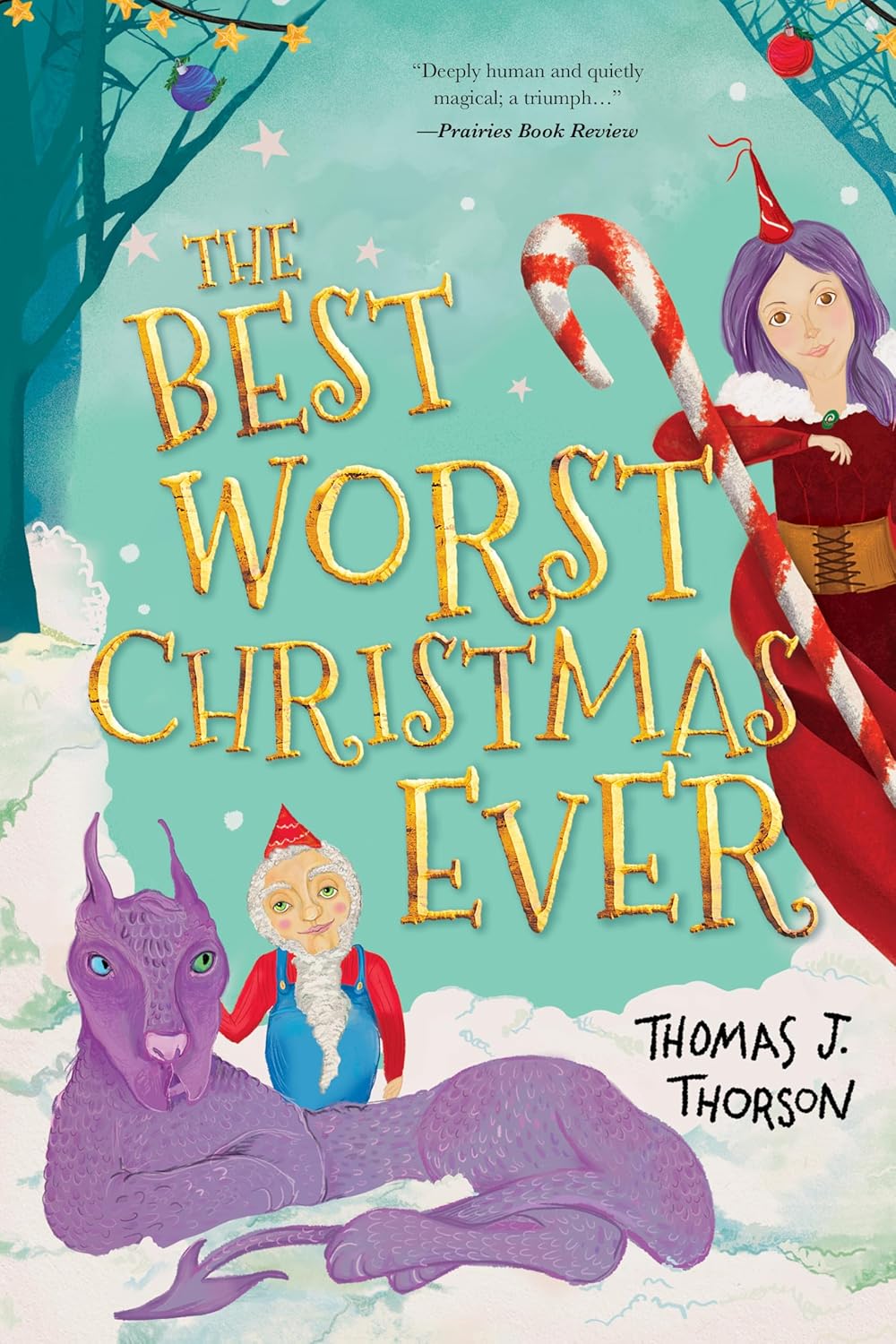
Thomas J. Thorson’s The Best Worst Christmas Ever begins as a simple snowbound family story and unfolds into something much more. Part adventure, part fairy tale, and part rediscovery of wonder. It starts with a family trapped by a blizzard on Christmas Eve, stripped of their digital comforts and forced to reconnect. A father and his three children, Parker, Candace, and little Lily, turn an ordinary night into an extraordinary one through shared imagination. What begins as storytelling by candlelight transforms into a magical journey involving Santa, fairies, lost treasures, and lessons about love, courage, and the true meaning of Christmas.
This book felt like it should be read by a warm fire while the world outside howled with snow. Thorson writes with a gentle humor and sincerity that caught me off guard. The story within a story, the family inventing a Christmas adventure together, reminded me of my own childhood, of times when imagination bridged every gap. The characters felt real, especially the father trying to keep the holiday spirit alive amid chaos. His patience, the kids’ bickering, and the messy dinner they invent, all felt honest and familiar. I liked how the writing never rushed. Each moment had room to breathe.
But what really surprised me was how emotional it became. There’s whimsy in the magic and humor in the dialogue, but there’s also depth. The story nudges you to think about connection, about how the simplest acts like sharing stories, and helping one another can turn a night of disappointment into one of wonder. I felt nostalgic, and a little wistful, reading it.
By the end, I found myself smiling. The Best Worst Christmas Ever isn’t flashy or cynical. It’s a small, heartfelt book that believes in kindness, family, and imagination. I’d recommend it to anyone who loves cozy stories with a touch of fantasy, parents reading aloud to kids, readers who still believe in a bit of Christmas magic, or anyone who just wants to feel good for a while.
Pages: 164 | ASIN : B0FM8HYSG1

We Are Not Promised Tomorrow

The Long, Lazy Summer follows a young boy who spends one last summer with his terminally ill mother, which deepens into lessons about love, loss, and the beauty of small moments. What made you write a story about this topic? Anything pulled from your life experiences?
Most of the children books I write are fiction fantasy with a lot of humor. The last few years, I’ve watched the Newbery Awards, and the books that won usually have a more serious tone to them. That really is the main reason I tackled this subject matter. I’ve had friends and family who have died of cancer, so that’s mainly why I focused on this area.
Surprisingly, real life ended up imitating art. My illustrator ended up finding out she had cancer when I was ready to start this book. She’s fine now, but this book almost didn’t happen. Then I faced my own mortality as well when I had heart problems this year. The ending of the book reflects the kind of thoughts running through my head at that time period.
What were some ideas that were important for you to share in this book?
The main ideas that were important to me were:
- Honesty of emotion. How would any adult feel going through that – facing their mortality and how do you explain that to a child?
- Love – what do we leave our loved ones after we are gone?
- Legacy – if you have a limited time left, what would be important to still do before you go? What do you want to be remembered for?
What is one thing that you hope readers take away from your story?
None of us are promised tomorrow. Look around you – are you living the life you truly wish to live? What do you think your loved ones will remember as being the most important part of your life?
I hope the Wonders of Childhood & Beyond series continues in other books. If so, where will the story take readers?
This series is intended to be unusual and perhaps unexpected. If the reader can learn to look at the world in a way different than they have before, then I will have done my job well as a writer.
Author Links: GoodReads | X | Instagram | Facebook | Website
For some of us, the greatest love and memories that we will hold in our hearts our whole lives through are the ones we experience and share with our parents.
They are part of our earliest memories and shape the lives we learn to live. They are our whole world, and when they leave us – when they pass over to the other side where pain and death can no longer touch us, we are left with an emptiness we can never again fill. To lose a parent is like losing a limb – you remember it being an essential part of your life even though it is no longer there. In many ways, you can still feel their spirits nearby, but they have moved beyond this realm where our five senses reign supreme and register into other senses of extraordinary perception we never knew we had.
For Raymond, it’s simple. He spends a beautifully long, lazy summer with his mother that he will never forget. His last one with her.
Nobody is promised forever. Any of us could leave this world at any moment. That being the case, what kind of memories would you leave your loved ones if you had a choice?
The Long, Lazy Summer (Wonders of Childhood & Beyond)

The Long, Lazy Summer is a tender and heart-tugging children’s book told through the eyes of a young boy named Ray, who spends one last summer with his terminally ill mother. What begins as a string of playful, simple days filled with scavenger hunts, zoo games, gardening, and homemade forts slowly deepens into lessons about love, loss, and the beauty of small moments. The narrative captures both the joy of being loved and the ache of knowing that time is running out. The season ends with the mother’s passing, but Ray carries her words, memories, and love into adulthood, forever changed by that golden stretch of days.
The writing is warm and straightforward, but the emotions beneath it are rich and deep. I could feel the sunshine in the happy scenes and the heaviness in the quiet ones. What I loved most was how the story balanced light and shadow. It never wallowed in sadness, but it didn’t shy away from it either. The metaphors, like sunflowers and butterflies, weren’t just pretty images; they stuck with me. And there’s something about the way Sayre writes dialogue between mother and son that’s simple, but the love comes through so strongly.
This is not a picture book you can read with dry eyes. The pacing lingers in places, and at first I thought it might be too gentle for my taste, but that rhythm fits the story’s heart. This isn’t about rushing to a twist or a big finale. It’s about letting each moment breathe, like the last summer evening before school starts again. The ideas like living fully, making memories, carrying love beyond loss aren’t new, but the way they’re told here feels fresh because they come through a child’s eyes. That innocence turns the whole thing into a bittersweet reminder of how fragile and beautiful life is.
I’d recommend The Long, Lazy Summer to parents, grandparents, teachers, and anyone who believes in the power of stories to start conversations about love and loss. It’s especially good for families looking to help children process grief in a gentle way. It’s also for grown-ups who need a reminder that even in goodbye, there’s a kind of forever.
Pages: 113 | ASIN : B0FG23Y128


