Blog Archives
People are Connected

The Adventures of Captain Polo Book 3: Polo in East Africa follows a polar bear on a mission to combat climate change who winds up on an international journey learning how climate change has impacted animals around the world. What is a key takeaway from this story you hope children understand?
A key takeaway is how people are connected across the world regardless of where they live and who they are. In the context of climate change this is an important message, particularly from people living in the Global North, where on a day to day basis we don’t see so many of the brutal front line effects of global warming. I particularly wanted to convey this sense of connection to my young readers in the context of consumer behavior, e.g. every time a kid in Europe or the US gets a new electronic device it will create a ripple effect across the world, in this case, more electronic waste shipped off to developing countries to pollute groundwater and ultimately harm kids the same age with the same interests who live in those countries. That particular example is used in Book 3 and is not immediately relatable to climate change per se but it nicely illustrates the point.
One of the most interesting features of your books is how you provide actionable suggestions for young readers on how to combat climate change, allowing them to feel they can do something beneficial. How do you envision your books being used in an educational or school setting?
I’ve always thought that my books would make very good reading material in schools, and indeed this idea is starting to prove correct as I now have schools in different parts of the world effectively buying and using my books. Science and Humanities teachers in particular find them valuable to aid their own efforts to include climate change in their already very busy curriculum. An example is how dozens of schools and environmental educational institutions in the Galapagos islands off Ecuador are currently benefiting from the Captain Polo series (Spanish language editions) in the framework of a donor-funded project that includes dissemination of these resources, as well as of others I have specifically created for this project. Similarly a school in Malaysia where I recently delivered (remotely) a climate storytelling workshop teaching students how to make their own comics with a climate change message is now investing in the purchase of the entire Captain Polo collection for its library. Parents too can use the Captain Polo books in homeschooling scenarios or just to complement their own knowledge about the issue of climate change and its many ramifications. For this reason, although my target readers are middle grade kids, my target buyers are adults, principally parents, teachers, and librarians.
It’s not just the books: Captain Polo is also starting to appear in animation videos; one project targeting cacao farmers in Peru, Colombia and Ecuador commissioned me to produce the scripts and artwork for a series of short video clips explaining climate change and how to take adaptive action in the context of rural, cacao producing communities in these countries. Similarly Captain Polo appears in a children’s story book I authored, which targets schools in these regions. The objective is to bring climate literacy to these very marginalized communities so that they can have greater agency for effective adaptation. Captain Polo resources are also to be found at the heart of grass roots climate education initiatives in the US, currently in California.
What was one of the most surprising things you learned in creating your books?
One of the most surprising things I learned was how climate change is often at the root of the most unexpected situations everyone automatically associates to very different causes. The case in point is how the humanitarian crisis affecting Syria and causing the forced movement of Syrian and also North African migrants to Europe is actually partly grounded in climate change: that part of the world suffered a prolonged, 5-year drought that decimated rural populations and forced them to migrate to the big cities in search of work. This coincided with the Arab Spring, adding fuel to the fire so to speak, and in many countries resulted in civil war and violent conflict. Additional political effects such as repressive regimes and of course the underlying long term impact of colonialism all exacerbated these situations, and because of that today Europe is facing a worsening immigration crisis. In Book 3 Captain Polo learns of this during the scenes where he crosses the Mediterranean heading for Europe after escaping a sticky situation in Cairo.
What types of questions do you ask yourself when planning a new book, and do you have more adventures planned for Captain Polo?
I ask myself what aspects of climate change still need to be talked about and better understood. I ask myself what my target readers might care about, and also what geographies to focus on. At the same time however I need to always keep in mind the story and plot, which need to be fast-paced, exciting and fun with lots of room for humor and adventure.
Author Links: GoodReads | Twitter | Facebook | Website | Amazon
Captain Polo in East Africa uniquely combines the entertainment value of Tintin-style graphic novel adventure, humour and geographically accurate settings with insightful education on climate change and positive action.
“Everyone needs to know about climate change and the adventures of Captain Polo do just that. The illustrations give clarity to the concept and give the story a good pace and movement.” – Readers Favorite
“The importance of conveying the climate change message to as wide a range of audiences as possible is more apparent now than ever before. This comic provides an excellent example of how this can be achieved.” – Dr. Ashton Berry, Global Climate Change Programme Coordinator, BirdLife International.
Traveling the world to learn about climate change is dangerous work: after braving the perils of the African savanna, a journey down the River Nile takes Captain Polo into Egypt and beyond. Polo’s final challenge involves breaking out of London Zoo, where he makes his first encounter with the most unlikely of companions…
Today’s climate emergency is nothing short of an existential crisis threatening life on Earth as we know it. The uncertain future is the cause of increasing anxiety, particularly among the younger generations. Book 3in this series of educational adventure comics complements the previous two books to provide yet deeper insight on the causes, effects and solutions to climate change within the framework of a fast-paced fiction story packed with action, humour and exotic settings.
Originally a lonely and confused polar bear, Captain Polo has undergone a life-changing transformation. Get your copy of Polo in East Africa to find out what it is!
The Adventures of Captain Polo: Polo in East Africa


Step into the captivating world of Captain Polo on his latest adventure. Captain Polo, a talking polar bear, finds himself adrift after the melting of sea ice propels him into an international journey. Along the way, he encounters a diverse array of people and animals, each sharing stories of how climate change has impacted their lives. From flooding due to rising sea levels to altered animal migration patterns, the consequences of climate change are everywhere. Yet, Captain Polo also uncovers numerous solutions and insights, offering hope and practical advice for addressing these global challenges.
The Adventures of Captain Polo Book 3: Polo in East Africa, by Alan J. Hesse, is a graphic novel that brings attention to the pressing issue of climate change. Captain Polo is a charming and proactive character, navigating through a series of adventures packed with action. The novel not only highlights the problems associated with climate change but also provides readers with actionable solutions they can implement in their own lives, encouraging everyone to contribute to the preservation of our planet.
Hesse offers readers a thrilling journey from the perspective of a polar bear, with a strong call to action on every page. The Adventures of Captain Polo Book 3: Polo in East Africa addresses the monumental issue of climate change and emphasizes that individual actions can collectively make a significant difference. This action-filled graphic novel is an excellent choice for introducing young readers to the concept of climate change and inspiring them to take positive steps to protect our planet. Join Captain Polo on his epic adventure and discover your unique role in preserving the Earth for future generations.
Pages: 37 | ASIN : B085WCKV1J

RhinoRAM: Your Friendly Neighborhood Cybersecurity Protector!

RhinoRAM, by Adom M. Cooper and vibrantly illustrated by LaTosha Maddox, is a captivating and instructive children’s book about internet safety. At its core, this story introduces young readers to RhinoRAM, a cybersecurity protector who embarks on a mission to educate children, particularly Enzi, about the significance of safe online behavior.
The book excels in distilling complex cybersecurity concepts into child-friendly language. Cooper effectively begins with a basic explanation of cybersecurity, cleverly woven into the storyline. RhinoRAM’s guidance through three fundamental Internet safety rules – seeking adult permission, having adult supervision, and avoiding sharing personal information on dubious sites or pop-ups – is both straightforward and memorable for young readers. A particularly engaging aspect of the narrative is the subplot involving Enzi and his classmates, who encounter a cyber threat from the hacker Malwarean. This scenario adeptly introduces the concept of social engineering attacks in a manner that is both understandable and relevant to a young audience. Through RhinoRAM’s timely intervention and informative dialogue with Enzi and his father, readers gain an insight into the nuances of online dangers. Maddox’s colorful illustrations not only complement the story but also enhance the educational value of the book. They contribute significantly to keeping the young readers engaged and aiding in the understanding of the book’s key messages.
RhinoRAM, primarily targeted at children and emphasizing digital resilience, admirably makes cybersecurity approachable and relevant. It holds particular value for young audiences, especially those from underrepresented communities, as it encourages both awareness and proactive behavior in the digital world. This book is not just a story; it’s a crucial early step in educating the next generation about the importance of cyber safety.
Pages: 39 | ASIN : B0CP3Y9KP4
Stewards of a Healthy Planet
The Adventures of Captain Polo: Polo and the Yeti follows a polar bear on an adventure who is captured and in danger of being sold to a zoo if he cannot escape and continue his journey. What was the inspiration for the setup of your story?
This is the second book of a trilogy that was originally published as a single title. When I decided to split this story into three separate books, I knew I had to find a cliffhanger on which to end the first book, and the perfect scene was when Polo is captured at sea. This is what inspired the setup in Book 2 starting with Polo escaping in the port of Shanghai, and it was a good way to simultaneously continue the main character’s travelogue into a key geography for topics relating to climate change (both in terms of issues and solutions) whilst maintaining the vital element of fast-paced entertainment required to carry the story along.
Many of the scenes in this part of the book are inspired by Tintin comics, both graphically and in terms of the plot.
Captain Polo may be a polar bear, but he has human characteristics and encounters problems because he is seen as just an animal. What were some driving ideals behind your character’s development?
A fundamental driving characteristic of character development in this first trilogy that carries through all three books is that the initial reaction of most human characters to Polo is surprise or even fear. This is a rational argument denoting the most probable reaction any human would have to suddenly encountering a bipedal polar bear in the most unexpected places. The pattern that immediately unfolds is that those same people quickly realise this is not an ordinary wild animal; Polo’s human traits quickly break through people’s fear and surprise to the point where they see him on their level as a conversant and highly intelligent being. This then allows Polo to interact in a meaningful way to carry the non-fiction elements of the book.
The Adventures of Captain Polo: Polo and the Yeti, I felt, did a good job explaining climate change and global warming to young readers. What is one thing that you hope readers take away from the story?
The main thing I wanted this particular book to communicate to readers is that two of the countries in the world that rank among the highest offenders in terms of causing global warming (China and India) are actually also among the most innovative for climate solutions, whether through public policy, technology, or both. Polo and the Yeti fulfills this purpose and the geography involved also provided me with an opportunity to throw in some messages of wisdom from Eastern religions and spiritual sources, many of which explicitly allude to humans’ responsibility as stewards of a healthy planet.
This is important to me because my readers so far at least tend to be mostly from the Western world, and I want my books to present the reality of climate change while also taking into account the perspective of other parts of the world, particularly in terms of social and technological innovation to mitigate and adapt to climate change. It is important that young readers appreciate they are part of a single world, and not as isolated as they might think from kids their age who live very far away.
When will Book 3 be available? Can you give us an idea of where that book will take readers?
Book 3 is already available! The final installment of the trilogy takes Captain Polo across the Arabian Sea into East Africa, down the River Nile, and on into Western Europe. Polo has many adventures along the way and learns about even more subtle and unexpected facets of climate change, such as the combined impact of global warming and tourism on Masai populations in Kenya and how climate change is, at least in part, at the root of the problematic immigration of desperate refugees from North Africa and the Middle East seeking asylum in Europe. At the end of Book 3 Polo is guest of honor of former President Obama, befriends Leonardo DiCaprio and Edward Norton, and makes a new friend in London Zoo…
Author Links: GoodReads | Twitter | Facebook | Website | Amazon
Captain Polo and the Yeti is an exciting graphic novel in the tradition of the legendary Tintin and Asterix series. If you like stories of adventure and humour with accurate geographical and cultural settings, then you’ll love this fast-paced, educational and entertaining tale.
Captain Polo is devastated: his precious boat is in pieces, lying at the bottom of the Pacific Ocean, and he is locked in the hold of a fishing vessel, destined to be sold to a zoo in a foreign land.
In Book 2 of the series, Polo faces countless dangers and obstacles on a path that will take him across China, up the mighty Himalaya mountains into the forbidden monasteries of Tibet, through the swampy delta of Bangladesh, and into India. On his voyage Polo meets many colourful, informative, heroic, kind, mischievous and also dangerous characters, ranging from an enlightened Chinese farmer to a jealous Fakir, a disgruntled Bengal Tiger to the Dalai Lama himself. On his way Polo also meets and learns from a character drawn from legend…
Every step of the way the bear who has become Captain Polo hones his understanding of the causes and effects of climate change, the true meaning of global warming and how it is affecting all living creatures and human societies. Polo also witnesses the heroic efforts of individuals, human groups and governments who are learning to adapt to a changing world, reduce their carbon footprints by innovating in the use of cutting edge technology and becoming leaders in the adoption of clean energy.
Captain Polo is half way around the world and a long way from home. On his travels he has picked up new understanding and knowledge about how global warming is affecting people across the world.
Get Book 2 in the series to share in his learning, and have fun while doing so!
The Adventures of Captain Polo: Polo and the Yeti

Alan J. Hesse’s The Adventures of Captain Polo: Polo and the Yeti, the second installment in his graphic novel series, provides a unique and engaging approach to understanding climate change and global warming. Hesse, with his background as a conservation biologist and an illustrator-author, crafts a narrative where the titular character, Captain Polo, embarks on a journey of environmental discovery after surviving a sea crash. This journey takes readers across various countries, each illustrating different aspects of global warming and the efforts to combat it.
The novel stands out for its ability to be accessible to new readers, offering a succinct summary of the first book, thus making it easy to dive into Polo’s world without prior knowledge. The storytelling is complemented by Hesse’s captivating illustrations, which not only add visual appeal but also effectively convey the gravity of climate change’s impact on both humans and animals. This dual focus is a testament to Hesse’s expertise as a climate educator, showcasing his ability to present complex issues through a medium that resonates with contemporary audiences. What is particularly noteworthy about this graphic novel is its ability to blend education with entertainment. The narrative is not just informative but also immersive, encouraging readers to engage with the critical topic of environmental preservation in a manner that is both enjoyable and thought-provoking.
The Adventures of Captain Polo: Polo and the Yeti is a commendable work that promises to enlighten and inspire its readers, regardless of their familiarity with graphic novels, and paves the way for future installments in the series. I recommend Hesse’s work to both parents and educators seeking high-interest nonfiction text for young readers.
Pages: 29 | ASIN : B085WBLBVS
Complicated and Amazing

Nurse Florence®, Tell Me About the Spleen follows three friends who, after learning about water filtration systems, want to know if the human body has a similar system. What do you find the most interesting about the spleen, making it a good topic to write about?
I love to write about human physiology. The body is very complicated and amazing. There seems to always be something to learn. Scientists are still discovering new things about how the human body functions, and it’s easy to be a lifelong learner with this topic. I thought discussing the spleen would be interesting for families since not everyone knows its purpose.
When writing the books in the Nurse Florence® series, how do you determine how in-depth to go into explaining concepts without overwhelming your younger readers but still providing enough information for a clear understanding of the topic?
You brought up one of the biggest challenges for me as the author of the series. I believe I have a gift of writing complex things into understandable units of information. My illustrators work very hard to create informative illustrations to complement the writing.
I love the Journal questions included at the story’s end. Have you considered adding other activities to future books to help further retention of the information?
We intend to create some activity books like word searches, connect the dots, and more in the future to supplement the series.
What topics are you planning next for Nurse Florence® to educate readers on, and when can your fans of the series expect a new book out?
We are planning about 500 books in the series to discuss all of the human physiology questions kids may have and diseases that may afflict families. We are publishing a new book about every 10 days. We have around 50 illustrators to support this project. Please visit www.nurseflorence.org for the latest information on the series and find a link to purchase the books directly from the printer.
Author Links: GoodReads | Website | Amazon
Inspiring a New Generation

Nurse Florence, What is Asthma? highlights the importance of using appropriate language when explaining medical conditions to children. Could you share your approach to finding the right balance between being informative and ensuring the language is age-appropriate?
In the Nurse Florence series, the company does not use slang terms to discuss human physiology. We want to inspire a whole new generation of kids to seek careers in the health science fields. There is a big shortage of nurses in the USA, and the need will continue to increase in the coming years.
In your story, Jean experiences symptoms of asthma during a physical education class, which is a common scenario for many children. What motivated you to choose this particular setting for the book?
Exercise-induced asthma is relatively common for people who struggle with the disease. We wanted to have a natural connection with a disease-triggering event to discuss the topic. We anticipate kids with asthma to have this book in their library or home so we wanted them to easily relate to the character.
Can you discuss the importance of using proper medical terminology in children’s literature and how you think it impacts a child’s understanding of their condition?
Masters of the arts usually start their art at a very young age. Our thinking is that if we can introduce kids to correct medical terminology at a young age, then we can help create a new generation that will understand their body better and have intelligent conversations with their medical providers.
What message do you hope children with asthma, or those who have a loved one with the condition, take away from reading Nurse Florence, What is Asthma? and what do you think makes it a “must-read” for these children?
We hope people affected by the disease will gain much insight into their condition so they can live healthier lives. We want to improve the health literacy of the world. We are translating the books into multiple languages. For more info about our project, please visit www.nurseflorence.org.
Author Links: GoodReads | Facebook | Website
Discover Healthy Coping Skills

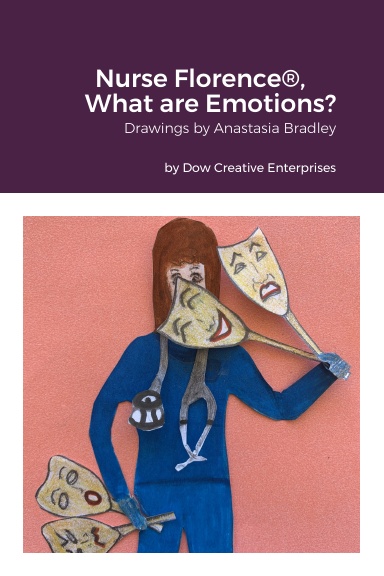
Nurse Florence, What are Emotions? takes a concept that is hard for children and some adults to understand and breaks it down in a way that can be understood and related to. What were your own emotions when writing this book?
Tranquility. When I write, I put on some music by Beethoven and experience a lot of peace as I write. Writing is a coping skill for me to help manage my stress. Each person is able to discover the coping skills that best suite them for the different challenges they face in life. Try doing something new to discover new healthy coping skills in our modern society.
Which of your books in the Nurse Florence series have you had the most fun writing?
The funnest book I have written was Nurse Florence, How Does the Brain Work? The conversation between the nurse and the three girls was exciting and uplifting. It makes me smile when I re-read the book.
What is your writing process like? Do you have a dedicated time or place, or are you more organic and write when the mood strikes?
I have my special area in the house where I get in the zone to write. I write usually at night after work at the hospital as an inpatient psychiatric nurse. I write each book as they are in the queue to complete. At any moment, we have over 40 books in production. I stay very busy.
Do you have any plans to turn the Nurse Florance series into a children’s TV show or YouTube channel?
We have created our first 2d animated video of Nurse Florence, How Do We Feel Hot and Cold Things? You can find it on our YouTube channel at https://youtu.be/UpI9K0sQ8Kc?feature=shared
For more info, please visit www.nurseflorence.org.
Author Links: GoodReads | Facebook | Website


 LITERARY TITAN