Blog Archives
The Original Human Beings
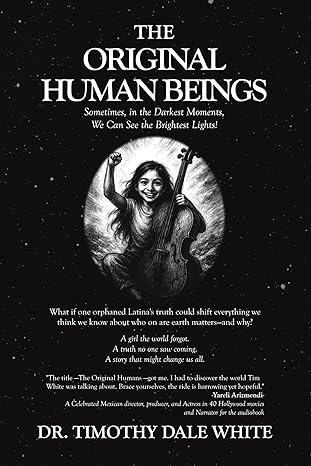

Most novels that revolve around music treat performance like a spotlight and leave it at that. The Original Human Beings treats music like a tool you can use to pry open a sealed life. The cello is described not only as an instrument but as a surrogate voice, capable of “cries” and “whispers of pain and joy,” and the book keeps faith with that idea even when the plot lunges into danger. When a professor says human beings dance because we’re sad and happy, it’s not a cute line; it’s a thesis about embodiment, about refusing to go numb.
I loved the sections that show craft, not just talent: technique sharpening, fingers blistering, the social machinery of being “discovered.” The glamour arrives with a shadow attached, expectation, scrutiny, panic, until the book captures that brittle feeling of being pulled too tight, “like the strings of my cello,” ready to snap. It’s one of the more accurate depictions I’ve read of what acclaim can do to a nervous system.
Then the New York sequence: immigration memory colliding with the Statue of Liberty, grief and hope walking together, and the private terror of possibly failing in a place that pretends it’s neutral but isn’t. The book refuses the lazy “America saved her” arc; it keeps the cost on the page, including the kind of quiet hate that “wants you to disappear.”
By the time Never reaches Carnegie Hall, the triumph isn’t written as a fairytale. It’s written as a claim, late, battered, and absolutely intentional. When she tells a reporter, “Music is our humanity… Without art, we are merely flesh and blood,” the line feels like a blade made of sound. This is a novel for readers who believe art doesn’t just reflect life, it metabolizes it, turns the unbearable into something you can carry without collapsing.
If you loved a novel where music isn’t garnish but a force that rearranges lives, you might feel an echo of Bel Canto by Ann Patchett, with the key difference that here the instrument becomes a lifeline threaded through immigration, violence, and reinvention rather than an enclosed social experiment. In emotional voltage and the way childhood catastrophe ripples into adulthood, The Kite Runner by Khaled Hosseini is a good comparison, though The Original Human Beings is more overtly braided with myth and spiritual argument than Hosseini’s comparatively realist frame.
Pages: 356 | ASIN : B0G42BPC2T

The Original Human Beings
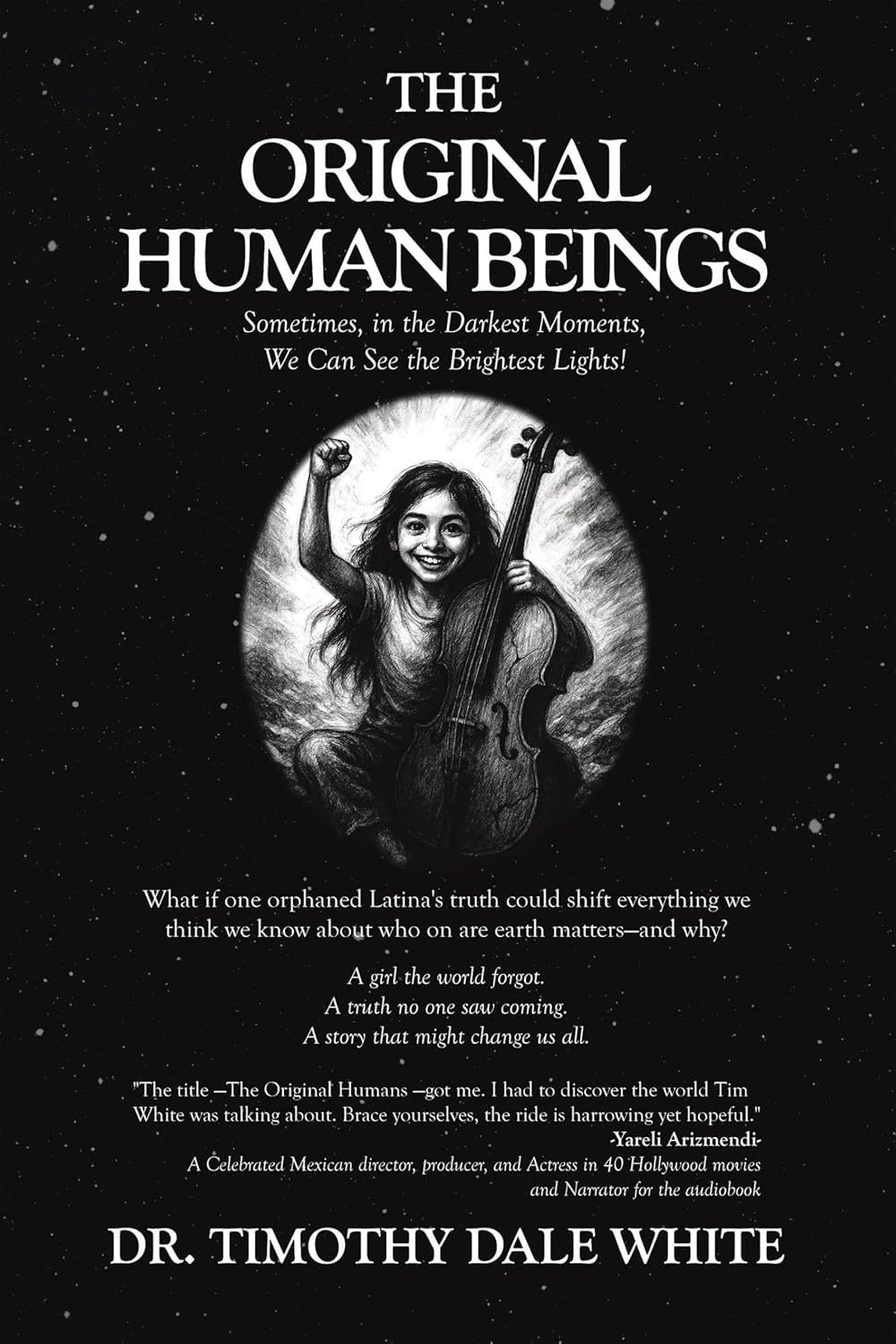
Timothy Dale White’s The Original Human Beings shifts between two gears: immediate survival and reflective, symbolic storytelling, without letting either one feel like an interruption. It begins in ash and refuse, childhood lived under the vocabulary of disposal, and keeps returning to a single, stubborn question: what counts as human when the world keeps voting no? The prose is unafraid of earnestness, but it’s an earnestness with teeth; it doesn’t merely petition your sympathy, it drags you across terrain where sympathy is insufficient.
What makes the novel stranger and better than a straightforward “overcoming” narrative is its second spine: Indigenous cosmology and the idea of identity as something older than paperwork, older than borders. The Nimiipuu creation story, with beings “walking out of the monster,” becomes more than local color; it’s a lens that recasts migration and historical violence as recurring species-level ordeals, not isolated tragedies. The book’s title starts to feel less like a label and more like a dare: remember who you were before you were taught to shrink.
The social conscience here is explicit, sometimes sermon-clear, but it’s also integrated into narrative pressure. There’s a fierce generosity in the argument that “our shared humanity” is a binding imperative and that love is not decor but a “survival strategy.” Even when the book edges toward manifesto, it keeps pulling back to the specific: the small humiliations of being stared at, the interior weather of panic, the stubborn mechanics of trust.
The novel occasionally overexplains, yet its ambition is difficult to dismiss: it braids myth, theology, immigration, and art into a single rope strong enough to haul a person out of the pit. By the time the story arrives at its later meditations on love and personhood, the grandness feels earned, not because life becomes tidy, but because the book insists that dignity can be constructed, plank by plank, even on scorched ground.
Pages: 356 | ASIN : B0G42BPC2T
The Original Human Beings: Sometimes, in the Darkest Moments, We Can See the Brightest Lights!
The Original Human Beings tells the life story of Never Morales, a Latina girl born in the Tegucigalpa garbage dump, who grows into a woman shaped by brutality, resilience, music, and a search for belonging. The novel follows her childhood in “Dante’s Inferno,” her encounters with dangerous men, her strange protector Loco Lucy, the death and revival prank of her mother, and the long journey that eventually leads her to the Nez Percé people and a deeper understanding of what it means to be human. Dr. Timothy Dale White blends raw memories with cultural history, weaving in philosophy and anthropology in a way that makes the story feel both personal and sweeping.
The writing swings between heartbreaking and strangely joyful, almost like the story breathes in pain and then exhales laughter. I kept feeling jolted by how quickly the author shifts from horror to humor. For example, the scene where Never’s mother fakes her own death to taunt her abuser left me shocked and then suddenly laughing through the tension. That moment hit me hard because it showed how joy can survive even when everything else is falling apart. The style feels bold, sometimes messy, sometimes poetic, but often intimate. I found myself pausing to absorb pieces of dialogue or reveling in small images.
I also felt a lot of admiration for how the book forces readers to sit with uncomfortable truths. The dump scenes are vivid and painful, and the children’s reality is harsh. Yet the story never sinks into hopelessness. Instead, it pushes toward questions about humanity, oppression, and identity. The inclusion of Indigenous philosophy and the Nez Percé worldview surprised me at first, yet it worked. It gave the story a bigger frame, like Never’s life was part of something older and wider. I appreciated that the book doesn’t pretend to have easy answers. It asks you to feel your way through the darkness instead and trust that something bright might show up.
I think this book would be perfect for readers who seek stories that blend emotional honesty with cultural depth. It suits people who want fiction that challenges them and surprises them, people who enjoy character-driven narratives, and anyone drawn to themes of survival, dignity, and identity. If you like stories that break your heart a little, this one is worth your time. Author Dr. Timothy Dale White has written a fierce and soulful novel that turns darkness into meaning.
Pages: 356 | ASIN : B0G42BPC2T
The Original Human Beings (Audiobook)

Listening to The Original Human Beings on audiobook, with Yareli Arizmendi as the narrator, felt less like consuming a novel and more like being personally invited to that Wallowa Lake campfire where Never Morales Santos Sundown tells her story. Her voice is soothing but firm, and that combination brought real weight to the ideas in the book. I felt like I was in the hands of someone who absolutely understood the gravity of what she was saying. The clarity of her delivery gave the whole narrative an air of authority.
The early chapters in the city dump were honestly hard for me to get through. The children live and scavenge in a toxic landfill, dodging soldiers, cops, and cartel thugs who treat them as expendable. Never’s mother is trapped in a horrifying relationship with General Mendosa and his bodyguard Gómez, and the violence they bring into the dump is unflinching. But the book refuses to collapse into misery. It keeps interrupting the horror with wild, irreverent humor: Mama staging mock-death dramas, kids playing pranks on authorities, and Loco Lucy, the aristocrat turned “vampiro” in a torn ball gown, reigning over the garbage like some broken fairy-tale queen. That mix of grief and laughter gave me whiplash, yet it felt emotionally true to how people actually survive trauma.
As Never’s world widens, the book shifts gears into something more reflective and overtly philosophical. We follow her escape from Honduras into the orbit of the Nez Percé, whose stories of being “The Walking-Out People” and “Original Human Beings” give her a new lens for understanding both her own life and the wider human story. The anthropology and Indigenous-knowledge sections could have turned into lectures, but because they’re filtered through Never’s battered, stubbornly curious voice, they feel more like late-night conversations with an elder than like theory. I loved how the narrative insists that humans, animals, and land form one kinship network, and how that idea quietly expands what “neighbor” means.
The final third, with Never as an aging anthropologist and cellist, took the book to a place I didn’t expect. Her Carnegie Hall performance could have read as a neat inspirational payoff, but it’s written more like a communal exorcism than a triumphalist finale. When she begins to dance with her cello, channeling the children of the dump, the migrants on the trains, and the songs of the Nimiipuu, the scene slips into a kind of musical magical realism. By the end I felt that click you get when a long, winding narrative suddenly makes sense of itself.
This is not a gentle read: it’s full of abuse, cartel violence, and spiritual harm. But having Yareli Arizmendi as the narrator made a big difference in how I could receive it. Her voice softened some of the edges without ever diluting the message; it held the space so the story’s mix of grief, joy, and defiant love could land fully. For me, the intensity was worth it. The story never lets go of joy as resistance, or of love as a kind of evolutionary leap humanity still has to make.
Listening Length: 13 hours and 43 minutes



