Blog Archives
The World Persists

Ghost of Nostalgia follows a woman living in an impoverished village who is taught to suppress all emotions or risk death at the hands of mysterious, ethereal beings drawn to human emotions. What was the inspiration for the setup of your story?
As cliché as it sounds, I had a dream. In this dream, there was a magnificent city floating in the sky surrounded by a spherical energy barrier. The land around the city was a complete wasteland, and underneath the city was a pile of battered cylindrical tubes. Suddenly, a hatch along the bottom of the city opened, and a silver tube dropped and landed on the pile. Something happened next, but for the sake of spoilers, I’ll have to keep the rest to myself.
The dream stayed with me for a long time, until I finally decided to take it to the page. The feeling of it was so bleak. The isolation is absolute. I realized the reason I remembered the dream so perfectly was because of how it made me feel. I sought to capture those emotions by making emotions the center of my world. I wanted them to be something that could set you free or lead you to death. But as I find with all my writing, it doesn’t come out quite the same as the inspiration. The dream was definitely more hardcore science fiction, but as I’m quite a romantic at heart, the result ended up softer with a heavy dose of romance. Even with those changes, I sought to have Gavril’s world be one that stirred the heart in many ways.
I find the world you created in this novel brimming with possibilities. Where did the inspiration for the setting come from, and how did it change as you were writing?
I’m glad you think so! Steampunk played a heavy role in inspiring the setting, but as much as I love it, I wanted to branch out into something that had a similar feeling but with its own flavor. This is one reason I decided to go with an electric-based power system rather than a steam-based one. As for the cultural inspiration, Victorian England was out, so I did a bit of research and landed on pre-revolutionary France. It had everything I was looking for: elaborate fashion, notable architecture, and a stark class divide. Gavril’s home, Nostalgie, is a village literally made of scraps. They have nothing but hope. I wanted to show the progression of “moving up” as Gavril travels to different towns, and how, instead of sympathy, the rich feel nothing but contempt for the “lesser.” Since each town is isolated in its own barrier, they feel like different worlds of their own. There is no camaraderie, just hope for the government’s favor. As Gavril learns along her travels, even the most beautiful place can be a cover for ugly behavior.
What were some themes that were important for you to explore in this book?
One of the biggest themes of Ghost of Nostalgia is control. Controlling emotions, controlling citizens, and controlling towns. All of these are accomplished in different ways and play different roles. As the story progresses, it becomes less clear who actually benefits from this behavior, and despite the suffering of some citizens, the world persists as is. Part of this is the class divide, and yet, no one rises to challenge the authority of the land.
Other themes are more personal to Gavril. She’s seen as a burden, and then the town’s fate rests on her shoulders. Self-worth, sacrifice, and being true to yourself are challenges she faces, especially in this patriarchal world, which sees her as only worth what she can birth. Her view of the world is full of despair, but sometimes hope can be found in the unlikeliest of places. Finding one’s truth is central to the story.
What is the next book that you are working on, and when will it be available?
The sequel! The sequel, which is tentatively called Sphere of Ardent, is currently in the editing process at Indigo River Publishing. We do not have a release date yet, but I’m hopeful I’ll be able to make an official announcement by the first half of next year. I’m very excited about it. The world-building really takes off, and the themes blow up in such unexpected ways.
Since I’m a glutton, I’ve already started writing the third book, which will finish out the intended trilogy.
Author Links: GoodReads | X (Twitter) | Facebook | Website | Amazon
Gavril follows the rules. Don’t dream. Don’t imagine a better future. Don’t cross the barrier, and whatever you do, don’t open your heart to emotions-especially the most powerful one: love.
Breaking the rules is deadly. Phases surround Gavril’s rural, impoverished village of Nostalgie. These mysterious ethereal beings, attracted to human emotion, suck passion and soul from anyone they touch-if the victim survives the encounter. Despite the danger, demanding questions linger in Gavril’s heart. What might life be like beyond the electrical barrier keeping the Phases at bay? What happened to her father, a legendary Résonateur gifted with the ability to combat Phases, who vanished several years ago? What does freedom feel like?
When the Solenoid powering the village’s barrier begins to die, Nostalgie’s mayor offers Gavril’s hand in marriage to the son of a nobleman in the distant village of Envie-a woman of a Résonateur bloodline to raise the family’s prominence in exchange for a new Solenoid. Gavril has no choice but to comply. If she refuses, the barrier will fall.
Gavril will do anything to save her mother and fellow villagers-even if it means breaking a few rules.
Led by a heart that suppressed curiosity and compassion for far too long, Gavril befriends a Phase named Morrow. When her actions are discovered, she is deemed a traitor by her future in-laws and sent to the Capital, Éthéré Coeur, for judgement. Commandant Serein, a Résonateur like her father, escorts her to her destiny.
In the whirlwind of French-influenced, retro-futuristic adventure that follows, Gavril’s spirit is freed. She meets wonders of human achievement-from motorized automatrams and flying soulevers to massive electronic libraries holding the world’s secrets.She encounters the rich, vibrant, and sometimes horrifying world beyond Nostalgie . . . and she falls in love.
Once you break the rules, where do you draw the line?
Ghost of Nostalgia will resonate with readers drawn to rich worldbuilding, emotional rebellion, and character-driven dystopian fantasy. For fans of lyrical prose, slow-burn tension, and stories that challenge what it means to feel—this journey lingers long after the final page.
The Presence of Magic

The Heart Scarab examines the fates of warriors, mystics, and serpents who are navigating a landscape that has been altered by mining, politics, and tribal magic. What was the inspiration for the setup of your story?
THE HEART SCARAB is Book 2 of the second series, so there are many strands of plotlines. The writer assumes that a reader who made it this far into the story is invested in the characters and ready to see them triumph.
Mostly, my stories are about the women, but this setup offers two men to carry the plot. Rufus el Arrivi has been present in all the previous books. Now, as a grown man with children, he decides to run for the office of khalif in open elections in a duchy where refugees called Rundi are allowed citizenship.
Meanwhile, Stuben works with Rufus as police in Urbyd and witnesses some difficult moments for the refugees. He breaks with Rufus and goes on an adventure with Obye, who is laboring to recover some Rundi who are abused at a stone quarry.
My inspiration comes from a love of the characters and my own questions about how their lives shape – sometimes as much of a surprise to me as to you.
Were there any characters that you especially enjoyed writing for?
Kore is 14 now and has inherited the treasure of Rularim. She attends a wedding in Utica, traveling with Rufus and her half-brother Karisma. Always willful, she gets into plenty of trouble.
Bybiis, the beastmaster, has worked through some of her problems with finding a place among the tribes, following her own destiny for working with sea serpents. She has met Aresur, who has some skills with magic and takes the banner for countering Ulaya, who wants Bybiis dead. I had fun with Aresur and her sideways attitudes about how to handle a difficult boss. She manages to
undercut Ulaya at every turn.
How did you balance magic and its use throughout the story to keep it believable?
Ah, magic…Hedge magic belongs to Aresur – charms and hexes – and Bybiis has many tattooed skin wards. The serpent pouches are based on a real occurrence in our world where sharks make pouches out of seaweed fronds as an incubator for living newborns. Bybiis has harvested a clutch of serpent pouches made the same way. When a holder stares into the hole drilled through the brain of the dead serpent fetus, she may connect with the holder of a similar pouch. I like it! Mostly, though, I wanted the presence of magic in their everyday lives, and several characters don’t believe in its power over them.
Can you give us a peek into the next book in this series? Where will it take readers?
THE IRON SNAKE is about resistance to a larger country tangent to the duchies and sending assassins to take or kill the children in order to weaken leaders. We follow Rufus again and Stuben, who grows into his leadership roles. Kore becomes a young woman – vulnerable to abduction, in fact – who becomes an opponent to Ulaya (and more) and her scheming ways. I keep setting obstacles in the paths of primary characters and fashioning a plot where they must work together to get ahead.
Author Links: GoodReads | X (Twitter) | Website | Amazon
Meanwhile, Stuben el Cylahi has taken a position as police in the duchy capital of Urbyd where he butts heads with his boss Rufus el Arrivi. Stuben realizes that he also must strike out on his own and joins a group of Rundi who are on mission to recover some quarry slaves. His witness of coming events makes him wish that he had remained nearby Rufus. Can Stuben regain his tribal status?
The Heart Scarab: A Dystopian Science Fiction Novel


The Heart Scarab is a sprawling and layered fantasy tale set in the richly imagined world of the Duchy Wars. The story weaves together the fates of warriors, mystics, and serpents in a landscape scarred by mining, politics, and old tribal magic. Atrium introduces us to Bybiis, Raykiim, Ulaya, and a cast of many others who grapple with serpents both literal and symbolic. At the center are the mysterious serpent pouches, objects of power and danger that drive much of the conflict. The novel is both an adventure and a meditation on power, sacrifice, and what it means to serve something larger than yourself.
The prose is often strange and textured, with voices that shift from tribal chants to raw dialogue. At first, it made me stumble, but then I leaned into it and realized that Atrium wanted me to feel disoriented, just as her characters are when they confront forces beyond their control. I admired the guts it takes to write like that. Some sections flowed like a river, pulling me along without effort. Others were jagged, forcing me to slow down, reread, and sit with the unease. I liked that tension.
I kept coming back to the characters. Bybiis is wounded and stubborn, scarred inside and out, but she burns with an energy that made me root for her even when she drove me crazy. Raykiim had this mix of charm and darkness that made me wonder how much of him was his own and how much came from those serpent pouches he guarded. And Ulaya, chasing her twisted experiments, was chilling in her certainty. What hooked me most was the sense that everyone here carried scars, literal or otherwise, and the story kept asking whether scars make us stronger or just remind us of what we’ve lost. The emotional weight of that question stayed with me.
The Heart Scarab isn’t an easy read, and I don’t think it’s supposed to be. It’s for readers who enjoy being challenged, who like complex worlds with no hand-holding, and who don’t mind wandering through passages that feel more like songs or riddles than straightforward narrative. If you want to be immersed in a world that feels alive, harsh, and unpredictable, with writing that pushes you out of your comfort zone, then The Heart Scarab is worth your time.
Pages: 539 | ASIN : B0FLF6ZHN1

Trace of Arcane
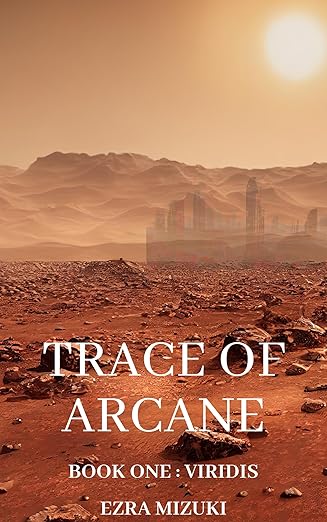

Trace of Arcane, by Ezra Mizuki, is a coming-of-age dystopian novel that follows Eden, a spirited and sharp-tongued teenage girl navigating a fractured society where spirituality, tradition, and power intersect in disturbing ways. Set in the colorful yet controlled city of Viridis, the story explores Eden’s struggle for autonomy, the pressures of an impending ceremonial passage called the Ruki, and the unsettling influence of a foreign missionary named Thales. Through poetic prose, social commentary, and unsettling tension, the book weaves a tale of rebellion, identity, and the often invisible violence that shapes young women’s lives.
What struck me first was how beautifully the book is written. Mizuki’s language is lyrical and haunting. The worldbuilding is rich, and the sensory details, like the spices in the market, the moonlight on old clay walls, made the setting feel close and alive. Eden’s voice is electric. She’s messy, sarcastic, defiant, and vulnerable all at once, and her internal monologue was sharp enough to make me laugh out loud one moment and feel sick to my stomach the next. But what really pulled me in was the unflinching way Mizuki handles trauma, not as a spectacle, but as something that hides in plain sight, in the spaces between duty and silence. The dynamic between Eden and Thales was especially chilling, and watching how Eden rationalized her pain left me uneasy in the best kind of way.
At times, I found myself frustrated, more with Eden than the book itself. Her contradictions felt so real, so raw, that it became hard to root for her without also wanting to shake her by the shoulders. But that discomfort is part of what made the book so powerful. It doesn’t try to teach a lesson. It invites you to sit with all the complications: a mother trying to protect her daughter from a life she herself was forced into, a society that wraps obedience in tradition, and a girl trying to claim herself in a place where every choice comes with a cost. Some of the dialogue felt a bit uneven at times, and a few characters, like Zig, came across as slightly exaggerated. Still, those moments were small and didn’t take away from a story that kept me engaged.
Trace of Arcane deals with spiritual abuse, coercion, classism, and betrayal in ways that feel too familiar. But if you’re someone who likes character-driven fiction that doesn’t sugarcoat the truth, something dark, poetic, and intimate, then this book will speak to you. I’d recommend it for fans of The Handmaid’s Tale, Daughter of Smoke and Bone, or The Power. If you’re a teen or adult who’s ever felt caught between two worlds, between tradition and choice, or if you’ve ever wanted to burn the whole system down just to breathe for a second, this is a must-read.
Pages: 425 | ASIN : B0F7SLJ9QZ
The Family Story

Terra Nova follows a father and daughter surviving the unknown as they navigate life across planets and face impossible decisions when he becomes gravely ill. Where did the idea for this book come from?
I wanted to explore the emotions and trials inherent with someone you love facing serious illness. I also wanted to allow Sev to grow into herself as a young woman, her father’s illness being a catalyst for making some tough decisions to keep her family together. I also wanted to showcase everyone’s role in the family story…everyone’s importance. Even Phoenix, despite being ill, undertakes significant emotional work to maintain the family unit. I was a caretaker for my grandmother during her illness, and a lot of Sev’s plight stems from my experiences.
What is the most challenging part of writing a series?
I’ve found that keeping the details straight over the series, as well as crafting the larger story outside of each installment, where everything is cohesive and engaging, is the most challenging aspect of writing a series. It’s also rewarding, though. I enjoy planning these adventures as much as I enjoy writing them.
What was your inspiration for the characters and their relationship?
The Terra series is an exploration of the purest form of love in all its designs…parental, familial, and romantic. I also wanted to explore the strength and flaws in people and their resilience through adversity.
Can we look forward to seeing Book 3 soon? Where will it take readers?
Yes! Terra Lux, the third installment in the Terra series, will come out in the Spring of 2026. You can expect new worlds, new adventures, as well as a few twists along the way.
Author Links: GoodReads | X (Twitter) | Facebook | Website | Amazon
Three years after the events of Terra Firma, Phoenix, Sev, and Pearla are thrust into a new battle—
one that will test them in ways they never imagined.
But time is running out.
With enemies closing in and impossible choices ahead, the family must once again fight for their
future—this time, against a fate far worse than those on Terra Firma.
Will they find their way home, or will they be lost to the stars forever?
For fans of The Divergent Series and The Hunger Games… when the future crumbles, it’s who you hold on to that matters most.
Are you ready to uncover buried secrets, face impossible choices, and defy a broken galaxy? Get your copy of Terra Nova today and be part of a journey where loyalty is tested and destiny rewritten.
Terra Nova
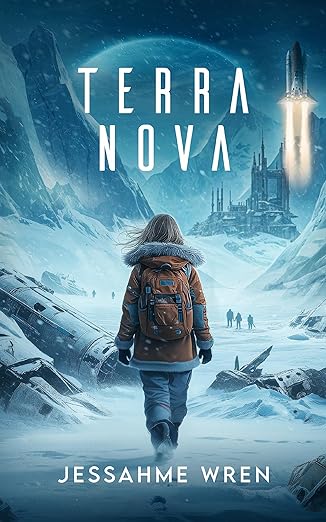
Jessahme Wren’s TERRA NOVA is a beautifully imagined and emotionally charged story about a father and daughter navigating life across planets, love, grief, and the sheer grit it takes to survive the unknown. At its core, it’s a tale of devotion. Sev, a whip-smart teen growing into herself, and her father, Phoenix, a loving and resilient man with a painful past, live on a world called Dobani. Their peaceful life is upended when Phoenix becomes gravely ill, and Sev must make an impossible decision to try and save him. What follows is a journey across stars to the snowy, distant planet of Ocarro, where medicine is cutting-edge but answers are scarce. Alongside them is Pearla, Phoenix’s partner, and Sev’s steadying force, as they face medical mysteries, bureaucratic red tape, and the shadows of old trauma.
Wren writes with an intensity that sneaks up on you. Her pacing is smooth and measured, letting the emotion build naturally. The world-building is sharp without being showy. Every planet feels lived in, not just imagined. What stood out most to me was the tenderness between Sev and Phoenix. Their relationship isn’t perfect, but it’s thick with love and care. Wren doesn’t rush the drama or the science fiction, she lets her characters breathe. And in those breaths, the humanity shines. I found myself rooting for Sev not because she was heroic in the usual way, but because she felt real. Smart, a little stubborn, and so brave.
The emotional punches land hard. Watching Phoenix deteriorate is gutting, especially because he’s portrayed so vividly in the beginning. I did wish, at moments, that the story pulled back a little to explore more of the broader universe. The political backdrop and the mystery of Terra Firma are ripe for digging into, but they take a backseat to the personal arc. That isn’t a flaw exactly, just a choice that trades scale for intimacy. And maybe that’s what this book is really about: not saving the galaxy, but saving the person you love most. That trade-off feels worth it.
TERRA NOVA is a warm but gut-wrenching story. It’s a sci-fi story for anyone who’s loved someone through illness, who’s had to grow up too fast, or who just needs a reminder that love is its own kind of gravity. I’d recommend it to fans of Becky Chambers, Martha Wells, or even folks who normally steer clear of sci-fi but love a strong emotional hook.
Pages: 234 | ASIN : B0FD48SQJS
Multidimensional and Relatable

Imber centers around a young woman whose family is dedicated to sustainable living as she finds herself drawn into the mystery surrounding the fate of Earth and the limits of science. Where did the idea for this novel come from?
For as long as I can remember, I have been drawn to wildlife and wild places – not necessarily in a clinical way, although I do enjoy learning about nature, but more often as feelings of deep affection and awe. The initial spark for Imber grew out of the idea that humanity has a profound connection with nature. I wanted to explore what might happen in a dystopian future where that connection is strained to a breaking point.
How do you capture the thoughts and emotions of a character like Violet?
Violet is a complex protagonist. While she has many admirable qualities, she is far from flawless. It was important to me that Violet be multidimensional and relatable. In the first moments of Imber, Violet is brooding and somber. She’s reading depressing poetry on a day when she is already sad. Although she is self-aware enough to stop, I love that the first time we meet her is in a moment of self-sabotage. When capturing Violet’s thoughts and emotions, I was careful to shine a light on both her strengths and weaknesses. And because she is highly intelligent and analytical, her inner life must reflect that as well. So, overall, I would say that characters like Violet require a layered approach that befits the complexity of their thoughts and feelings. Violet was challenging to write – but tons of fun, too.
Is there any moral or idea you hope readers take away from Imber?
One of the fascinating things about reading is that people can take away very different things from the same book. They might have dissimilar interpretations of the plot or characters, or certain aspects of the story might resonate differently with them. As an author, I think it’s exciting that my work can have a life of its own in that way. Nevertheless, there are themes in Imber that I hold dear: humanity’s responsibility as shepherds of the earth; the power of hope; courage and perseverance in the face of injustice; and the beauty of found family, to name a few.
What is the next book that you are working on, and when will it be available?
I would love to write a sequel to Imber. I have roughly outlined the story, but I haven’t started to write it in earnest yet. I am working hard to help Imber find an audience. If there is interest, I would be thrilled to continue this tale!
Author Links: Goodreads | X (Twitter) | Website | Amazon
The remnants of humanity are living in hiding, making the best of their circumstances while searching for a new celestial home. Just when salvation seems imminent, four strangers discover they have an unusual, inexplicable link—one that pitches them headlong into high adventure and intrigue.
Totally unprepared, the four must navigate shocking obstacles and trust unexpected allies as they race against the clock to unravel a chain of unsettling revelations that could impact the fate of the world.
The government has been concealing important facts about humankind’s promising hereafter. Will the efforts of a farmer, a hacker, a businessman, and an academic be enough to overcome impossible odds and expose the truth before it’s too late?
Imber
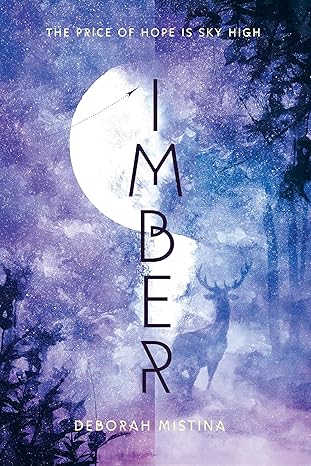
Deborah Mistina’s Imber is a speculative, soul-stirring tale set in a future where nature is both fragile and sacred. The novel follows Violet Murphy, a young woman devoted to her family’s farm and their legacy of sustainable, organic living amid a crumbling world. As the government’s strange motives begin to unravel, Violet is pulled into a deepening mystery that questions everything, from the fate of the Earth to the limits of science and memory. At once a dystopian adventure and an emotional meditation on grief and hope, Imber crafts a world that’s both fantastical and deeply familiar.
I enjoyed Mistina’s writing style. It’s poetic, even when it’s subtle. Take the opening pages where Violet feeds her horse Firestorm while mourning her lost parents. The imagery is soft and painful: “They broke like porcelain on the jagged rocks below, where the sea writhed with furious waves…”. Mistina doesn’t just write; she paints with words. She lets grief sit beside beauty. The prose made me feel something in every paragraph, like each sentence had its own pulse.
Then there’s the story itself, which is clever and unexpected. When Violet is summoned to present her work at the Science Bureau, things turn dark fast. The seemingly harmless coffee offered to her becomes a sinister turning point. “It was excessively bitter and altogether unsavory,” she says—a perfect metaphor for what comes next. That whole interrogation scene was haunting. It wasn’t just suspenseful, it was invasive and raw. The way Mistina writes Violet’s spiraling consciousness during that sequence made me uncomfortable, in the best way. I couldn’t stop reading, even though I wanted to yell at Violet to run.
But maybe the most surprising part of Imber was how it made me care so deeply about more than one character. Jack Collins, who shows up in a later chapter, is someone I didn’t expect to love. He’s a hunter mourning his father, caught in a storm of his own. At one point, he’s trying to shoot a deer but ends up crying in the rain because he suddenly feels the deer’s fear. Sounds absurd, but the way Mistina handles it is gentle and strange and real. I felt his grief. I felt his confusion. That’s powerful writing.
By the time I finished the book, I felt a little haunted, a little hopeful, and completely wrecked in the best way. Imber isn’t just a sci-fi story or a survival tale. It’s a quiet rebellion against numbness. It reminds us what it means to feel deeply, to protect fiercely, and to listen—even when it’s hard. I’d recommend this book to anyone who loves stories about resilience, about the intersection of science and emotion, and about what it means to fight for what you love. It’s perfect for fans of Station Eleven or The Overstory, or really anyone who needs to be reminded that the Earth, and our hearts, are worth saving.
Pages: 315 | ASIN : B0DV3V8L5K


