Blog Archives
The Heart Scarab: A Dystopian Science Fiction Novel


The Heart Scarab is a sprawling and layered fantasy tale set in the richly imagined world of the Duchy Wars. The story weaves together the fates of warriors, mystics, and serpents in a landscape scarred by mining, politics, and old tribal magic. Atrium introduces us to Bybiis, Raykiim, Ulaya, and a cast of many others who grapple with serpents both literal and symbolic. At the center are the mysterious serpent pouches, objects of power and danger that drive much of the conflict. The novel is both an adventure and a meditation on power, sacrifice, and what it means to serve something larger than yourself.
The prose is often strange and textured, with voices that shift from tribal chants to raw dialogue. At first, it made me stumble, but then I leaned into it and realized that Atrium wanted me to feel disoriented, just as her characters are when they confront forces beyond their control. I admired the guts it takes to write like that. Some sections flowed like a river, pulling me along without effort. Others were jagged, forcing me to slow down, reread, and sit with the unease. I liked that tension.
I kept coming back to the characters. Bybiis is wounded and stubborn, scarred inside and out, but she burns with an energy that made me root for her even when she drove me crazy. Raykiim had this mix of charm and darkness that made me wonder how much of him was his own and how much came from those serpent pouches he guarded. And Ulaya, chasing her twisted experiments, was chilling in her certainty. What hooked me most was the sense that everyone here carried scars, literal or otherwise, and the story kept asking whether scars make us stronger or just remind us of what we’ve lost. The emotional weight of that question stayed with me.
The Heart Scarab isn’t an easy read, and I don’t think it’s supposed to be. It’s for readers who enjoy being challenged, who like complex worlds with no hand-holding, and who don’t mind wandering through passages that feel more like songs or riddles than straightforward narrative. If you want to be immersed in a world that feels alive, harsh, and unpredictable, with writing that pushes you out of your comfort zone, then The Heart Scarab is worth your time.
Pages: 539 | ASIN : B0FLF6ZHN1

Trace of Arcane
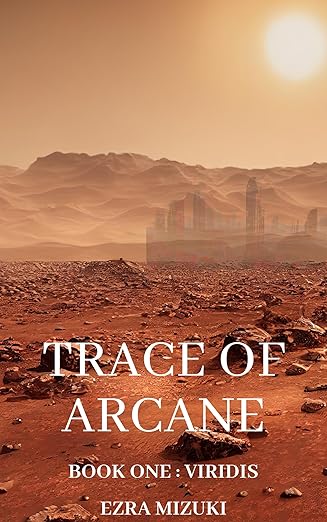

Trace of Arcane, by Ezra Mizuki, is a coming-of-age dystopian novel that follows Eden, a spirited and sharp-tongued teenage girl navigating a fractured society where spirituality, tradition, and power intersect in disturbing ways. Set in the colorful yet controlled city of Viridis, the story explores Eden’s struggle for autonomy, the pressures of an impending ceremonial passage called the Ruki, and the unsettling influence of a foreign missionary named Thales. Through poetic prose, social commentary, and unsettling tension, the book weaves a tale of rebellion, identity, and the often invisible violence that shapes young women’s lives.
What struck me first was how beautifully the book is written. Mizuki’s language is lyrical and haunting. The worldbuilding is rich, and the sensory details, like the spices in the market, the moonlight on old clay walls, made the setting feel close and alive. Eden’s voice is electric. She’s messy, sarcastic, defiant, and vulnerable all at once, and her internal monologue was sharp enough to make me laugh out loud one moment and feel sick to my stomach the next. But what really pulled me in was the unflinching way Mizuki handles trauma, not as a spectacle, but as something that hides in plain sight, in the spaces between duty and silence. The dynamic between Eden and Thales was especially chilling, and watching how Eden rationalized her pain left me uneasy in the best kind of way.
At times, I found myself frustrated, more with Eden than the book itself. Her contradictions felt so real, so raw, that it became hard to root for her without also wanting to shake her by the shoulders. But that discomfort is part of what made the book so powerful. It doesn’t try to teach a lesson. It invites you to sit with all the complications: a mother trying to protect her daughter from a life she herself was forced into, a society that wraps obedience in tradition, and a girl trying to claim herself in a place where every choice comes with a cost. Some of the dialogue felt a bit uneven at times, and a few characters, like Zig, came across as slightly exaggerated. Still, those moments were small and didn’t take away from a story that kept me engaged.
Trace of Arcane deals with spiritual abuse, coercion, classism, and betrayal in ways that feel too familiar. But if you’re someone who likes character-driven fiction that doesn’t sugarcoat the truth, something dark, poetic, and intimate, then this book will speak to you. I’d recommend it for fans of The Handmaid’s Tale, Daughter of Smoke and Bone, or The Power. If you’re a teen or adult who’s ever felt caught between two worlds, between tradition and choice, or if you’ve ever wanted to burn the whole system down just to breathe for a second, this is a must-read.
Pages: 425 | ASIN : B0F7SLJ9QZ
The Family Story

Terra Nova follows a father and daughter surviving the unknown as they navigate life across planets and face impossible decisions when he becomes gravely ill. Where did the idea for this book come from?
I wanted to explore the emotions and trials inherent with someone you love facing serious illness. I also wanted to allow Sev to grow into herself as a young woman, her father’s illness being a catalyst for making some tough decisions to keep her family together. I also wanted to showcase everyone’s role in the family story…everyone’s importance. Even Phoenix, despite being ill, undertakes significant emotional work to maintain the family unit. I was a caretaker for my grandmother during her illness, and a lot of Sev’s plight stems from my experiences.
What is the most challenging part of writing a series?
I’ve found that keeping the details straight over the series, as well as crafting the larger story outside of each installment, where everything is cohesive and engaging, is the most challenging aspect of writing a series. It’s also rewarding, though. I enjoy planning these adventures as much as I enjoy writing them.
What was your inspiration for the characters and their relationship?
The Terra series is an exploration of the purest form of love in all its designs…parental, familial, and romantic. I also wanted to explore the strength and flaws in people and their resilience through adversity.
Can we look forward to seeing Book 3 soon? Where will it take readers?
Yes! Terra Lux, the third installment in the Terra series, will come out in the Spring of 2026. You can expect new worlds, new adventures, as well as a few twists along the way.
Author Links: GoodReads | X (Twitter) | Facebook | Website | Amazon
Three years after the events of Terra Firma, Phoenix, Sev, and Pearla are thrust into a new battle—
one that will test them in ways they never imagined.
But time is running out.
With enemies closing in and impossible choices ahead, the family must once again fight for their
future—this time, against a fate far worse than those on Terra Firma.
Will they find their way home, or will they be lost to the stars forever?
For fans of The Divergent Series and The Hunger Games… when the future crumbles, it’s who you hold on to that matters most.
Are you ready to uncover buried secrets, face impossible choices, and defy a broken galaxy? Get your copy of Terra Nova today and be part of a journey where loyalty is tested and destiny rewritten.
Terra Nova
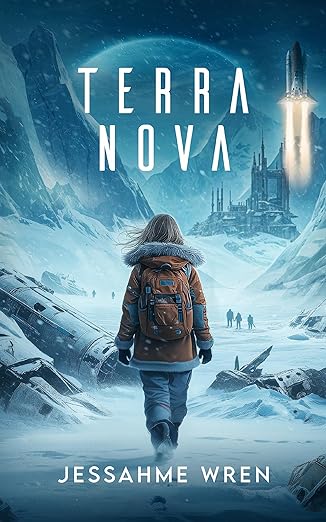
Jessahme Wren’s TERRA NOVA is a beautifully imagined and emotionally charged story about a father and daughter navigating life across planets, love, grief, and the sheer grit it takes to survive the unknown. At its core, it’s a tale of devotion. Sev, a whip-smart teen growing into herself, and her father, Phoenix, a loving and resilient man with a painful past, live on a world called Dobani. Their peaceful life is upended when Phoenix becomes gravely ill, and Sev must make an impossible decision to try and save him. What follows is a journey across stars to the snowy, distant planet of Ocarro, where medicine is cutting-edge but answers are scarce. Alongside them is Pearla, Phoenix’s partner, and Sev’s steadying force, as they face medical mysteries, bureaucratic red tape, and the shadows of old trauma.
Wren writes with an intensity that sneaks up on you. Her pacing is smooth and measured, letting the emotion build naturally. The world-building is sharp without being showy. Every planet feels lived in, not just imagined. What stood out most to me was the tenderness between Sev and Phoenix. Their relationship isn’t perfect, but it’s thick with love and care. Wren doesn’t rush the drama or the science fiction, she lets her characters breathe. And in those breaths, the humanity shines. I found myself rooting for Sev not because she was heroic in the usual way, but because she felt real. Smart, a little stubborn, and so brave.
The emotional punches land hard. Watching Phoenix deteriorate is gutting, especially because he’s portrayed so vividly in the beginning. I did wish, at moments, that the story pulled back a little to explore more of the broader universe. The political backdrop and the mystery of Terra Firma are ripe for digging into, but they take a backseat to the personal arc. That isn’t a flaw exactly, just a choice that trades scale for intimacy. And maybe that’s what this book is really about: not saving the galaxy, but saving the person you love most. That trade-off feels worth it.
TERRA NOVA is a warm but gut-wrenching story. It’s a sci-fi story for anyone who’s loved someone through illness, who’s had to grow up too fast, or who just needs a reminder that love is its own kind of gravity. I’d recommend it to fans of Becky Chambers, Martha Wells, or even folks who normally steer clear of sci-fi but love a strong emotional hook.
Pages: 234 | ASIN : B0FD48SQJS
Multidimensional and Relatable

Imber centers around a young woman whose family is dedicated to sustainable living as she finds herself drawn into the mystery surrounding the fate of Earth and the limits of science. Where did the idea for this novel come from?
For as long as I can remember, I have been drawn to wildlife and wild places – not necessarily in a clinical way, although I do enjoy learning about nature, but more often as feelings of deep affection and awe. The initial spark for Imber grew out of the idea that humanity has a profound connection with nature. I wanted to explore what might happen in a dystopian future where that connection is strained to a breaking point.
How do you capture the thoughts and emotions of a character like Violet?
Violet is a complex protagonist. While she has many admirable qualities, she is far from flawless. It was important to me that Violet be multidimensional and relatable. In the first moments of Imber, Violet is brooding and somber. She’s reading depressing poetry on a day when she is already sad. Although she is self-aware enough to stop, I love that the first time we meet her is in a moment of self-sabotage. When capturing Violet’s thoughts and emotions, I was careful to shine a light on both her strengths and weaknesses. And because she is highly intelligent and analytical, her inner life must reflect that as well. So, overall, I would say that characters like Violet require a layered approach that befits the complexity of their thoughts and feelings. Violet was challenging to write – but tons of fun, too.
Is there any moral or idea you hope readers take away from Imber?
One of the fascinating things about reading is that people can take away very different things from the same book. They might have dissimilar interpretations of the plot or characters, or certain aspects of the story might resonate differently with them. As an author, I think it’s exciting that my work can have a life of its own in that way. Nevertheless, there are themes in Imber that I hold dear: humanity’s responsibility as shepherds of the earth; the power of hope; courage and perseverance in the face of injustice; and the beauty of found family, to name a few.
What is the next book that you are working on, and when will it be available?
I would love to write a sequel to Imber. I have roughly outlined the story, but I haven’t started to write it in earnest yet. I am working hard to help Imber find an audience. If there is interest, I would be thrilled to continue this tale!
Author Links: Goodreads | X (Twitter) | Website | Amazon
The remnants of humanity are living in hiding, making the best of their circumstances while searching for a new celestial home. Just when salvation seems imminent, four strangers discover they have an unusual, inexplicable link—one that pitches them headlong into high adventure and intrigue.
Totally unprepared, the four must navigate shocking obstacles and trust unexpected allies as they race against the clock to unravel a chain of unsettling revelations that could impact the fate of the world.
The government has been concealing important facts about humankind’s promising hereafter. Will the efforts of a farmer, a hacker, a businessman, and an academic be enough to overcome impossible odds and expose the truth before it’s too late?
Imber
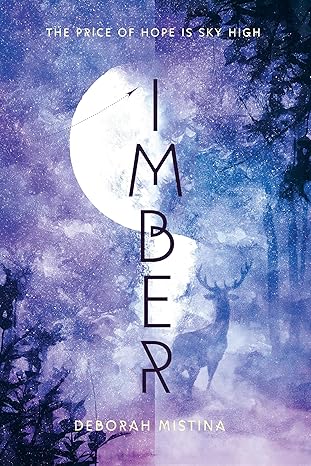
Deborah Mistina’s Imber is a speculative, soul-stirring tale set in a future where nature is both fragile and sacred. The novel follows Violet Murphy, a young woman devoted to her family’s farm and their legacy of sustainable, organic living amid a crumbling world. As the government’s strange motives begin to unravel, Violet is pulled into a deepening mystery that questions everything, from the fate of the Earth to the limits of science and memory. At once a dystopian adventure and an emotional meditation on grief and hope, Imber crafts a world that’s both fantastical and deeply familiar.
I enjoyed Mistina’s writing style. It’s poetic, even when it’s subtle. Take the opening pages where Violet feeds her horse Firestorm while mourning her lost parents. The imagery is soft and painful: “They broke like porcelain on the jagged rocks below, where the sea writhed with furious waves…”. Mistina doesn’t just write; she paints with words. She lets grief sit beside beauty. The prose made me feel something in every paragraph, like each sentence had its own pulse.
Then there’s the story itself, which is clever and unexpected. When Violet is summoned to present her work at the Science Bureau, things turn dark fast. The seemingly harmless coffee offered to her becomes a sinister turning point. “It was excessively bitter and altogether unsavory,” she says—a perfect metaphor for what comes next. That whole interrogation scene was haunting. It wasn’t just suspenseful, it was invasive and raw. The way Mistina writes Violet’s spiraling consciousness during that sequence made me uncomfortable, in the best way. I couldn’t stop reading, even though I wanted to yell at Violet to run.
But maybe the most surprising part of Imber was how it made me care so deeply about more than one character. Jack Collins, who shows up in a later chapter, is someone I didn’t expect to love. He’s a hunter mourning his father, caught in a storm of his own. At one point, he’s trying to shoot a deer but ends up crying in the rain because he suddenly feels the deer’s fear. Sounds absurd, but the way Mistina handles it is gentle and strange and real. I felt his grief. I felt his confusion. That’s powerful writing.
By the time I finished the book, I felt a little haunted, a little hopeful, and completely wrecked in the best way. Imber isn’t just a sci-fi story or a survival tale. It’s a quiet rebellion against numbness. It reminds us what it means to feel deeply, to protect fiercely, and to listen—even when it’s hard. I’d recommend this book to anyone who loves stories about resilience, about the intersection of science and emotion, and about what it means to fight for what you love. It’s perfect for fans of Station Eleven or The Overstory, or really anyone who needs to be reminded that the Earth, and our hearts, are worth saving.
Pages: 315 | ASIN : B0DV3V8L5K
By Dawn’s Early Light

By Dawn’s Early Light opens with a shipping container marked with harmless cargo—kitty litter, hazelnuts, and bananas—and spirals into a jaw-dropping apocalyptic thriller. A nuclear attack levels America’s major cities in a matter of minutes, and from there, chaos reigns. Through the eyes of Jack, Mohammad, Sasha, and Jake, readers are dragged into a gritty, horrifying world where society crumbles fast and quietly, and the line between survival and humanity fades just as quickly.
Jenny Ahmed’s writing is intense. The buildup in the prologue is deceptively calm: Jack’s container pickup feels routine, almost boring until this gnawing unease sets in. That feeling never really leaves. Mohammad’s moment with the button, the memory of his daughter Leila, and his final “Forgive me, Leila” just gutted me. It’s brutal, heartbreaking, and somehow still grounded in something deeply human. The whole detonation scene was visceral. Every paragraph punches you in the gut with imagery so vivid it borders on cinematic.
But what really surprised me was how the tone shifts post-blast. The pacing slows down a bit and becomes almost eerily quiet, just like the abandoned cities Sasha and Jake find themselves in. The creeping dread of walking through empty buildings, the discovery of the almost zombie-like infected people, the weird stillness of Albany—that got under my skin. Sasha’s logical, methodical background as an FBI forensic pathologist clashes beautifully with the utter irrationality of what’s unfolding. The horror isn’t just in the destruction, it’s in what’s left behind. Ahmed makes the reader sit with the silence, the unknown, the rot. It’s not just about surviving; it’s about understanding what kind of world you’re surviving in now.
By Dawn’s Early Light isn’t simply a disaster novel. It’s about fear, helplessness, and the slow unraveling of reality. The writing is raw, the characters feel like real people making terrible decisions under impossible pressure, and the tension never lets go. I’d recommend this sci-fi book to fans of post-apocalyptic thrillers, especially those who like The Road or Station Eleven but want a little more fire.
Pages: 229 | ASIN : B0DPLKXNYY
By Dawn’s Early Light
Jenny Ahmed’s By Dawn’s Early Light is a gut-wrenching thriller that throws readers headfirst into a world unraveling at the seams. It begins with a seemingly routine shipment at the Port of New York, just another night, another job, and another cargo manifest listing the mundane: kitty litter, hazelnuts, and bananas. But beneath that everyday veneer, something sinister lurks. As the story unfolds, the stakes skyrocket in a terrifyingly plausible doomsday scenario. A nuclear attack on American soil shatters life as we know it, leaving behind a silent, scorched wasteland where the rules of survival have changed. What follows is a gripping tale of chaos, fear, and the desperate fight to understand what happened and, more importantly, what comes next.
What struck me first was the sheer weight of the opening chapters. The eerie calm before the storm and the quiet tension as Jack picks up an unassuming shipment build an undeniable sense of dread. Ahmed’s writing is visceral, immediate, and cinematic. She doesn’t just tell you that something is wrong; she makes you feel it, in the tightening grip of Jack’s paranoia, in the silence that feels too thick, in the way shadows seem to stretch just a little too long. The moment of impact, when the bombs detonate, is nothing short of breathtaking. The descriptions are brutal: New York reduced to ash, people vaporized in an instant, the sheer force of destruction wiping away lives like they were never there. It’s horrifying, yet impossible to look away.
Beyond the spectacle of destruction, the book shines in its portrayal of human resilience, or lack thereof. Take Mohammad, a character whose inner turmoil is as gripping as the apocalypse itself. His finger hovers over a button, the weight of an entire country’s fate pressing down on his trembling hand. He’s not a villain in the traditional sense. He’s a man consumed by forces bigger than himself, trapped in a web of manipulation, fear, and a desperate, misplaced sense of duty. His final moments before he presses that button are some of the most chilling in the book, not because of what he does, but because of how painfully real his thought process feels. His story isn’t just about terrorism; it’s about desperation, coercion, and the terrifying ease with which someone can be turned into a weapon.
Then there’s Sasha and Jake, two people thrown into a world where nothing makes sense anymore. Their journey through the ruins of a dead city is filled with haunting imagery, the sky an unnatural shade of orange, the streets eerily silent, entire cities wiped clean of life. But what makes their story compelling isn’t just the horror; it’s the uncertainty. They don’t know what’s happening. The world they knew is gone, and all they can do is run, searching for answers, for safety, for something that feels real again. The tension is persistent, especially when they encounter the sheriff, sick, hollow-eyed, and barely human. The realization that this isn’t just about bombs, but about something far worse, hits like a gut punch.
If there’s one thing this book does masterfully, it’s keeping the reader on edge. Every time you think you understand the scope of the disaster, Ahmed pulls the rug out from under you. It’s not just New York. It’s not just Washington. It’s everywhere. The slow, horrifying realization that civilization as we know it has ended seeps into every page. And then there’s the creeping horror of what comes next—the people left behind, the sickness, the way death lingers in the air. The world doesn’t just collapse in fire; it unravels, leaving behind something unfamiliar, something wrong. And yet, in the middle of all this destruction, the question remains: who did this? And why?
By Dawn’s Early Light is not for the faint of heart. It’s raw, relentless, and deeply unsettling. But it’s also one of those books that sticks with you long after you’ve turned the last page. If you’re a fan of apocalyptic thrillers with a razor-sharp edge—think The Road meets Tom Clancy—this one’s for you. Just be prepared: it doesn’t pull its punches. And once you step into this world, you won’t come out the same.
Pages: 229 | ASIN : B0DPLKXNYY


