Blog Archives
Peeling the Layers of an Onion

Crushed Azaleas gathers fragments of an international childhood into an intimate memoir about belonging, family wounds, cultural identity, music, and learning to understand the people who shaped us. The memoir unfolds through self-contained memories rather than a strictly chronological narrative. Why did that structure feel right for your story?
I chose the form of self-contained memories, or vignette-like scenes (as I refer to them in my introduction) because it was the only way to convey the beauty and power of each memory, and also the absence of a unifying theme linking these memories into a coherent whole. Longer chapters like “Roman New Year’s” and “A Monsoon Tale” present somewhat of a contrast because they portray entire worlds where festive and colorful surroundings take center stage.
Music appears throughout the memoir as an important emotional language. What has music allowed you to express or understand that words sometimes cannot?
Any answer to this question will be incomplete because you are asking me to describe a place beyond words. Toward the end of my chapter titled “Seeking a Spiritual Path,” I describe what listening to music does for me. It creates a sanctuary, a space beyond time where love received is perceived as light, a place of mystery, a home for my soul.
What was most difficult about writing honestly about people you loved while also acknowledging the pain within those relationships?
Writing this memoir has been like peeling the layers of an onion. Each layer has brought pain with it, and also a deeper insight. It has been an inward journey. Early on I decided to bare my soul to the reader and to show the beauty and pain inherent in loving relationships. In family, we are at our most loving and most vulnerable. I found resonance and affirmation in reading Thomas Moore’s “Care of the Soul” where he states “Family is a sometimes comforting, sometimes devastating, house of memory.”
After spending so much of the memoir searching for belonging, where do you believe our deepest sense of home ultimately comes from?
In answer to this question, I would like to quote a concept from Zen practice called “turning one’s light around.” It teaches that one’s true light (wisdom) isn’t waiting at the end of a long journey, it has been always at one’s own doorstep (within) if one simply stops looking outward. I lean towards this inward journey at the end of my first chapter titled Origins: “Maybe the way back home is to find the most intimate part of me, a part stretched thin by memory. A part that is beautiful, mysterious, and fragile, sustained by a love of dreams and origins.”
Author Links: GoodReads | Website
Born in Washington, D.C., and raised across Japan, the United Kingdom, Italy, and India, Moulik grew up amid constant motion—an outsider everywhere, yet belonging nowhere. Told through vivid vignettes, his memories capture the wonder of postwar cities, the rituals of diplomatic life, and the friendships that shaped a wandering childhood.
But beneath the cosmopolitan surface lies a more fragile world: a demanding father whose approval must be earned, a mother struggling with deep depression, and a boy searching for refuge in music, memory, and the cultures around him.
Evocative, intimate, and deeply reflective, Crushed Azaleas explores the quiet complexities of identity, family, and belonging—resonating with anyone who has ever lived between cultures or questioned where “home” truly lies.
Crushed Azaleas


Amal Moulik’s Crushed Azaleas is a memoir built from vivid, self-contained memories of a childhood spent moving among India, Japan, England, and Italy. The son of an Indian diplomat who later worked for the United Nations, Moulik grows up surrounded by travel, education, culture, and material comfort, yet his most persistent concern is the meaning of home. Early in the memoir, he describes himself simply: “I remained an outsider.” That sense of displacement gives the book its emotional continuity. Moulik presents childhood through episodes shaped by the way memory actually works: certain rooms, conversations, humiliations, landscapes, meals, and pieces of music remain sharply illuminated while the years around them recede. He moves easily from a sunrise accompanied by an Indian morning raga to childhood mishaps in Tokyo, school life in London, family holidays in India, and adolescence in Rome. The result is a memoir in which geography matters deeply, but place is always connected to an internal search for belonging.
The book’s strongest quality is Moulik’s ability to preserve a child’s perspective while allowing the older writer to understand what the child couldn’t. That dual vision gives seemingly small incidents surprising emotional weight. A young Amal can marvel at an earthquake, quarrel over a handkerchief, misunderstand religious customs, or lose his breakfast to monkeys, while the adult narrator recognizes the larger questions those memories contain. Humor appears frequently and keeps the memoir intimate, particularly when childhood logic collides with adult expectations. At the same time, darker memories accumulate around his family. His father, Baba, is intellectually formidable, culturally sophisticated, and capable of introducing his son to beauty, but he’s also controlling and intensely concerned with achievement and obedience. His mother, Ma, is loving and spiritually influential, yet increasingly withdrawn as depression overtakes her daily life. Moulik’s treatment of both parents gains force from its specificity. He remembers food, clothing, music, gestures, arguments, and silences, allowing family relationships to emerge through scenes. The title itself comes to represent this mixture of beauty and injury, a pattern that extends through much of the memoir.
As Moulik grows older, Crushed Azaleas broadens into a thoughtful account of identity formation. His experiences with racism at school force him to understand how others interpret the color of his skin, while friendships across cultures and religions encourage him to resist inherited prejudices. His spiritual curiosity develops in much the same way. Hindu prayers associated with his mother, Christian scripture and hymns at school, Catholic Rome, and his own questioning temperament become parts of an evolving personal spirituality. Music provides an equally important language of connection. Indian classical music, opera, church music, and eventually Mahler accompany some of the memoir’s most significant moments, giving Moulik access to emotional territory that his family often struggles to express directly. These themes come together particularly well in the later Rome chapters, where adolescence brings greater independence. He begins challenging his father’s assumptions, defending friendships his father disapproves of, pursuing his own interests, and discovering the city beyond the controlled boundaries of family life. The international setting therefore becomes more than background. It shapes the author’s moral imagination, teaching him to examine nationality, race, faith, loyalty, and prejudice through lived encounters.
The closing sections give the memoir its deepest emotional resonance. The death of Moulik’s friend Marc, who introduced him more fully to Mahler, transforms a youthful friendship into a lifelong meditation on grief, just as the earlier death of Ram, the devoted family servant who cared for him as a child, becomes inseparable from childhood guilt. Moulik writes of Ram, “Writing this now is an act of self-forgiveness.” That sentence also describes much of the memoir’s larger purpose. In “Heart to Heart,” he looks back at the emotional structure of his family with unusual clarity, recognizing his father’s need for control, his mother’s suffering, and his own lifelong search for unconditional love. The epilogue then carries the idea of home beyond childhood, tracing Moulik’s later movement through London, the United States, and Germany before his eventual return to the country of his birth. Crushed Azaleas is therefore both a record of an unusually international upbringing and an examination of how a person turns scattered memories into a coherent understanding of self. Its lasting achievement is the way it holds beauty and pain in the same frame: the music, cities, friendships, humor, and moments of kindness remain as consequential as the loneliness and family wounds. Moulik’s memoir suggests that home can be carried through memory, relationship, art, and the difficult work of understanding the people who shaped us.
Pages: 231 | ASIN : B0GZV79RFH

Sleeping With Lions
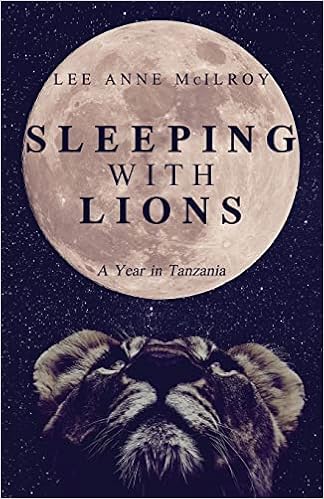
Lee Anne McIlroy’s Sleeping With Lions: A Year in Tanzania documents her time spent as an English Language Fellow for a university in Bukoba, Tanzania. The author’s memoir is a poignant portrayal of the landscapes and people who shaped her journey as a woman following a difficult divorce.
Lee Anne describes the scenery in Bukoba with eyes of wonderment. Unlike some of her peers, who only see the economic poverty of Tanzania and greater Africa, she indulges in the cultural richness of local life. She sees her time in Tanzania as a way to rediscover herself in a land that has always felt dear to her heart. From the food to the sounds and sights she experiences, she uses vivid descriptors that give the landscape a magical feeling.
The people she meets are a formative part of her journey. She makes an active effort to do more than coexist with her colleagues and the locals around her; she strives to learn from them, even in the most minute ways. She gets to know the family of Ocham, the professor she partners with at the university, and even visits their family home. She has a particular affinity for the priests with whom she stays for the duration of the trip. The priests help her rediscover her womanhood; unlike her ex-husband, who never fully understood her, they respect her career and offer her a set of fresh perspectives.
Finally, as an educator and mom of daughters raised in California, she often considers the conditions in which her students learn and operate. Despite lacking the socioeconomic privilege that her daughters had throughout their childhoods, she describes her students as some of the brightest and hardest-working she has encountered. In contrast to her students in California, students frequented her office hours in droves to reinforce their commitment to their education. In the end, she discovers that it is not wealth that makes a person’s life rich; the richness of spirit and passion makes it so.
Sleeping With Lions: A Year in Tanzania is an emotional memoir that shares one woman’s journey discovering parts of herself while learning about a new culture. Her strength shines through her stories and is inspirational to those that read them.
Pages 291 | ASIN : B0BKYFTPC9


