Blog Archives
A Special Bond

Fuzzy Pickles and the Tale of Two Grannies follows two grandmothers who are asked to babysit their grandson and what begins as a simple babysitting visit quickly turns into a lighthearted rivalry.What was the inspiration for your story?
The two grannies in the story are named after my own grandmothers, Pearl and Essie. They were both so different but I loved them each the same. Pearl loved to bake and serve her family and community. Essie loved to play in the dirt and have picnics.
What were some ideas that were important for you to share in this book?
There’s a special bond that grandchildren share with their grandparents and there’s enough love to go around.
The art in this book is fantastic. What was the art collaboration process like with the illustrator Nabeel Tahir?
Nabeel has illustrated seven Fuzzy Pickles stories. He’s an excellent communicator and so easy to work with.
What is the next book that you are working on and when can your fans expect it to be out?
I’ve recently released my first children’s chapter book. Onex: No Ordinary Dog is based on the true story of a bomb sniffer turned family dog. It’s about how one dog’s journey can teach us about resilience and the deep bonds of family.
Author Links: Facebook | Website
Discover how Granny Gerkin fills the house with the sweet smells of baked goods.
Join Granny Pickles in her magical garden, creating mud pies and planting flowers.
Learn alongside Fuzzy as he realizes what matters most about family and love.
This book is a heartwarming tale that captures the essence of family dynamics and the special bond grandchildren share with their grandparents.
Fuzzy Pickles and the Tale of Two Grannies
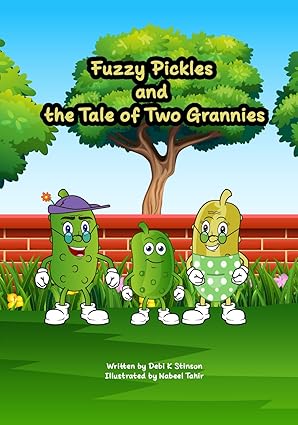

When Mrs. Pickles must leave town for the day, she calls on Granny Gerkin and Granny Pickles to look after her grandson, Fuzzy. What begins as a simple babysitting visit quickly turns into a lighthearted rivalry in Fuzzy Pickles and the Tale of Two Grannies, a delightful children’s book by Debi Stinson.
Fuzzy adores both of his grandmothers, but he soon realizes they each have different plans for how they want to spend time with him. Granny Gerkin, an expert in the kitchen, is eager to bake sweet treats together, while Granny Pickles, with her love for gardening, hopes Fuzzy will help her plant and tend to her beloved garden. Stuck in the middle, Fuzzy faces a challenge, how can he make both grandmothers happy without disappointing either? Will they all find a way to compromise, or will Fuzzy have to choose between them?
This charming tale stands out in more ways than one. First, it’s rare to come across a children’s book where pickles take center stage as the main characters, making this story refreshingly original. Second, Stinson’s creative take on the friendly tug-of-war between Fuzzy’s two grandmothers adds an engaging and relatable twist. Many children may find themselves in a similar situation, torn between the affections of family members who love them dearly. The book beautifully conveys the message that love isn’t a competition, rather, it’s about togetherness, understanding, and finding balance.
The vibrant illustrations by Nabeel Tahir bring the story to life with crisp, full-page artwork. Every page bursts with color and energy, ensuring young readers remain engaged while following Fuzzy’s adventure. The visuals not only enhance the storytelling but also make the reading experience all the more enjoyable for audiences of all ages.
Author Debi Stinson, known for her passion for children, animal rescues, and community service, brings warmth and creativity to this heartwarming story. As the sixth and final installment in the Fuzzy Pickles series, this book continues her tradition of crafting fun and meaningful narratives for young readers.
Fuzzy Pickles and the Tale of Two Grannies is a delightful read for children and adults alike. With its lovable characters, engaging storyline, and stunning illustrations, it’s a book that families will enjoy reading together. Whether you’re drawn to its humor, its heart, or its unique premise, this story is sure to leave a lasting impression.
Pages: 27 | ASIN : B0DFS2B3BS

Carried by Wings
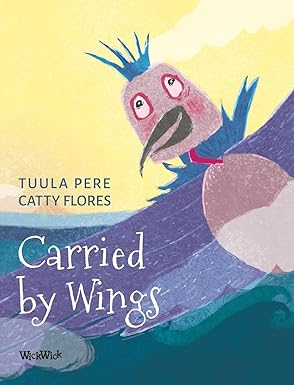
Carried by Wings is a heartwarming children’s book that tells the story of two young condor brothers, Arthur and Walter, as they grow and prepare for flight. Arthur is bold and eager, ready to take to the skies without hesitation, while Walter is hesitant, clinging to the safety of the nest. As the story unfolds, Walter struggles with fear and doubt, but with gentle encouragement from his parents, he eventually finds the courage to spread his wings and embrace his destiny. It’s a beautiful tale about facing fears, growing at your own pace, and discovering the confidence that was inside you all along.
What I love most about this picture book is the way it captures emotions so simply and honestly. Walter’s fear of flying feels so real. He isn’t just nervous, he’s absolutely terrified. When he tries to dig himself into the ground instead of taking off, I couldn’t help but smile. His slow journey to bravery, from watching his parents soar to finally taking that first leap, felt natural and deeply relatable.
The writing itself is easy and rhythmic, making it a great read-aloud book. The dialogue between Walter and his parents feels warm and reassuring, just like a parent encouraging a child who’s scared to try something new. The descriptions of the Andes mountains, the roaring sea, and the wind rushing around the nest create a vivid. The balance between action and introspection keeps the story moving, while still letting kids connect with Walter’s thoughts and emotions.
Catty Flores has done an incredible job bringing the story to life. The colors are rich, the landscape is breathtaking, and the condors themselves have so much personality. You can see Walter’s uncertainty in the way he tucks his wings in, the way he looks up at the sky with a mix of awe and fear.
I’d recommend Carried by Wings to any child who has ever been afraid to try something new. It’s perfect for bedtime reading, classroom storytime, or even as a gentle reminder to adults that sometimes, you just have to trust yourself and take the leap. It’s uplifting, beautifully written, and full of heart.
Pages: 40 | ISBN : 9528201970
The Ghost of the Deserted House
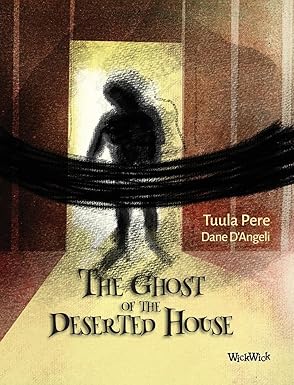
The Ghost of the Deserted House by Tuula Pere is a delightful children’s story about summer adventure, friendship, and a little mystery. Oliver and his best friend, Liam, spend their vacation at a summer cottage. What starts as an ordinary trip filled with fishing, homemade soup, and comic books takes an exciting turn when the boys decide to sleep in the attic of an old, deserted house. Their nighttime adventure quickly becomes suspenseful as an unexpected visitor appears, leaving the boys to wonder if the house is truly haunted.
I adored the way the story captured the magic of childhood summers. The setting felt so familiar. Lazy afternoons by the lake, the excitement of sneaking away, and the slight fear of the unknown. Oliver and Liam’s friendship was the heart of the book. The scene where they build their own sleeping nest in the attic brought back memories of my own children making forts and creating their own worlds.
The suspense was well done without being too scary. The moment Liam woke up to a dark figure looming over them was both thrilling and funny. I loved how the author balanced fear with lightheartedness, especially when the “ghost” turned out to be Oliver’s snoring father. As a mother, I appreciated that the book delivered excitement without crossing into anything too frightening. It gave just the right amount of mystery for young readers.
One of my favorite aspects of the story was how it encouraged independence. Oliver and Liam made their own plans, problem-solved, and experienced small risks in a safe way. While they did sneak away, their intentions were innocent, and the story ultimately reinforced the importance of communication.
I would highly recommend The Ghost of the Deserted House for young readers, especially those who love light mysteries, sleepover adventures, and stories about friendship. It’s perfect for kids who enjoy books like The Boxcar Children or The Magic Tree House series.
Pages: 34 | ISBN : 9528201873
Stormy Sailing

Stormy Sailing tells the story of Liban, a young boy on an endless journey with his refugee family, searching for a place to call home. From the first pages, you can feel the exhaustion of his parents and the weight on his little shoulders. The story follows Liban and his father as they are separated from their family, forced to build a makeshift boat, and sail into the unknown, hoping for a reunion on the other shore. The ending, though bittersweet, leaves you with a sense of relief.
What I loved most about this picture book is how real it felt. Liban isn’t some larger-than-life hero, he’s just a kid trying to be brave. The moment when he begs his parents not to leave his old uncle behind? That one really got me. It’s heartbreaking because you know he’s right, but there’s no good choice. And then there’s his dad, always trying to stay strong, even when you can tell he’s just as scared. The scene where he promises Liban, “Tomorrow everything will be better,” even though they both know that’s not true, was so raw and honest.
The writing is simple but powerful. It doesn’t waste words, which makes every moment hit harder. Watching Liban and his dad gather scraps and somehow turn them into something that could carry them across the sea was oddly hopeful. It was messy and desperate, but it was also kind of beautiful. And when Liban says, “No one else has anything like this!” you can feel the pride in his voice, even though you know how fragile that little boat really is.
Then came the storm. That scene was terrifying. And when Liban’s dad tells him, “As long as I stay afloat, don’t let go!” I actually teared up. The stakes were so real. It’s not a story where you know everything will be okay. This is survival.
Stormy Sailing is for anyone who wants a story that makes them feel something. It’s not just a children’s book, it’s a book for anyone who’s ever felt lost, scared, or hopeful. It would be a great read for older kids who can handle serious topics, and for adults who want a deeper, emotional story in a simple, beautiful package.
Pages: 42 | ISBN : 9528202071
Upward Mobility

In This Is How We Heal from Painful Childhoods, you provide readers with a guide for dealing with childhood traumas that leave an impact far into adulthood. Why was this an important book for you to write?
Throughout the doctoral program for my PhD in clinical psychology, I searched for a comprehensive program to address the many complex issues present in family environments that allowed for repeated trauma and dysfunction. While I learned many fantastic therapeutic approaches to treating trauma, I found that they addressed several key parts of the trauma picture while ignoring other critical components. And so I set out to create a more complete list of variables, along with solutions and guidance to address each variable. And it only took me 14 years to complete!
What is a common misconception you feel people have about growing up with a dysfunctional family dynamic?
So many young adults believe that all they have to do is get free of their dysfunctional family by getting a solid job and their own independent place to live, which usually works for about a decade until their late 20’s and early 30’s when the less obvious (but very damaging) lingering habits and unhealthy thinking prevent personal thriving and happiness. It is not until they learn about self-sabotaging cycles, interpersonal control dynamics, and other natural consequences of the dysfunctional family dynamic that these survivors are able to truly break free from their family’s trauma history.
Can you share with us a little about the research required to put your book together?
First of all, for many years I have directly served clients struggling with complex post-traumatic stress disorder (C-PTSD), like at the National Center for PTSD at the Veterans Affairs Palo Alto Healthcare System (amongst other places) where I studied and worked for 4 years in graduate school. Secondly, through continuing education programs, I purposefully learned many of the empirically validated therapies for treating trauma (EMDR, biofeedback, mindfulness, ACT, DBT, etc.). Third, by 2015, I had created my curriculum that included 13 variables that I turned into ‘rules’ that were easier for my clients to memorize and integrate into their lives. By 2017, the list had grown to 20 rules. By 2020, the 20 rules curriculum was highly refined and had successfully helped my clients and me address their family dysfunction in a comprehensive and detailed fashion. It was time to put the curriculum into book format!
What is one thing you hope readers can take away from This Is How We Heal from Painful Childhoods?
The lifestyle of upward mobility!! There is no one technique, one concept or skill, or one action that will heal a survivor and prepare them for a healthy, stable, happy life with their own successful relationships and family. So, much like the lifestyle of the martial artist, thriving survivors of childhood struggles have adopted a lifestyle of self-education, training, and self-empowerment that comes with tremendous challenges and victories throughout their lives. They just keep learning in their therapeutic activities–year after year–the many skills and insights that enable them to successfully handle life’s many challenges, as well as pass on their hard-learned education to the next generation!
Author Links: GoodReads | Facebook | Website 1 | Website 2
During prolonged periods of chronic stress, family traumas, or dysfunctional family dynamics, your young brain likely created deeply ingrained physical and mental habits to help you survive. Unfortunately, these habits and core beliefs work against your adult life and relationship goals.
Even if you did not directly experience childhood abuse or neglect, you have likely felt the harmful effects of intergenerational (generational) trauma from your family, inherited as genetic issues or passed along through skills deficits and dysfunctional relationships. When these ancestral issues go unaddressed, we hand them down to the next generation. Natural responses to childhood stress can include:Chronic anxiety symptoms
Unhealthy, chaotic, or toxic relationships
Survival-based thinking (short-term, defensive, distrusting)
Personal or family substance abuse (or addictions like gambling, work, porn)
Unstable work life
These perfectly normal reactions to a painful childhood do not automatically go away when you grow up! Recovery from such childhood experiences is challenging but quite possible when motivated survivors utilize self-education, therapy, and skills building to empower themselves.
This book presents 20 key concepts for comprehensively thriving past your stressful childhood. While many books focus on two to three of these issues in depth, they typically leave out entire concepts critical to beast-mode thriving! This book offers guidelines for you to develop yourself as an individual before moving on to enhancing your interpersonal functioning. Each chapter explains key concepts before offering solutions with realistic healing exercises to develop healthy habits that will help you heal and ultimately thrive! Here are just a few of the 20 rules:Trauma lies are just that…LIES
We must slow down to speed up
Practice treating yourself in a self-loving and self-respecting fashion
We are responsible for the decisions that we are aware of
It’s us against trauma world
This encouraging and reality-based guide was authored by Ernest Ellender, PhD, who has worked directly with trauma survivors from all walks of life since 1995. He combined insights from his clinical psychology doctorate education and career with training methods from his martial arts career (Jiu-jitsu black belt instructor) to create this comprehensive and effective curriculum for those on a healing journey toward emotional wellbeing.
Clients benefiting from this curriculum have included those struggling with mental health instability; those in codependent and dysfunctional relationships; single parents wanting to do better for their children; divorced parents struggling with healthy co-parenting; clients diagnosed with C-PTSD (complex post-traumatic stress disorder), ADHD, bipolar disorder, major depression, or dissociative disorders; clients whose prior therapists were poorly trained in trauma counseling and cptsd treatments; and parents seeking parenting tips to strengthen their family to prevent or minimize the impact of future traumas.
Following the guidelines of this book will lead to…More control, stability, and self-esteem
A daily life free of toxic shame!
Empathic and mature self-care and coping skills
Advanced self-advocacy and communication skills
Healthier, mutually supportive, and deeply engaged relationships when desired
The ability to articulate, set, and enforce healthier boundaries with both loved ones and toxic individuals
Positive parenting that fosters healthy families
A healthy lifestyle of healing and pursuit of long-term goals
Read less
A Reflection of My Childhood

Stella and the Berry Bay follows a little girl about to start school who finds out her family is moving to a new house and town. What was the inspiration for your story?
Stella and the Berry Bay like the other books in the Stella Series, are very dear to me. They contain many things that I have experienced myself.
Stella is not just a character but a reflection of my childhood. Many events and places from my past have found their way into the books about Stella and her friends. This story is a journey back to the time when I, like Stella, enjoyed the freedom of riding a little red bike in a safe country village.
But before I reached that point in my life, I had to experience the same challenges as Stella when she unexpectedly had to move. Writing a book about families moving to new places felt important because it has become increasingly common. Many children have to experience leaving their roots. As parents or educators, we must know how to treat the pain and discomfort associated with moving. Rooting in a new environment needs support.
It’s not easy for all children to get to know new schools, classmates, friends, places, and hobbies. In the worst case, a family move can instantly turn everything familiar upside down, making the child feel insecure. Parents don’t always pay enough attention to a child’s troubles because they might change jobs simultaneously. Also, making everything work in a new home takes time and energy.
What were some ideas that were important for you to share in this book?
Many things in this book are essential to consider when a family moves.
The children must be included in the preparations as early as possible to have enough time to prepare for a significant life change. This includes practical tasks like packing and arranging new living situations, which are important. However, the utmost importance lies in the mental transition from familiar surroundings to new experiences.
Primarily, it revolves around fundamental safety, focusing on whether the family remains united and addresses core family concerns. The subsequent consideration involves friendships, anticipating adjustments, especially with long-distance moves.
This book aims to emphasize the indispensable role of adults in the family’s moving journey. They contribute at various stages—from preparations and farewells to embracing the new chapter. Even seemingly insignificant keepsakes and memories can hold profound sentimental value.
Initially portraying Stella’s poignant challenges, the book gradually shifts focus towards the opportunities and friendships awaiting her in the new locale. These connections provide her with the strength to confront another hurdle, particularly the strict teacher overseeing her class at the new school.
Did you include any memories or emotions from your own childhood in the character of Stella?
I have used plenty of my childhood memories and personal experiences in all three Stella books I have published so far. Writing them gives me lots of fun because I can relive the best moments of my early years—not forgetting some challenges I had to conquer. I hope that both the ups and downs are something the young readers can enjoy and also use as building blocks in their own lives. Stella reminds me a lot of myself as a child. She loves independent nature trips, makes a lot of friends of all ages, and enjoys her little red bike.
In the first Stella book, Stella and the Magic Stone, I describe a particular summer in her life. She enjoys the freedom her little red bike represents and is not particularly intrigued by her parents’ constant blueberry picking – both very familiar elements in my childhood. Trying to find valuable or at least beautiful stones by hitting them to pieces was something I used to do. Thunderstorms with lightning were common in Eastern Finland’s lake district; they even burnt houses and destroyed forests and fields. However, the most prominent theme in this book is Stella’s relationship with her Grandpa, which reflects my Dad, who ended up in the hospital decades later and had to be woken up.
This book, Stella and the Berry Bay, is also very personal. As a child, I experienced the same situation as my main character. I was looking forward to getting into a nearby school, but things changed when our family moved to a country village twenty-five kilometers away. I said goodbye to my friends and headed towards the unknown. In my hand, I was tightly holding the teddy bear postcard given by the club aunt. I didn’t meet her ever after. Fortunately, the change turned out well for me in the end, and I have many good memories from that small village and a lot of inspiration for children’s books.
Also, the third book, Stella and the Spiky Friend, is based on my childhood and focuses particularly on one of my extraordinary adult acquaintances in the village—namely, the pharmacist who was feared by children and adults as well!
To put it short, Stella and her environment reflect, in many respects, my person and my life. I guess that village and its people meant to me the same as “Noisy Village” with its people meant to Astrid Lindgren.
Is there a topic you have always wanted to write about but have not yet found the right storyline for?
As for the children’s stories, I have been lucky to publish over sixty books in English already and even more in Finnish. The flow is constant, and new ideas keep developing smoothly in my mind.
The challenges of unfinished book plans and ideas mainly relate to my dreams of writing even more for adults. So far, I have published primarily short stories. But it would be wonderful if I could sometimes write something “longer” for adults. My life experience and the winding road from a small village to completely different environments and responsibilities would undoubtedly help me with this task. I feel that even we adults are all surprisingly small in front of the greatness of life – we carry inside us birth and death, joy and sadness, dreams and disappointments from the beginning till the end.
At least, that’s how I feel, although I tend to offer children the brighter side of life and encouragement for surviving even the more challenging days.
Author Links: Facebook | Website
In her new neighborhood in Berry Bay, Stella makes some new friends. But at Berry Bay School, Stella has more trouble getting used to things–especially Casserole Day in the cafeteria and her strict new teacher.
This Is How We Heal from Painful Childhoods: A Practical Guide for Healing Past Intergenerational Stress and Trauma
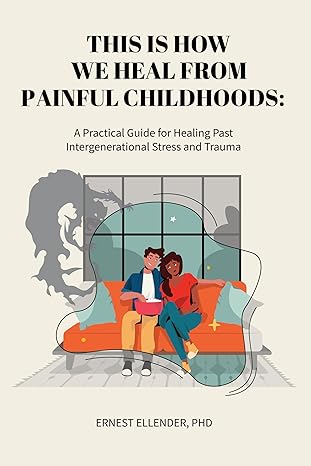
In This is How We Heal from Painful Childhoods: A Practical Guide for Healing Past Intergenerational Stress and Trauma, Ernest Ellender delves into the profound impact of childhood experiences on our adult lives. It’s a well-established notion that early childhood shapes our character and drives us through life. However, the journey is rarely without its challenges, and many of us carry the weight of childhood trauma into adulthood. Ellender’s book offers an insightful exploration of this trauma, particularly transgenerational trauma, and provides practical examples for beginning the healing journey.
Ellender emphasizes that transgenerational trauma doesn’t always stem from violence or horrific events; rather, it often arises from dysfunctional family dynamics that persist through generations. He asserts that now is the time to heal and grow from these inherited mistakes. The book is structured around 20 key points, or “rules,” designed to help readers overcome childhood trauma and live free from behaviors learned as self-protection mechanisms in childhood. One of the most compelling concepts in the book is the idea that “We must slow down to speed up.” This rule centers on the necessity of introspection. In our fast-paced lives, trauma doesn’t simply disappear; it requires deliberate and sustained effort to address and heal. To become stronger individuals, both for ourselves and those around us, we must take the time to engage in thorough self-work, allowing us to heal from our wounded pasts.
What sets Ellender’s work apart is its accessibility. Despite his academic background, the book is written in a relatable and comprehensible tone. It feels like a conversation with a trusted friend or a therapy session, making it easy for readers to connect with and learn from the material.
As someone with a background in psychology, I cannot overstate the importance of this book. Ellender’s career and expertise have culminated in a work that is invaluable for professionals in the psychology and mental health fields, as well as anyone struggling with past trauma or simply curious to learn more about the healing process. This is How We Heal from Painful Childhoods is a must-read for anyone on the journey to self-discovery and healing.
Pages: 367 | ASIN : B0CW1MJ1NH



 LITERARY TITAN