Blog Archives
Still Good: A Cookbook for Forgotten Food
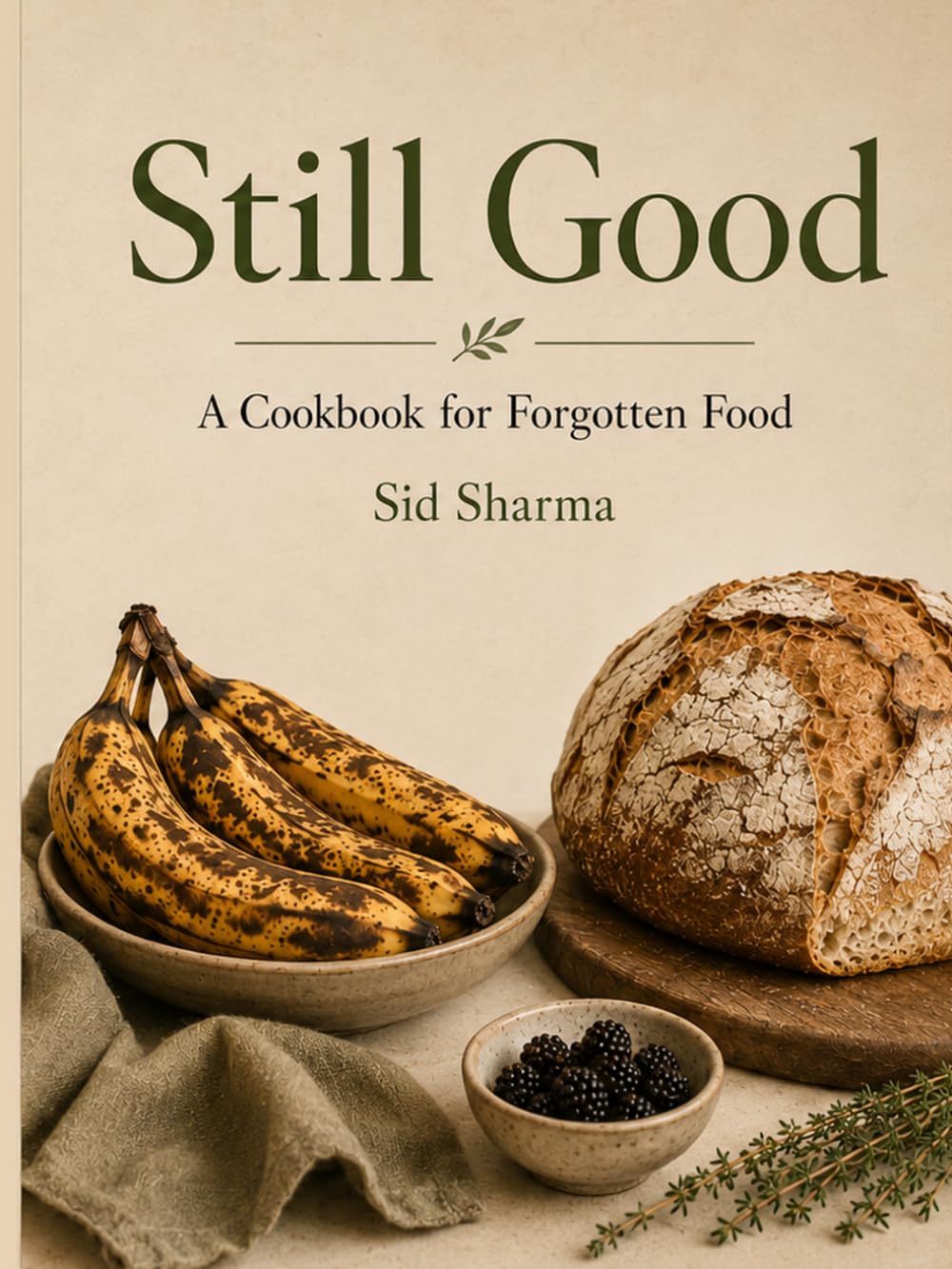

Still Good, by Sid Sharma, is a practical, visually inviting cookbook built around a familiar kitchen problem: food that’s no longer at its prettiest but is still perfectly usable. Sharma’s guiding idea is simple, “Ugly is usable. Spoiled is not.” From spotted bananas and wrinkled berries to stale bread, soft tomatoes, aging dairy, and leftover rice, the book helps readers recognize the difference between food that needs to be discarded and food that just needs a new purpose. Sharma organizes the book around ingredients people commonly forget about, which makes it especially useful when you’re staring into the fridge wondering what can still become dinner.
One of the book’s strongest features is how easy it is to use. Ingredients are divided into stages such as “Still Good,” “Past Prime,” and “Last Call,” and the recipes match those stages. A soft banana might become pancakes, bread, or frozen banana ice cream, while tired tomatoes can turn into sauce, chutney, soup, or shakshuka-style eggs. That same approach continues through herbs, bread, rice, dairy, eggs, root vegetables, avocados, and assorted leftovers. The recipes are generally short, approachable, and built from ordinary ingredients. Small author’s notes keep the instructions personable, while the safety notes are a smart addition because they remind readers that reducing waste doesn’t mean taking chances with spoiled food.
The book also succeeds as something you can browse, not just cook from. Its warm photography and consistent page design make aging ingredients look surprisingly appealing, and the ingredient guides are especially useful because they give quick visual and written cues for deciding what to cook now and what to toss. The final section expands the idea beyond individual recipes with a leftover cheat sheet, freezer guide, substitution guide, kitchen notes, and a reflection on the habits that lead to less waste. That broader structure gives Still Good a practical philosophy: cook with what you have, pay attention to the condition of your food, and get comfortable adapting. The result feels less like a collection of fixed recipes and more like a friendly kitchen reference you’d keep nearby.
I’d recommend Still Good most to home cooks who regularly buy groceries with good intentions and then discover a soft vegetable, aging yogurt, half-used bunch of herbs, or container of rice a few days later. It would also be a good fit for students, newer cooks, budget-conscious households, and anyone trying to waste less food without turning meal planning into a major project. Experienced cooks may appreciate it too, especially as a source of quick ideas and reminders, but its greatest value is for someone who wants more confidence deciding what can still be saved and what to do with it. Still Good makes that decision feel manageable, and it turns the neglected corners of the fridge into a surprisingly useful place to start cooking.
Pages: 79 | ASIN : B0H6S6H6C7



