Blog Archives
Appetizers with Judith – Yummy Nibbles and Starters that WOW!


Appetizers with Judith feels like spending an afternoon in Judith Briles’s kitchen while she gets ready for friends to arrive. The book is built around her genuine enthusiasm for gathering people around food, whether that means a holiday spread, a neighborhood potluck, or an assortment of appetizers that becomes dinner. Briles describes herself as a hands-on cook who likes to open the refrigerator or pantry, see what appeals to her, and play with ingredients from there. That spirit runs through the whole book. She wants food to taste good, look inviting, and encourage conversation, and she prefers ingredients that are familiar and reasonably easy to find.
There’s an impressive amount of variety here. The recipes move through beef, chicken, eggs, fruit, seafood, vegetables, charcuterie-style offerings, crostini, bruschetta, puff pastry bites, dips, sauces, and plenty of cheese. You can go from Easy Peasy Grape Meatballs to French Onion Baked Brie, Chicken Salad Sliders, stuffed dates, crab cakes, Shrimp Scampi Toasties, Sweet Potato Crostini, or Yellow Zucchini Soup Sippers without the collection feeling locked into one kind of party food. Briles is especially good at showing how one idea can branch into several possibilities. A cheese can change, a topping can be swapped, a homemade component can become a shortcut, or a recipe can shift from appetizer to lunch or light meal. That flexibility makes the book useful for cooks who like recipes but don’t want to feel boxed in by them.
The strongest personality in the book comes from Briles herself. She tells stories about friends, neighborhood gatherings, travel, ingredients she loves, things she keeps in her freezer, and the foods that disappear first when she puts them out. Her language is playful and unmistakably hers, with plenty of “easy peasy,” “a kiss” of this or that, and enthusiastic commentary about what makes her taste buds happy. Recipes also include practical details such as make-ahead advice, serving temperatures, substitutions, shopping shortcuts, portion estimates, and reminders about allergies. The later sections on cheese and kitchen essentials extend that same practical approach, giving readers a sense of how Briles stocks and organizes a kitchen for the kind of spontaneous cooking and entertaining the recipes encourage.
I recommend Appetizers with Judith to people who enjoy having friends over, bringing something memorable to a potluck, or turning a table of small bites into a meal. It should also appeal to cooks who appreciate permission to use a rotisserie chicken, prepared pesto, frozen puff pastry, or another useful shortcut when it makes sense. More adventurous home cooks will find plenty of combinations to riff on, while less experienced cooks can start with the many recipes that need only a handful of ingredients and a short prep time. Most of all, this is a cookbook for people who see appetizers as social food. Briles treats those little plates, skewers, dips, crostini, and warm bites as an invitation to linger, graze, talk, and reach for one more. That generous, convivial attitude is what gives the collection its character.
Pages: 212 | ASIN : B0HC4WY4YX

Still Good: A Cookbook for Forgotten Food
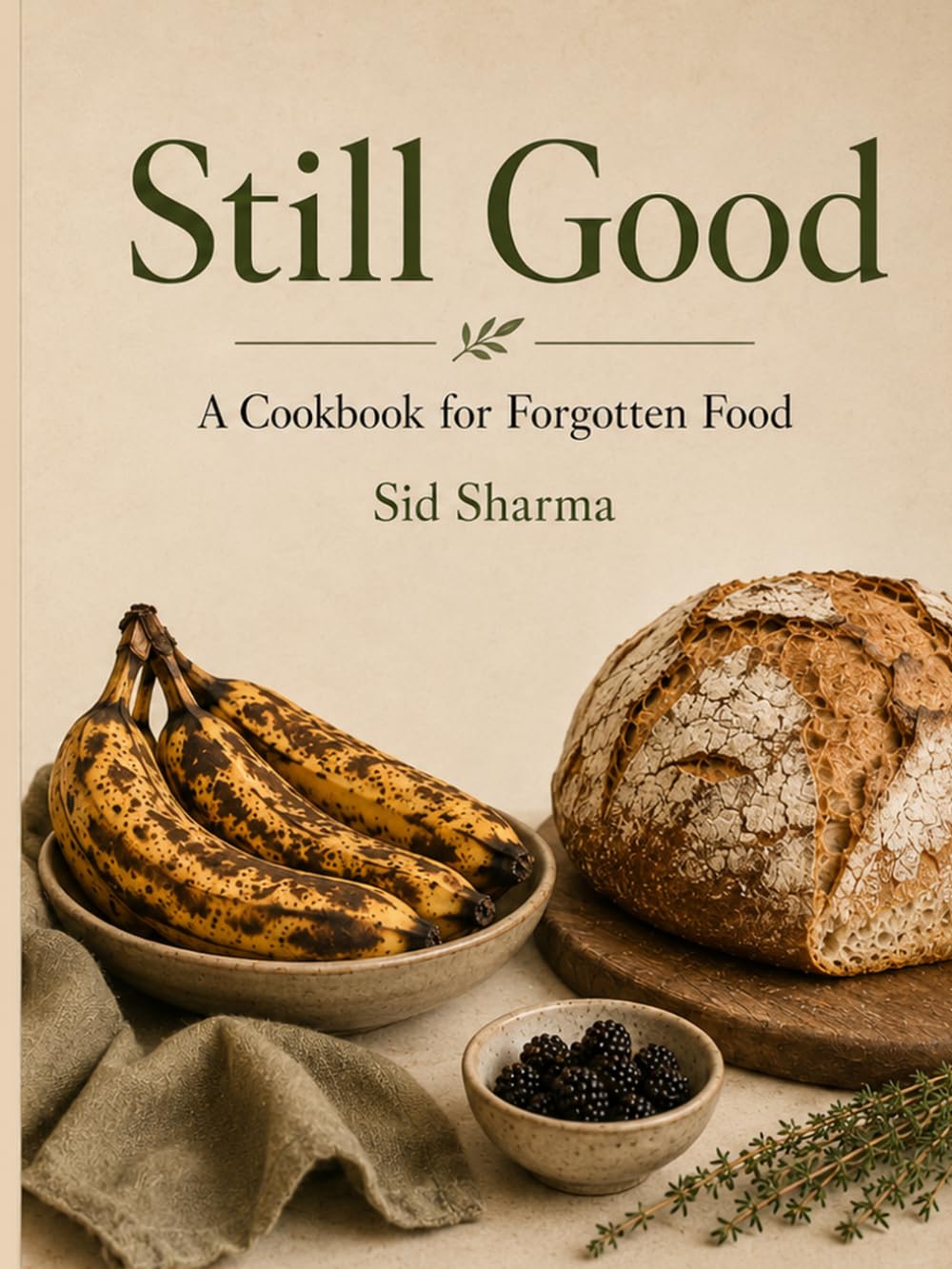

Still Good, by Sid Sharma, is a practical, visually inviting cookbook built around a familiar kitchen problem: food that’s no longer at its prettiest but is still perfectly usable. Sharma’s guiding idea is simple, “Ugly is usable. Spoiled is not.” From spotted bananas and wrinkled berries to stale bread, soft tomatoes, aging dairy, and leftover rice, the book helps readers recognize the difference between food that needs to be discarded and food that just needs a new purpose. Sharma organizes the book around ingredients people commonly forget about, which makes it especially useful when you’re staring into the fridge wondering what can still become dinner.
One of the book’s strongest features is how easy it is to use. Ingredients are divided into stages such as “Still Good,” “Past Prime,” and “Last Call,” and the recipes match those stages. A soft banana might become pancakes, bread, or frozen banana ice cream, while tired tomatoes can turn into sauce, chutney, soup, or shakshuka-style eggs. That same approach continues through herbs, bread, rice, dairy, eggs, root vegetables, avocados, and assorted leftovers. The recipes are generally short, approachable, and built from ordinary ingredients. Small author’s notes keep the instructions personable, while the safety notes are a smart addition because they remind readers that reducing waste doesn’t mean taking chances with spoiled food.
The book also succeeds as something you can browse, not just cook from. Its warm photography and consistent page design make aging ingredients look surprisingly appealing, and the ingredient guides are especially useful because they give quick visual and written cues for deciding what to cook now and what to toss. The final section expands the idea beyond individual recipes with a leftover cheat sheet, freezer guide, substitution guide, kitchen notes, and a reflection on the habits that lead to less waste. That broader structure gives Still Good a practical philosophy: cook with what you have, pay attention to the condition of your food, and get comfortable adapting. The result feels less like a collection of fixed recipes and more like a friendly kitchen reference you’d keep nearby.
I’d recommend Still Good most to home cooks who regularly buy groceries with good intentions and then discover a soft vegetable, aging yogurt, half-used bunch of herbs, or container of rice a few days later. It would also be a good fit for students, newer cooks, budget-conscious households, and anyone trying to waste less food without turning meal planning into a major project. Experienced cooks may appreciate it too, especially as a source of quick ideas and reminders, but its greatest value is for someone who wants more confidence deciding what can still be saved and what to do with it. Still Good makes that decision feel manageable, and it turns the neglected corners of the fridge into a surprisingly useful place to start cooking.
Pages: 79 | ASIN : B0H6S6H6C7
Whole-Food Vegan Diet

The Flavors Factor offers readers a truly nourishing whole-food, plant-based lifestyle that helps them avoid the pitfalls of junk-food veganism. Why was this an important book for you to write?
I noticed that many compassionate people were making ethical choices for animals without realizing they could also dramatically improve their own health. I understand that many weren’t concerned about their diet beforehand, so naturally continued on the same path with vegan equivalents, and that’s where I thought the book could make a difference. It’s written primarily for vegans who need a little encouragement to take advantage of these nourishing foods and to show that replacing their favorite meals with plant-based alternatives needn’t feel restrictive. Their decisions can help animals and benefit themselves; that’s a genuine win-win!
The eight food groups that make up “The Flavors Factor” give the book a clear structure. How did you develop that framework, and why those eight categories?
I came up with the idea of a structure within a structure. The external structure is the LEAD framework, which guides the reader from learning about the foods to designing their own meals with them. The eight categories encompass all the plant foods that are needed to thrive on a whole-food vegan diet. Then it suddenly occurred to me that they could all come together in the word FLAVORS, bringing the best of vegan and whole food plant-based together into one memorable foundation. The foundation is the internal structure and the basis of The Flavors Factor. I didn’t want the book to be just a cookbook, and the recipes included are purely examples, as the possibilities are truly infinite!
You share personal memories, including your childhood in Scotland. How did your own experiences with food shape your philosophy about eating well?
Looking back, I never connected food with health as a child, and Scotland’s not known for healthier dietary choices overall. We cooked everything in an enormous block of fat that was solid at room temperature, and then poured the melted fat from the sausages over the mashed potatoes, and it tasted great! My dad would then spread butter exactly 1/2 inch thick on each slice of bread. Some childhood experiences left me with a lifelong dislike of hospitals, which led me to look for ways to keep out of them, and researching how to eat well grew naturally from that. It led me to the whole-food vegan diet that I have followed and enjoyed for the last thirty years.
Looking back on the journey of writing this book, what has surprised you most about the conversations it has sparked with readers interested in healthier, more sustainable eating?
What surprised me most was how open people were. Even readers who weren’t vegan told me they wanted to eat more whole plant foods once they saw the approach wasn’t about perfection or restriction. Many also appreciated separating the nutritional aspect of eating from the ethical one, as it made the ideas easier to understand and apply. Of course, diet is only one part of a healthy lifestyle, and I still think “How to Avoid Getting Hit by a Bus” is the most unexpected chapter heading in a nutrition book!
Author Links: GoodReads | Amazon
Most people going vegan feel confident about the why, but not all are certain about the how. Cutting out animal products is only part of the picture.
A whole food plant-based approach is what actually determines whether your diet is balanced, nourishing, and sustainable long-term.
Whether you’re already vegan or simply exploring plant-based nutrition, getting it right from the start matters.
Well-intentioned choices don’t always add up to meals that support your well-being. You need a clear path and a solid structure.The Flavors Factor provides that structure
This book distinguishes between highly processed “junk-food vegan” traps and the whole plant foods that have sustained healthy populations for thousands of years. It explores their history, culinary traditions, and evidence-based health benefits, while offering a practical system for turning that knowledge into everyday meals.
At the heart of the book is The Flavors Foundation, an elegant solution for understanding which whole plant foods to eat, why they work together, and how to make them genuinely delicious and sustainable in everyday life.
The Experience section turns that understanding into action:
56 whole-food plant-based recipes built around familiar breakfasts, lunches, and dinners.
8 guided 7-Day Experiences that turn familiar meals into new plant-based favourites.
13 plant-based cheeses, sauces, and spreads that make whole foods deeply satisfying.
Evidence-informed nutrition science, explained in plain language.This is not a restrictive plan.
It is not a short-term reset.
It provides the clarity and direction needed to build a plant-based diet you can trust and enjoy for life.No extremes. No noise. No guesswork.
Story, Education, and Real Recipes

Mimi’s Magic Kitchen: The Great Brownie Bake-Off Disaster follows two children who enter a baking competition where they are challenged to make brownies with some very unexpected ingredients. Where did the concept come from, and why brownies specifically?
Really, the concept came from my love of food and cooking. I’ve always been a foodie. I love food, I love cooking, and I especially love baking. At that point in my life, I decided I wanted to spend more time doing things I genuinely loved, so I started getting back into cooking and baking again and sharing some of it online. That’s when I realized how much I wanted to encourage kids and parents to get back in the kitchen together more often. Some of my favorite memories growing up happened around the kitchen and homemade food, and I felt like that experience was slowly disappearing a little because life has become so fast and convenient.
Once I had the idea to make a children’s book centered around baking, the brownie idea came together pretty quickly because I already had this brownie recipe I’d been making for years that everyone always loves. The brownies are super easy to make, really forgiving, and honestly just really good, which made them perfect for the story.
Then I realized the unusual ingredients in the recipe sounded strange enough to become the actual story itself. That’s where the bake-off disaster idea came from. I thought it would be funny if the “normal” brownie ingredients people usually think of when making brownies disappeared, and the kids had to figure out how to make brownies using all these unexpected replacements instead.
Emma and Archer actually became the two kid characters in the book because they’re my real kids. My son was 9, and my daughter was 6 while I was writing it, which felt like the perfect ages for the world and audience of the story. They also have very different personalities, which made them really fun characters to write and helped bring a lot of personality into the story.
From there, everything else kind of grew naturally: the baking competition, the little educational section about ingredients and kitchen tools, and the real recipes in the back of the book. One thing that was really important to me was making sure the recipes were recipes families would actually want to make again and again, not just recipes meant to keep kids busy for twenty minutes.
The baking tips and ingredient explanations make the book feel interactive and educational without losing its playful tone. How did you balance storytelling with hands-on learning?
From the beginning, I already knew I wanted the book to be a mix of story, education, and real recipes. But honestly, once I wrote the story and really developed Mimi’s character, the rest of it kind of fell into place naturally.
I completely fell in love with her while I was writing. She’s funny, a little chaotic, creative, confident, and somehow always seems to know how to handle things without getting too flustered. She’s the kind of person kids would want to hang out with and the kind of fun, comforting adult I think a lot of us wish we had around growing up. She really became the heart of the whole book.
Once her personality started coming to life in the story, it became really obvious to me how I could make the educational parts and recipes feel fun too. I never wanted kids to feel like the story suddenly stopped, and now it was time for “learning.” I wanted it to feel like they were just continuing along with Mimi into her magical little kitchen world.
So I started writing the educational tips and recipes in her voice, with all her little comments, humor, and personality sprinkled throughout. I still remember testing some of the early recipe drafts on my daughter after I had rewritten them in Mimi’s voice. She was completely entertained by them and genuinely wanted me to keep reading the recipes out loud, which honestly made me laugh because what kid gets excited about hearing a recipe? That was the moment when it really clicked for me that this approach was working.
After that, I leaned into it even more. I wanted the whole experience to feel lighthearted, cozy, creative, and fun for both kids and parents. In my opinion, people do their best cooking when they’re relaxed, using their imagination, making memories together, and ending up with something delicious they can’t wait to make again.
This book feels designed to continue after story time ends, especially with the real brownie recipes included afterward. Why was it important to make the baking experience part of the book itself, and did you hope the story would encourage more family cooking and baking together?
Absolutely. One of the biggest goals of the book was to make the experience continue after the story ended. I didn’t want it to just be something kids read once and put back on a shelf. I wanted it to turn into something families could actually go do together afterward.
I also really wanted kids to feel more confident in the kitchen. I think a lot of people grow up believing they “can’t cook” just because they had a few bad experiences or messed something up once and got intimidated by it. But honestly, cooking and baking are messy sometimes. I’ve had complete disasters in my own kitchen, and I love cooking. That’s just part of learning.
That’s why the story itself became so important to me. The kids in the book get overwhelmed when everything starts going wrong, and then Mimi comes in with this attitude of, “Okay, so we’ll figure it out.” She teaches them that there’s usually a solution, even if it means thinking outside the box a little.
That’s a huge part of cooking to me. Some of the best things happen in the kitchen when you experiment, get creative, substitute ingredients, or make something your own. I’m notorious for taking recipes and scribbling all over them, changing ingredients and amounts until they become my version of the recipe. I wanted kids and parents to feel like the kitchen could be a place for imagination and creativity instead of pressure and perfection.
I also really wanted families to make memories together through the experience of the book itself. Read the story together, laugh at the chaos, learn a few things without it feeling overly serious, then go make brownies together and maybe make a little mess while you’re at it. Honestly, who cares if flour ends up all over the counter? That’s part of the fun.
My hope was that families would walk away not only feeling entertained but feeling proud of what they made together. Because when kids make something genuinely delicious that other people love too, it gives them confidence. That’s the kind of confidence that makes them want to get back in the kitchen and do it all over again.
Will Emma and Archer return to Mimi’s Magic Kitchen? If so, what other baking disasters might be waiting for them there?
Absolutely. Once I created Mimi, Emma, Archer, and this magical kitchen world, I honestly did not want to leave it behind. I always intended for this to become a series, which is why the book ends with “to be continued.”
The biggest inspirations for me were the kinds of worlds I grew up loving, things like Candy Land, Strawberry Shortcake, and The Magic School Bus. I loved those imaginative, colorful worlds as a kid, so a magical world filled with funny food creations, baking disasters, strange ingredients, and things you don’t totally understand yet just felt like such a fun place for kids to explore.
Once I finished the first story, I remember thinking, “Oh my gosh, this could be a whole world.” Not just one story, but an actual Mimi’s Magic Kitchen world with all these different places, food adventures, kitchen experiments, and lessons hidden underneath the fun. That’s something I really want to keep expanding more and more throughout the series.
The next story is actually already in the works, and it’s centered around homemade sodas, which is why the first book ends with “it’s about to get bubbly.” While I was finishing the brownie book, my kids and I started experimenting with homemade sodas and fermentation at home, and we had so much fun with it that I immediately knew it needed to become the next adventure.
We made things like ginger bug sodas, fruit syrups, and homemade versions of drinks that still felt exciting and magical for kids. I loved the idea that something as simple as making soda at home could turn into this big creative kitchen experiment where kids are learning new things almost without realizing it, because they’re too busy having fun making bubbly drinks.
I also love the idea of helping families realize that homemade things can still feel exciting and special. You don’t have to be some hardcore health person to enjoy making things from scratch. I just think there’s something really special about kids getting into the kitchen, experimenting, making a mess, and getting excited because they made something themselves that tastes amazing, and bonus, is so much better for them than anything at the store.
I already have ideas for more adventures after that, too, possibly even something savory after the bubbly adventure. But really, the biggest goal with all of it is just continuing to create experiences that kids and parents can genuinely have fun with together. I want families to get immersed in Mimi’s world, laugh at the stories, learn a few things along the way, and then feel excited and confident enough to go try something new together in the kitchen.
Honestly, I had an absolute blast writing the first story, and I’m having just as much fun working on the second one. I’ll definitely keep everybody posted on when that adventure might be coming next. But in the meantime, I really hope families enjoy stepping into Mimi’s Magic Kitchen world together, and I can’t wait for them to see what adventure is waiting for Emma and Archer next.
Author Links: GoodReads | Facebook | Website | Instagram | TikTok | YouTube | Amazon
Mimi’s Magic Kitchen and the Great Brownie Bake-Off Disaster is a highly illustrated kids storybook that turns story time into a real baking experience, complete with six brownie recipes families can make together.
Step into Mimi’s Magic Kitchen for a brownie bake-off gone wrong. Archer and Emma are left with a pantry full of things like pickled turnips, almond butter, and Essence of Mystery, with no idea how to turn any of it into brownies. What could possibly go right?
After the story ends, the fun continues with simple baking tips, ingredient explanations, and real recipes inspired by the book, because reading about brownies without making them would just be mean.
Hardcover and paperback editions coming Summer 2026!
Perfect for:
• Kids who love baking
• Family baking nights
• Cozy screen-free activities
• Parents looking for hands-on fun together
Includes:
• Six real brownie recipes
• Four gluten-free options
• Kid-friendly baking basics
• Highly illustrated full-color pages
A Life Manual-Finally!

Gerry O’Reilly’s A Life Manual (Finally) is less a conventional self-help book and more of a sprawling personal handbook for everyday living. It presents itself as an eighteen-month course in becoming more cultured, capable, and self-possessed, beginning with cleanliness, posture, manners, and presentation, then widening into cooking, writing, finances, religion, languages, flags, politics, nature, survival, psychology, the arts, and even antiques. The book openly announces that range and ambition from the start, with O’Reilly calling it “a life encyclopaedia after all,” and that description fits. It’s a manual in the old-fashioned sense: part guidebook, part reference work, part encouragement from someone who wants to pass along everything he’s gathered.
What gives the book its identity is O’Reilly’s voice. He writes like someone talking across a kitchen table, excited to share a stack of notes, hard-won habits, and odd bits of trivia that he genuinely thinks might improve your life. That tone is there in lines like, “You are about to commence your own journey,” which captures the book’s basic spirit: he’s not lecturing from a distance, he’s trying to accompany the reader through a long process of self-education. Even when the material gets dense or idiosyncratic, the voice keeps it personal. You always know there’s a specific person behind the advice, and that makes the book feel more human than polished.
The book is at its most distinctive when it embraces its huge scope. O’Reilly doesn’t stop at etiquette or grooming. He wants to teach the reader how to move through the world with more awareness, from table manners and bar behavior to cultural literacy and practical resilience. That’s why the same volume can move from “proper presentation” and restaurant conduct to tolerance, spirituality, and detailed pandemic and terrain survival planning. Read as a whole, the book becomes a portrait of the life O’Reilly admires: disciplined, curious, courteous, informed, and ready for almost anything. It’s not just about refinement. It’s about building a broad base of knowledge that he believes can steady a person in daily life.
What I found most interesting is that A Life Manual is really a map of one man’s idea of self-formation. O’Reilly tells the reader that this grew out of his own effort to become “more cultured and refined,” and that sense of private project turned public book gives it a memorable character. The result is a book full of instructions, opinions, encouragement, and personal conviction, all arranged into a long curriculum of improvement. It can feel eccentric because it reflects one person’s worldview so directly, but that’s also why it holds attention. You’re not reading bland advice assembled by committee. You’re reading a deeply individual attempt to answer a big question: what should a person know to live well and carry themselves with dignity?
A Life Manual is a big, earnest, wide-ranging compendium that wants to be useful, motivating, and memorable all at once. This book is a conversation starter, a personal syllabus, and a running attempt to make everyday life more intentional. Even when it wanders, it stays committed to that central mission, and that commitment gives the book its real charm.
Pages: 3054 | ASIN : B0GNR9J4NF
Ya Gotta Eat!

Ya Gotta Eat! is a cozy hybrid of family memoir and community cookbook, where Catherine Ring Saliba braids together Italian, Syrian, and old-school New England dishes with stories about the people who cooked them and the kids who grew up eating them. Recipes for things like lamb-bone spaghetti sauce, Christmas lasagna, kibbeh, koosa, bacon rolls, and corned beef and cabbage sit alongside memories of her scientist father whose mantra gives the book its title, long-ago tablecloths, nursing-school nights in snowy Vermont, and grandchildren circling the kitchen. It feels less like a polished “chef” book and more like being handed the family recipe box and a stack of photo albums at the same time.
I really fell for Saliba’s voice. She talks the way a good home cook talks in the kitchen, with side comments and little detours and a lot of humor. She admits when something is fussy, when she cheats, when she never mastered mashed potatoes. I liked how often she lets herself wander for a page before getting to the “official” recipe, like the story about her father’s grapes before stuffed grape leaves, or the rant about the IRS and that catastrophic turkey wing before the lemony wing recipe. Those bits made me feel oddly cared for. I could hear the clatter of pans, the low family chatter in the background, the sense that food is what you reach for when you do not quite know how else to love people. The writing is simple, sometimes rambly, but it has a warm pulse.
I also felt a lot of affection for the way she treats the recipes themselves. They are specific enough to cook from, yet they keep a loose, older style that trusts the reader. There is plenty of “a dab of butter,” “a big scoop,” “as much as you like,” and jokes about not remembering why the wooden spoon matters, only that it does. The dishes can be rich and old-fashioned, full of bacon, lamb bones, George Washington seasoning, and long-simmering pots. For me, that gave the book real character and a strong sense of era and place. I sometimes wished for clearer cues on yield, timing, or substitutions, especially when she leans on products that are not as common now or skips steps a beginner might need spelled out. The balance tilts more toward “let me tell you how we do it in this family” than toward test-kitchen precision.
I would recommend Ya Gotta Eat! to readers who like cookbooks with a personal, lived-in feel and to home cooks who already know their way around a stove and want to add some deeply nostalgic Italian and Syrian American dishes to their rotation. It is a great fit for people who cook to remember their own families. If you are happy to read family stories, dog-ear pages, and let the house smell like sauce for hours, this book feels like good company.
Pages: 268 | ASIN : B0GDZB8RGG
Just Time for a Quickie

Just Time for a Quickie isn’t your typical cookbook. It’s a flirtatious and cheeky exploration of food and love, designed to spice things up in the kitchen and beyond. From appetizers like “Foreplay Fondue” to desserts titled “Va Va Voom Vanilla,” the recipes are quick, easy, and packed with sensual charm. The Sisters channel humor, playfulness, and a genuine passion for cooking into a collection that encourages couples to bond over shared culinary adventures. It’s like a romantic comedy but with food as the star.
I have to admit, the puns alone had me hooked. Every recipe name oozes creativity and a touch of mischief. Take “Sleep with Me Salmon,” a dish that’s as fun to say as it is to make. The instructions are easy to follow, and the ingredients don’t require a scavenger hunt through exotic markets. I tried “Make Me Moan Meatloaf” for dinner, and while it didn’t quite live up to its name (blame my cooking skills), it was delicious and cozy.
The humor and sauciness add a delightful layer of charm to the recipes, creating a fun and engaging experience. The intros to each section bring a playful touch that sets the tone for the recipes. Including a few modern twists for health-conscious couples could make this gem of a cookbook even more versatile and appealing.
The “Slippery When Wet” section blew me away. These cocktails are flirty and fun, with titles like “Make Me Blush Rosé” and “Let the Night BeGIN.” The recipes turned an ordinary Friday night into something special. I whipped up “Tempt Me Tequila” for a friend’s visit, and it was such a hit that we ended up recreating it twice. The mix of practical tips and flirtatious charm made this section unforgettable.
Just Time for a Quickie is the perfect gift for couples looking to bring fun and romance into their kitchen or anyone who enjoys a little spice (figuratively and literally). It’s a delightful pick for date nights, newlyweds, or anyone who wants to turn cooking into an adventure. Pour a glass of wine and dive in.
Pages: 116 | ASIN : B0DPKMN4P9

Reap The Benefits

The Magic of Gluten-Free Cooking is a collection of recipes that will demystify gluten-free cooking and show readers that it can be affordable and taste great. Why was this an important book for you to put together?
The Magic of Gluten-Free Cooking was written because it occurred to me that if changing the way I ate was beneficial to me and my daughter, then it could also help other people reap the benefits by eliminating gluten in their diet. I wanted to share what we experienced. No more bloating, no more fatigue, increased happiness, and losing weight.
What is your one “go-to” recipe in this cookbook that you could not live without and why?
My one go-to recipe is the Pasta with Colorful Sauteed Vegetables. I love one-pan or one-pot meals, and it is a versatile and mouthwatering dish. You can add a protein like shrimp or chicken or just make it with the vegetables as a vegan dish. I always add more vegetables to this dish for leftovers during the week.
Moving to a gluten-free diet can be challenging. What is one thing you would tell your readers to offer them encouragement when they feel overwhelmed?
When beginning a gluten-free diet, remember to always take baby steps. Try cooking at home, because you’ll have more control over what you eat. It’s more affordable and you can choose healthier ingredients. If you’re not sure what foods are raising havoc with your digestive system, I recommend having a food test done. Slowly, you can eliminate from your diet anything with rye, barley, wheat, or, in my case, also corn. You’ll be amazed with just a few tweaks of how good you feel. If you fall off the wagon, like I did when I first started, it’s OK. There’s always tomorrow!
Do you have future cookbooks planned? If so, what can readers expect in your next volume of recipes?
I have another cookbook that I am working on right now which I’m so excited to share with you. It will be a gluten-free food and cultural experience. The book will include recipes from countries surrounding the Mediterranean Sea and explore their vast cuisine flavors and traditions, along with wine pairing.
Author Links: Goodreads | Facebook | Website | Amazon
Ever since humans started farming, one particular type of grain – consisting of the wheat, barley, and rye varieties – rose to high prominence.
Fast-forward to modern times, and you’ll find that these grains have become popular across the globe, especially in their millions of ground, kneaded, and baked avatars.
Oh yes, bread… bread of all kinds, shapes, sizes, colors, and flavors. You can’t outrun this culinary staple, for it haunts every kitchen, cuisine, restaurant, fast-food chain, and roadside stand, lurking in bread doughs. You can also find it plaguing your small intestines in the form of gluten. Normally, this protein is not that big of a deal, but when you have gluten intolerance, it can wreak havoc in your body by:
*Making you double over with unbearable pain
*Giving you bloating, with its accompanying problems of constipation or diarrhea
*Triggering skin rashes, headaches, nausea, and unintentional weight loss
And if you have celiac disease – in which your small intestine is hypersensitive to gluten – consuming such foods can reduce your body’s ability to absorb nutrients. Sadly, modern science does not have an answer to what causes gluten intolerance, but that doesn’t mean there is no way to dodge this pesky protein.
Not only can you make food WITHOUT having to rely on anything wheat or gluten-related, but you can also make it so delicious that you will have a hard time keeping yourself from second and third helpings.
Within this magical ride to gluten-free cooking, you will discover:
*20 easy-to-prepare recipes to enjoy an enhanced and energetic lifestyle
*Detailed ingredient lists and clear instructions with added suggestions and dairy-free options
*The gluten-free way to start every day – breakfasts so good, you’ll never say never!
*How each home-cooked meal is a doorway to better digestive health, mood, and focus: a gluten-free mind and body leads to a disease-free life
*Fulfilling lunches to make easy yet exquisite meals – grab your herbs, veggies, shrimp, chicken, and pasta to whip marvels that make your tastebuds do the tango!
*Mouth-watering dinners you simply cannot do without!
*How to maximize the benefits of anti-inflammatory herbs and spices to make your dishes aromatic, delicious, and healing
And much more.
Adopting a gluten-free diet is your ticket to a new way of living – you’ll feel like you’ve been born again from within. Mix it up with your favorites, add a dash of your chosen spices, put on your preferred playlist, and cook to your heart’s content. You’re creating magic with each recipe, after all. And who doesn’t want to eat healthily without having to sacrifice any taste?
Adopt a tasty way to live a gluten-free lifestyle: scroll up and click “Add to Cart” right now.


