Blog Archives
The People of Schwarzenfeld

The Sower of Black Field follows an American priest in Nazi Germany as he defies oppression to protect his parish and wrestles with the moral challenges of faith in a time of unimaginable darkness. What was the inspiration for the setup of your story?
In 2004 (about 20 years ago), I discovered that Fr. Viktor Koch, C.P., my paternal great-granduncle, witnessed the rise and fall of Nazi Germany behind enemy lines. He was credited for saving Schwarzenfeld from Patton’s Third Army. This story was not passed down through the generations. In fact, Fr. Viktor visited the US only once after WWII, and he never revealed any of his wartime experiences to his family. We learned his story through a series of fateful coincidences.
To piece together fragments of Fr. Viktor’s story, I traveled to Schwarzenfeld in 2005 and spoke with eyewitnesses who remembered him. Some were the very people he saved. Once I realized the profound impact he had on the local population—both as an American and a Passionist—I knew this novel had to immerse readers in the experiences of German characters enduring oppression and hardship under their own government. In the narrative, they’ll witness how Fr. Viktor’s ministry and counsel insulated his followers from the predatory ideology of National Socialism. Only then is it clear why he risked everything to defend the people of Schwarzenfeld from his fellow Americans under the most harrowing circumstances.
How did you approach balancing historical accuracy with the fictional narrative?
Aside from being a novelist, I’m also an academic and an independent historian. From the start, I knew I was dealing with historical factors that were highly unlikely in the broader context of WWII history. I don’t think many novelists write peer-reviewed journal papers and present at history conferences to support their novels, but I do—and for good reason. This story contained so many controversial aspects that historians were bound to scrutinize it for perceived historical inaccuracies.
The facts themselves were extraordinary enough to make an emotive storyline. I injected fiction only to streamline the narrative (inventing characters who reenacted real-life stories and gave the novel a cohesive flow), fill holes where the facts were forever lost to history, and apply fictitious names to people who historically played a negative role. I was dealing with sensitive history on the German side, and it’s not my intention to impugn anyone or point out whose father did what in the war.
What were some themes that were important for you to explore in this book?
While researching and writing this story, I gained a nuanced perspective on what life was like for the Germans in Schwarzenfeld—and for anyone unfortunate enough to live under an authoritarian regime. Think of the five freedoms granted to American citizens in the First Amendment of the U.S. Constitution: press, petition, assembly, speech, and religion. Can you imagine living in a time and place where you had none of those? Even the smallest act of dissent or resistance could have devastating consequences. I wanted American readers to experience that oppression through the thoughts and senses of a character born on free soil, just as they are. In the process, I hope they will gain an appreciation for the courage of the Schwarzenfelders as they attempt to live a life of conscience and faith.
Clearly, faith was another vital theme in the story. The theology of Fr. Viktor’s order—the Passionists—served as my guiding light throughout the writing process. The Passionists believe that suffering is the great and terrible equalizer of humanity. In their words, “Christ is present in all who suffer.” This is a profound message—one that calls on us to perceive the divine in every living person, regardless of nation, race, or creed, and challenges us to see beyond divisions created by culture and society. In times of war and oppression, suffering is never far from one’s mind. Perhaps this is why his followers found solace and strength in his message.
What was the most challenging aspect of writing about faith in such a harrowing historical context?
When I began writing this story, I grappled with many of the questions that frequently arise when we contemplate the horrors of Nazi Germany. If there is a God, how can He permit such horrors? Why does He do nothing to intervene? In the novel, Fr. Viktor accepts that his presence in Schwarzenfeld is tantamount to a miracle—a higher power wanted an American there to prevent his fellow countrymen from committing an atrocity. If that is true, how could God intervene to save one small village in such an extraordinary way while millions perished in concentration camps?
As a writer, I’m aware that saints, theologians, and people of faith have contemplated questions like these for decades—even centuries. I don’t claim to be a theologian (and I’m certainly not a saint!) However, I did attempt to offer answers. I pored over Fr. Viktor’s historical letters in detail, trying to glean his insights on faith, good, evil, free will, and God’s will—and I did my best to integrate them into his dialogue. Regardless of whether readers accept the perspectives presented in the novel, I figured they would respect the work if I tackled these thorny questions head-on, and let the characters ponder and debate them. Based on reader comments and editorial reviews, many people turn the last page with plenty of food for thought.
Author Links: GoodReads | X (Twitter) | Facebook | Website | Viktor Koch | Dusquene University | YouTube | Amazon
Winner of 6 Major Awards for Religious and Historical Fiction!
Category Winner – 2025 Independent Press Awards
Gold Medal – 2024 Readers’ Favorite Awards
Category Winner – 2024 American Writing Awards
Moral Courage in the Shadow of the Third Reich.
In a Bavarian village gripped by Nazi tyranny, an American priest’s faith will be tested like never before.
Father Viktor Koch has spent the war quietly ministering to his parish, keeping their faith alive under the watchful eyes of Nazi authorities. But as Germany crumbles in 1945, a shocking discovery thrusts the village into a moral crisis.
A mass grave of concentration camp victims lies on the village’s border. When American liberators demand justice, the commander gives the villagers an impossible choice: unearth and bury the dead within 24 hours—or face mass execution.
With time running out, Father Viktor must summon extraordinary courage to protect his people. But can he convince the Americans of the villagers’ humanity, or will the legacy of Nazi atrocities condemn them all?
Famous Duo

The Tutankhamen Friendship weaves a tale of friendship, perseverance, and discovery as archaeologists navigate the challenges and triumphs of unearthing one of history’s greatest archaeological treasures. What inspired you to write this story?
Like many people, I have been fascinated by Tutankhamen since childhood. I initially wrote a book about him. No one knows how the teenage king died, although academics have a variety of theories about his demise. One day, when I was trying to choose Tutankhamen’s death scene, the idea of writing about his discoverers arose.
How did you balance historical accuracy with fictional storytelling when reimagining the personal dynamics between Carter and Carnarvon?
There is a lot of public information about Lord Carnarvon and Howard Carter. It was easy to balance the knowledge of history with fiction, in part because the discovery reads like a novel.
Indiana Jones was a fictional character synonymous with archeology. However, the immensely wealthy English aristocrat, Lord Carnarvon and the driven archaeologist, Howard Carter, were real people. Toss in a beautiful unattainable woman (Lord Carnarvon’s daughter) and you have a recipe for unrequited love. Add Egyptians, French, and Americans, with a dash of Muslim and Christian interaction, and one is headed for something interesting. When it is combined with the threat of an Egyptian revolution and world press attention, it is very easy for a writer to make one small step from historical fact to fiction!
The novel vividly captures the atmosphere of early 20th-century Egypt. What kind of research went into recreating this setting?
I have visited Egypt several times since childhood. Egyptian customs and the way of life have not changed in many parts since Carter and Carnarvon’s time. This assisted me in the depiction of the Egyptian characters, one of whom is a leading character in the story.
It is also possible to walk in the footsteps of Carter and Carnarvon. There are places where the duo frequented, such as the Winter Palace, Castle Carter, and the Tutankhamen’s tomb in the Valley of the Kings, all of which are helpful to a novelist’s creation.
How do you hope readers will connect with the themes of perseverance and friendship in the context of such a monumental historical event?
In every close friendship, there are times when people agree and others when they are at loggerheads. It is easy for readers to connect with Carter and Carnarvon because they had a real friendship.
The famous duo spent years excavating together. They often lived together during those periods of excavation. This proximity to one another created a bond, but it also led to arguments.
Carnarvon’s letter to Carter after a deep rift, possibly over Carter’s feelings for Lady Evelyn, is very touching because he asks for forgiveness. In those days it was unheard of, not simply because Carnarvon was Carter’s employer, but because he was upper class.
With their bond of friendship, these men crossed the social barriers of their time and culture and their communication probably went some way towards making the Tutankhamen discovery. They could have given up several times, but because they were friends, they persevered together to produce a result that staggers us even today.
Author Links: GoodReads | X (Twitter) | Facebook | Website | Amazon
When he learned Tutankhamen was real…
… he started to trust the archaeologist.
But was Lord Carnarvon prepared for an ancient curse?
Carnarvon has three problems, a weak heart, the angry excavator Howard Carter, and dwindling funds.
There are occult forces at work.
He and Carter must learn to fight their powers.
What they didn’t expect was the media. With the curse of an ancient pharaoh still lying in his tomb the pair must find a team to remove the gold before it’s too late.
Dancing in the Ring
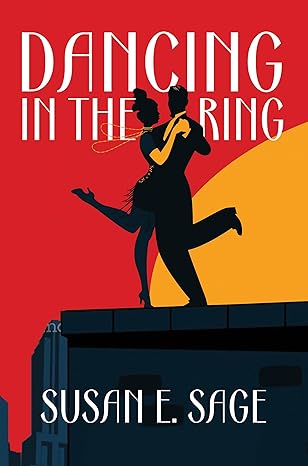

Dancing in the Ring, by Susan E. Sage, is a captivating historical fiction novel that draws inspiration from the true story of the author’s great aunt and uncle. Sage skillfully fills in the gaps of historical records with imaginative fiction, creating a rich tapestry that merges the gritty world of 1920s and 30s Detroit with an intimate family saga. Her meticulous research and vivid storytelling vividly bring this era to life, highlighting the economic struggles and societal challenges of the Great Depression while delving into the multifaceted lives of her characters. The protagonist, Catherine McIntosh, is a bright and determined young woman with aspirations in the legal field. Unwilling to conform to the traditional roles of wife and mother, she falls for the charismatic Bob Sage, who is funding his law school education through boxing winnings.
Sage’s strength as a writer shines through in her character development. Writing about real people, she portrays them with authentic flaws, making them deeply intriguing and relatable. Catherine’s ambition and sharp intellect are counterbalanced by her inner turmoil, while Robert’s caring and passionate nature is often marred by his volatile temper. Their relationship is a rollercoaster as they chase their careers and indulge in the excesses of the 1920s, only to confront the harsh realities of the Depression.
This book is not just a love story about two imperfectly perfect individuals; it also serves as a poignant social commentary on the lives of women during that era. Sage addresses issues such as employment and education discrimination, birth control, financial independence, and gender double standards. Her thorough research also allows her to explore the prevalent racial discrimination against black people and the persecution of the LGBTQ+ community during that time.
Dancing in the Ring is a masterfully written novel that offers both an engaging narrative and a thoughtful exploration of the societal issues of the early 20th century. Sage’s ability to intertwine historical context with deeply personal stories makes this book a must-read for fans of historical fiction and anyone interested in the complexities of human relationships and social justice.
Pages: 351 | ASIN : B0C2BC9CF2

Elodia’s KnifeElodia’s Knife: Book One of the Visigoth SagaElodia’s Knife

Elodia’s Knife, a novel by Robert S. Phillips, immerses readers in the tumultuous era of the Gothic-Roman conflicts. At its heart is the story of a young Gothic woman, Elodia, who, after a dramatic escape from her abusive marriage, finds shelter under the wing of a Roman Limitanei. Despite the cruel treatment from Military Tribune Bitorix, Elodia discovers love and a semblance of peace. The narrative takes a turn as the Roman emperor allows the Tervingi Goths to cross the Danube. This leads to a series of events where Elodia is claimed by Bitorix, bought by Military Count Lupicinus, and ultimately given to Lord Fritgern. Remarkably, Elodia transitions from a slave to a leader, marking her journey with resilience and determination.
Set against the backdrop of the Gothic War, Elodia’s Knife blends historical facts with fiction. While characters like Elodia and Caius are products of Phillips’ creativity, figures such as Emperor Valens and the Battle of Adrianople anchor the story in historical reality. The novel explores themes of greed and its consequences, particularly through Military Count Lupicinus’ actions, which escalate tensions and crush any hopes of peace. Additionally, it depicts the hardships faced by the Goths, exacerbated by Roman exploitation.
One of the book’s strengths is its portrayal of Elodia’s character arc. From her initial struggles to her ascent as a leader, Elodia’s journey is a testament to her resilience and refusal to be defined by her circumstances. Her story underscores the importance of skills and inner strength over fleeting beauty, as these qualities ultimately contribute to her survival and success. While the novel primarily focuses on Elodia’s remarkable journey, the character of Caius is intriguingly presented. Phillips introduces him in a way that piques readers’ interest. Although his presence is less prominent throughout the story, his reappearance towards the novel’s conclusion effectively rekindles the reader’s curiosity about his character and his relationship with Elodia. This approach adds an element of anticipation and leaves one looking forward to learning more about him.
Elodia’s Knife is a compelling blend of history and fiction, offering an insightful look into a turbulent historical period through the lens of a powerful female protagonist. Phillips skillfully navigates the complexities of war, survival, and personal growth, leaving readers with a resonant and thought-provoking narrative.
Pages: 384 | ASIN : B0CMC58LJM


