Blog Archives
Like Embers in the Night
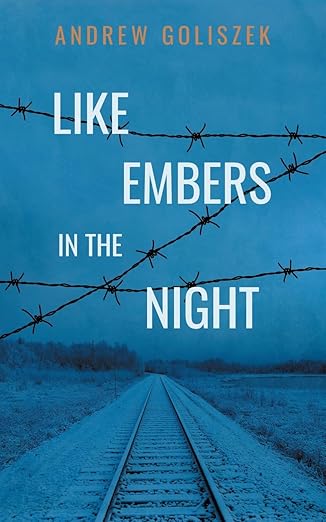

Andrew Goliszek’s Like Embers in the Night delivers a moving exploration of human endurance, inspired by real-life events during the Second World War and the grim realities of Soviet labor camps. At its core, the novel tells Wanda’s extraordinary story, a tale of survival, family, and love blossoming against the backdrop of unimaginable chaos. Goliszek juxtaposes human suffering with defiant acts of resistance, crafting a work of historical fiction novel that serves as a powerful testament to the indomitable will to persevere.
Through vivid and unflinching prose, Goliszek captures Poland’s anguish, caught between the brutalities of Soviet oppression and Nazi atrocities. The dehumanization faced by those imprisoned in labor camps and the relentless physical and emotional toll inflicted upon them leave a searing impression. Wanda’s resilience as a survivor of not just one but two merciless regimes resonated deeply with me.
The novel’s portrayal of war is unrelentingly raw, exposing the grim realities of trauma and suffering. Goliszek’s ability to immerse readers through evocative imagery and skillful storytelling is exceptional. Each scene pulses with intensity, making it nearly impossible not to feel the characters’ pain and perseverance. Particularly striking is the depiction of Wanda’s post-traumatic stress. Goliszek captures the subtle, heart-rending triggers, such as the delicate breath of a child, that unearth buried memories of Wanda’s darkest moments. These details lend an authenticity that lingers long after the final page.
At the emotional heart of the story is Wanda and Janek’s love, a relationship forged through shared hardship and sustained by hope. Their bond shines as a beacon in the pervasive darkness, offering glimpses of light amid the despair. The narrative structure, which alternates between Wanda’s present-day struggles with dementia in 2004 and flashbacks to her harrowing past, amplifies the emotional depth of her journey. Her unwavering love for her family becomes her anchor, sustaining her through unimaginable suffering.
Like Embers in the Night is an unmissable read for fans of historical fiction or those drawn to stories of resilience, love, and the triumph of the human spirit. Goliszek’s story not only immerses readers in the brutality of history but also leaves them with an appreciation for the strength and courage that emerges in the face of adversity.
Pages: 342 | ISBN : 978-1509259298

Watching, A Different Type of Time Travel, Volume 2: Portrait of an Innocent Girl
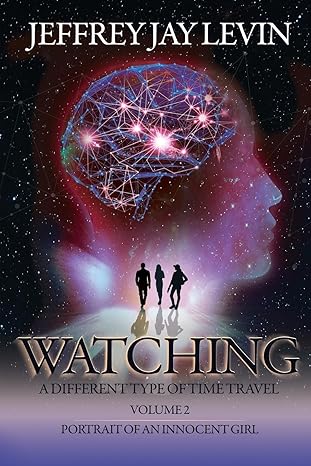
Jeffrey Jay Levin’s Watching Volume 2 is a mesmerizing journey that marries time travel with emotional resonance. This sequel builds on the intriguing concept of “Watchings” introduced in the first volume, where the protagonist, Josh, undertakes non-corporeal journeys through space and time. This time, he is drawn into the haunting world of Nazi-era Vienna, compelled by a painting and the mysteries surrounding it. The narrative effortlessly balances historical drama with speculative fiction, making it an engaging read from start to finish.
What struck me first about this book was the vivid detail. Levin paints historical settings with such precision that you can almost feel the tension of occupied Vienna or the eerie stillness surrounding stolen art. The prologue, describing the chilling parade of Nazi tanks and soldiers, is visceral. This immersive style carried me through the story, though at times, I wished the pace didn’t lag in Josh’s modern-day contemplations. However, the descriptions of the titular painting and its impact on Josh more than made up for these slower moments.
I also appreciated the emotional depth Levin brought to his characters, especially Josh. His reluctance to revisit his Watching abilities, juxtaposed with his unrelenting curiosity, feels relatable. One standout scene was his interaction with Adrian after his museum experience. Their dynamic captures the perfect mix of love, worry, and exasperation that comes with sharing an extraordinary burden. Similarly, Agent Starling Hebert’s frustration with bureaucracy and sexism within the FBI grounds her character, making her investigative journey all the more satisfying. Levin’s ability to weave personal struggles into the grander narrative of historical intrigue is a triumph.
The pseudo-scientific explanations of Watchings add a fascinating layer to the story, showcasing Levin’s creative imagination and his ability to blend science with fiction. The idea of heightened enzymes and hippocampal activity is unique, giving the concept of time travel a fresh twist. While these sections delve deeply into detail, they provide a thoughtful backdrop for the fantastical elements, enriching the reader’s understanding of the phenomenon.
The exploration of Nazi art theft and the mystery surrounding Gustav Scheiner’s Portrait of an Innocent Girl was fascinating and tied beautifully to themes of loss, memory, and justice. Levin’s extensive research shines here, offering a thought-provoking look at the devastating cultural impact of war.
Watching Volume 2: Portrait of an Innocent Girl is a compelling read for fans of historical fiction, mystery, and time travel. It’s perfect for those who savor rich character development and thought-provoking themes. I’d recommend it to anyone intrigued by history’s shadows and the mysteries they hold.
Pages: 288 | ISBN : 978-1685135935
Mussolini’s Puppet Government

Jigsaw: Beginnings follows a group of students on a trip to Italy who stumble into the secrets of a WWII teleportation experiment, forcing them to unravel a conspiracy where history and the present collide. What were some sources that informed this book’s development?
Excellent question. I did a great deal of research on the Italian Resistance Movement, OSS espionage and Holocaust rescue efforts at the time and general area, Mussolini’s Puppet Government in Salo following his rescue by the Nazis in 1943, and overtures to get Spain to join the war on the Axis side. I felt these were neglected parts of history that needed greater exploration. I also have visited Voltri on two occasions when I was younger. My Great Aunt and Uncle (my Grandmother’s brother) lived there and I wanted to make this a quasi-tribute to that side of the family. I also drew from personal experiences and other people I know like my parents, grandmother, siblings, and friends to fill in the character development. The names of the student’s characters came from children that attended the charter school I once owned.
Colonel Angelo and Professor Klein are morally complex characters. How did you develop their motivations?
Klein represents that part of history where Conservative Jewish Palestinians had, at first, a productive relationship with Mussolini’s Government in the 1920s and 1930s. As Italy’s government became more openly Anti Semitic in its subservience to Hitler, Jews who thought Mussolini had backstabbed them were more prevalent. That is how I developed Klein. I do not want to say much about Angelo here because he has an arc that readers would see in the second and third books in the series, Warheads and Full Circle and I do not want to spoil that.
The Italian settings feel incredibly vivid. Did you visit these locations, or was your research primarily historical?
As mentioned in the first question, I have visited Voltri and Genoa several times. While I based some of the scenes on personal experience like visiting the Villa and going to the Genovese port, I did still have to research the areas and the history to fill in the gaps and round out the historical plot of the story.
Were there any real-life wartime experiments that influenced the teleportation aspect of the story?
Not to my knowledge. I know there were rumors of the Philadelphia Experiment in the 1940’s and the German time machine Bell program but those did not influence the plot.
Author Links: GoodReads | X (Twitter) | Facebook | Instagram | Threads | Website | Amazon
High school history buffs Noah Patterson and Mariah Fischer can’t wait to get to Italy. Their plan? To explore as much as they can and have loads of fun. What they face, however, is mind-blowing when they get shot at by the Italian Black Brigade.
Running for their lives, they quickly realize that they’ve somehow been transported to Italy, circa 1943. But how?
Humiliated by defeat and rescued by Hitler, Mussolini plans to win the war at all costs. Pushing forward relentlessly, he has a secret weapon: teleportation. But a failed experiment with the device draws Noah and Mariah back in time. Now they must find a way to stop Mussolini’s “New Roman Empire” and return to the present they know—if it’s still there.
The fight for reality starts now…Jigsaw Beginnings is an adrenaline-driven, YA time travel series perfect for action and adventure enthusiasts.
The Last Rival: A time of our Choosing
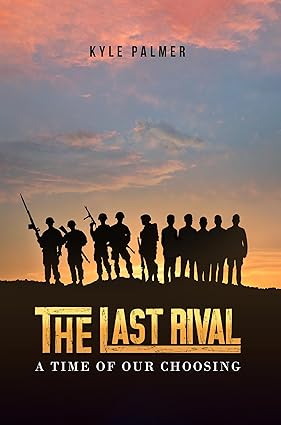
Kyle Palmer’s The Last Rival: A Time of Our Choosing is a gripping and intellectually compelling novel set in the turbulent aftermath of World War II. At its heart are Jim Bolden and Lew Weinman, covert operatives navigating the shadowy world of intelligence. Their mission is perilous, their existence unacknowledged by any government, and their enemy a hidden remnant of the Nazi regime seeks to seize power and reshape history in its own sinister image.
Palmer’s prose is sharp and evocative, balancing high-stakes action with moments of profound introspection. Suspense builds with relentless intensity, yet the novel’s true strength lies in its exploration of moral ambiguity. Themes of sacrifice, redemption, and the battle between duty and conscience weave seamlessly into the narrative, elevating it beyond a conventional spy thriller. The action grips, but it is the philosophical depth that lingers, prompting readers to ponder the complexities of right and wrong when allegiances shift and ideals collide.
Far from mere instruments of espionage, the characters emerge as deeply human figures wrestling with personal demons and ethical dilemmas. Their struggles, whether to seek vengeance or embrace forgiveness, add a rich emotional undercurrent that resonates beyond the confines of their mission. As they confront impossible choices, their internal battles become as compelling as the external threats they face.
For those who appreciate historical fiction infused with intellectual depth, The Last Rival delivers an immersive and thought-provoking experience. Palmer masterfully blends real-world history with speculative intrigue, crafting a novel that feels both immediate and timeless. Though the pacing slows at times to allow for introspective moments, the payoff is well worth it. This is more than a thriller; it is a journey into the heart of human conflict, both on the battlefield and within the soul.
Pages: 500 | ASIN : B0DM6H5TD8
An Unsung Neighborhood

The Mystery from Way Back When follows a man returning to his childhood church where he meets a young woman who is the baby he rescued years ago. She now needs his help to find her birth mother. What was the inspiration for the setup of your story?
My father grew up a member of a close family that were proud members of Sacred Heart Church in the Keighry Head neighborhood of Elizabeth, New Jersey. He attended Sacred Heart School and was even an altar boy. Sacred Heart Church later became Our Lady of Fatima Church. I wanted to set a mystery there, in Keighry Head. It’s an unsung neighborhood and, from my late dad’s stories, the way it once was when he was a boy during the Depression and World War II has pretty much disappeared.
What were the morals you were trying to capture while creating your characters?
Above all, strength of character and decency! The main character, Benny, doesn’t hesitate for a second when he sees a young girl at a distance abandoning a baby on the steps of his church. He takes the baby right home to his mother, knowing she can help the little one, and then tries to identify who abandoned her. It’s World War II. The people are patriotic. The kids have their eye on a suspected spy. Maybe a lot of people these days don’t realize this, but Catholics have always taken a lot of flak in this country, even yet, and especially since the whole situation came to light about the pedophile priests. In this story, the priest doesn’t belong in jail. He’s a really good guy.
What was your favorite scene in this story?
Oh, that’s an easy question! When Benny brings the abandoned newborn baby home and his mother tends to her, she starts to sing to the baby, and naturally, the song is “Baby Face.” Benny, his brothers, and even the old grandfather who lives with them chimes in. It’s joyous! It turns the baby’s sad start into something of a celebration of her arrival.
What is the next book that you are working on, and when will it be available?
There were two books that I had started working on and then put temporarily aside. I picked them up again and I’m continuing with both. They’re mysteries. One is set on a cruise ship and the other in a non-profit organization where someone is corrupt to the core and stealing the funds. I also have another one in mind, and it’s a mystery that unfolds during a wedding, where the parents of the bride are divorced and it’s always a battleground when they’re required to get together. So I’ve got three books in the works, and they should be available later in the year. Somehow, for me, it works out beautifully to work on more than one book at a time. I’m loving the whole process of creating all of these stories!
Author Links: GoodReads | X (Twitter) | Facebook | Website | Amazon
The only clue to the child’s origins is a note found in the basket requesting that she be raised Catholic. The police arrive to get the baby to the hospital while the parish priest arranges for her adoption. Meanwhile, the boys try to play detective and figure out who gave the baby up. Benny even has a likely suspect, Nancy Kilkenny, but she hotly denies it.
Years later, the baby, all grown up, has an urgent reason to connect with Benny and Timmy to try and find out what really happened way back when. Who was the mother who gave her away? What happened on that memorable day in 1944? And can she ever manage to find out the truth?
Truth is Fundamentally Important

A Remembrance of Death follows a young man navigating loss, physical limitations, and the British Empire’s complex legacy in the aftermath of WWI. What was the inspiration for the setup of your story?
I wanted to write a story where the main protagonist is not an obvious hero. He is kind, courteous, and principled; he will not lie and understands right and wrong. At the outset, he is an observer of the events around him. He watches as his friend is thrown into a river and is helpless as his marriage falls apart. At the lowest point in his life, he goes to Nuremberg rather than stay with his wife because this is required of him. After Nuremberg, he must make a choice between loyalty to his country or exposing the truth. My inspiration for this story came about because I believe there is a growing trend for our news and history to be manipulated and that the truth is fundamentally important, no matter how uncomfortable it may be.
How did your research into historical events like the Mau Mau uprising and the Nuremberg Trials shape the narrative?
The two events are closely linked for the purposes of the story. My main protagonist, Basil Drewe, is shocked when confronted with the horrors of Dacau and Nazi atrocities and helps with the prosecution of Nazi War Criminals. Nine years later he must look into the Mau Mau uprising, where he learns that the British have closed their eyes to the torture of detainees and that nearly a million natives of the Kikuyu tribe have been resettled forcibly. Until this point in the novel Basil has mainly been a passive observer and now must make a choice as to whether to tow the British establishment line or not. From this point in the narrative Basil changes as does his life, particularly the trajectory of his relationship with his wife.
Laxman Choudhury is a memorable character. What motivated you to include his perspective and cultural experiences?
I was motivated to include Laxman’s perspective and cultural experiences to give a different perspective to the novel. Throughout the novel, there are instances of how foreigners, who are culturally different, are treated. For example, the Chinese workmen who built the railway across America, ‘The Dunera’ boys who were transported to Australia, the Kikuyu who were forced into unsanitary villages, and the detention and killing of Jews during WWII. Laxman Choudhury’s experiences show what it is like to be a foreigner in a time when a country does not respect someone else’s culture. He then returns to India where the tensions between the Hindu and Muslim communities are at breaking point. While he sees the faults of the British, he struggles to see what it is like being a Muslim in a Hindu-dominated society.
If readers take away one lesson or emotion from A Remembrance of Death, what do you hope it will be?
To learn from your mistakes and not to repeat them.
Author Links: GoodReads | X (Twitter) | Facebook | Website | Amazon
As he arrives at Oxford in 1917, Basil Drewe is coming to terms with the recent death of his brother Adrian in the Great War. Meanwhile at Ojai in America, Celia Lutyens and her illegitimate son Robert struggle to find their place in a foreign country. On returning to England, Celia renews her acquaintance with Basil and finds she must deal with the mistakes of her past and the constraints placed upon her by society and its expectations. Their journey takes them to India, Vienna, London, Nuremberg and Kenya. Finally, they return to Castle Drogo, the place where they first met, however, the castle no longer represents the ideal it once did for Celia but is now a mausoleum.
A Remembrance of Death was short-listed for the Yeovil Literary Price and received a high commendation. It was described as, “prose with a classic sensibility … evoking a clear and present time and place, the characters lifting effortlessly from the page with authentic dialogue and engaging set pieces.”
Selfless Sacrifice

A Place More Dark follows a Lance Corporal in WWII who is forced to join the march across Central Europe, where he risks his life to save someone from the SS. What was the inspiration for the setup of your story?
With a grandfather who was a POW in World War Two, I have a natural interest in the subject. When researching the topic, two things struck me: firstly, how ill-prepared the British army was at the start of the war and how, in the debacle leading to the famous evacuation at Dunkirk, many of the less well-trained troops were sacrificed to allow others to escape; and secondly, those same men, held in captivity for the war’s duration, were often considered to have ‘sat out’ the conflict, avoiding the dirty but heroic business of fighting and earning victory. This double body-blow to their reputation is inherently unfair and so I was inspired to present them in a more heroic light and do justice to their memory. Beyond the escape story, POWs have had limit representation in fiction. With my Jock Mitchell series, I want to show other aspects but also demonstrate they were still in the war, fighting battles of a different kind and winning by surviving.
I enjoyed the depth of the main character, Jock Mitchell. What was your process to bring that character to life?
Jock is an everyman, leading an unassuming life before the war, but he now finds himself in a dramatic, complex world of conflict where simple survival shapes his every action. He clings to the nostalgic, balanced world he recalls in better times with his family, drawing strength from those memories to do the right and heroic thing when chaos and cruelty threatens. But equally, he finds anger, pain, or self-preservation driving him in other situations. He has little control, dragged and thrown by the currents and crashing waves in this tempest. Emotions, risks, and friendships are intensified by the war: stoic determination mixing with fragility and despair, laughter blending with tears. It is trauma played out in a world with no time or opportunity to succumb to it.
What were some themes that were important for you to explore in this book?
A Place More Dark is literally about a journey across Europe from one hell into another, but at its heart is the journey into the human spirit. From cruelty to selfless sacrifice, the spectrum of basic human behaviours is explored using the stage of a war. I was keen not to present conflict one-dimensionally: of just good against bad. Each character is stripped raw and shown to be flawed, being extraordinary as monsters or saints, sometimes both, because order has collapsed, and survival is the name of the game. In this primitive landscape, it is light that leads them out of the darkness: the camaraderie, acts of kindness, sacrifice, and humanity.
Where does the story go in the next book and where do you see it going in the future?
Book one in the series, Triumphant Where it Dares Defy, left a few threads dangling that need tying up and so I intend to bring Jock back in a post-war world, exploring the impact of five years of captivity on a man in peace-time. Did the war ever truly end for them? There was also a new world order taking shape and so that will provide a perfect stage for a new adventure. At some point I will return to the start of the war, a prelude to Jock’s captivity, and find out his story in those confused and terrifying weeks as the British and French armies collapsed, and the free world hung in the balance.
Author Links: GoodReads | Website | Amazon
Already half-starved, disease-stricken and brutalised, the last thing the prisoners of Stalag XXa need is an order to pack their meagre belongings and begin marching through the harsh winter of early 1945. Under the watchful eye of their guards and the SS, they walk into the unknown, facing the bitter cold across hundreds of miles of Central Europe, while the dangerous frontline between the Wehrmacht and Red Army followings close on their heels.
Lance Corporal Jock Mitchell, a POW of five long years, leaves Stalag XXa with a hole in his boot and a sledge converted from his old bunk. It doesn’t take long for Jock to realise fighting nature, as well as the Nazis, will be his greatest challenge ever. With blizzards and an empty stomach, just placing one foot in front of the other is hard enough, but when Jock steps in to save someone from the barbarity of the SS, his march westward takes on a greater importance and far more danger. From the hell of the prison camp, Jock finds himself in a place more dark.
Book Two in the Jock Mitchell Adventures continues the thrilling story of survival and danger for those whose war continued in captivity but who never stopped fighting.
A Place More Dark
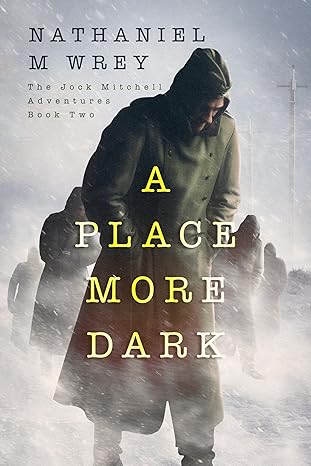
Nathaniel M. Wrey’s A Place More Dark plunges readers into the grim and unforgiving world of Stalag XXa, a Nazi prisoner-of-war camp that serves as a brutal stage for the horrors of World War II. For Lance Corporal Jock Mitchell, survival is already an immense challenge, but his ordeal intensifies when he is forced to join the grueling march across the frozen plains of Central Europe. With the Red Army and Wehrmacht clashing close behind, Jock faces unimaginable trials. Yet, his journey gains significance when he risks everything to save another life from the merciless hands of the SS.
Wrey crafts a historical war story that spares no detail, confronting the barbarity of war with unflinching realism. His narrative recalls the raw intensity of Hemingway’s wartime prose and the methodical precision of Tom Clancy’s storytelling. Though this is the second novel in the series, newcomers will find it accessible, as the author deftly weaves essential backstory into the tale without slowing its momentum.
At its heart is Jock Mitchell, a stoic yet layered character whose resilience and humanity anchor the story. Initially hardened by his environment, Jock reveals unexpected depths of compassion and moral courage as the story unfolds. The novel’s tone is appropriately stark, yet Wrey’s prose has a way of shifting gears during pivotal moments. His descriptions become vivid and visceral when portraying the heinous acts of the SS, forcing readers to confront the raw brutality of these events. This deliberate contrast highlights the extremes of human cruelty and the fragile sparks of kindness and heroism that endure despite it.
Wrey’s careful attention to historical detail enriches the story, creating a backdrop that feels authentic and immersive. A Place More Dark is not a light or easy read. Its unflinching portrayal of war’s atrocities makes it a tough and sometimes harrowing experience. But for those willing to endure its darker passages, the book offers immense rewards. The character development is fantastic, the narrative is gripping, and the ending is satisfying. This is a story about the resilience of the human spirit in even the bleakest circumstances.
Fans of historical fiction, particularly those who appreciate stories steeped in wartime realism and moral complexity, will find much to admire. A Place More Dark is a powerful and unforgettable journey into the depths of humanity and the enduring light of courage.
Pages: 195 | ASIN : B0DJ7N9VT2


 LITERARY TITAN