Blog Archives
Mario of My Life


In Mario of My Life, author Jill Campbell-Mason transports readers to the historic 15th-century city of Machu Picchu, set in contemporary Peru, through the eyes of Mario, a young shoeshine boy. Despite the challenges of poverty, Mario’s vibrant spirit and innate talents shine brightly. His life takes an intriguing turn when he encounters an American family, sparking a cultural exchange that promises mutual enrichment.
The narrative, reminiscent of a Dickensian journey from rags to riches, weaves a tale of personal growth and the boundless potential of the human spirit. Campbell-Mason’s storytelling, said to be inspired by true events, evokes the essence of the acclaimed film Slumdog Millionaire, offering a rich, multi-layered experience. At its core, the novel is an ode to optimism, a quality increasingly rare in today’s world. Campbell-Mason skillfully crafts characters that are not only believable but also resonate with depth and complexity. The interactions between Mario, Grandma Jana, Ciel, and Sonorisa are not only central to the unfolding story but also serve as a testament to the transformative power of understanding and connection.
One of the standout features of this work is the dialogue. Crafting authentic and compelling conversations is a formidable task for any writer, yet Campbell-Mason excels, using it as a vehicle to advance the plot and deepen the readers’ understanding of each character. The precision and natural flow of the exchanges speak to her skill and serve as a valuable study for enthusiasts of creative writing.
Mario of My Life is a well-conceived and executed novel. The story is engaging, the themes are meaningful, and the lessons imparted are both timeless and relevant. It’s a testament to Campbell-Mason’s literary acumen and a compelling invitation to explore the richness of human experience through the lens of a young boy in Machu Picchu.
Pages: 280 | ASIN : B0CL99SNQQ

Embrace the Dangers and Possibilities

The Elephant in the Room follows a couple who visits Indonesia for the first time and experiences a culture drastically different than what they are used to. What was the inspiration for the original and fascinating idea at the center of the book?
Something had to be done to address the extreme rifts between people in this country as well as the rest of the world. As a writer, I wanted to communicate the message through people who were living on each end of many of these extremes. The message is a critical one of beginning healing.
Writing this book has allowed me to expose publicly, in a fascinating, yet understated way, rampant, accepted prejudice and cultural inequalities.
Reading, the act of reading, puts the magic of words and ideas inside readers’ bodies and minds with a subtlety impossible in a verbal interchange. Internalized, it can be contemplated—revised, rethought, doubted—and changed! A new way of thinking, acting and BEING can come about. More kind, more understanding.
How thrilling to discover The Elephant in the Room—and rather than fear it, embrace the danger and possibilities it represents.
In the book, the Crown Prince, with his aggressive greed and power, had the potential to completely shatter an entire culture. He and his minions had dehumanized the population. Only through the simplest of simple wisdom, that of the shaman Apollo, with his community in Medicine Village, was healing begun.
With this story I hope to share the process of healing at its purest, most basic level.
What kind of research did you do for this novel to ensure you captured the essence of the story’s theme?
Since research sometimes is dry, and I wanted this story to be vividly alive, my most important research was traveling to Sumatra with Indonesian friends who had grown up on the island. With them I learned the culture in extremely intimate ways. I am most grateful to them for their generosity in sharing so much of their history. In addition, I did research the history of the caste system, the ACEH movement, the treatment of elephants, etc. to make certain all my information was genuine—and it is!
What were some themes that were important for you to explore in this book?
I wanted to empower the reader into the realization that the Elephant, or elephants, in the Room, can be addressed. In fact, they must be. The ecological elephants, both symbolic and real!, the cultural elephants, the elephants of prejudice and greed, political elephants, etc. Through the characters and events in the book, my hope is that readers become aware of these ‘elephants’, and that they can see transformation in a positive direction is possible. Only with awareness and action can this happen. I would love my book to help make that awareness a reality.
What is the next book that you are working on and when will it be available?
My next book will continue to delve into wonderful characters struggling both with themselves and cultural differences. It is based on a true incident that begins at the foot of Machu Picchu and unreels over the course of two decades. It is titled Mario of My Life and will be available sometime late in 2023.
It will most likely be followed by a searing memoir of my four years in Barcelona, Spain while the dictator Francisco Franco was still in power.
Author Links: Website | Twitter | Facebook | Instagram
The Elephant in the Room
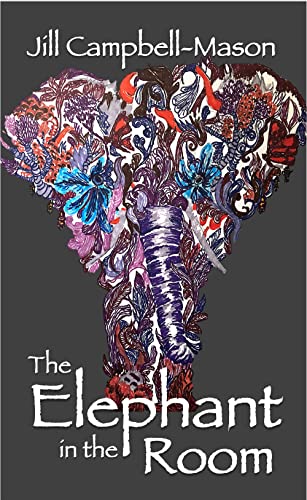
Much like its front cover, The Elephant in the Room by Jill Campbell-Mason is a colorful story of Ella and Warren’s trip to Indonesia after meeting Asta and Henry on a cruise ship, who invited them to stay at their home in Jakarta. This is more than just a fascinating travel adventure story. It sheds light on the dynamic culture and social differences of those living in Indonesia.
Keen to prepare for the upcoming trip, they meet with Aunt Clara to probe her memories for any tips she may have on relating to a foreign culture without causing offense. Upon arriving, the couple soon discovers that Aunt Clara’s tales of the southeast were not exaggerated and the country is more exotic and fascinating than any fiction tale, complete with wild elephants that still barge into villages uninvited and infrastructure that is essentially non-existent.
Blink for a second, and you will be lost. This story moves quickly. The writing style is highly complex, loaded with figurative expressions and phrases that are utilized to tell the story of multiple characters across various periods of time. This technique works well to incorporate historical context and picks up on key issues of racism, religion, discrimination, power, and poverty. However, Campbell-Mason’s tone fluctuates often and can be read as somewhere in the middle of past and present, which can be difficult to follow. The inclusions of so many characters also create barriers to a deeper connection.
As the title suggests understanding the role of elephants is key to understanding the underlying lessons of this narrative; how an individual’s actions can alter the trajectory of a nation or their courage to bring down tyranny and criminality can create harmony and reunite the community. They represent human life and the values within humanity.
The Elephant in the Room by Jill Campbell-Mason is a fantastic woman’s adventure novel addressing prejudice towards some of the most marginalized groups in society. The juxtaposition of the two couples worked well to provide a two-lens approach to understanding Indonesian culture and faith – it will leave you with great conversation starters!
Pages: 421 | ASIN : B0B7F1G5HW



 LITERARY TITAN